
When designing housing for small ruminants, focus on creating a comfortable space with proper ventilation and strategic layout. Incorporate features like well-placed windows, vents, or exhaust fans to promote air exchange and minimize humidity. Use accessible feeding and bedding areas that reduce waste and stress. Guarantee your shelter can adapt to seasonal changes and allows for easy cleaning. Continuing to improve these elements will help you provide a healthy environment that boosts your animals’ productivity.
Key Takeaways
- Design housing with proper ventilation systems like vents and exhaust fans to ensure continuous airflow and reduce humidity.
- Incorporate windows and strategic vent placement to promote fresh air exchange without creating drafts.
- Use natural or mechanical ventilation to remove ammonia and moisture, improving air quality and animal health.
- Ensure adequate space and height in housing to prevent overcrowding, stress, and injuries.
- Integrate feeding and bedding areas into the design for hygiene, comfort, and ease of cleaning.
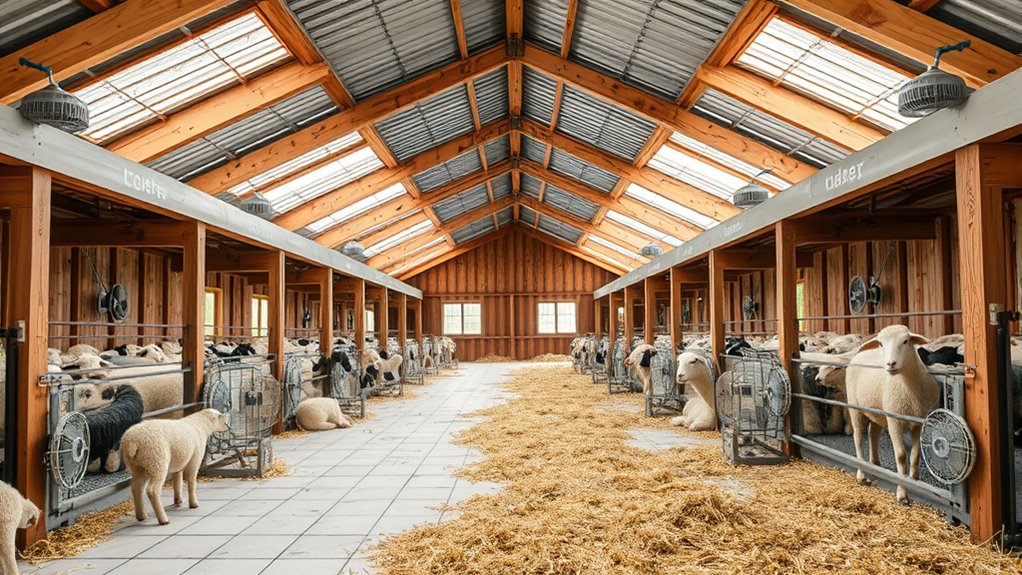
Have you ever wondered how proper housing can boost the health and productivity of small ruminants like sheep and goats? The design of their shelter plays an essential role in guaranteeing they stay healthy, comfortable, and productive. One key aspect to consider is how you manage feeding strategies within the housing setup. Providing easy access to quality feed and clean water encourages better intake, which in turn improves growth, reproduction, and milk production. You should position feeding stations in accessible areas that minimize competition and waste. Incorporate feeding strategies that promote natural foraging behaviors, such as troughs or hay racks placed at appropriate heights, reducing stress and injury. Ensuring that feed is protected from contamination and spoilage is critical, especially in confined spaces, to prevent diseases.
Proper feeding access and strategies enhance health and productivity of small ruminants.
Another fundamental element is bedding materials, which directly impact the comfort and hygiene of your small ruminants. Proper bedding helps absorb moisture, reduce the buildup of waste, and prevent the development of foot rot and other infections. Use bedding materials like straw, wood shavings, or sawdust, which are readily available and effective at maintaining cleanliness. Regularly replacing bedding keeps the environment dry and minimizes ammonia buildup, which can cause respiratory issues. When choosing bedding, consider the local climate and availability, but always prioritize materials that promote good hygiene and comfort. Proper bedding management also makes cleaning easier, saving you time and labor.
Ventilation is equally essential in small ruminant housing. Good airflow reduces humidity, clears out harmful gases like ammonia, and helps control temperature extremes. Proper ventilation strategies involve installing windows, vents, or exhaust fans that facilitate continuous air exchange without creating drafts. You want to avoid stagnant air, which encourages the growth of bacteria and fungi, leading to respiratory problems. During hot weather, increased ventilation prevents heat stress, while in colder months, strategic placement of vents ensures fresh air without chilling the animals. Maintaining a well-ventilated environment is critical for reducing disease transmission and promoting overall health.
Additionally, incorporating adequate lighting into the housing can improve the animals’ well-being and productivity by promoting natural behaviors and supporting their circadian rhythms. Ultimately, the success of small ruminant housing depends on integrating these elements seamlessly. Thoughtful feeding strategies, suitable bedding materials, and effective ventilation work together to create a comfortable, healthy environment. When your sheep and goats are housed properly, they’re more likely to thrive, producing better meat, milk, and offspring. It’s a continuous process of adjusting and improving your housing design to meet their needs, guaranteeing that your small ruminants stay happy, healthy, and productive year-round.

Ehiair 8 Inch Upgraded Shutter Exhaust Fan with Thermostat & Remote Control, Automatic On/Off by Temperature, 760 CFM Wall Mounted Garage Fan for Attic, Greenhouses, Sheds, Chicken Coops & Shops
【Powerful Ventilation】- Ehiair 8-inch shutter exhaust fan delivers a strong 760 CFM airflow to quickly remove heat, humidity,…
As an affiliate, we earn on qualifying purchases.
As an affiliate, we earn on qualifying purchases.
Frequently Asked Questions
What Materials Are Best for Small Ruminant Housing Construction?
You should choose durable materials like treated wood, metal, or concrete for small ruminant housing, as they withstand weather and wear. Incorporate insulation materials such as foam boards or straw to maintain a stable temperature, especially in colder months. Consider durability and insulation to guarantee a comfortable environment, reduce maintenance, and protect your animals from extreme temperatures, ultimately supporting their health and productivity.
How Can I Reduce Heating Costs in Winter?
To cut winter heating costs, you should focus on effective insulation techniques like sealing gaps, using insulated panels, and adding straw bedding for warmth. Consider efficient heating system options such as infrared heaters or thermostatically controlled space heaters that target specific areas. These strategies help retain heat, reduce energy use, and keep your small ruminants comfortable without high costs. Proper insulation and smart heating choices make a significant difference.
What Are the Signs of Poor Ventilation in Pens?
You might notice poor ventilation in your pens if there’s excessive odor, which indicates inadequate air quality and poor odor control. Other signs include persistent dampness, condensation on surfaces, and increased respiratory issues among your animals. Studies show that proper airflow reduces disease risk by up to 70%. If your small ruminants breathe with difficulty or you detect a strong, lingering smell, it’s time to upgrade ventilation to guarantee healthier, happier animals.
How Often Should Cleaning and Maintenance Be Performed?
You should perform cleaning and maintenance regularly, ideally on a weekly basis, to keep your small ruminant housing in top condition. Follow a cleaning schedule and use a maintenance checklist to guarantee no tasks are overlooked. Regular cleaning removes manure and debris, reducing disease risk, while ongoing maintenance keeps ventilation systems working efficiently and prevents structural issues. Consistent care promotes healthier animals and a safer environment.
Are There Specific Designs for Different Small Ruminant Species?
Yes, you should consider species-specific housing and breed considerations when designing shelters for small ruminants. Different species, like sheep and goats, have unique needs for space, ventilation, and flooring. Breeds also influence design choices, as some require specific environmental conditions. Tailoring your housing to these factors helps guarantee ideal health, comfort, and productivity, making it essential to customize the structure based on the particular species and breeds you keep.
Jekeno Goat Sheep Gifts Blanket for Women Girls Mom Sister Friends Birthday Valentines Christmas Goats Sheeps Floral Print Presents Decor Home Sofa Couch Soft Cozy Plush Throw for Kids Adults 50"x60"
Perfect Gift for Every Occasion – More than just a blanket, it's a warm thoughtful ideas gifts for…
As an affiliate, we earn on qualifying purchases.
As an affiliate, we earn on qualifying purchases.
Conclusion
By paying close attention to thoughtful design and proper ventilation, you create a cozy haven that gently nurtures your small ruminants’ well-being. When their environment is just right, they’ll thrive quietly, offering you the rewards of healthier, happier animals. Remember, a well-ventilated shelter isn’t just about air—it’s about fostering comfort and peace of mind. With a little care, you’ll find your animals flourish in a space that subtly supports their every need.
GULAIMOAO Outdoor Cat House Weatherproof, Durable Resin Cat Houses for Outdoor Indoor Cats, Outdoor Cat Enclosure Shelter with Elevated Base, Anti-Slip Pad, Ventilation, Grey
🔄 Dual-Door Ventilation Design: Dual round doors with a flip-top cover allow pets to come and go freely,…
As an affiliate, we earn on qualifying purchases.
As an affiliate, we earn on qualifying purchases.
COZOFU 47" Chicken Trough Feeder – Galvanized Steel Feed Trough with Drainage Holes & Red Crossbar for Chicken, Duck, Turkey | Heavy Duty, Rust-Proof & Easy-Clean Design
Heavy-Duty Chicken Trough Feeder Constructed with galvanized steel and anti-rust powder coating, this feed trough withstands harsh outdoor…
As an affiliate, we earn on qualifying purchases.
As an affiliate, we earn on qualifying purchases.