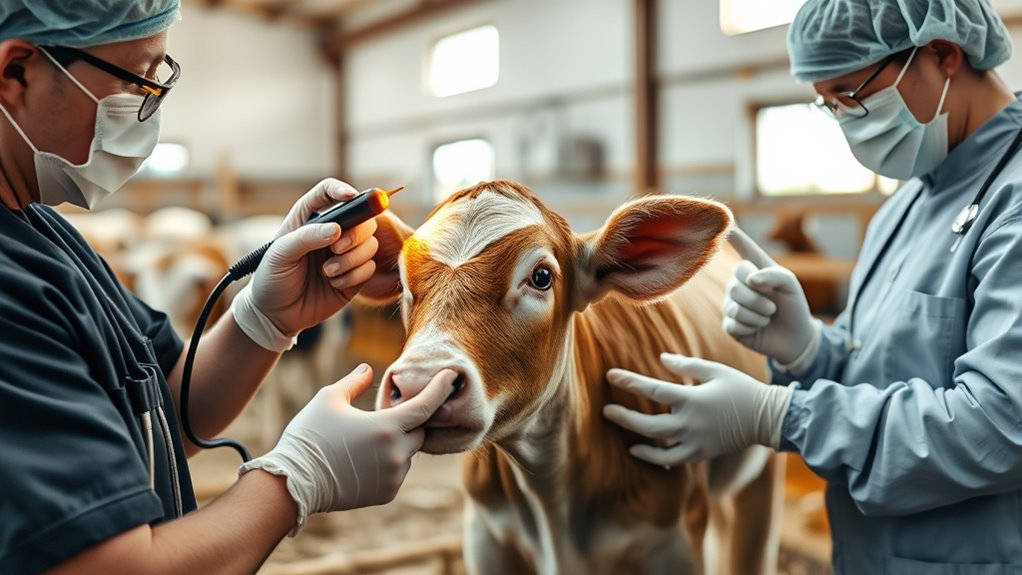

When performing dehorning and castration, use humane techniques that minimize pain, such as applying local anesthesia or analgesics before, during, and after procedures. Choose methods suited to the age and size of your animals, like cauterization or banding, and guarantee proper restraint and sterile instruments. Prioritize swift, careful execution to reduce stress and discomfort, and provide ongoing care for recovery. Continuing with best practices will help you improve animal welfare and ensure responsible livestock management.
Key Takeaways
- Employ age-appropriate techniques like hot-iron cauterization for dehorning and banding for castration to minimize pain.
- Use effective pain management strategies, including local anesthesia and analgesics, before, during, and after procedures.
- Ensure proper restraint, sterile equipment, and skilled technique to reduce procedure-related stress and discomfort.
- Provide post-operative care with wound monitoring, cleaning, and continued pain relief to promote healing and animal welfare.
- Follow ethical standards and current guidelines to prioritize animal welfare and reduce suffering during dehorning and castration.
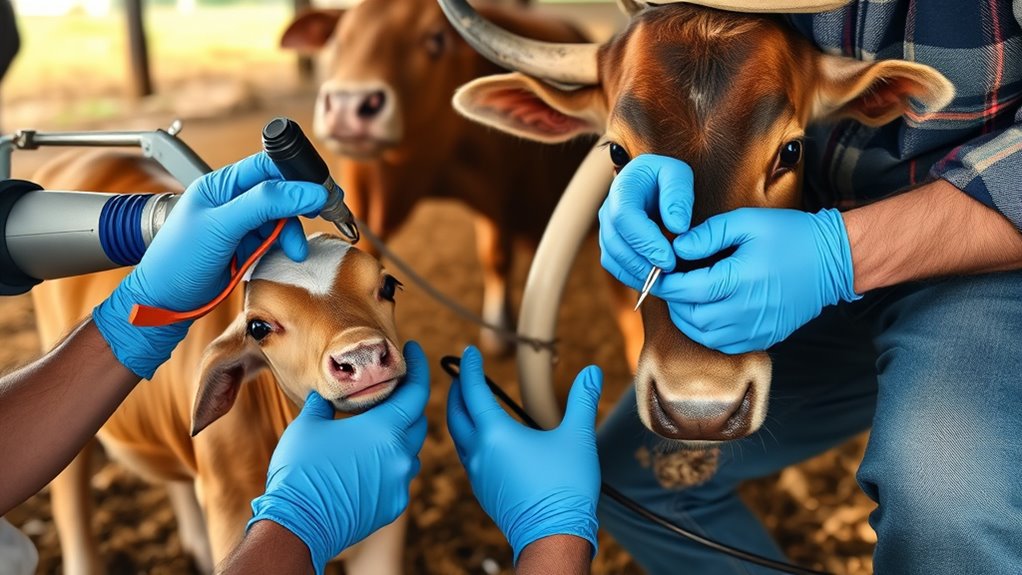
Dehorning and castration are common management practices in livestock farming aimed at improving safety and handling. These procedures, while routine, can cause significant discomfort if not performed correctly, so understanding how to manage pain and uphold ethical practices becomes essential. When you plan to dehorn or castrate animals, it’s your responsibility to prioritize their welfare by implementing effective pain management strategies. This might include local anesthesia, analgesics, or other pain relief methods that minimize discomfort during and after the procedures. Using pain management not only helps reduce animal suffering but also aligns with ethical practices, demonstrating your commitment to responsible livestock care.
Prioritize animal welfare with effective pain management during dehorning and castration procedures.
The timing of these procedures plays a crucial role in minimizing pain and stress. For instance, performing dehorning and castration at a young age typically results in less pain and fewer complications because younger animals have less developed nerve endings and smaller horns or testicles. If you choose to delay the procedures, ensure you’re prepared with appropriate pain mitigation techniques. Administering analgesics before, during, and after the procedure shows your dedication to animal welfare and helps vital a smoother recovery.
There are several techniques available for dehorning, such as hot-iron cauterization, scooping, or using chemical caustics. Each method has its pros and cons, but regardless of which you select, applying pain relief is crucial. For castration, options include surgical removal, banding, or use of chemical agents. No matter the method, ethical practices demand that you approach these procedures with care, minimizing pain and distress as much as possible. Proper restraint, sterile equipment, and skilled technique are vital to ensure the procedure is quick and as painless as possible.
Post-procedure care is equally important. Keeping the wound clean and monitoring for signs of infection or ongoing pain helps animals recover comfortably. Providing pain relief after the procedure can prevent prolonged suffering and promote healing. Educating yourself on the latest pain management protocols and adhering to best practices not only improves animal welfare but also enhances the overall success of your operations. Remember, ethical practices aren’t just about following regulations—they’re about respecting the animals in your care and ensuring their well-being throughout their lives. Additionally, understanding vetted practices can help ensure procedures are performed with the highest standards of animal welfare.
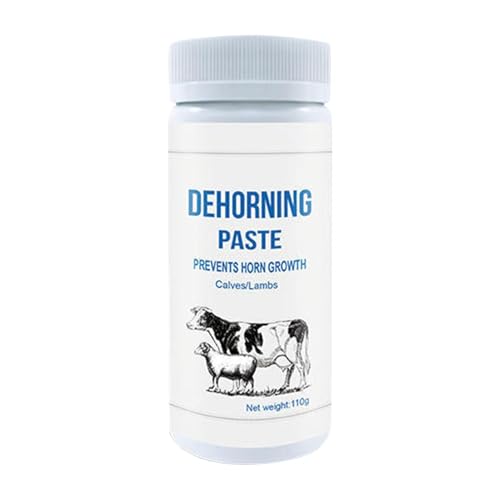
110g Horn Removal Paste, Cattle Dehorner Paste, Natural Quick Irritation Accessories, Gentle and Natural Dehorning Tool Cattles for Cattle/Goats/Dehorning Calves Young Animals
- Natural Dehorning Formula: Made from high-quality, safe ingredients
- Cost-Effective Solution: Simple, affordable dehorning method
- Versatile Application: Suitable for cattle, sheep, goats, and more
As an affiliate, we earn on qualifying purchases.
As an affiliate, we earn on qualifying purchases.
Frequently Asked Questions
What Are Alternative Methods to Dehorning and Castration?
You can explore alternative methods like genetic selection to naturally reduce horn growth and improve temperament, minimizing the need for dehorning. Additionally, using pain mitigation strategies during necessary procedures helps reduce discomfort. These approaches promote animal welfare while maintaining productivity. By choosing genetic selection and prioritizing pain management, you can effectively address concerns related to dehorning and castration without relying solely on invasive techniques.
How Does Dehorning Impact Long-Term Animal Health?
Think of dehorning as pruning a tree; if done carefully, it helps the plant grow strong, but improper cuts can weaken it. Long-term, dehorning can affect animal health by increasing infection risk if not managed well. By using genetic selection to breed naturally hornless cattle and applying pain management, you support their well-being, reducing stress and promoting healthier, more resilient animals over time.
Are There Breed-Specific Considerations for These Procedures?
Yes, breed sensitivities and genetic predispositions influence how you should approach dehorning and castration. Some breeds, like British breeds, may have thicker skin or more sensitive tissues, requiring gentler techniques. Others, with genetic predispositions to complications, need careful planning to mitigate pain and long-term effects. Always consider breed-specific traits to ensure procedures are humane, effective, and tailored to your animals’ unique needs.
What Training Is Required to Perform These Techniques Humanely?
Think of training like mastering a musical instrument; you need proper guidance. To perform dehorning and castration humanely, you should complete training certification focused on humane handling. This guarantees you understand pain minimization and proper techniques. The right training not only improves animal welfare but also boosts your confidence, making procedures smoother and more ethical. Invest in certified courses to become proficient and compassionate in these essential skills.
How Do Regulations Vary Internationally Regarding These Procedures?
International regulations on dehorning and castration vary widely, so you must guarantee legal compliance in your country. You’ll find cultural differences influence the acceptance and timing of these procedures, with some regions emphasizing pain management and humane methods. Stay informed about local laws and standards, and adapt your practices accordingly to meet both legal and ethical expectations, ensuring animal welfare is prioritized regardless of where you operate.
Conclusion
By understanding the proper techniques and welfare considerations, you can guarantee the well-being of your animals. Did you know that over 90% of cattle in some regions undergo dehorning and castration without pain relief, risking their health and comfort? Taking proactive steps not only improves their quality of life but also aligns with ethical farming practices. Remember, compassionate care isn’t just better for animals—it’s better for your operation too.