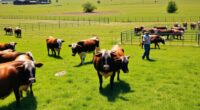
Accurate record keeping is essential for tracking your livestock’s health and performance. By documenting growth, reproduction, feed intake, and medical treatments, you can make smarter management decisions that boost productivity and herd quality. Monitoring these details helps you identify issues early and plan effective breeding strategies. Good records support genetic improvement and reduce costs. Keep detailed, consistent records to improve your operation, and you’ll discover ways to optimize results as you gather more insights.
Key Takeaways
- Maintain detailed health records, including vaccinations, illnesses, and treatments, to monitor herd wellness and prevent outbreaks.
- Track reproductive events such as breeding dates, calving, and success rates to improve fertility and breeding strategies.
- Record performance data like growth rates and feed intake to evaluate efficiency and optimize nutrition plans.
- Document genetic traits and lineage to support selective breeding and herd improvement over generations.
- Use comprehensive records to identify health issues early and make informed management decisions for better herd productivity.

Keeping accurate records for your livestock is essential to managing a successful and profitable operation. When you track details about each animal’s performance and health, you gain valuable insights that can guide your decision-making. One of the most critical aspects of record keeping is understanding how genetic selection impacts your herd. By documenting traits such as growth rates, reproductive success, and disease resistance, you can identify the animals that pass on desirable qualities. This information allows you to select breeding stock wisely, ensuring improvements over generations. When you combine genetic data with detailed records, you optimize your breeding programs, leading to healthier, more productive animals that better suit your operation’s goals.
Accurate livestock records are key to selecting superior genetics and improving herd performance.
Feed management is another crucial element you need to monitor closely. Accurate records of what your livestock eat, how much they consume, and how they respond to different feeds help you fine-tune your nutrition strategies. For example, if certain animals show better growth or reproduction when fed specific diets, you can adjust feed plans accordingly. Recording feed intake and related performance metrics also helps you evaluate the efficiency of your feeding programs, reducing waste and lowering costs over time. When you keep track of these details consistently, you can identify patterns and make informed decisions that improve overall herd health and productivity.
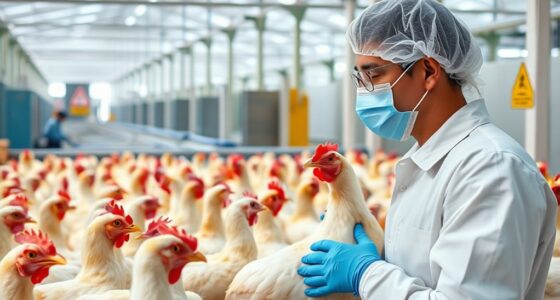
Additionally, good record keeping allows you to track health issues and medical treatments. Noting illnesses, vaccinations, and medications used helps you spot recurring problems and evaluate the effectiveness of treatments. This proactive approach minimizes disease outbreaks and promotes a healthier herd. When you document health events alongside performance data, you can correlate specific health conditions with productivity dips, enabling you to address underlying causes more effectively.
The importance of maintaining detailed records extends to reproduction management as well. Tracking breeding dates, calving or lambing intervals, and success rates helps you identify the most fertile and reliable animals. This data supports strategic breeding plans that enhance genetic progress while reducing the time and resources spent on animals with poor reproductive performance. Moreover, recording such information can help you identify genetic traits linked to desirable outcomes, improving your herd over time.
In essence, keeping accurate records empowers you to make better decisions about genetics, nutrition, health, and reproduction. It transforms your approach from reactive to proactive, helping you detect issues early and capitalize on opportunities for improvement. Whether you’re selecting superior genetics or refining your feed management, detailed record keeping provides the necessary foundation for a sustainable, productive, and profitable livestock operation.

INTII Heavy Duty Stall Mat Grippers - Pair of 2 Mat Movers Tool for Horse Stalls, Gym, Barn, and Trailer, Makes Moving Rubber Mats Easier, Saves Your Back and Hands
Secure Grip with Anti-Slip Teeth: Engineered with serrated gripping edges and reinforced jaws, our mat grippers lock onto...
As an affiliate, we earn on qualifying purchases.
Frequently Asked Questions
How Often Should I Update My Livestock Records?
You should update your livestock records at least weekly to guarantee accurate tracking of performance and health. Establishing an ideal data review schedule helps you catch issues early and make informed decisions. Regular updates, ideally after each significant event like vaccinations, treatments, or weight checks, keep your records current. Consistent record keeping empowers you to monitor trends and improve your herd’s overall well-being efficiently.
What Digital Tools Are Best for Livestock Record Keeping?
You should consider using digital record systems and livestock management apps like FarmWizard, Herdwatch, or StockManager. These tools streamline tracking performance and health, making updates quick and easy. They offer features like health logs, breeding records, and performance analytics, helping you stay organized and make informed decisions. Choose an app that fits your farm size and needs, and commit to regular updates for ideal livestock management.
How Do I Ensure Data Privacy and Security?
To guarantee your livestock data stays private and secure, you should use data encryption to protect information during storage and transmission. Implement access controls so only authorized personnel can view or modify sensitive data. Regularly update your security protocols and use strong passwords. Keep backups in secure locations, and stay informed about new threats. These steps help safeguard your performance and health records effectively.
Can Record Keeping Help Improve Breeding Decisions?
Yes, record keeping can dramatically improve your breeding decisions. By meticulously tracking performance and health data, you gain insights into genetic traits and identify top-performing animals. This information fuels better genetic selection and helps refine your breeding protocols. With each record, you uncover secrets that could elevate your herd’s quality. Don’t underestimate the power of detailed data—it’s your secret weapon for making smarter, more successful breeding choices.
What Are Common Mistakes to Avoid in Livestock Tracking?
You should avoid common mistakes like data entry errors, which can lead to inaccurate records, and inconsistent record formats, making it hard to analyze performance. Double-check your entries regularly and stick to a standardized format for all records. This helps guarantee reliable data for making informed decisions. Plus, training staff on proper recording techniques minimizes mistakes and keeps your livestock data accurate and useful.

Feroca Heavy Duty Stall Mat Gripper, a Pair of Mat Mover Tool - Effortless Remover for Thick Rubber Mats in Horse Stalls, Barn, Gym, Trailer - Easy Lift & Move to Save Your Back
EFFORTLESS LIFTING & MULTI-THICKNESS ADAPTION - Stall mat gripper save more than 50% effort with ergonomic lever-assisted design!...
As an affiliate, we earn on qualifying purchases.
Conclusion
Remember, your records are the heartbeat of your herd, a steady rhythm guiding health and growth. Each note is a drop of water nourishing your farm’s future, a seed planting success with every detail. Keep your logs clear and consistent—like a compass pointing true north—so you can navigate challenges and celebrate milestones. Your diligent record-keeping becomes the lighthouse, shining through fog and storm, guiding your livestock toward a thriving, resilient tomorrow.

LWFCOEE Horse Stall Mat 4x6 Ft Large Horse Stable Mat Absorbent Non-Slip Washable Floor Mat for Horses Livestock Stables Barns Kennels Garages, Easy to Clean
【All-in-One Stall Protection】This Horse Stall Mat provides a durable and comfortable foundation for your equine friends. It acts...
As an affiliate, we earn on qualifying purchases.

CIEOVO 4x6 Ft Horse Stall Mat, Stable Mat for Horses Back Non-Slip Design Mat Backing Moisture Absorbent Easy to Clean for Horses Livestock Stables Barns Kennels Garages
Quality Material: The horse stall mat pad is made of high-quality felt and the back is made of...
As an affiliate, we earn on qualifying purchases.