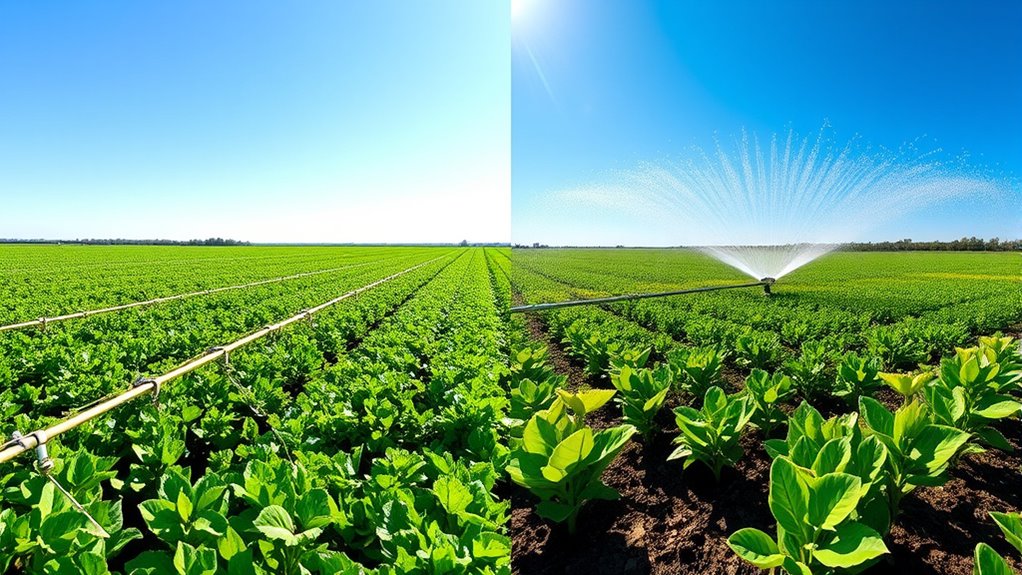
To conserve water while keeping your landscape healthy, consider using water-efficient irrigation methods like drip and sprinkler systems. Drip irrigation delivers water directly to plant roots, reducing evaporation and runoff, while sprinkler systems evenly cover larger areas with automated controls. Proper scheduling and regular system maintenance help optimize water use for both methods. Stay with us to discover more tips on choosing and managing these systems for maximum efficiency.
Key Takeaways
- Drip irrigation delivers water directly to plant roots, minimizing evaporation and runoff for maximum efficiency.
- Sprinkler systems are ideal for lawns, providing even coverage with automated timers and adjustable heads.
- Tailoring irrigation schedules based on weather and soil moisture optimizes water use and promotes healthy plant growth.
- Using soil moisture sensors and weather data helps fine-tune watering times, reducing waste during rainy or dry periods.
- Regular maintenance of both systems ensures proper function, preventing leaks and uneven watering for sustained efficiency.
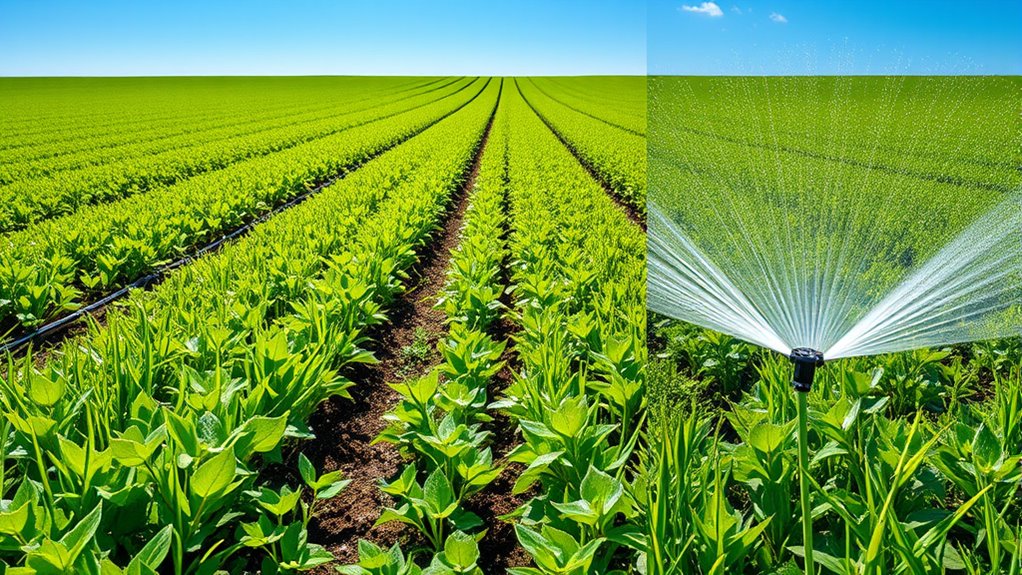
Water-efficient irrigation methods are essential for conserving this indispensable resource while maintaining healthy crops and landscapes. When you focus on effective techniques like drip and sprinkler systems, you can optimize soil moisture levels and reduce water waste. Proper irrigation scheduling plays a critical role in ensuring your plants receive the right amount of water at the right times, preventing both under- and over-watering. By fine-tuning your approach, you not only save water but also promote healthier plant growth and more efficient use of resources.
Efficient irrigation conserves water, promotes healthy growth, and reduces waste through tailored schedules and sustainable methods.
Drip irrigation is one of the most efficient methods for delivering water directly to the root zone of your plants. This system minimizes evaporation and runoff because water is slowly dripped through emitters placed at the base of each plant. When you install drip lines, you gain precise control over soil moisture levels, reducing the risk of over-saturation or drought stress. The key is to adjust your irrigation schedule based on weather conditions, soil type, and plant needs. For example, during rainy seasons, you can extend the intervals between watering, while in hot, dry weather, more frequent watering may be necessary. Monitoring soil moisture with sensors or manual tests helps you make informed decisions, ensuring that your plants get enough water without excess. Incorporating soil moisture monitoring tools can further enhance water efficiency by providing real-time data.
Sprinkler systems, on the other hand, are versatile and suitable for lawns and larger landscapes. Modern sprinklers equipped with timers and smart controllers allow you to automate watering schedules, promoting consistency and efficiency. When you set your irrigation schedule, consider factors like evapotranspiration rates, soil absorption capacity, and plant requirements. Proper spacing and head adjustment ensure even coverage, preventing dry patches or water pooling. To maximize water efficiency, run sprinklers early in the morning or late in the evening when evaporation rates are lower. Regularly inspecting and maintaining your sprinkler heads ensures peak performance, avoiding leaks and uneven distribution.
Both drip and sprinkler systems benefit greatly from tailored irrigation scheduling. By aligning watering times and durations with your landscape’s specific needs, you avoid water wastage while keeping soil moisture at ideal levels. Incorporating weather forecasts and soil moisture data into your schedule allows for dynamic adjustments, further conserving water and supporting plant health. Ultimately, choosing the right system and maintaining a disciplined irrigation schedule enable you to use water wisely, protect this essential resource, and keep your landscape thriving.

TRJZWA 150FT Drip Irrigation System Kit with 2 Zone Water Timer for Garden
- Quick 3/4" Connection: Tool-free, leak-proof faucet connection
- Fast-Plug Technology: Easy, tool-free tubing setup
- Expandable 3-Zone System: Includes Y-diverter for multiple zones
As an affiliate, we earn on qualifying purchases.
As an affiliate, we earn on qualifying purchases.
Frequently Asked Questions
What Are the Initial Costs of Installing Drip Versus Sprinkler Systems?
You’ll find that the cost comparison between drip and sprinkler systems varies, but generally, drip irrigation has higher installation expenses upfront due to its detailed setup and parts. Sprinkler systems tend to be less costly initially, with simpler installation. However, consider long-term savings on water and maintenance. Your choice depends on your budget and water efficiency goals, but expect higher initial costs for drip systems compared to sprinklers.
How Do Weather Conditions Affect Irrigation Efficiency?
Weather conditions considerably impact your irrigation efficiency, especially since climate variability can cause rainfall to fluctuate by up to 25%. During droughts or hot spells, you need to make seasonal adjustments to prevent overwatering or underwatering. Wind can reduce sprinkler efficiency by up to 50%, while high temperatures increase evaporation. Monitoring weather forecasts helps you adapt your system, ensuring water conservation and healthy plants despite changing weather patterns.
Can These Systems Be Automated for Remote Control?
Yes, these systems have great automation potential for remote control. You can easily set timers, adjust watering schedules, and monitor performance from anywhere using smartphone apps or automated controllers. This convenience helps you optimize water usage based on weather conditions, soil moisture, and plant needs, ensuring efficient irrigation without manual intervention. Embracing remote control technology makes managing your irrigation system more effective, saving water and time.
What Maintenance Is Required for Long-Term Operation?
Imagine your irrigation system as a well-tuned orchestra, performing flawlessly each day. To keep it that way, you need to regularly calibrate the system and clean filters to prevent clogs. Check for leaks, replace worn-out parts, and verify timers or controllers are functioning correctly. With routine maintenance, your drip or sprinkler system stays efficient, saving water and ensuring your garden thrives long-term.
Are There Specific Crop Types Best Suited for Each Method?
You should consider crop compatibility and soil preferences when choosing between drip and sprinkler systems. Drip irrigation works best for row crops, vegetables, and fruit trees, especially in well-drained soils, as it delivers water directly to roots. Sprinklers suit larger fields, turf, and crops needing overhead watering, particularly in loamy or sandy soils. Matching your crop type and soil conditions guarantees ideal water use and healthy growth.
Conclusion
By choosing drip or sprinkler irrigation, you can save more water than you ever thought possible—it’s like revealing a secret fountain of efficiency. These methods drastically cut water waste, helping your plants thrive while conserving our planet’s most precious resource. Don’t let your garden drown in waste; embrace these water-efficient techniques today and become a true hero for your garden and the environment. Your plants—and future generations—will thank you!