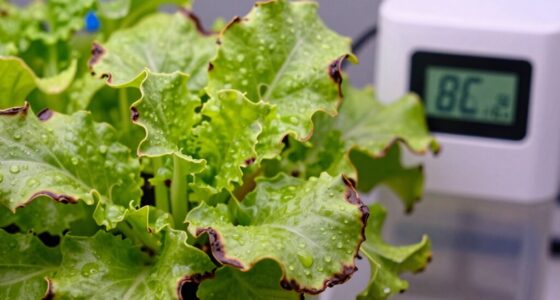

To protect early spring crops from frost, start with windbreaks built from wood or shrubs to block cold winds and create a warmer microclimate. Use floating covers or frost blankets overnight to trap heat and prevent frost from settling on plants. Consider installing cold frames inside these barriers for extra warmth. Keep a close eye on weather forecasts and remove covers during warm days. For more effective strategies, explore additional tips to extend your growing season.
Key Takeaways
- Use cold frames to create a warm, insulated environment for seedlings during chilly nights.
- Employ floating covers or frost blankets to add extra frost protection on cold nights.
- Install windbreaks on north and northwest sides to shield crops from cold, chilling winds.
- Combine cold frames with windbreaks and covers for layered, enhanced frost protection.
- Monitor weather forecasts closely and remove covers during the day to prevent overheating.
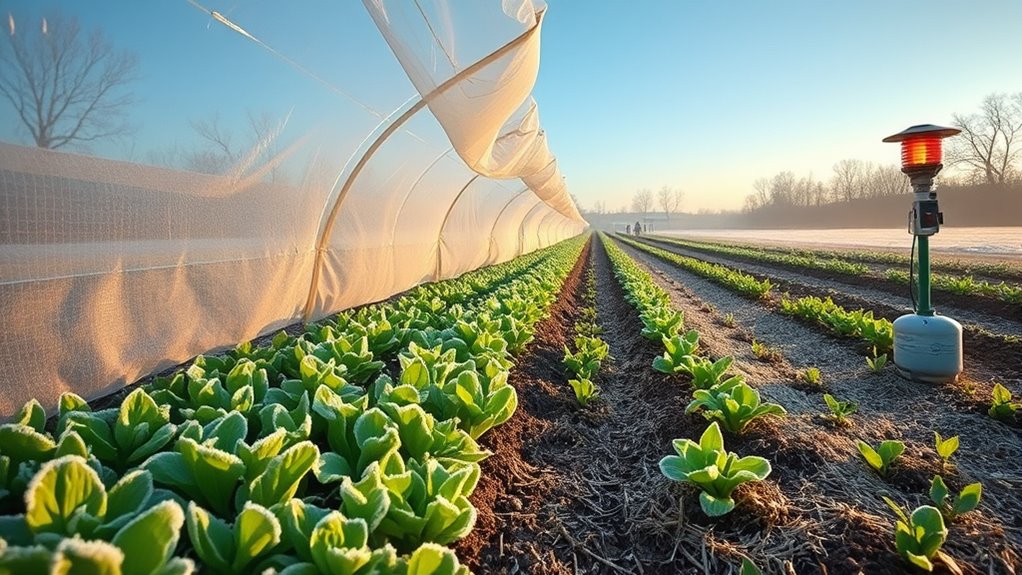
As early spring crops begin to emerge, sudden frosts can pose a serious threat to their survival and growth. To protect your young plants, you need effective strategies that insulate them from freezing temperatures. One of the most reliable tools is a cold frame, which acts as a miniature greenhouse, trapping heat and sunlight to maintain a warmer environment around your crops. You can place seedlings inside a cold frame during chilly nights, ensuring they stay above freezing and continue developing without damage. Cold frames are simple to set up and can be easily moved if needed, making them an adaptable solution for early-season planting. They also help extend your growing season, giving your crops a head start before the weather stabilizes. Using floating covers can provide additional frost protection by creating a barrier that traps heat around the plants during particularly cold nights. In addition to using a cold frame, constructing windbreaks around your planting area offers significant frost protection. Windbreaks reduce the chilling effects of cold winds, which can lower temperatures around your crops and increase the risk of frost damage. You can build windbreaks from a variety of materials, like wooden panels, burlap, or dense shrubbery, to create a barrier that shields your plants from gusts. Proper placement is essential; position windbreaks on the north and northwest sides where cold winds usually originate. Not only do windbreaks protect against wind chill, but they also create a calmer microclimate that helps retain soil warmth and moisture, fostering healthier plant growth. Combining these strategies enhances your early spring frost protection efforts. For instance, setting up a cold frame inside a windbreak creates a double layer of defense, trapping warmth more effectively. During especially cold nights, you might also consider additional measures, such as covering plants with frost blankets or sheets, which reflect heat back onto the plants and prevent frost from settling directly on them. Remember to remove these covers during the day to prevent overheating and to allow your plants to breathe. Monitoring weather forecasts closely helps you time these protections precisely, so you’re prepared when frost warnings are issued.
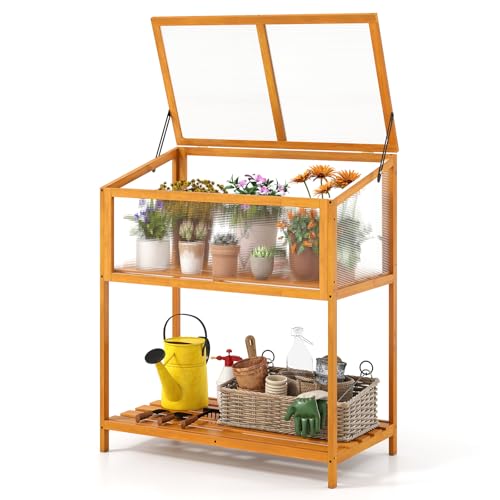
Giantex Wood Cold Frame Greenhouse, Raised Flower Planter Protection with Transparent Openable Roof & Slatted Shelf, Indoor Outdoor Hot House for Garden Balcony, 36”x20”x42”
[Dual-purpose Design]: Enjoy both planting and organizing with the garden greenhouse, which includes a built-in slatted shelf to…
As an affiliate, we earn on qualifying purchases.
As an affiliate, we earn on qualifying purchases.
Frequently Asked Questions
How Do I Determine the Specific Frost Risk for My Area?
To determine the specific frost risk for your area, start with a frost risk assessment based on your local climate analysis. Check local weather stations or historical temperature data to identify past frost dates and temperature lows. You can also use online tools or apps that provide frost forecasts tailored to your location. Monitoring these sources regularly helps you plan effective frost protection strategies for your early spring crops.
Are There Eco-Friendly Frost Protection Methods Available?
Like a gentle shield from winter’s breath, eco-friendly frost protection exists. You can use biodegradable covers that break down naturally, reducing waste and impact. Natural insulation materials, such as straw or mulch, trap heat close to your crops without harming the environment. These methods work harmoniously with nature, providing effective frost protection while respecting the earth. Embrace these sustainable options to safeguard your plants responsibly.
How Cost-Effective Are Different Frost Protection Techniques?
You’ll find that cost comparison varies widely among frost protection techniques. Using row covers is quite affordable and offers good material durability, making it a cost-effective choice. On the other hand, installing sprinkler systems can be more expensive upfront but provides reliable protection for larger areas. Consider your crop size and budget to choose the most economical method, balancing initial costs with long-term effectiveness.
Can Frost Protection Strategies Be Combined for Better Results?
Yes, you can combine frost protection strategies for better results. Imagine a chilly night, where mulching techniques insulate roots, while windbreak implementation shields your crops from gusts that could cause damage. When used together, these methods create a powerful barrier against frost, increasing your crops’ survival chances. By integrating mulching and windbreaks, you maximize protection, ensuring your early spring crops thrive despite unpredictable weather.
What Are the Long-Term Impacts of Frost Protection on Soil Health?
Frost protection methods can impact soil health over time, especially if they cause soil disturbance or reduce microbial diversity. You might notice changes in soil structure or a decline in beneficial microbes, which are essential for nutrient cycling. To minimize long-term effects, use non-invasive techniques like mulching or cover cropping, and avoid excessive soil manipulation, helping preserve soil vitality and microbial diversity for sustained crop growth.

Plant Covers Freeze Protection, 10ft×33ft Reusable Rectangle Frost Protection Floating Row Cover Plant Blanket Garden Winterize Cover for Cold Weather Snow
【Best Winterize Protections for Plants & Trees】 Extra Stable Plant Blanket creates and retains warmth while protecting against…
As an affiliate, we earn on qualifying purchases.
As an affiliate, we earn on qualifying purchases.
Conclusion
By understanding frost risks, by preparing your tools, and by implementing protective measures, you can safeguard your early spring crops. Protect your plants from cold snaps, prevent damage from unexpected frosts, and promote healthy growth all season long. Stay vigilant, stay proactive, and stay confident in your ability to nurture a thriving garden. With these strategies in place, you’ll face spring’s surprises with resilience, confidence, and the assurance that your crops will flourish despite the frosty challenges.

DECOHS 30 x 10 Ft Plant Sun Protection Cloth, Garden Plant Shade Cloth, Non-Woven White Light Refraction Sunshade Cloth for Protecting Plants Vegetable Rows from Direct Sunlight
Full Spectrum White Light Refraction: Our shade cloth for garden can not only effectively block strong direct sunlight,…
As an affiliate, we earn on qualifying purchases.
As an affiliate, we earn on qualifying purchases.
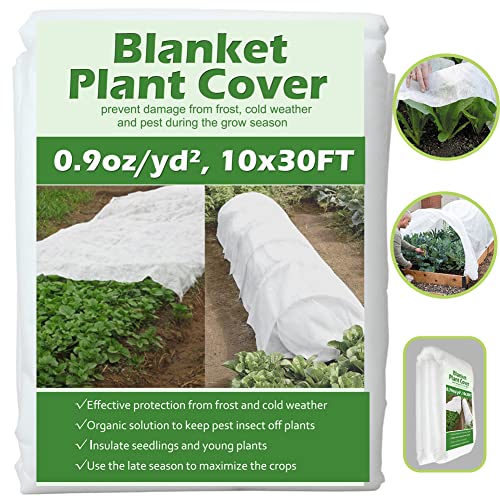
Plant Covers Freeze Protection 10 ft x 30 ft Floating Row Cover 0.9oz/yd² Garden Fabric Plant Cover for Winter Frost/Sun Pest Protection (10FT X 30FT)
※Big Size to cover large area : The size of our plant cover is 10x30ft, the size can…
As an affiliate, we earn on qualifying purchases.
As an affiliate, we earn on qualifying purchases.