Using mulch helps you conserve moisture by reducing water evaporation from the soil surface, keeping your plants hydrated longer and lowering the need for frequent watering. Apply a 2-4 inch layer of organic or inorganic mulch around your plants, making sure not to contact stems or crowns. Mulch also moderates soil temperature and decomposes over time, enriching the soil and promoting healthy growth. Keep exploring to uncover how different mulching materials can transform your garden’s health.
Key Takeaways
- Mulch reduces soil water evaporation, keeping plants moist longer and decreasing watering frequency.
- Organic mulches decompose, enriching soil with nutrients and improving soil structure.
- Applying 2-4 inches of mulch around plants protects roots from extreme temperatures.
- Mulch acts as a barrier against weeds, aiding moisture retention and soil health.
- Proper mulching promotes beneficial soil microorganisms and enhances overall soil ecosystem vitality.
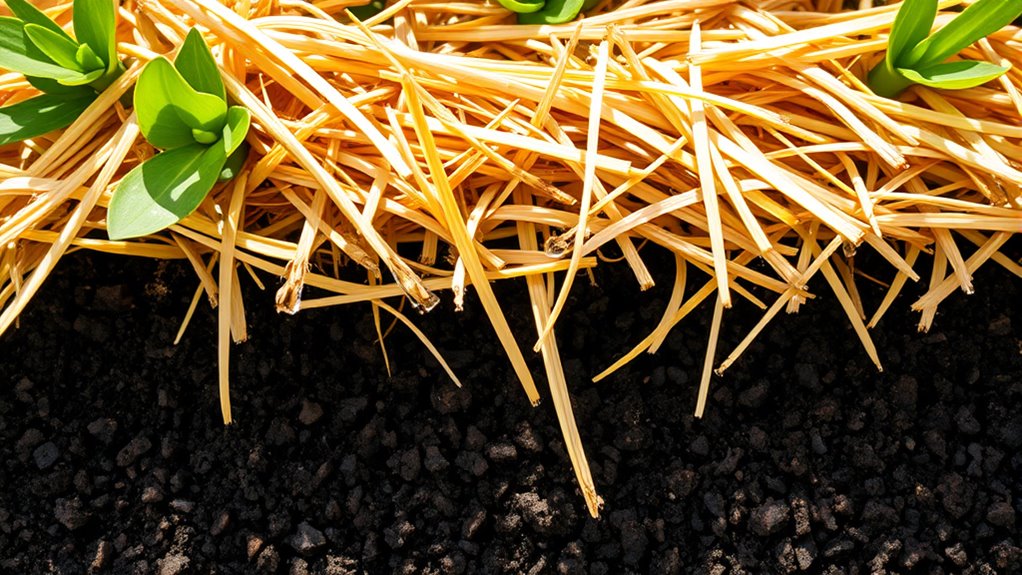
Mulch is an effective way to conserve moisture and enhance soil health in your garden. By covering the soil surface, mulch helps reduce water evaporation, keeping your plants hydrated longer and reducing the need for frequent watering. When choosing mulch types, you have a variety of options, including organic materials like wood chips, straw, shredded leaves, and compost, as well as inorganic options such as black plastic or landscape fabric. Each type offers unique benefits, but all contribute to maintaining a healthier soil environment. Organic mulches break down over time, adding nutrients to the soil and improving soil structure, which is essential for healthy plant roots. Inorganic mulches, on the other hand, primarily serve as a barrier to weeds and moisture loss but don’t improve soil fertility directly.
Mulch conserves moisture, improves soil, and supports healthy plant roots.
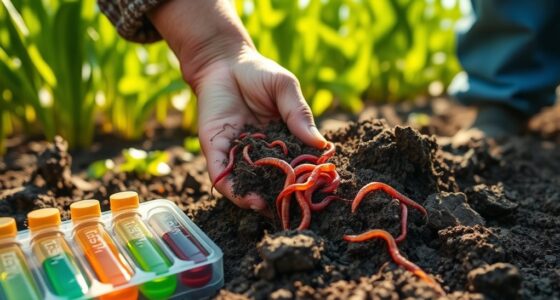
Focusing on soil health, mulch plays an indispensable role in creating the right conditions for beneficial microorganisms and earthworms to thrive. When you use organic mulch, it gradually decomposes, releasing organic matter that enriches the soil and promotes a lively, balanced ecosystem beneath the surface. This process helps improve soil aeration, drainage, and nutrient availability—factors that directly influence plant health and productivity. Proper mulching also moderates soil temperature, protecting roots from extreme heat in summer and cold in winter, which further supports soil vitality. Additionally, the use of glycolic acid in skincare products demonstrates how targeted treatments can enhance skin texture and radiance, much like how proper mulching improves overall soil quality and plant health.
Applying mulch correctly is essential. You should spread a layer approximately 2 to 4 inches thick around plants, ensuring that it doesn’t touch the stems or trunks to prevent rot. Keep the mulch a bit away from plant crowns or roots to allow air circulation and avoid creating a damp environment that could lead to disease. Regularly check your mulch and replenish it as needed, especially for organic types that decompose over time. This ongoing maintenance sustains its benefits for moisture retention and soil improvement.
Incorporating mulching into your gardening routine is an efficient way to boost soil health and conserve water. Not only does it reduce your watering needs, but it also fosters a thriving soil ecosystem that supports robust plant growth. With the right mulch types and proper application, you’re creating an environment where your garden can flourish naturally, with healthier soil and less effort on your part.

Back to the Roots 100% Organic Mulch, 58 Quart (2 Cubic ft), Expanding Coconut Husk Block for Gardening
Includes 10lb block of Back to the Roots compressed Coconut Husk Mulch that expands to over 2 cubic…
As an affiliate, we earn on qualifying purchases.
As an affiliate, we earn on qualifying purchases.
Frequently Asked Questions
What Types of Mulch Are Best for Vegetable Gardens?
You should choose organic mulch like straw, shredded leaves, or compost for your vegetable garden because it enriches the soil and boosts plant health. Inorganic options like black plastic or landscape fabric are also effective for moisture retention and weed control. Consider your specific needs; organic mulch improves soil over time, while inorganic mulch is durable and low-maintenance. Both options help conserve moisture and promote healthy vegetable growth.
How Often Should Mulch Be Replaced or Refreshed?
You should refresh your mulch every 6 to 12 months to maintain its benefits. While it might seem like a simple task, neglecting mulch renewal can lead to decreased moisture retention and weed growth. Think of it as giving your garden a fresh coat of protection. Regularly adding mulch guarantees your soil stays moist and healthy, preventing weeds and promoting lush growth. Keep an eye on it, and refresh when necessary for best results.
Can Mulch Prevent Weed Growth Effectively?
Yes, mulch can effectively prevent weed growth by providing weed suppression, blocking sunlight from reaching weed seeds. It also enhances moisture retention, making it harder for weeds to establish. To maximize these benefits, guarantee you apply a thick layer of mulch, about 2-3 inches deep, and refresh it regularly. This way, you create an inhospitable environment for weeds while keeping your soil moist and healthy.
Is Mulch Suitable for All Soil Types?
While mulch suits many soil types, it’s not one-size-fits-all. You might find it less ideal for very acidic soils, where certain mulches can alter pH levels. The texture of your mulch matters too; coarse bark works well on sandy soils, but fine straw may compact on clay. So, consider your soil’s acidity and mulch texture to choose the best mulch for your garden’s needs.
How Does Mulch Affect Soil Temperature?
Mulch helps regulate soil temperature by acting as insulation, keeping it cooler in summer and warmer in winter. This soil insulation reduces temperature fluctuations, which benefits root growth. Additionally, mulch enhances moisture retention by decreasing evaporation, ensuring your plants stay hydrated. You’ll notice healthier plants and improved soil conditions when you use mulch, especially in extreme weather. It’s a simple way to create a more stable environment for your garden.

VEVOR Compost Spreader, 24 in Wide Peat Moss Spreader with T Shaped Handle, 3 Heights Adjustable, Powder-Coated Steel Garden Peat Moss Roller, Heavy Duty Grass Seed Spreaders for Planting Seeding
Adjustable Handle for Comfort: The handle features three adjustable heights (42.91 in / 109 cm, 44.88 in /…
As an affiliate, we earn on qualifying purchases.
As an affiliate, we earn on qualifying purchases.
Conclusion
By spreading mulch around your plants, you create a cozy blanket that traps moisture and shields the soil from harsh sun. Picture the soil as a sleeping garden, gently wrapped in a soft, dark layer that keeps roots cool and happy. As you nurture your garden with mulch, you’re watering not just the plants but the very foundation of life beneath. Embrace mulch’s quiet magic, and watch your garden flourish with vibrant health and lush growth.

LAVEVE 4FT x 100FT Weed Barrier Landscape Fabric, 3.2oz Premium Heavy Duty Garden Cloth, Ground Cover for Gardening, Farming
Professional Grade Weed Barrier: LAVEVE weed barrier fabric is made of woven polypropylene material. Its high-density and permeable…
As an affiliate, we earn on qualifying purchases.
As an affiliate, we earn on qualifying purchases.

XLUX Long Probe Deep Use Soil Moisture Meter, Water Monitor Indicator Sensor, Hygrometer for Outdoor Indoor Large Pot Plants, Flower, Gardening, Farming
Accurate Soil Moisture Detection: The XLUX Soil Moisture Meter can tell you if the soil deep inside your…
As an affiliate, we earn on qualifying purchases.
As an affiliate, we earn on qualifying purchases.