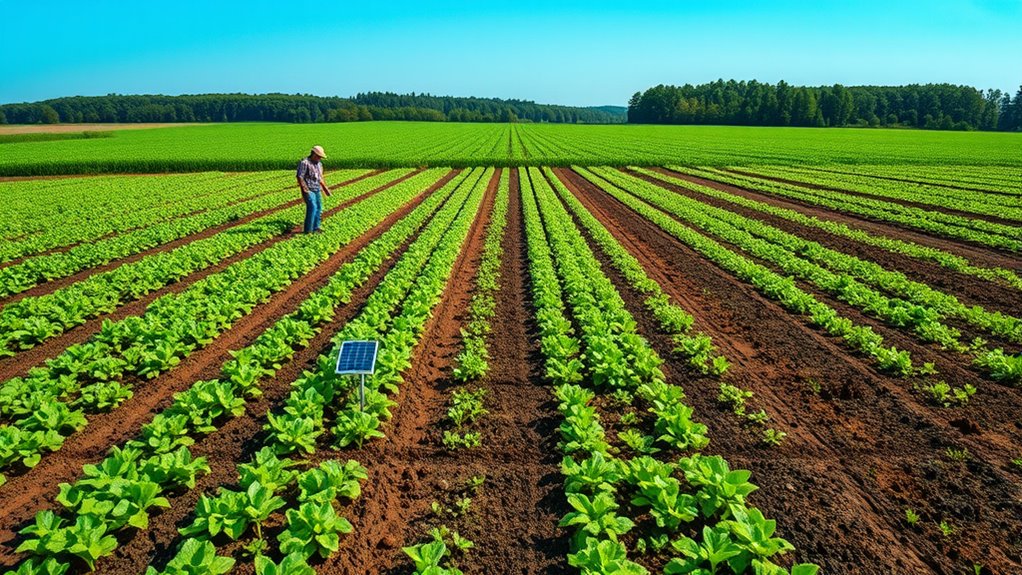

By adopting agroforestry practices that boost soil microbial activity, you can effectively increase soil carbon storage and generate soil carbon credits. Trees and shrubs add organic matter, while healthy microbes decompose this material, locking carbon into the soil. These practices not only help combat climate change but also open new revenue streams through carbon trading. If you want to discover how to maximize these benefits and make your farm more sustainable, you’ll find useful insights ahead.

Get garden gear delivered free — and shop member deals
- Fast, free delivery on millions of items
- Access to Prime Big Deal Days deals on October 6–7
- Prime Video, Amazon Music and more included
Key Takeaways
- Soil carbon credits are earned by increasing soil organic carbon through practices like agroforestry.
- Microbial activity enhances soil carbon storage, enabling farmers to generate and sell credits.
- Integrating trees and shrubs boosts organic matter, promoting long-term soil carbon sequestration.
- Selling soil carbon credits offers farmers additional income while supporting climate change mitigation.
- Sustainable land management practices that improve soil health are essential for maximizing carbon credit potential.
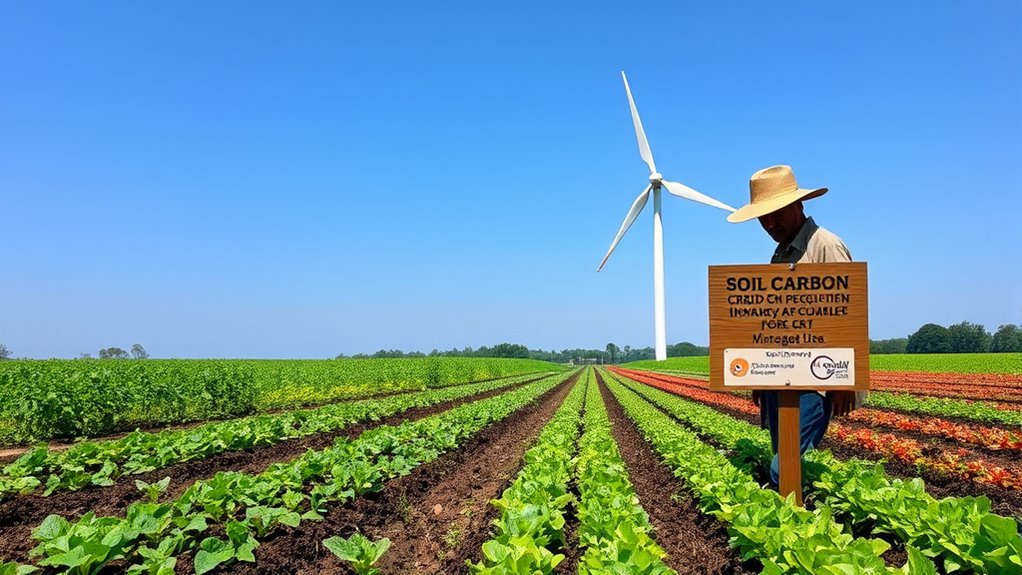
Have you ever wondered how farming practices can help fight climate change? One powerful way is through implementing agroforestry practices. These involve integrating trees and shrubs into crop and livestock systems, which not only enhances biodiversity but also boosts soil health. When you adopt agroforestry, you’re creating a more resilient ecosystem that captures and stores carbon more effectively. The trees absorb carbon dioxide from the atmosphere, reducing greenhouse gases, while their roots improve soil structure and organic matter content. This process turns farmland into a carbon sink, actively removing CO2 from the air and storing it underground in the soil.
But it’s not just about planting more trees. The health of the soil itself plays an imperative role, especially microbial activity. When you encourage diverse microbial communities through agroforestry practices, you foster a lively, active soil environment. These microbes break down organic material and help lock carbon into the soil, making it more stable and less prone to release back into the atmosphere. The more active your soil microbes are, the better your soil can sequester carbon long-term. This process is fundamentally important because it enhances soil fertility naturally, reducing the need for chemical fertilizers and promoting sustainable farming.
By adopting agroforestry practices, you’re also supporting a range of soil processes that increase carbon storage. Trees and shrubs contribute organic matter through leaf litter and root exudates, which microbes then decompose, releasing nutrients that benefit crops while simultaneously trapping carbon. This symbiotic relationship means that healthy microbial activity directly influences the amount of carbon your soil can store. The more diverse and active these microbial communities are, the more efficiently they work to stabilize carbon in the soil matrix.
Implementing agroforestry isn’t just good for the environment; it can also generate financial benefits through soil carbon credits. As your soil’s carbon levels increase, you may become eligible to sell these credits to companies seeking to offset their emissions. This creates an incentive for farmers to adopt sustainable practices that sequester more carbon. In essence, you’re not only helping to combat climate change but also creating a new revenue stream, making your farming operation more economically sustainable. Additionally, understanding the role of preppy dog names can inspire a sense of pride and tradition in your farming community, fostering a positive environment for sustainable practices.
As an affiliate, we earn on qualifying purchases.
Frequently Asked Questions
How Do Soil Carbon Credits Impact Local Biodiversity?
Soil carbon credits positively impact local biodiversity by improving soil microbial health, which supports a diverse range of microorganisms essential for ecosystem balance. When you adopt practices that earn these credits, you promote native plant support, encouraging native species to thrive. This creates a healthier habitat, boosts plant diversity, and sustains local wildlife, ultimately strengthening the entire ecosystem’s resilience and richness.
What Are the Long-Term Financial Benefits of Soil Carbon Sequestration?
Imagine reaping ongoing financial benefits—soil carbon sequestration offers just that. You’ll enjoy steady income from financial incentives as the market stabilizes, rewarding your sustainable practices. Over time, these benefits grow, providing economic security and boosting your farm’s resilience. As demand for eco-friendly products rises, your investment in soil health could pay off handsomely, making long-term financial gains not just possible but inevitable.
Can Urban Soils Be Effectively Used for Carbon Storage?
Yes, urban soils can be effectively used for carbon storage through urban soil revitalization and green infrastructure. By enhancing soil health, planting trees, and creating green spaces, you increase organic matter, which helps trap carbon. Implementing green infrastructure strategies not only boosts carbon sequestration but also improves urban environments, reduces heat islands, and promotes biodiversity, making cities healthier and more sustainable in the long run.
How Do Climate Change Policies Influence Soil Carbon Markets?
Climate change policies shape soil carbon markets by creating policy incentives that encourage landowners and farmers to adopt sustainable practices. These policies influence market dynamics by establishing standards and certification systems, making it easier for you to participate and sell credits. As policies evolve, they can either boost or hinder market growth, so staying informed helps you capitalize on opportunities and contribute to climate mitigation efforts effectively.
What Technological Innovations Are Enhancing Soil Carbon Measurement Accuracy?
You can improve soil carbon measurement accuracy through technological innovations like remote sensing and soil sampling. Remote sensing uses satellites and drones to monitor land over large areas quickly, providing valuable data on soil health. Soil sampling allows for precise, ground-truth measurements, ensuring your data is accurate. Combining these methods helps you get a clearer picture of soil carbon levels, making your efforts more reliable and impactful in carbon management.
Conclusion
Understanding soil carbon credits and sequestration shows you the power of your land in fighting climate change. While some claim these credits can fully offset emissions, others argue they’re not a silver bullet and depend heavily on accurate measurement. By supporting sustainable farming practices, you can help enhance soil health and carbon storage. It’s a promising tool, but stay informed—trust the science and recognize that real change requires ongoing effort and transparency.
Fall yard work Picks
leaf blowers
As an affiliate, we earn on qualifying purchases.