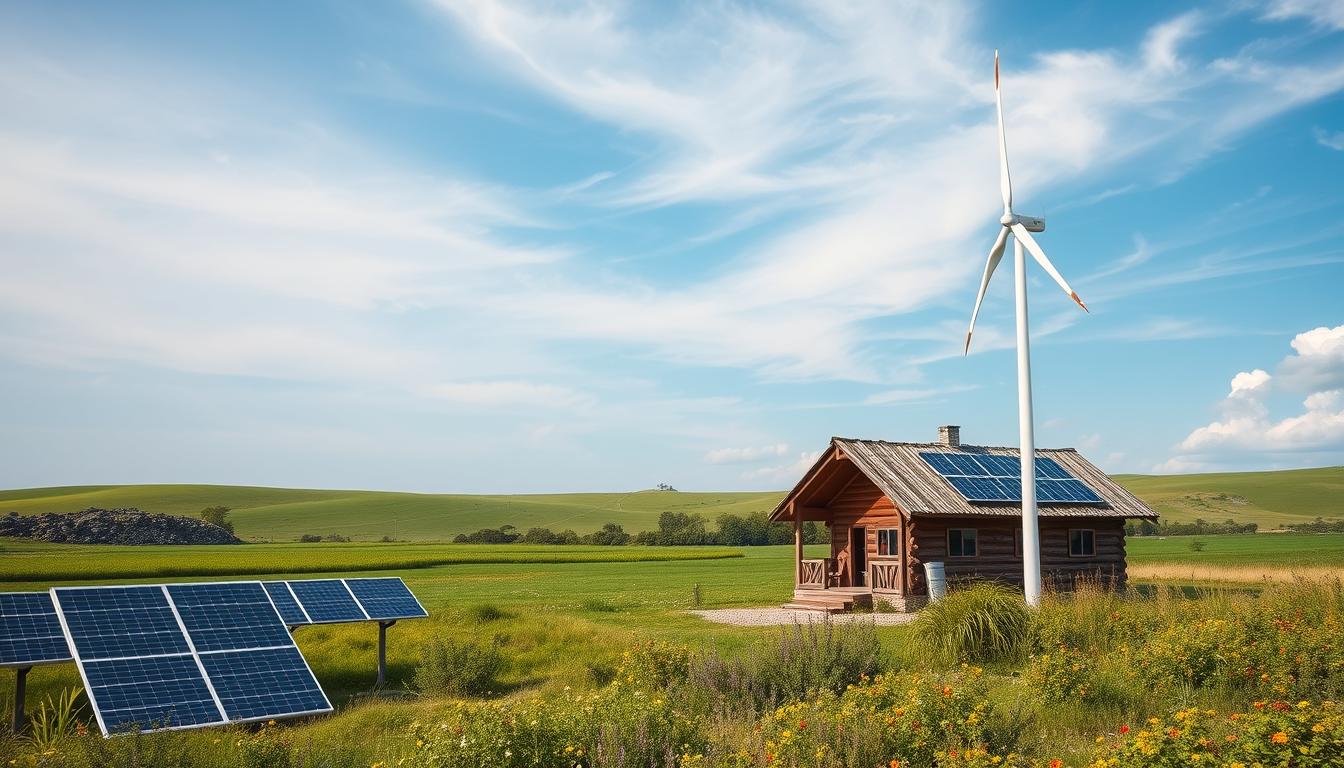


Sustainable agritech combines renewable energy and resource optimization to make farming more eco-friendly and efficient. You can use solar panels and wind turbines to power irrigation systems, sensors, and machinery, reducing reliance on fossil fuels. Smart water management with sensors helps prevent waste and conserve resources, while data analytics improve decision-making. This integrated approach boosts productivity, lowers costs, and supports resilience against climate challenges. Keep exploring to uncover how these innovations work together for a sustainable future.
Play games included with Prime
Start a Prime free trial and play with Amazon Luna on your devices.
As an affiliate, we earn on qualifying purchases.
Key Takeaways
- Integrating solar and wind energy reduces farm reliance on fossil fuels, lowering greenhouse gas emissions.
- Smart water management with sensors optimizes irrigation, conserving water and enhancing crop efficiency.
- Using AI and data analytics predicts resource needs, minimizing waste and improving overall farm productivity.
- Renewable energy powers farm operations, leading to cost savings and increased resilience against energy shortages.
- Combining soil health, water conservation, and renewable energy promotes holistic, sustainable agricultural practices.
Have you ever wondered how technology can transform agriculture into a more sustainable practice? It’s possible with innovative solutions that focus on improving soil health and water conservation, two critical pillars of sustainable farming. When you prioritize soil health, you’re enhancing the productivity and resilience of your land. Techniques like precision agriculture allow you to monitor soil conditions in real-time, applying nutrients and amendments only where needed. This targeted approach prevents over-fertilization, reduces runoff, and maintains the natural balance of microbial communities in the soil. As a result, your crops grow healthier, and the land becomes more resilient to erosion and degradation over time.
Water conservation plays an equally essential role in sustainable agritech. Using smart irrigation systems, you can considerably reduce water waste by delivering precise amounts directly to plant roots. These systems utilize sensors that measure soil moisture levels, weather forecasts, and crop needs, ensuring you use water efficiently. This not only conserves this precious resource but also cuts down on your water bills and the energy required to pump and distribute water. Additionally, integrating rainwater harvesting and recycling systems further minimizes reliance on external water sources, making your farm more resilient to droughts and water shortages.
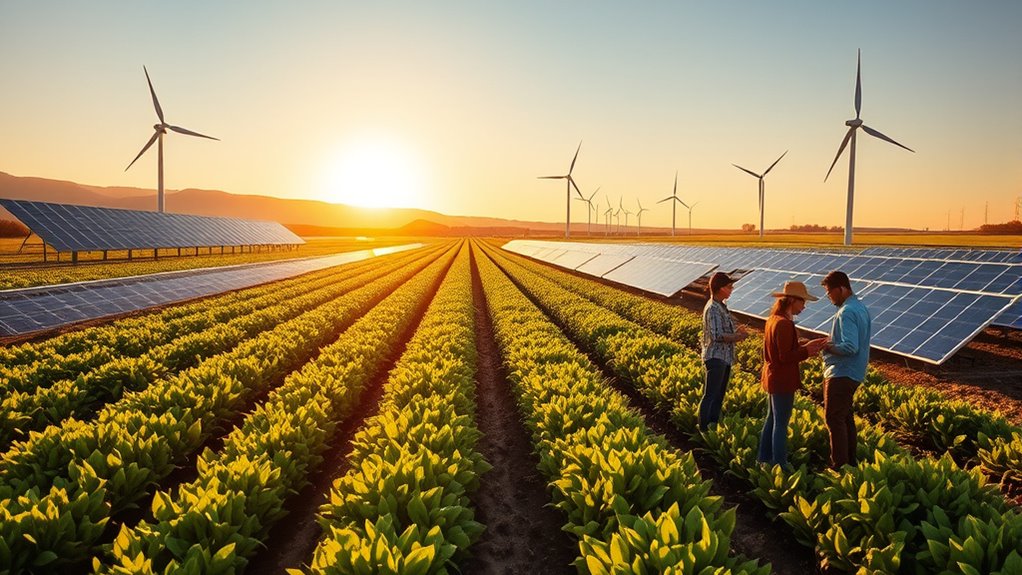
Renewable energy sources, like solar and wind power, complement these efforts by reducing your carbon footprint. Installing solar panels to power irrigation systems, sensors, and other farm machinery helps you operate more sustainably. This shift to renewables cuts your reliance on fossil fuels, lowers greenhouse gas emissions, and can even lead to cost savings in the long run. Wind turbines can be set up on larger farms to generate electricity, powering equipment and facilities without adding to pollution. When you combine these renewable energy solutions with water conservation practices and soil health management, you create a holistic approach to sustainability that benefits both the environment and your bottom line.
Additionally, technology-driven resource optimization allows you to plan your activities more effectively. Data analytics and machine learning algorithms can predict weather patterns, pest outbreaks, and crop yields, giving you the insights needed to make smarter decisions. This proactive approach minimizes resource wastage and maximizes productivity, making your farm more sustainable and profitable. Furthermore, advancements in AI Security have the potential to enhance the safety and reliability of farm automation systems, ensuring continuous operation and data integrity. By leveraging these advancements, you turn your farm into a model of efficiency, resilience, and environmental stewardship. In the end, adopting sustainable agritech isn’t just about being eco-friendly; it’s about building a resilient, productive future where natural resources are preserved and used wisely.
As an affiliate, we earn on qualifying purchases.
Frequently Asked Questions
How Cost-Effective Are Renewable Energy Solutions for Small-Scale Farms?
Renewable energy solutions are quite cost-effective for small-scale farms when you conduct a thorough cost analysis. You can save money on energy bills in the long run and often qualify for financial incentives like grants or tax credits, which reduce upfront costs. While initial investments might seem high, the savings and incentives make renewable energy a smart, sustainable choice that pays off over time, boosting your farm’s profitability.
What Are the Biggest Challenges in Implementing Resource Optimization in Agriculture?
You face big challenges in implementing resource optimization, from limited farmer training to restricted market access. Without proper training, you struggle to adopt new techniques effectively, hindering progress. Limited market access prevents you from scaling sustainable practices, trapping you in a cycle of inefficiency. Overcoming these obstacles requires targeted education, better infrastructure, and stronger connections to markets, empowering you to optimize resources, increase yields, and protect your farm’s future.
Can Sustainable Agritech Methods Improve Crop Yields Significantly?
Yes, sustainable agritech methods can considerably improve crop yields. By focusing on crop genetics, you can develop resilient, high-yield varieties tailored to your environment. Improving soil health through organic practices and precision farming enhances nutrient availability and plant growth. These strategies make your farming more efficient, reduce resource waste, and boost productivity, ensuring you get better harvests while maintaining environmental sustainability.
How Do Policies Influence the Adoption of Renewable Energy in Farming?
Imagine a farm that switches to solar-powered irrigation thanks to government regulations and policy incentives. These policies make renewable energy adoption easier by offering subsidies, tax credits, or stricter emission standards, encouraging farmers to invest. When governments prioritize renewable energy through regulations, it reduces costs and risks, motivating more farmers to adopt sustainable practices. Your farm benefits from lower energy costs and contributes to environmental preservation.
What Are the Latest Innovations in Sustainable Water Management for Farms?
You can improve water management on your farm with innovative drip irrigation, which delivers water directly to plant roots, reducing waste and evaporation. Additionally, implementing rainwater harvesting systems allows you to collect and store rainwater for later use, minimizing reliance on external sources. These techniques optimize your water use, cut costs, and promote sustainability, helping your farm become more resilient to water scarcity and climate variability.
Conclusion
So, you’re ready to save the planet one high-tech farm at a time? With renewable energy and smart resource use, you can grow more while *actually* hurting less. Who knew that saving the environment could be just a clever switch away? So go ahead—embrace sustainable agritech, because nothing says “future-proof” like turning your farm into a green energy superstar. After all, the planet’s too tired to keep up with your outdated methods!
NFL season / tailgating Picks
team gear
As an affiliate, we earn on qualifying purchases.