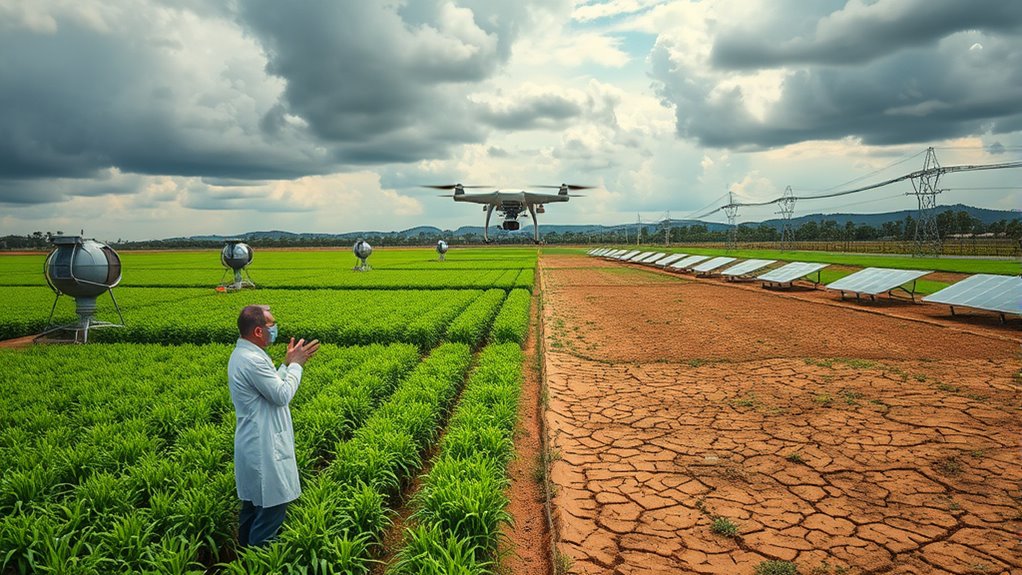

Global food security faces big challenges like population growth, climate change, and resource shortages, making it harder to access nutritious, safe food worldwide. To tackle these issues, innovative solutions such as urban farming allow communities to grow fresh produce locally, reducing reliance on long supply chains. Advances in GMO crops also help by increasing yields and resilience to harsh conditions. Staying aware of these innovations helps you understand how we can build a more secure and sustainable food future.
Key Takeaways
- Population growth and climate change threaten global food availability through environmental stresses and resource depletion.
- Urban farming offers localized solutions by utilizing city spaces to grow fresh produce, reducing supply chain reliance.
- GMO technologies enhance crop resilience to drought, pests, and environmental stresses, increasing yields and nutritional content.
- Innovations like urban agriculture and GMOs bolster sustainable, resilient food systems amid environmental and resource challenges.
- Policy support, community engagement, and ongoing research are essential to overcoming regulatory and acceptance hurdles for food security solutions.
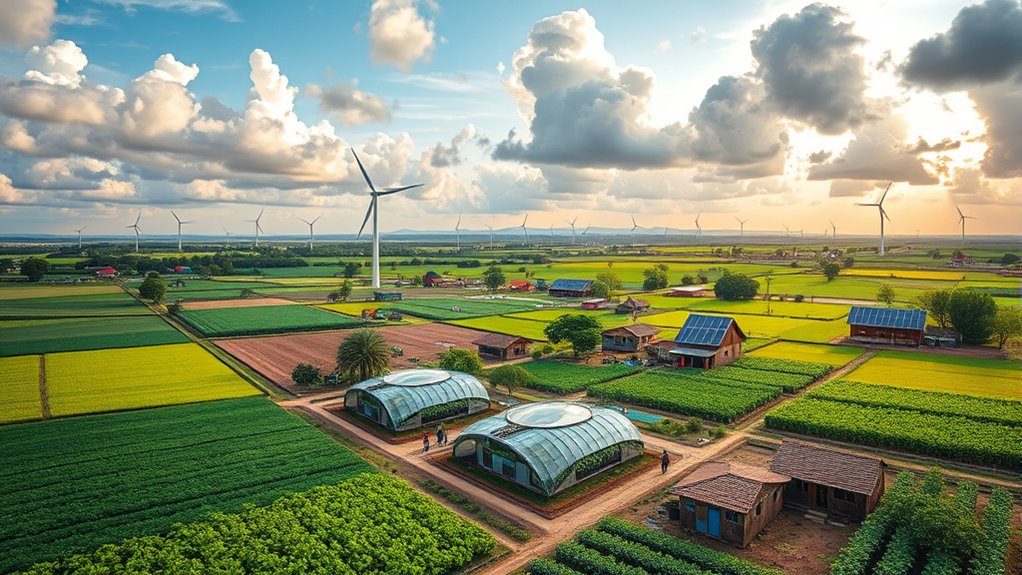
Have you ever wondered how people around the world access enough safe, nutritious food? It’s a complex challenge driven by a variety of factors, including population growth, climate change, and resource depletion. But innovative solutions are emerging to help bridge these gaps, and two key strategies are urban farming and GMO advancements. These approaches are transforming how food is produced and distributed, especially in areas where traditional agriculture struggles to meet demand.
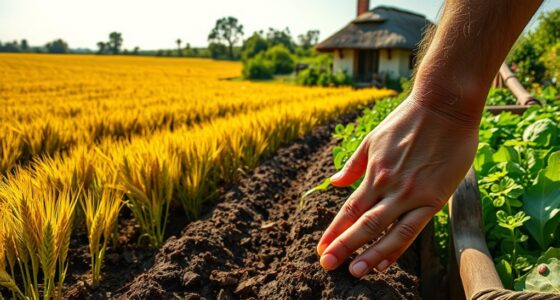
Urban farming allows communities to grow fresh produce right in the heart of cities. You might think it’s just a trend, but it’s actually a essential part of increasing local food security. By utilizing rooftops, vacant lots, and even indoor spaces, urban farming reduces dependency on long-distance food supply chains. It also cuts down on transportation emissions and provides communities with access to nutritious foods that might otherwise be out of reach. This approach not only boosts food availability but also encourages sustainable practices and community engagement. As cities expand and arable land becomes scarce, urban farming offers a practical way to make the most of limited space, ensuring more people can access fresh, healthy food.
Urban farming boosts local food security by growing fresh produce in city spaces and reducing dependency on long-distance supply chains.
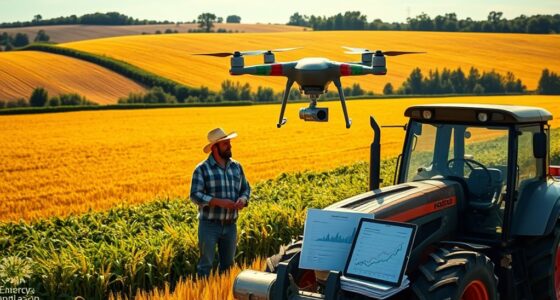
On the other hand, GMO advancements play a fundamental role in tackling food security on a broader scale. Genetically modified organisms (GMOs) have been engineered to withstand harsh conditions, resist pests, and improve yields. As you may know, climate change leads to unpredictable weather patterns, droughts, and floods, all of which threaten traditional crops. GMO technology helps crops adapt to these challenges, ensuring farmers can produce more food with fewer resources. For example, drought-tolerant maize or pest-resistant rice can thrive where conventional varieties might fail. These innovations reduce the need for chemical inputs and water, making agriculture more sustainable and resilient. Additionally, GMO crops are often fortified with essential nutrients, addressing micronutrient deficiencies in vulnerable populations. Modern farming techniques like precision agriculture and sustainable land management further support global efforts to enhance food security.
Both urban farming and GMO advancements demonstrate how technology and ingenuity are paving the way toward greater food security. They complement each other—urban farming bringing fresh produce directly to city dwellers and GMO innovations boosting crop productivity on a global scale. As these solutions evolve, they offer hope for a future where everyone, regardless of their location, has reliable access to safe, nutritious food. Still, challenges remain, including regulatory hurdles and public acceptance, but ongoing research and community involvement continue to drive progress. By embracing these innovations, you’re part of a movement working tirelessly to end hunger and build a more sustainable food system worldwide.

Effortless Raised Bed & Container Gardening for Beginners: Beat Limited Space, Busy Schedules & Inexperience to Grow Veggies, Herbs & Flowers in 15 Minutes-No Big Budget Needed (Organic Harvest)
As an affiliate, we earn on qualifying purchases.
As an affiliate, we earn on qualifying purchases.
Frequently Asked Questions
How Do Climate Change Impacts Vary Across Different Regions?
You’ll notice climate change impacts vary greatly across regions. In some areas, you face more frequent regional droughts that threaten water and crop supplies. Rising sea levels also threaten coastal communities, leading to erosion and saltwater intrusion. While some regions experience extreme heat, others suffer from unpredictable weather patterns. These differences mean your region’s food security depends on understanding local climate risks and adopting tailored strategies to adapt and build resilience.
What Role Do Small-Scale Farmers Play in Global Food Security?
You might underestimate the power of small-scale farmers, but they are the backbone of global food security. They contribute through local farming, ensuring fresh, nutritious food reaches communities. Their seed diversity protects crops from pests and climate change impacts, making our food systems resilient. Without their effort and innovation, the world’s food supply would be fragile and unsustainable, risking widespread hunger and ecological collapse.
How Can Technology Improve Food Distribution in Remote Areas?
You can improve food distribution in remote areas by leveraging technology like drone delivery and mobile apps. Drones can quickly transport perishable goods over difficult terrains, ensuring freshness and reducing waste. Meanwhile, mobile apps connect farmers and consumers, providing real-time updates on available produce and delivery schedules. Together, these tools streamline logistics, enhance access to nutritious food, and make distribution more efficient and reliable in even the most isolated communities.
What Are the Most Promising Innovations in Sustainable Agriculture?
You’ll be amazed at how innovations like precision farming and vertical agriculture are transforming sustainable agriculture. Precision farming uses data-driven techniques to optimize resources, reduce waste, and boost yields, making farms more eco-friendly. Vertical agriculture stacks crops vertically, conserving land and water while producing abundant food in urban spaces. These breakthroughs could revolutionize farming, making it more sustainable and resilient for future generations—truly game-changers in the fight for global food security.
How Do Political Conflicts Affect Global Food Supply Chains?
Political conflicts cause trade disruptions and policy instability, which directly impact your access to food supplies. When conflicts flare, transportation routes become unsafe or blocked, delaying shipments and driving prices up. Policy uncertainties make it harder for farmers and traders to plan, reducing food production and distribution. As a result, you may face shortages, higher costs, and limited availability of essential foods, stressing the entire global food supply chain.
Conclusion
As you navigate the complex landscape of global food security, remember that innovation is your guiding star. By embracing new technologies and sustainable practices, you can turn the tide against hunger and scarcity. The challenges are mountains, but with determination and ingenuity, they become stepping stones toward a resilient future. Just as a lighthouse guides ships through storms, your efforts can illuminate a path to nourishing everyone, ensuring no one is left adrift in hunger’s shadow.