Using a goat hoof stand can speed up trims, but only if your handling habits improve too. When you handle your goats gently, build trust, and use positive reinforcement, they become calmer and more cooperative. This reduces stress during trimming, making the process faster and safer. A hoof stand alone won’t work effectively without proper handling techniques. Keep in mind, adopting good handling practices is key to efficient hoof care—there’s more to learn on how to do it right.
Key Takeaways
- Proper handling reduces goat resistance, making hoof trimming quicker regardless of the stand used.
- Calm goats are easier to position on hoof stands, speeding up the trimming process.
- Improving handling habits minimizes stress-related delays, enhancing the efficiency of hoof care.
- Even with a hoof stand, good handling ensures cooperation and reduces trimming time.
- Combining handling skills with hoof stands optimizes overall trimming speed and safety.
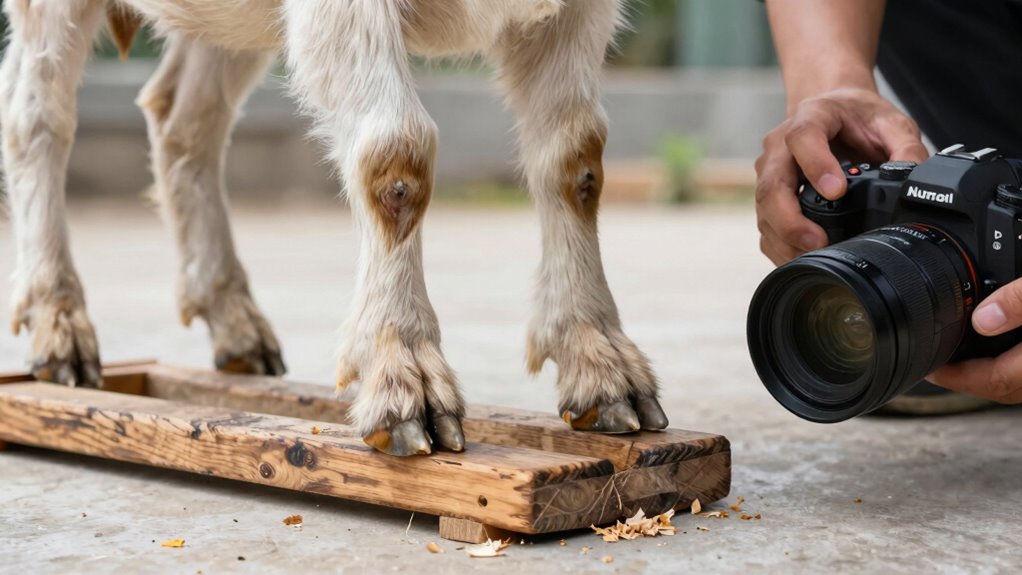
If you’ve ever struggled to keep your goat still during hoof trimming, you’ll appreciate how goat hoof stands can make the process faster and easier. These stands provide a stable, secure platform that helps you hold your goat comfortably, reducing stress for both of you. But while hoof stands are a great tool, they only deliver their full benefits when your goat’s behavior improves. A calmer, more cooperative goat results in quicker, safer trims, which directly benefits hoof health.
Understanding goat behavior is key. If your goat is anxious or resistant, it’s harder to perform a proper trim without risking injury to the animal or yourself. Gradually training your goat to accept handling and restraint builds trust, making future trims smoother. Using positive reinforcement, such as treats or gentle praise, encourages your goat to associate hoof trimming with positive experiences. When your goat is calmer, you can more easily position them on a hoof stand and conduct a thorough, effective trim. Incorporating handling habits that promote trust can significantly improve the trimming process and overall hoof health. Consistent, gentle handling also helps prevent stress-related hoof issues, ensuring your goat remains comfortable and healthy. Developing a routine that emphasizes patience and calmness creates a more cooperative environment, further enhancing hoof care.
Proper handling habits significantly impact hoof health. Regular, gentle handling prevents stress-related issues and allows you to spot early signs of hoof problems, like cracks or infections. When your goat’s behavior improves, you can incorporate routine trims into your care schedule with less fuss. This consistency helps maintain hoof health, preventing overgrowth and related lameness. A hoof stand then becomes a valuable tool, making the process efficient and less stressful for your goat. Remember, a well-trained goat is more likely to cooperate, making the whole process safer and more effective for both of you. Additionally, understanding and applying animal handling skills can greatly enhance the overall success of hoof trimming sessions. Building your skill set in animal handling techniques ensures a smoother, more confident approach, leading to better outcomes for your goat’s hoof health.

Lezbanz 600 LBs Goat Stand with Feed Bin, Goat Milking Stand for Sheep Trimming and Milking, Hoof Trimming Stand Adjustable Size, with Feeder, Iron Black
- Heavy-Duty Support: Supports up to 600 lbs for adult sheep
- Stable Triangular Frame: Ensures sturdy and stable structure
- Adjustable Height: Customizable for different sheep sizes
As an affiliate, we earn on qualifying purchases.
As an affiliate, we earn on qualifying purchases.
Frequently Asked Questions
How Often Should I Use a Goat Hoof Stand?
You should use a goat hoof stand as often as needed to maintain good hoof health, typically every 4 to 8 weeks. Pay attention to your goat’s behavior—if they seem uncomfortable or their hooves look overgrown, it’s time for a trim. Regular use helps improve handling habits, making trims quicker and less stressful for both of you. Consistent care keeps your goat healthy and prevents hoof problems.
Can Improper Handling Negate Trimming Benefits?
Improper handling can undo your trimming efforts, like trying to steer a boat with a loose rudder. When handling consistency suffers, behavioral training becomes shaky, making trims less effective. If your goat isn’t comfortable or calm during handling, trims won’t last long or be accurate. To get the most benefit, focus on gentle, consistent handling and proper behavioral training. This helps your goat stay relaxed, ensuring trims are beneficial and long-lasting.
Are There Specific Signs Indicating Trimming Is Needed?
Yes, there are specific signs indicating trimming is needed. Keep an eye on hoof health; if you notice cracks, overgrowth, or uneven wear, it’s time for a trim. Additionally, if your goat favors one leg, shows discomfort while walking, or the hooves become too long, these are clear trimming indicators. Regularly checking your goat’s hooves helps prevent issues and maintains overall hoof health, ensuring they stay comfortable and healthy.
What Tools Are Best for Goat Hoof Trimming?
Think of hoof trimming tools as your goat’s trusted toolkit for healthy hooves. The best options include a sharp hoof trimmer, a hoof nipper, and a rasp for smoothing. As you handle your goats, use a hoof trimmer designed for precision, making clean cuts. Proper goat handling guarantees safety and efficiency, helping you trim effectively and keeping your goats comfortable. With the right tools, hoof care becomes a smooth, confident routine.
How Can I Train My Goat to Stand Calmly?
To train your goat to stand calmly, use handling patience and calming techniques consistently. Approach your goat gently, speak softly, and reward calm behavior with treats. Practice short, regular sessions to build trust, and always handle your goat when they’re relaxed. Gradually introduce the hoof stand, encouraging your goat to stand on it with positive reinforcement. Over time, these methods help your goat become more comfortable and cooperative during trims.
Conclusion
Remember, a well-maintained goat isn’t just about quick trims—it’s about fostering good handling habits too. When you handle your goat calmly and consistently, trimming becomes smoother and faster, like a well-oiled process. So, next time you approach your goat’s hooves, ask yourself: are you creating a calm rhythm that makes both of you comfortable? When handling improves, trimming speeds up naturally, turning a chore into a moment of trust and care.