You can’t fully cut feed waste with feed bin systems alone if rodents are allowed to infest your storage. Rodents contaminate feed and gnaw through packaging, causing losses and spreading disease. To maximize your system’s effectiveness, focus on sealing entry points, keeping areas clean, and using pest control methods. When you improve rodent control, you’ll see better feed utilization and healthier livestock. Keep going to discover strategies that keep pests at bay and optimize your storage.
Key Takeaways
- Effective rodent control prevents feed contamination and loss, maximizing the waste-reduction benefits of feed bin systems.
- Sealing entry points and regular inspections maintain the integrity of feed bins, preventing pest-related spoilage.
- Combining pest management with proper storage practices ensures feed remains dry, fresh, and accessible.
- Rodent-proofing measures support the efficiency of feed bin systems by avoiding damage and contamination.
- An integrated approach to storage and pest control reduces waste, improves feed quality, and promotes livestock health.
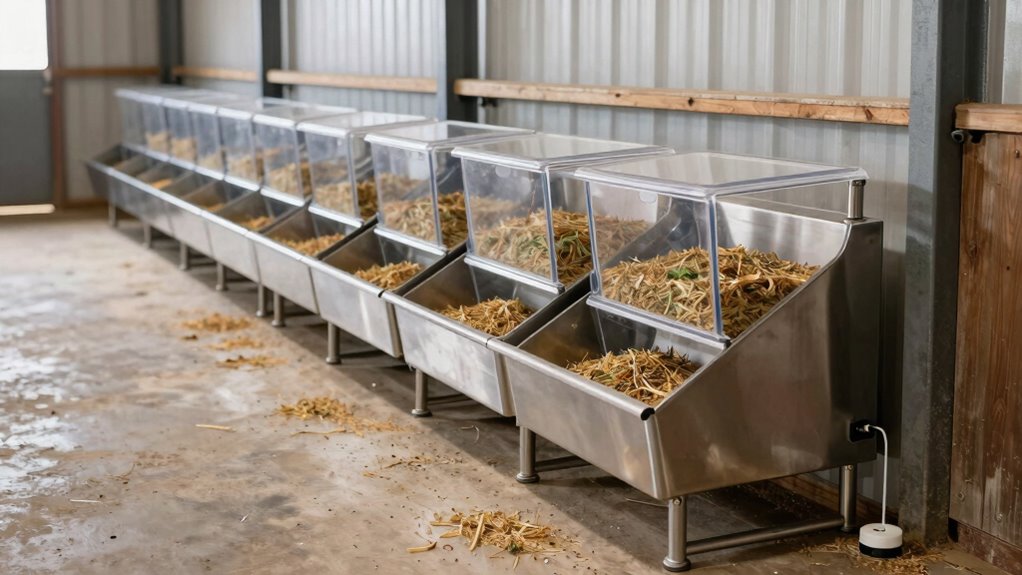
Implementing feed bin systems can markedly reduce feed waste, but this benefit only materializes if rodent control measures are also improved. When you switch to modern feed bin systems, you organize your grain storage more efficiently, minimizing spillage and preventing contamination. These systems keep feed dry, fresh, and accessible, which encourages better feeding practices and reduces the amount of leftover feed that might otherwise spoil or be discarded. However, all these advantages can be undermined if pests, especially rodents, infiltrate your storage areas.
Rodents are notorious for contaminating grain storage, spreading disease, and gnawing through packaging, which leads to significant feed loss. Even the best-designed feed bin system won’t fully prevent waste if pests are unchecked. Effective pest management becomes an essential part of protecting your investment in feed and maintaining the integrity of your grain storage. You need to implement strategies that keep rodents at bay, such as sealing all entry points, setting traps, and maintaining cleanliness around your storage facilities. Keeping the surrounding area free of clutter and food debris also discourages rodents from nesting nearby. Regular pest inspections**** can help identify early signs of infestation before they become severe.
When pest management is integrated into your overall storage plan, it enhances the benefits of your feed bin systems. You prevent rodents from chewing through bins or contaminating feed, which means less waste and fewer health risks for your livestock. Regular inspections and monitoring can help you catch infestations early before they escalate. Consider using bait stations and natural deterrents alongside physical barriers to reinforce your pest control efforts. Having a proactive approach ensures that pests don’t become a persistent problem that negates the efficiencies gained from your grain storage improvements. Maintaining a clean environment also helps support the effectiveness of rodent control measures, making your storage practices more resilient against infestations.
In addition to pest management, proper maintenance of your feed bins is vital. Check for any signs of damage or entry points that rodents could exploit. Keep the storage area clean, dry, and well-ventilated to make it less attractive to pests. Educate your team about the importance of quick cleanup and reporting any pest activity immediately. By combining these practices with a reliable pest management plan, you safeguard your feed, reduce waste, and improve the overall efficiency of your grain storage system. Regularly updating your pest control strategies based on current trends can further enhance your defenses. Developing a comprehensive pest management plan tailored to your storage environment can help you stay ahead of infestations.
Ultimately, your success hinges on a thorough approach. Feed bin systems alone won’t eliminate waste if rodents can infiltrate your storage. You need to stay vigilant and maintain rigorous pest management practices. When you do, you’ll see a marked reduction in feed loss, better grain quality, and healthier livestock, all thanks to a well-rounded strategy that protects your grain storage investments.
As an affiliate, we earn on qualifying purchases.
Frequently Asked Questions
What Types of Feed Bin Systems Are Most Effective?
You should choose feed bin systems with airtight, rodent-proof designs for maximum effectiveness. Vertical and horizontal bins made from durable materials like metal or high-quality plastic are ideal for secure feed storage. Look for bins with tight-fitting lids and smooth internal surfaces to prevent pests and spoilage. Proper bin design guarantees minimal waste, maintains feed quality, and supports better rodent control, making your feeding operation more efficient and pest-free.
How Often Should Rodent Control Be Performed?
You should perform rodent control monthly to effectively manage pests. For example, a farm that conducted regular inspections reduced rodent habitats, preventing infestations. Consistent pest management keeps rodents from damaging feed bins and spreading disease. Regular checks, especially around feed storage areas, guarantee that any signs of activity are caught early. This proactive approach minimizes waste, maintains feed quality, and supports overall farm health.
Are Feed Bins Suitable for All Types of Livestock?
Feed bins are suitable for most types of livestock, as they help with feed storage and maintaining livestock nutrition. However, you should consider the specific needs of your animals, like size and feed type, to choose the right bin. Properly designed feed storage minimizes waste and contamination, ensuring your livestock get the best nutrition. Always evaluate your livestock’s unique requirements before selecting a feed bin system.
What Are the Costs Associated With Upgrading Feed Systems?
Upgrading your feed storage system involves costs like new equipment, installation, and ongoing maintenance. You’ll need to budget for initial expenses and future maintenance costs, which vary based on system complexity. The investment can reduce waste, prevent rodent issues, and improve feed efficiency, ultimately saving money long-term. Be prepared for both upfront costs and ongoing maintenance costs as you upgrade to a more effective feed system.
How Do Weather Conditions Affect Rodent Control Efforts?
Weather conditions substantially impact your rodent control efforts. Climate fluctuations, like heavy rain or drought, can alter pest behavior, making rodents more active or hiding in new areas. Cold weather drives them indoors, increasing infestation risks, while warm, dry periods boost their movement and food searches. To stay effective, you need to adapt your strategies based on changing weather patterns, ensuring your control measures remain effective despite fluctuating climate conditions.
Conclusion
Remember, a chain is only as strong as its weakest link. Upgrading your feed bin systems can reduce waste, but it won’t solve rodent issues on its own. To truly protect your feed and investments, you need to improve rodent control alongside. When you address both, you’ll see better results and fewer headaches. Don’t put all your eggs in one basket—tackle the problem from all angles, and you’ll come out ahead.