One common mistake is assuming cold weather reduces animals’ water intake, so you may neglect to keep water accessible and clean. Cold water can discourage drinking, and frozen or dirty sources further reduce intake. Failing to monitor water temperature and cleanliness can lead to dehydration and health issues. Using insulated or heated water systems helps maintain proper hydration. Keep an eye on these details, and you’ll discover how to improve your winter water management strategies.

Get garden gear delivered free with Prime
- Fast, free delivery on millions of items
- Prime Video, Amazon Music and more included
- Member-only deals all year
Key Takeaways
- Neglecting to monitor and encourage regular water intake despite colder temperatures can lead to dehydration.
- Using unheated or poorly insulated water sources increases freezing risk and reduces water availability.
- Failing to maintain clean waterers can discourage animals from drinking and promote health issues.
- Ignoring the importance of water temperature, which should be warm enough to promote consistent drinking.
- Not inspecting and maintaining water systems regularly can result in blockages and reduced access to water.
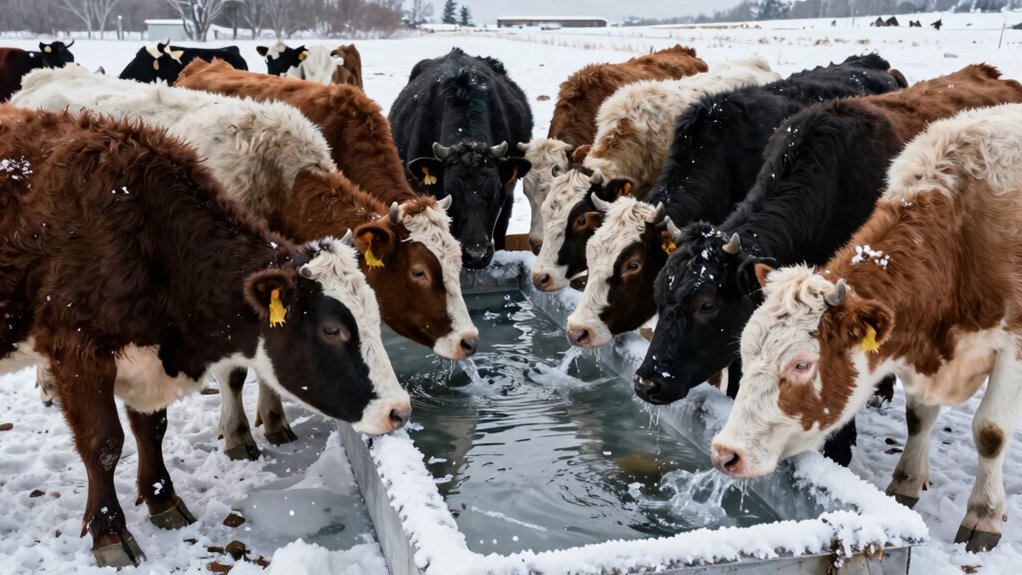
While winter brings colder temperatures that can reduce livestock water consumption, many farmers make critical mistakes that can harm their animals’ health. One common error involves neglecting proper hydration habits. Even when it’s chilly outside, your animals still need ample water to stay healthy. Some farmers assume that cold weather naturally decreases water intake and, consequently, reduce water access or frequency of checking water sources. This can lead to dehydration, weakening animals’ immune systems and impairing digestion. You must maintain a consistent supply of fresh, clean water and encourage your livestock to drink regularly. Monitoring water intake becomes essential, especially since animals might not drink as much due to discomfort or the water being too cold. Ensuring proper water temperature and cleanliness is vital for preventing health issues during winter. water temperature plays a significant role in livestock hydration. If the water is too cold, animals may be reluctant to drink, especially in freezing temperatures. Cold water can cause discomfort and even lead to a drop in water consumption, which is risky during winter. To prevent this, you should consider using insulated or heated waterers to keep the water at a comfortable temperature. Warm water encourages animals to hydrate more freely, helping prevent dehydration and associated health issues like colic or constipation. Remember, water that’s too cold can also cause shock or other health problems, so maintaining an ideal temperature is essential. Additionally, some farmers forget to observe their animals’ water intake closely. During winter, subtle signs of dehydration can be overlooked because animals might appear normal. Regularly monitoring water intake and temperature control can help ensure animals stay properly hydrated and healthy. Proper system maintenance is also crucial, as frozen water lines can block access and reduce water availability. During winter, cracks or blockages in waterers caused by freezing can further limit access, so inspecting water systems frequently is crucial. Dirty or frozen water sources discourage animals from drinking and can introduce pathogens. Regularly cleaning waterers, removing ice, and ensuring a continuous flow of fresh water is critical. Using heating systems or insulated tanks prevents freezing, ensuring your livestock always have access to water. Additionally, some farmers forget to observe their animals’ water intake closely. During winter, subtle signs of dehydration can be overlooked because animals might appear normal. You need to check water availability frequently, especially during extreme cold snaps. If animals are not drinking enough, they can become stressed, lose weight, or develop more severe health problems. Proper hydration management is essential for maintaining overall animal welfare and productivity. Implementing regular checks on water systems can significantly reduce the risk of water shortages caused by freezing or blockages.
As an affiliate, we earn on qualifying purchases.
Frequently Asked Questions
How Does Cold Weather Affect Livestock Water Consumption?
Cold weather decreases livestock water intake because animals instinctively drink less in freezing temperatures, risking dehydration. Cold stress can also make them less active and more prone to health issues, further reducing their water consumption. To prevent this, you should guarantee a continuous supply of unfrozen, clean water and keep water sources accessible and warm, encouraging proper hydration during winter’s harsh conditions.
Are Heated Water Sources Necessary for Winter Livestock Care?
A stitch in time saves nine, and that applies to livestock water needs too. Heated water isn’t always necessary, but maintaining proper water temperature is vital for winter. Heated water sources help prevent freezing and encourage livestock to drink enough, preventing dehydration. If temperatures drop considerably, providing heated water guarantees your animals stay hydrated and healthy, avoiding issues caused by cold water consumption.
What Signs Indicate Livestock Are Dehydrated in Winter?
You can tell your livestock are dehydrated in winter if they show signs like dry, sunken eyes, dull coats, or decreased appetite. Watch for reduced water intake, which often indicates winter hydration issues. Dehydration indicators include lethargy, weak pulses, or thick saliva. To prevent this, make certain they always have access to clean, unfrozen water, and monitor their behavior closely, especially during cold spells.
How Can I Prevent Water Freezing in Livestock Water Troughs?
To prevent water from freezing in livestock troughs, you should use insulated or heated troughs and guarantee water quality stays high by avoiding debris buildup. Regularly clean troughs to prevent ice formation and algae growth, which can worsen freezing issues. Adding a floating heater or de-icer can also keep water accessible. Consistent maintenance helps livestock stay hydrated, especially during cold weather, and promotes overall health.
Does Water Temperature Impact Livestock Health During Winter?
Water temperature definitely impacts livestock health in winter. Cold water can slow down their hydration process, risking dehydration and health issues. Keep water quality high by ensuring it stays unfrozen and clean, encouraging animals to drink enough. When water is too cold, livestock might avoid drinking, leading to dehydration and weakened immune systems. You must monitor water temperature closely to protect their well-being during colder months.
Conclusion
By avoiding these common water intake mistakes, you can guarantee your livestock stays healthy and thriving all winter long. Remember, neglecting proper hydration can turn your farm into a disaster zone faster than you can say “cold catastrophe.” Stay vigilant, keep water accessible and clean, and your animals will thank you with vibrant health and productivity that’s nothing short of extraordinary. Don’t let winter’s chill turn your care into a nightmare—stay proactive and hydrated!
Fall yard work Picks
leaf blowers
As an affiliate, we earn on qualifying purchases.