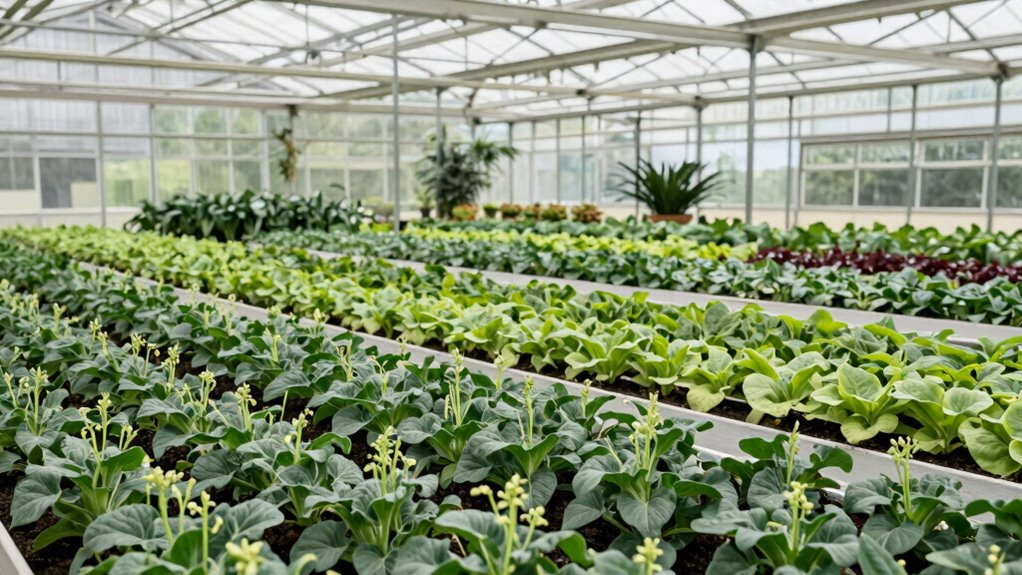

By implementing better crop staging, you create a more organized and uniform layout in your greenhouse. This reduces overcrowding and allows light, air, and nutrients to reach all plants evenly, making the space feel larger and brighter. Well-planned staging also prevents clutter and optimizes space utilization, enhancing the overall perception of openness. If you want to discover more tips on making your greenhouse appear more spacious, keep exploring these strategies.
Key Takeaways
- Proper crop staging creates organized, open layouts that enhance the perception of space inside the greenhouse.
- Uniform plant growth reduces clutter, making the environment appear larger and more breathable.
- Clear visual progress and planned layouts improve airflow and light distribution, emphasizing openness.
- Efficient space utilization through accurate staging prevents overcrowding and underused areas.
- Well-managed crop development fosters a clean, tidy environment that feels more expansive and inviting.
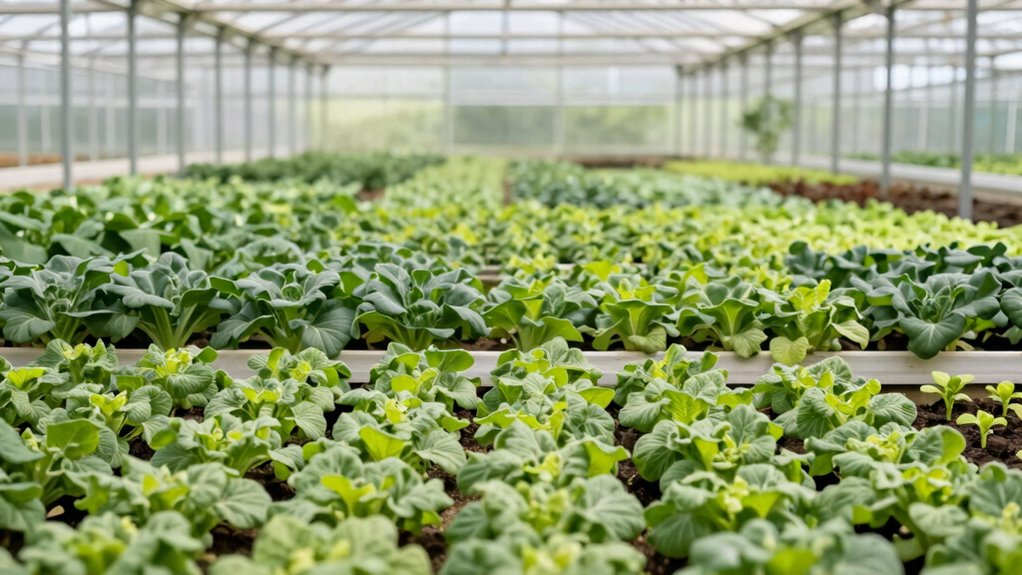
Accurate crop staging is essential for optimizing management practices and maximizing yields. When you correctly identify the growth stage of your plants, you can tailor interventions to support plant health and guarantee growth consistency. This precision helps prevent issues like over- or under-fertilization, pest outbreaks, or disease spread, all of which can compromise your crop’s overall productivity. By understanding exactly where your plants stand in their development cycle, you gain better control over watering schedules, nutrient applications, and light management. This detailed approach creates a healthier environment for your plants, ultimately leading to stronger, more resilient crops.
Accurate crop staging ensures optimal management, healthier plants, and higher yields through precise interventions and growth control.
When your crop staging is precise, your greenhouse can feel much larger than it actually is. A well-organized staging process allows you to utilize space more efficiently because you’re not overcrowding or leaving areas underutilized. Instead, you can plan the arrangement of plants based on their growth needs, ensuring each one receives ideal light, airflow, and nutrients. Proper staging also helps you identify which plants need more attention and which ones are ready for harvest, reducing unnecessary clutter and making your space feel more open. This sense of order and clarity can make your greenhouse seem bigger, brighter, and more inviting. Additionally, consistent crop staging can facilitate better space utilization, further enhancing the perception of roominess.
Growth consistency is easier to achieve when you’re accurately tracking crop stages. When plants are at the same stage, they tend to develop uniformly, which simplifies management and harvesting. Uniform growth means fewer surprises and less guesswork, giving you confidence that your entire crop is progressing as expected. Consistent growth also improves plant health because it minimizes stress caused by uneven development, such as overcrowding or competition for resources. As a result, your crop becomes more robust, and your harvests more predictable. Recognizing the importance of crop staging helps you plan and execute your management practices more effectively, especially since timely interventions are crucial for optimal results. Moreover, understanding the growth cycle enhances biodiversity awareness, encouraging sustainable practices that benefit the environment and crop resilience. This understanding can be supported by modern 3D scanning and imaging technologies, which provide precise data on plant development stages.
In addition, precise crop staging improves your ability to plan ahead. You’ll know exactly when to start different treatments or interventions, avoiding last-minute rushes or delays. This foresight reduces stress and helps you maintain a steady workflow, making your greenhouse feel more spacious and organized. It also enhances your ability to monitor progress visually, as each plant is at a similar stage, removing unnecessary confusion. When you master crop staging, your greenhouse not only functions more efficiently but also feels more expansive, transforming a compact space into a productive, well-managed environment.

Panana 4 Tier Garden Greenhouse Steel Staging Shelving Plant Stand Garden Shelving Unit Garage Storage Racking, 2 Pack Plant Racks
- Pack Size: 2 Pack Plant Racks
- Number of Tiers: 4 Tier Shelving
- Color: Green
As an affiliate, we earn on qualifying purchases.
As an affiliate, we earn on qualifying purchases.
Frequently Asked Questions
How Does Crop Staging Influence Greenhouse Energy Efficiency?
Crop staging directly impacts your greenhouse’s energy efficiency by optimizing light and temperature use. When you plan crop rotation and stagger planting stages, you reduce pest management issues and minimize energy waste. Healthy, well-staged crops grow faster with less heating and cooling. This strategic approach helps you maintain ideal conditions, lowers energy costs, and increases overall productivity, making your greenhouse more efficient and sustainable.
Can Crop Staging Reduce the Need for Artificial Lighting?
Crop staging can cut down on artificial lighting needs by optimizing crop timing and allowing for better utilization of natural light. When you stage crops strategically, they grow at the right time and height, maximizing sunlight absorption. This synchronization helps you harness natural light efficiently, reducing reliance on artificial illumination. So, by managing crop staging carefully, you can create a brighter, more balanced greenhouse environment, saving energy and lowering costs.
What Tools Are Best for Monitoring Crop Growth Stages?
You should use tools like digital cameras, sensors, and specialized growth tracking software to monitor crop growth stages. These tools help you observe crop maturity precisely by tracking growth patterns over time. With accurate growth tracking, you can better determine the right time for harvest and optimize your crop staging. Regularly monitoring crop development guarantees you manage your greenhouse effectively and improve overall yields.
How Often Should Crop Stages Be Reassessed During the Season?
Think of crop growth like a symphony, where each note needs timing. You should reassess crop stages at regular staging intervals—ideally every 7 to 10 days during peak growth, and more frequently during rapid changes. This guarantees your understanding stays in tune with the plants’ development, helping you adjust care promptly. Regular evaluations keep your greenhouse vibrant and productive, harmonizing growth and maximizing your harvest potential.
Are There Specific Crops That Benefit Most From Staging?
Certain crops, like tomatoes, peppers, and lettuce, benefit most from staging. The key is matching crop variety and staging timing to optimize space and light. For example, tomatoes need careful staging to prevent overcrowding, while lettuce benefits from quick succession staging to ensure continuous harvest. By tailoring staging to each crop’s growth cycle, you improve greenhouse efficiency and make your space feel larger than it is.
Conclusion
By mastering better crop staging, you can make your greenhouse feel much larger than it actually is. When you carefully plan and time your plant growth, it’s like opening a window to a bigger space—suddenly, your greenhouse isn’t just a small room, but a thriving oasis. Keep in mind, patience and precision pay off, turning your greenhouse into a lush, expansive haven. With the right approach, you’ll see your space bloom far beyond what meets the eye.