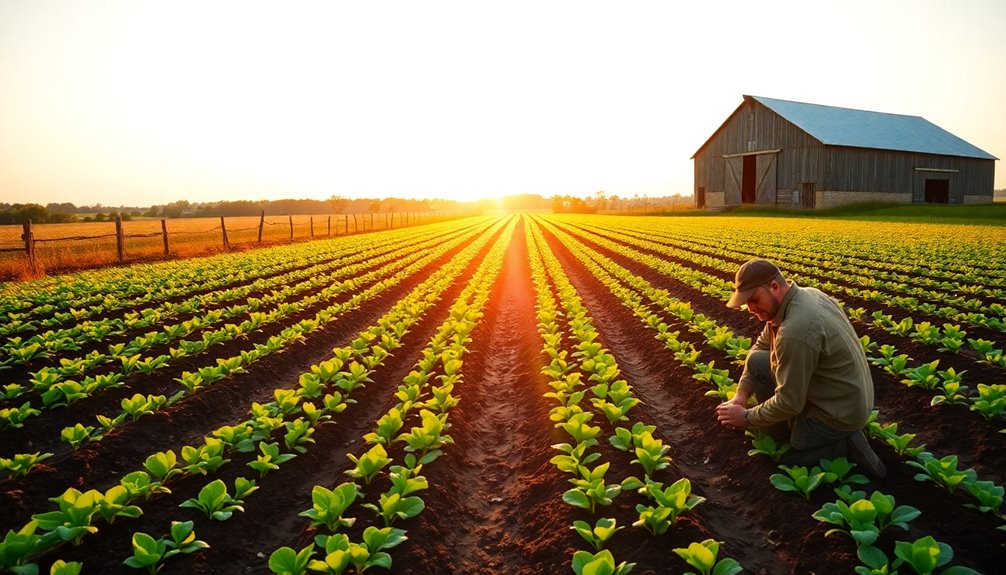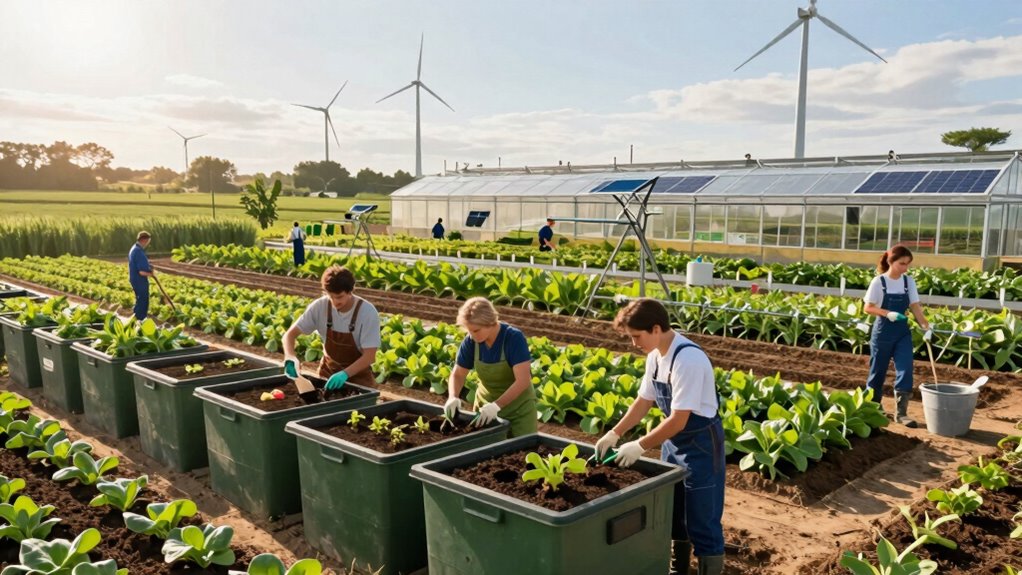

To build a smart seasonal farm reset day, start by evaluating your farm’s needs and planning crop rotations to prevent soil exhaustion and pests. Enrich your soil with compost and cover crops, and clear out debris to keep pests at bay. Inspect and repair infrastructure, then update your planting calendar and prepare seedbeds. Following these steps will set your farm up for success, and if you continue, you’ll discover even more ways to optimize your reset routine.

Get garden gear delivered free — and shop member deals
- Fast, free delivery on millions of items
- Access to Prime Big Deal Days deals on October 6–7
- Prime Video, Amazon Music and more included
Key Takeaways
- Schedule a dedicated day each season for comprehensive farm assessment and cleanup activities.
- Prepare a detailed plan for crop rotation, soil testing, and amendments based on recent farm data.
- Gather necessary tools, supplies, and resources ahead of time to streamline reset activities.
- Incorporate soil enrichment and pest management strategies into the reset process for sustainable health.
- Document observations, adjustments, and plans to inform future seasonal rotations and improvements.
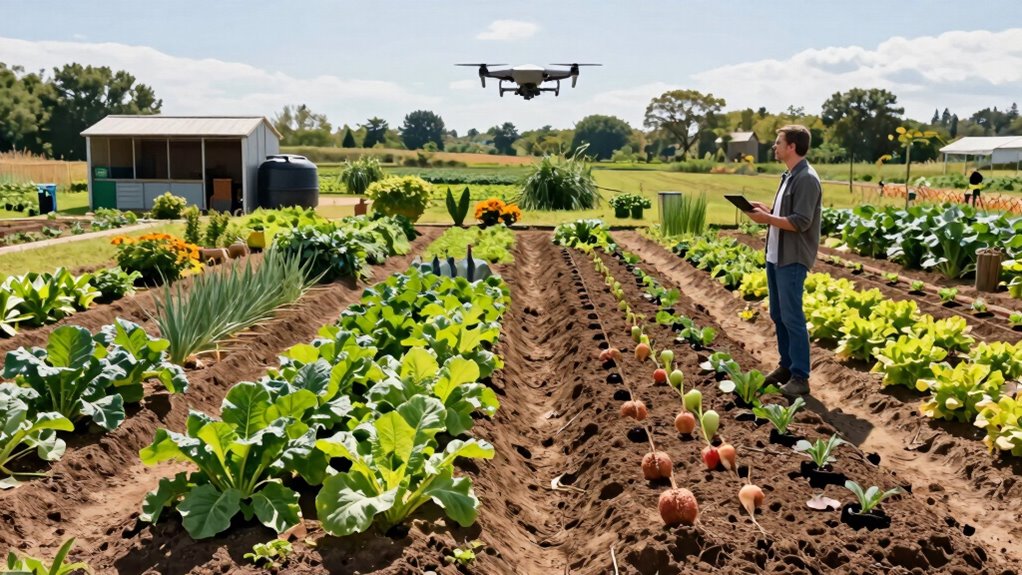
Creating a dedicated seasonal farm reset day is a smart strategy to keep your farm productive and organized throughout the year. This day serves as a critical checkpoint where you assess what’s working, what needs adjusting, and how to prepare for the upcoming season. One of the most effective ways to do this is by focusing on crop rotation and soil enrichment. These practices guarantee your soil stays healthy, which directly impacts your crop yields and overall farm vitality.
A dedicated seasonal reset day boosts farm productivity through crop rotation and soil enrichment.
When planning your reset day, start by evaluating your current crop layout. Crop rotation is essential for preventing soil depletion and controlling pests. By rotating plant families each season, you break pest cycles and reduce the risk of soil exhaustion. For example, if you grew tomatoes in one section last season, consider planting legumes like beans or peas in that spot this time. This switch helps replenish nutrients naturally, reducing the need for chemical fertilizers. Keep records of your rotations so you can build on them each year, creating a sustainable cycle that benefits your farm in the long run. Incorporating crop diversity into your planning can further enhance your soil’s resilience against pests and diseases.
Next, focus on soil enrichment. Even if your soil looks healthy, it’s imperative to enhance its quality regularly. On your reset day, test your soil to identify deficiencies or imbalances. Based on the results, you can add organic matter such as compost, manure, or cover crops like clover or vetch. These additions improve soil structure, increase microbial activity, and boost nutrient levels. Soil enrichment isn’t just about fixing problems; it’s about proactively maintaining soil health to support robust plant growth. Incorporating soil health practices can significantly improve your farm’s productivity and resilience over time. Additionally, understanding the soil testing process can help you make more informed decisions about amendments and crop choices. A thorough soil assessment can also guide you in selecting the most effective soil amendments. Regularly updating your soil management strategies based on test results can help sustain long-term farm health.
In addition, incorporate mulching to help retain moisture and suppress weeds, further aiding soil vitality. As part of your reset routine, clear out old plant debris and weeds that might harbor pests or diseases. Compost or dispose of these materials properly to prevent issues from carrying over into the new season. If you’ve noticed specific pests or diseases, plan your crop rotation and soil amendments accordingly to minimize their impact next season. Additionally, take this time to inspect your tools, irrigation systems, and infrastructure, making repairs or upgrades as needed to streamline operations.
Finally, update your planting calendar based on your observations and soil conditions. Prepare seedbeds, start seedlings indoors if necessary, and plan your planting schedule to optimize growth periods. By dedicating this day to such thorough preparation, you set a strong foundation that promotes healthy, productive crops. Incorporating crop rotation and soil enrichment into your seasonal reset ensures your farm remains sustainable, resilient, and ready for future success. This proactive approach minimizes problems and maximizes yields, making your farm more efficient and enjoyable year-round.
Frequently Asked Questions
How Do I Determine the Best Date for My Farm Reset Day?
To find the best date for your farm reset day, consider your crop rotation schedule and pest management needs. Look at the cycle of your crops to identify when fields are empty or ready for a fresh start, reducing pest buildup. Choose a time when weather conditions are favorable for soil recovery and pest control efforts. This guarantees your farm resets effectively, promoting healthy growth and minimizing pest issues.
What Tools Are Essential for a Successful Farm Reset?
To guarantee a successful farm reset, you need vital tools like reliable farm equipment for clearing and preparing the land. Soil testing kits are vital to assess nutrient levels and pH balance, guiding your fertilization and crop choices. Having these tools on hand lets you efficiently reset your farm, optimize soil health, and set a strong foundation for the upcoming season. Proper equipment and testing make the process smoother and more effective.
How Can I Involve Community Members in the Reset Process?
You can involve community members by promoting community engagement through local events or social media, inviting them to participate. Use volunteer coordination to organize tasks, assign roles, and guarantee everyone feels valued. Create a welcoming environment where volunteers understand the importance of the reset process, and encourage ongoing participation. This approach fosters a sense of ownership, strengthens community bonds, and makes the reset day more successful and enjoyable for everyone involved.
What Safety Precautions Should I Consider During Farm Reset Activities?
You must prioritize farm safety like a superhero guarding their fortress during reset activities. Always wear protective gear, double-check equipment maintenance, and be mindful of sharp tools and heavy machinery. Keep pathways clear to prevent accidents, and guarantee all safety protocols are followed meticulously. By doing so, you’ll create a secure environment that keeps everyone safe while you efficiently tackle the farm reset, turning chaos into a smooth, safe operation.
How Do I Track Progress After Completing the Reset?
To track your progress after a farm reset, keep detailed records of crop rotation schedules and pest management activities. Use a farm journal or digital tools to log what you’ve done and when, noting improvements in soil health or pest control. Regularly review these records to assess success, identify patterns, and plan for future resets. Consistent tracking guarantees you stay on top of your farm’s health and productivity.
Conclusion
By embracing a thoughtful seasonal farm reset day, you set your farm up for success year-round. Imagine a farmer who dedicates a day each spring to clearing old crops and preparing new ones; their fields stay healthy, and yields improve. You too can streamline your farm’s renewal process, saving time and boosting productivity. With a strategic reset day, you’ll keep your farm thriving season after season, making each harvest more rewarding and sustainable.
Fall yard work Picks
leaf blowers
As an affiliate, we earn on qualifying purchases.