
TL;DR
A new ornamental ground cover has been developed that thrives in shady garden areas, offering a low-maintenance alternative to patchy grass. This development could significantly change how homeowners manage shaded lawns, especially with innovative options like ground cover plants.
A newly developed ground cover plant, designed specifically for shaded garden areas, has been introduced to the market, offering a low-maintenance, visually appealing alternative to patchy grass. This innovation is expected to change landscaping practices for homeowners struggling with shade-damaged lawns, making garden maintenance easier and more attractive.
The ground cover, called ShadeEase, was developed by horticulturists at GreenGrow Labs and officially launched at the Spring Garden Expo in March 2024. You can learn more about ground cover plants to add to your garden. It is claimed to thrive in areas with minimal sunlight, requiring less water and maintenance than traditional grass or turf, making it ideal for shaded lawns and garden beds.
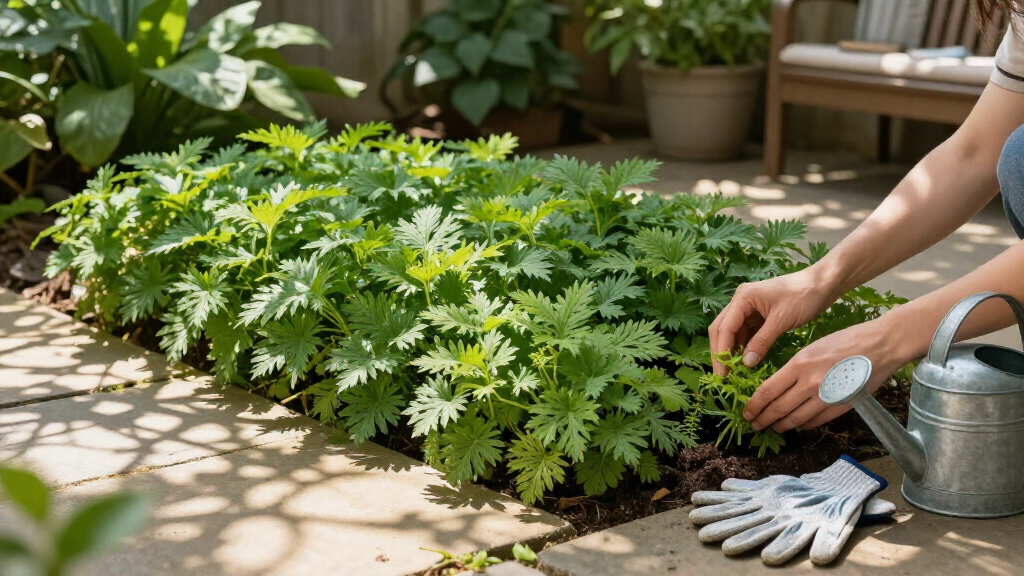
According to GreenGrow Labs, ShadeEase can establish itself quickly in shady conditions, forming a dense, attractive mat that suppresses weeds and reduces soil erosion. The plant’s foliage is described as lush and evergreen, with a soft texture that provides visual appeal year-round. It is also said to be resistant to pests and diseases common in shaded environments.
Horticultural experts note that this ground cover could be particularly useful in urban gardens, backyard shaded areas, and under large trees where ground cover plants struggle to grow. The plant’s low water requirements and minimal mowing needs could significantly reduce gardening time and costs for homeowners.
Potential Impact on Shaded Garden Landscaping
The introduction of ShadeEase could revolutionize how homeowners and landscapers approach shaded garden areas. Traditionally, shaded lawns are patchy and require significant effort to maintain, often involving frequent reseeding, watering, and weed control. This new ground cover offers a practical, aesthetically pleasing alternative that demands less upkeep, potentially reducing water use and lawn care costs.
Moreover, the plant’s ability to suppress weeds and prevent soil erosion could improve garden health and appearance, encouraging more people to cultivate shaded areas rather than avoiding them. This could lead to more diverse, lush gardens even in challenging shade conditions, expanding gardening options for urban dwellers and homeowners with mature trees.
Environmental benefits may also arise, as the plant’s low water needs and pest resistance could decrease reliance on chemical treatments and irrigation, aligning with sustainable gardening practices.
shade tolerant ground cover plants
As an affiliate, we earn on qualifying purchases.
As an affiliate, we earn on qualifying purchases.
Background on Shaded Lawn Challenges and New Solutions
Maintaining lush, green lawns in shaded areas has long been a challenge for gardeners. Traditional grass varieties often struggle to establish in low-light conditions, leading to patchy, unattractive patches that require frequent reseeding and watering. Over the years, alternative ground covers such as moss or creeping thyme have been used, but each has its limitations in terms of appearance, growth rate, or maintenance needs.
In recent years, plant breeders and horticulturists have sought to develop more resilient ground covers suitable for shady environments. Previous options have included various sedum varieties or ferns, but none have gained widespread popularity due to issues with invasiveness, appearance, or care requirements. The development of ShadeEase represents a new effort to address these longstanding issues with a plant specifically bred for shade tolerance, ease of care, and visual appeal.
This development aligns with broader trends in sustainable gardening and low-maintenance landscaping, where homeowners seek attractive yet practical solutions to garden challenges.
“ShadeEase is designed to thrive in low-light conditions, requiring minimal watering and care, making it perfect for shaded lawns and garden beds.”
— Dr. Susan Miller, horticulturist at GreenGrow Labs
Unanswered Questions About Long-Term Performance
While ShadeEase has shown promising results in initial trials and early market feedback, it is not yet clear how it will perform over multiple seasons or in different climate zones. Long-term growth, potential invasiveness, and how it interacts with local ecosystems remain unconfirmed.
Additionally, there is limited information on how the plant will respond to extreme weather events or how it compares to existing ground covers in terms of durability and maintenance over time.
Upcoming Trials and Market Expansion Plans
GreenGrow Labs plans to conduct further regional trials to assess the plant’s performance across diverse climates and soil types. They also intend to gather more user feedback during the upcoming gardening season to refine cultivation guidelines. Commercial availability is expected to expand in the coming months, with distribution through garden centers and online platforms. Researchers and early adopters will continue to monitor its performance to address remaining uncertainties.
Key Questions
Is ShadeEase safe for pets and children?
According to GreenGrow Labs, ShadeEase is non-toxic and safe for pets and children when used as directed. However, users should follow planting and maintenance instructions carefully.
How much maintenance does ShadeEase require?
The plant is described as low-maintenance, requiring minimal watering once established, occasional trimming to maintain shape, and no mowing. It is designed to be largely self-sustaining.
Can ShadeEase replace traditional grass entirely?
While ShadeEase is suitable for shaded areas and can form dense ground cover, it may not be ideal for high-traffic zones or areas requiring a soft, walkable surface. It is best used as an alternative in low-traffic shaded zones.
Will ShadeEase spread invasively?
GreenGrow Labs states that ShadeEase has been bred to be non-invasive, but long-term studies are ongoing to confirm its behavior in different environments.
Where can I buy ShadeEase?
The plant will be available through select garden centers and online retailers starting in the next few months, with wider distribution planned for later in the year.
Source: rss