TL;DR

Get garden gear delivered free with Prime
- Fast, free delivery on millions of items
- Prime Video, Amazon Music and more included
- Member-only deals all year
A Planet Natural report compares four fall alternatives when it is too late for a cover crop: leaves, compost, cardboard and opaque tarps. Each can protect or prepare a bed, but none fully replaces the active roots of a living cover crop; the best choice depends on weeds, exposure and spring planting plans.
Planet Natural has compared leaves, compost, cardboard and opaque tarps as options for gardeners who have missed the late-summer or fall window to establish a cover crop. The report says these materials can protect bare soil or make spring bed preparation easier, but they do not fully replace the active roots of a living cover crop, which help hold soil and take up leftover nutrients.
The report recommends choosing a material according to the bed’s immediate needs: whether soil is at risk of blowing or washing away, whether spring weeds are the main concern, and how soon the next crop must be planted. Shredded leaves are a low-cost winter cover when they are available and planting can wait until late spring. They settle into a more even layer than whole leaves, which can mat when wet, but dry leaves may blow away from exposed beds.
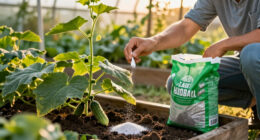
Finished compost can add organic matter and leave a bed easier to work in, particularly where soil needs improvement or a heavy-feeding crop is planned. Planet Natural cautions against treating it as an all-purpose mulch: a deep application can be costly, and repeated large additions may raise nutrients such as phosphorus beyond what the garden needs. Compost also does not reliably control established perennial weeds.
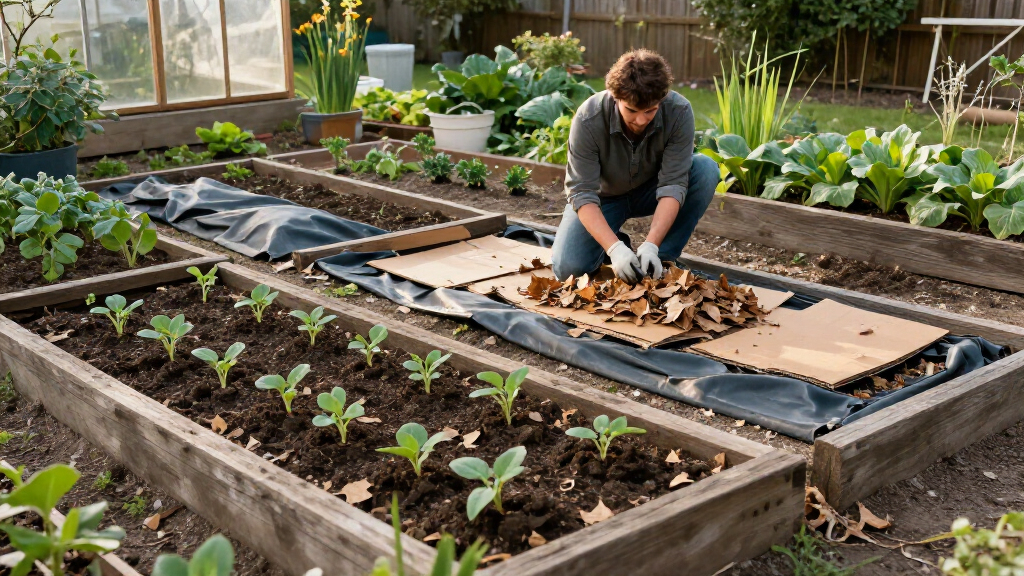
Plain cardboard is presented mainly as a bed-building layer over closely mown grass or small annual weeds. The report advises overlapping clean, unwaxed corrugated pieces, wetting them and covering them with organic material. Opaque tarps are described as a stronger weed-reset option. They exclude light and are best suited to a bed where weed suppression matters more than immediate planting, though the supplied report excerpt does not include its complete instructions or assessment of tarp trade-offs.
Choosing Cover by Spring Planting Plans
The practical difference is not just which material is available; it is what the bed needs to do before planting. A loose leaf layer can shield soil through winter where planting is flexible, while a bed needed early may be easier to manage under an opaque tarp. Cardboard can help start a new bed, but it may obstruct spring planting if used where the ground is already clear.
The options also differ in cost, labor and limits. Locally available leaves may be more sensible than buying compost solely to cover an empty bed. Compost has value where organic matter or a workable planting surface is needed, but soil nutrient levels matter. Matching the material to the problem can reduce unnecessary work without suggesting that a surface cover provides all the functions of a living crop.
As an affiliate, we earn on qualifying purchases.
What a Surface Cover Cannot Replace
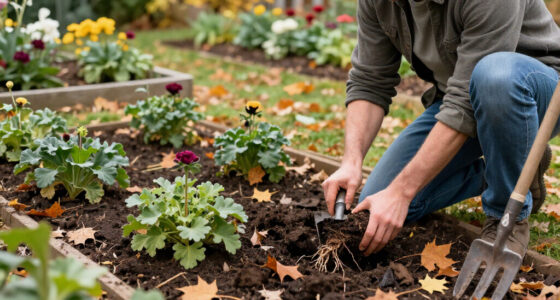
The report’s starting point is a seasonal timing problem: after beds are cleared and nights cool, there may no longer be enough time for a cover crop to establish reliably before winter. A living cover crop keeps roots active, protects soil from rain and wind, and can take up nutrients left in the soil. Surface treatments offer partial protection, but they do not reproduce those root functions.
For leaves, the report favors shredding to reduce movement and help them break down evenly. It advises avoiding leaves from trees treated with persistent herbicides or leaves mixed with trash. Cardboard should be plain and free of tape, labels, plastic windows, staples and glossy or heavily printed material. The report says it is less suited to aggressive perennial weeds such as bindweed or bermudagrass, which may grow through seams or return at edges.
Limits of the Tarp Guidance
The supplied report excerpt ends partway through its tarp section, after saying an opaque tarp works by excluding light and should be laid over moist soil and secured. It does not provide the complete guidance on tarp duration, material, removal or specific trade-offs, so those details cannot be confirmed from the material provided. The source also gives no comparative trial data showing how much weed control or soil protection each option provides under particular climates or soil conditions.
Local availability, weather, soil nutrient levels, weed species and planting dates will affect the choice. The report does not establish one material as best for every garden.
Match the Cover to the Bed
Before covering a bed, gardeners can assess how exposed it is, identify whether weeds or soil improvement are the main concern, and decide when planting must begin. Where leaves are used, shredding or securing them can limit wind loss; where compost is applied, a moderate layer and awareness of soil nutrients are advised. Cardboard is most suited to a new bed and should be covered rather than left exposed.
For tarp use, readers would need the full source guidance or locally appropriate gardening advice before deciding how long to leave the cover in place. In every case, the next practical milestone is spring planting: remove or move the cover as needed, then prepare the surface for the crop rather than assuming winter protection has resolved persistent weeds or soil problems.
Key Questions
Can leaves replace a fall cover crop?
Not fully. Leaves can cover bare soil and add organic material as they break down, but they do not provide the active roots that help a living cover crop hold soil and take up leftover nutrients.
Which option is best for a bed with weeds?
It depends on the weeds and planting schedule. Planet Natural identifies an opaque tarp as a stronger weed-reset option. Cardboard may help over closely mown grass or small annual weeds, but the report warns that aggressive perennial weeds can return through seams or at edges.
Should compost be spread deeply over an empty bed?
The report advises against automatically applying a deep layer. Finished compost can improve organic matter and provide a workable spring surface, but large repeated additions may raise nutrients, including phosphorus, beyond what the garden needs.
What kind of cardboard is suitable?
Use clean, plain, unwaxed corrugated cardboard. Remove tape, labels, plastic windows and staples, and avoid glossy or heavily printed pieces. Wet it and cover it with leaves, compost or other organic material so it stays against the ground.
Source: rss
Halloween Picks
halloween
As an affiliate, we earn on qualifying purchases.