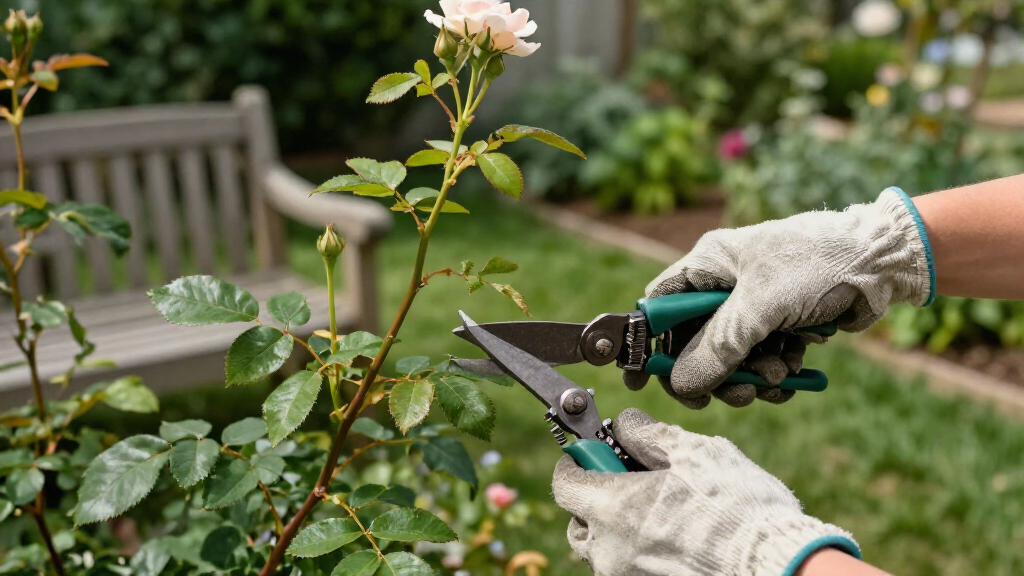

The best garden pruning shears balance clean cuts, comfortable handling, and a blade capacity suited to the branches you actually trim. My best overall pick is the Fiskars Professional Bypass Pruning Shears for its 1-inch cutting capacity, while the Felco F-2 stands out as a classic choice for buyers who value a repairable tool, and the Fiskars 5/8-inch model suits lighter, routine pruning. The main tradeoffs are cutting capacity versus hand comfort, and durable, serviceable construction versus a simpler tool that may be easier to maintain. Blade materials and handle shapes also affect care and fit, so the longest specification list is not automatically the best match. Read on for the full comparison and recommendations by garden and pruning style.

Get garden gear delivered free with Prime
- Fast, free delivery on millions of items
- Prime Video, Amazon Music and more included
- Member-only deals all year
Complete the kit


Key Takeaways
- Cutting capacity separates the main workhorses from light-duty picks: the Fiskars Professional and Corona BP 3180D list 1-inch capacity, while the smaller Fiskars model is intended for thinner growth.
- Repairability and straightforward ownership are different strengths: the Felco F-2 and F-11 are established manual-pruner options, while several other models emphasize included accessories, blade materials, or a simpler purchase.
- Japanese-steel and Japanese-style models form a distinct group: KAKURI, Kimura Yasugi Steel, and TONMA may appeal to buyers prioritizing blade material and cutting feel, but steel type alone does not determine fit or ease of upkeep.
- Handle length and overall size matter as much as the blade: compact 7- to 8-inch options can suit controlled, close work, while longer models may offer more reach but can feel less manageable in smaller hands.
- No single model suits every pruning task: frequent cuts through thicker live stems favor capacity and robust construction; light deadheading and routine trimming place more weight on comfort, control, and easy maintenance.
| Fiskars Professional Bypass Pruning Shears, 1-Inch Cut Capacity |  | Best for Wrist-Friendly Pruning | Blade type: Bypass | Cutting capacity: 1 inch diameter | Blade material: Alloy steel | VIEW LATEST PRICE | See Our Full Breakdown |
| Fiskars Bypass Pruning Shears, 5/8-Inch Cut Capacity |  | Best for Everyday Light Pruning | Blade type: Bypass | Cut capacity: 5/8 inch | Blade material: Alloy steel | VIEW LATEST PRICE | See Our Full Breakdown |
| Felco F-11 Pruning Shears |  | Best for Right-Handed Anvil Cutting | Model: F-11 | Blade type: Anvil | Blade material: Hardened steel | VIEW LATEST PRICE | See Our Full Breakdown |
| Gerossi 7-Inch Bypass Pruning Shears |  | Best Compact Pick | Length: 7 inches | Blade type: Bypass | Blade material: High-carbon SK5 steel | VIEW LATEST PRICE | See Our Full Breakdown |
| KAKURI Japanese Pruning Shears with Leather Sheath, 8-Inch |  | Best for Bonsai and Traditional Craft | Model: 47840 | Overall length: 8 inches | Blade length: 2.3 inches | VIEW LATEST PRICE | See Our Full Breakdown |
| DECERK 8.5-Inch Professional Bypass Pruning Shears |  | Best for Lower-Effort Cutting | Blade type: Bypass | Blade material: Japanese SK5 steel with titanium coating | Blade length: 7.5 cm (2.95 in) | VIEW LATEST PRICE | See Our Full Breakdown |
| VOTREK 8.5-Inch Bypass Pruning Shears with SK5 Steel Blade |  | Best for Flower and Rose Pruning | Blade type: Bypass | Blade material: High-carbon SK5 steel | Blade coating: Teflon non-stick | VIEW LATEST PRICE | See Our Full Breakdown |
| Felco F-2 Classic Manual Hand Pruner, 9.25-Inch |  | Best for Repairable, Long-Term Use | Model: F-2 | Blade type: Anvil | Blade edge: Single bevel | VIEW LATEST PRICE | See Our Full Breakdown |
| Corona BP 3180D Forged Classic Bypass Pruner, 1-Inch Cutting Capacity |  | Best for Green Wood | Blade type: Bypass | Blade material: Alloy steel and carbon steel | Cutting capacity: 1 in | VIEW LATEST PRICE | See Our Full Breakdown |
| Kimura 8-Inch Pro Bypass Pruning Shears |  | Best Lightweight 1-Inch Pick | Blade type: Bypass | Blade material: Japanese SK5 steel | Blade coating: PTFE | VIEW LATEST PRICE | See Our Full Breakdown |
| Haus & Garten ClassicPRO Bypass Pruning Shears, 8.5-Inch |  | Best for Comfort and Heavier Hand Pruning | Type: Bypass pruning shears | Length: 8.5 inches | Cutting capacity: Up to 1 inch | VIEW LATEST PRICE | See Our Full Breakdown |
| Kimura 8-Inch Japanese Yasugi Steel Bypass Pruning Shears |  | Best for Japanese Steel and Edge Retention | Type: Bypass pruning shears | Origin: Sakai, Japan | Dimensions: 7.87 × 1.97 inches | VIEW LATEST PRICE | See Our Full Breakdown |
| TONMA 8.1-Inch Japanese Stainless Steel Pruning Shears |  | Best for 1-Inch Cuts in a Stainless Steel Build | Model: TP-1 | Type: Bypass pruning shears | Length: 8.1 inches | VIEW LATEST PRICE | See Our Full Breakdown |
| gonicc 8-Inch Professional Bypass Titanium Pruning Shears |  | Best Lightweight Pick for Smaller Branches | Model: GPPS-1003 | Type: Bypass pruning shears | Size: 8 inches | VIEW LATEST PRICE | See Our Full Breakdown |
| garden pruning shear | Blade material | Hand orientation | Handle material | Weight |
|---|---|---|---|---|
| Fiskars Professional Bypass Pr | Alloy steel | — | — | — |
| Fiskars Bypass Pruning Shears | Alloy steel | Ambidextrous | Alloy steel | — |
| Felco F-11 Pruning Shears | Hardened steel | Right | Aluminum alloy | 8.8 ounces |
| Gerossi 7-Inch Bypass Pruning | High-carbon SK5 steel | Ambidextrous | Aluminum with soft cushion grip | 0.27 kg |
| KAKURI Japanese Pruning Shears | Hand-forged Japanese carbon steel | Ambidextrous | — | — |
| DECERK 8.5-Inch Professional B | Japanese SK5 steel with titanium coating | Ambidextrous | Aluminum and rubber | — |
| VOTREK 8.5-Inch Bypass Pruning | High-carbon SK5 steel | Ambidextrous | Aluminum and rubber | 8 oz |
| Felco F-2 Classic Manual Hand | Steel | Right | — | 8.8 oz |
| Corona BP 3180D Forged Classic | Alloy steel and carbon steel | Ambidextrous | Alloy steel | 13.6 oz |
| Kimura 8-Inch Pro Bypass Pruni | Japanese SK5 steel | Ambidextrous | Aluminum with PVC coating | 230 g |
| Haus & Garten ClassicPRO Bypas | High-carbon steel with titanium coating | Ambidextrous | Forged anodized aluminum | 9 ounces |
| Kimura 8-Inch Japanese Yasugi | Japanese Yasugi steel | — | Aluminum with non-slip vinyl coating | 230 g |
| TONMA 8.1-Inch Japanese Stainl | Japanese stainless steel (SK5) | Ambidextrous | Stainless steel | 252 g |
| gonicc 8-Inch Professional Byp | SK-5 alloy steel with titanium coating | Ambidextrous | Aluminum with PVC wrap | 150 g |
More Details on Our Top Picks
Fiskars Professional Bypass Pruning Shears, 1-Inch Cut Capacity
The Fiskars Professional is the strongest fit here for gardeners who want a generous cut range without giving up bypass-style cuts on live growth. Its angled cutting head is designed to ease wrist strain, while adjustable blade tension lets you tune the feel of the cut. Compared with the standard Fiskars 5/8-inch model, this one handles thicker branches and adds a replaceable blade, making it better suited to mixed pruning jobs. The sap groove and low-friction coating are practical aids against sticky cuts, but they do not remove the need for blade care. Its 1-inch capacity is still a limit, so established woody growth may call for a larger tool. The listed weight is unusually low, so I would not use it alone to judge how it feels in hand.
Pros:- Angled head is designed to reduce wrist fatigue during repeated cuts.
- Adjustable blade tension offers a way to tune cutting feel.
- Replaceable alloy-steel blade supports ongoing maintenance.
- Ambidextrous handle and sap groove suit varied users and sticky stems.
Cons:- Capacity tops out at 1 inch, limiting use on heavier branches.
- More features may be unnecessary for occasional trimming of thin stems.
Best for: Gardeners who prune live stems and light branches regularly and want an angled head, adjustable tension, and a 1-inch stated cutting capacity.
Not ideal for: People who routinely cut branches thicker than 1 inch or want one pruner for heavy woody growth.
- Blade type:Bypass
- Cutting capacity:1 inch diameter
- Blade material:Alloy steel
- Blade tension:Adjustable
- Handle orientation:Ambidextrous
- Dimensions:10.75 in L × 3.88 in W
- Pack size:1
Our verdict“Choose this Fiskars if wrist comfort and a 1-inch bypass capacity matter more than a simple, light-duty pruner.”
Fiskars Bypass Pruning Shears, 5/8-Inch Cut Capacity
For routine work on flowers, herbs, and young shoots, this Fiskars bypass pruner keeps the job straightforward. Its 5/8-inch capacity is narrower than the 1-inch Fiskars Professional, but that smaller range fits gardeners whose cuts are mostly on delicate live growth. The low-friction blade coating and sap groove are intended to reduce sticking, while the non-slip handle supports control across repeated snips. A safety lock makes storage and transport less awkward, and the lifetime warranty is a useful ownership distinction. The tradeoff is that it is not a substitute for a heavier-capacity shear when branches thicken. It also calls for cleaning after use and light blade oiling, so this is a better match for buyers willing to maintain a basic cutting tool than for anyone expecting zero upkeep.
Pros:- Bypass blades suit clean cuts on delicate live growth.
- Low-friction coating and sap groove help limit sticking.
- Non-slip handle supports controlled repetitive trimming.
- Safety lock and lifetime warranty add practical ownership benefits.
Cons:- 5/8-inch capacity rules out many thicker branches.
- Blade cleaning and occasional oiling are part of routine care.
Best for: Home gardeners who mainly trim flowers, herbs, and live stems no thicker than 5/8 inch and value a secure storage lock.
Not ideal for: Gardeners pruning frequent, thicker woody branches who would benefit more from the 1-inch Fiskars Professional or another higher-capacity option.
- Blade type:Bypass
- Cut capacity:5/8 inch
- Blade material:Alloy steel
- Handle material:Alloy steel
- Hand orientation:Ambidextrous
- Dimensions:11.5 × 4.75 inches
- Warranty:Lifetime
Our verdict“Pick this model for frequent light pruning where control and a safety lock matter more than cutting thicker branches.”
Felco F-11 Pruning Shears
The Felco F-11 takes a different approach from the bypass shears in this group: its anvil blade presses against a flat surface, which may suit firm, dry material better than delicate green stems. Hardened steel blades and aluminum alloy handles give it a professional-grade construction profile, while rubber cushion shock absorbers are designed to soften the feel at the end of a cut. Unlike the ambidextrous Fiskars models, the F-11 is specifically for right-handed users, a decisive limitation for left-handed gardeners. Its 25 mm cutting width is close to the 1-inch capacity of the Fiskars Professional, but the blade style changes the kind of work it suits: softer stems can be crushed rather than cleanly sliced. Replaceable parts and a lifetime guarantee support long-term serviceability, though its weight is greater than the listed Fiskars figure.
Pros:- Hardened steel blade is designed for precise, durable cutting.
- Aluminum alloy handles keep the construction comparatively light.
- Rubber shock absorbers soften the end of the cutting motion.
- Replaceable parts and lifetime guarantee support long-term repair.
Cons:- Right-hand orientation excludes left-handed users.
- Anvil action may crush softer stems compared with bypass shears.
- At 8.8 ounces, it is heavier than the listed weight of the Fiskars Professional.
Best for: Right-handed gardeners seeking a serviceable, professional-grade pruner for firmer stems and who value replaceable parts.
Not ideal for: Left-handed users or gardeners whose main task is cleanly cutting soft, live stems; a bypass model such as the Fiskars Professional is a better fit for that work.
- Model:F-11
- Blade type:Anvil
- Blade material:Hardened steel
- Handle material:Aluminum alloy
- Cutting width:25 mm
- Weight:8.8 ounces
- Hand orientation:Right
- Origin:Switzerland
Our verdict“Choose the Felco F-11 if you are right-handed and want an anvil pruner with replaceable parts, not a general-purpose bypass shear for tender growth.”
Gerossi 7-Inch Bypass Pruning Shears
The Gerossi 7-Inch is the compact option in this batch, pairing a short overall length with a stated 3/4-inch capacity. That makes it more substantial than the Fiskars 5/8-inch model for branch thickness, while remaining shorter than the 10.75-inch Fiskars Professional. Its SK5 steel blade has a corrosion-resistant Teflon coating, and the spring return is intended to reopen the shears between cuts. Cushioned aluminum handles and a one-handed lock add useful control and storage convenience. The tradeoff is the listed weight of 0.27 kg, which is relatively substantial for a 7-inch tool and could feel tiring during long sessions. Its capacity also remains below the 1-inch Fiskars Professional, so gardeners with larger woody cuts should choose a higher-capacity pruner.
Pros:- Compact 7-inch length is convenient for close trimming and storage.
- SK5 steel blade has a corrosion-resistant Teflon coating.
- Spring return supports repeated cutting without manually reopening the blades.
- Cushioned grip and one-handed safety lock add control and handling convenience.
Cons:- Listed weight of 0.27 kg may feel heavy for a compact pruner.
- 3/4-inch capacity falls short of the 1-inch Fiskars Professional.
- The shorter size may offer less reach for pruning inside dense growth.
Best for: Gardeners who want a shorter bypass shear for container plants, flower beds, and routine branches up to 3/4 inch.
Not ideal for: People who prioritize the lightest tool for extended pruning or regularly cut branches near or above 1 inch.
- Length:7 inches
- Blade type:Bypass
- Blade material:High-carbon SK5 steel
- Blade coating:Corrosion-resistant Teflon
- Cutting capacity:Up to 3/4 inch
- Handle material:Aluminum with soft cushion grip
- Hand orientation:Ambidextrous
- Weight:0.27 kg
Our verdict“Choose the Gerossi for compact handling and moderate branch capacity, but skip it if low weight or 1-inch cuts are priorities.”
KAKURI Japanese Pruning Shears with Leather Sheath, 8-Inch
The KAKURI 8-Inch brings a traditional, craft-focused option to a lineup otherwise led by feature-rich general-purpose pruners. Its hand-forged Japanese carbon-steel bypass blade is suited to trimming plants, flowers, and bonsai, and the included cowhide leather sheath protects the blade during storage or carrying. Compared with the Fiskars Bypass 5/8-inch model, KAKURI provides a longer 2.3-inch blade and a more traditional material choice, but its data does not specify a cutting-capacity limit. That makes it harder to match confidently to thicker branches than the rated Fiskars or Gerossi models. Carbon steel also needs more attention to moisture than the coated Gerossi blade. This is a distinct choice for careful, detail-oriented gardeners, not the clearest pick for low-maintenance yard work or repeated heavy cuts.
Pros:- Hand-forged Japanese carbon-steel bypass blade suits detailed plant trimming.
- Included natural cowhide sheath protects the blade during storage and carrying.
- Ambidextrous design works for left- and right-handed users.
- 8-inch overall length offers a compact alternative to longer shears such as the Fiskars 11.5-inch model.
Cons:- Carbon steel may require care to prevent rust.
- No cutting-capacity figure is provided, making branch-size selection less certain.
- The 2.3-inch blade may be limiting for larger cuts.
Best for: Bonsai growers and detail-oriented gardeners who want hand-forged carbon-steel bypass shears and a protective carry sheath.
Not ideal for: Buyers who need a stated cutting-capacity rating, a corrosion-resistant coating, or a low-maintenance tool for wet conditions.
- Model:47840
- Overall length:8 inches
- Blade length:2.3 inches
- Blade material:Hand-forged Japanese carbon steel
- Cutting style:Bypass
- Sheath material:Natural cowhide leather
- Shears weight:7.7 ounces
- Hand orientation:Ambidextrous
- Place of manufacture:Sanjo, Japan
Our verdict“Choose KAKURI for bonsai and careful detail work with a sheath included, not for buyers who need a clear capacity rating or low-maintenance blade care.”
DECERK 8.5-Inch Professional Bypass Pruning Shears
The lever-action design gives these shears a useful edge for gardeners who want help making repeated cuts without moving up to a bulkier tool. Their titanium-coated SK5 steel blade is paired with aluminum handles and cushioned rubber grips, while the included replacement spring offers a practical spare. Compared with the Corona BP 3180D, DECERK is lighter and built around easier-feeling cutting, but it gives up the Corona’s 1-inch capacity: these are rated for branches up to 3/4 inch. That limit suits routine pruning of smaller stems, not thicker woody growth. The one-hand lock is handy for storage, though the blade still needs wiping and occasional oiling to manage sap and debris.
Pros:- Lever-action design is intended to reduce effort on repeated cuts.
- Titanium-coated SK5 blade is designed to resist wear and corrosion.
- Rubber grips provide a cushioned, non-slip hold.
- Includes a replacement spring and one-hand safety lock.
Cons:- 3/4-inch capacity is lower than the 1-inch Corona BP 3180D and Kimura 8-Inch Pro.
- Blade requires cleaning and occasional oiling to manage sap and debris.
Best for: Gardeners pruning frequent small-to-medium stems who value a lighter-feeling lever action and cushioned, ambidextrous grips.
Not ideal for: People regularly cutting branches near or above 1 inch, or anyone who wants to avoid routine blade cleaning and oiling.
- Blade type:Bypass
- Blade material:Japanese SK5 steel with titanium coating
- Blade length:7.5 cm (2.95 in)
- Maximum branch capacity:3/4 in (20 mm)
- Handle material:Aluminum and rubber
- Hand orientation:Ambidextrous
- Item length:8.5 in
- Item weight:0.25 kg
- Included components:Bypass hand pruner and replacement spring
Our verdict“Choose DECERK for smaller routine cuts where lever-assisted action matters more than the wider capacity of the Corona BP 3180D.”
VOTREK 8.5-Inch Bypass Pruning Shears with SK5 Steel Blade
VOTREK is aimed at detail work: curved, non-slip grips and a sealed spring are intended to help maintain control around flowers, roses, and bonsai while reducing debris buildup near the mechanism. Its Teflon-coated SK5 blade is rated for cuts up to about 0.8 inch, which places it between the DECERK’s 3/4-inch limit and the 1-inch capacity of the Kimura 8-Inch Pro. That makes it a reasonable middle ground for mixed garden trimming, but not a substitute for a larger-capacity pruner when thicker branches are common. The ambidextrous thumb glide also makes closing the blades straightforward for either hand. Its stated support is for normal home garden use, so heavy-duty or commercial users should look elsewhere.
Pros:- Teflon-coated SK5 blade is designed to reduce sticking.
- Sealed spring is intended to resist moisture and garden debris.
- Curved, non-slip grips are designed to support control and reduce hand fatigue.
- Ambidextrous one-handed thumb lock suits either hand.
Cons:- Cutting capacity is below the 1-inch Kimura 8-Inch Pro and Corona BP 3180D.
- Support is described for normal home garden use rather than heavy-duty work.
Best for: Home gardeners who regularly shape roses, bonsai, and flowers and want an ambidextrous tool with a spring designed to resist debris.
Not ideal for: Gardeners who frequently cut branches over 0.8 inch or need a pruner specified for heavy or commercial use.
- Blade type:Bypass
- Blade material:High-carbon SK5 steel
- Blade coating:Teflon non-stick
- Cutting diameter:Up to 20 mm (0.8 in)
- Dimensions:8.46 × 1.77 in
- Weight:8 oz
- Handle material:Aluminum and rubber
- Hand orientation:Ambidextrous
- Lock:One-handed thumb glide
Our verdict“Pick VOTREK for careful home pruning of flowers and modest branches, but choose the Kimura 8-Inch Pro for regular cuts closer to 1 inch.”
Felco F-2 Classic Manual Hand Pruner, 9.25-Inch
The replaceable, sharpenable components are the Felco F-2’s defining advantage: rather than treating a worn part as the end of the tool, owners can replace or sharpen components. Forged aluminum handles keep its 9.25-inch frame at 8.8 ounces, and the angled head with non-slip coating is designed to make hand positioning more comfortable. Its listed 1-inch capacity matches the Corona BP 3180D and Kimura 8-Inch Pro, but the F-2 is specified for right-handed use, which narrows its audience compared with those ambidextrous alternatives. There is another distinction: the supplied data identifies its blade as anvil, unlike the bypass blades on most picks here. Buyers seeking a bypass pruner for live-stem cuts should favor the Corona or Kimura instead.
Pros:- Components can be replaced or sharpened, supporting ongoing maintenance.
- Forged aluminum handles keep the listed weight to 8.8 ounces.
- Angled head and non-slip coating are designed for comfortable handling.
- Listed cutting width reaches 1 inch.
Cons:- Designed for right-handed use, unlike the ambidextrous Corona BP 3180D and Kimura 8-Inch Pro.
- Listed as an anvil pruner, not a bypass model like the other shears in this group.
- Manufacturer warranty is listed as 1 year.
Best for: Right-handed gardeners who want a repairable pruner with replaceable or sharpenable components and a 1-inch stated cutting capacity.
Not ideal for: Left-handed users or gardeners specifically seeking a bypass blade for routine live-stem pruning.
- Model:F-2
- Blade type:Anvil
- Blade edge:Single bevel
- Blade material:Steel
- Cutting width:1 in
- Handle design:Forged aluminum
- Hand orientation:Right
- Weight:8.8 oz
- Replaceable parts:Yes
Our verdict“Choose the Felco F-2 if repairability and right-handed fit matter most, but select a bypass model such as the Corona BP 3180D for that blade style.”
Corona BP 3180D Forged Classic Bypass Pruner, 1-Inch Cutting Capacity
The Corona BP 3180D is the straightforward choice here for gardeners who prioritize a forged-steel bypass blade and capacity for live branches up to 1 inch. Its spring-loaded action and sap groove address two common annoyances in repeated green-wood pruning: hand effort and sap buildup. Compared with the lighter DECERK, Corona offers a larger stated capacity but weighs 13.6 ounces, so it may feel more substantial during long sessions. The contoured non-slip handles and ambidextrous layout make it more broadly usable than the right-handed Felco F-2, though the listed alloy-steel handles may feel less cushioned than the rubber-gripped DECERK or Kimura. The safety lock helps secure the blades for carrying and storage; this is a practical workhorse pick rather than the lightest option.
Pros:- Forged-steel bypass blade is specified for clean cuts through live branches up to 1 inch.
- Sap groove is designed to reduce blade sticking and buildup.
- Contoured non-slip handles and ambidextrous orientation broaden its fit.
- Spring-loaded action and safety lock support repeated pruning and secure storage.
Cons:- At 13.6 ounces, it is heavier than the DECERK and Kimura models.
- Alloy-steel handles may feel less cushioned than rubber- or PVC-gripped alternatives.
- Capacity remains limited to branches up to 1 inch.
Best for: Gardeners pruning live branches and green wood up to 1 inch who want a forged bypass blade, sap groove, and ambidextrous handling.
Not ideal for: People who prefer a very light pruner or want softer, rubber-covered handles for extended sessions.
- Blade type:Bypass
- Blade material:Alloy steel and carbon steel
- Cutting capacity:1 in
- Weight:13.6 oz
- Dimensions:8.5 × 1 in
- Handle material:Alloy steel
- Hand orientation:Ambidextrous
- Warranty:Limited lifetime
Our verdict“Choose the Corona for green-wood pruning up to 1 inch if you value a forged bypass blade and sap groove more than low weight.”
Kimura 8-Inch Pro Bypass Pruning Shears
Kimura pairs a 1-inch cutting capacity with a listed weight of just 230 g, making it a compelling fit for gardeners who want to handle larger stems without choosing the heavier Corona BP 3180D. Its Japanese SK5 blade with PTFE coating is designed to reduce friction and sap buildup, while aluminum handles with non-slip PVC grips keep the tool light and controllable. Compared with DECERK, Kimura reaches a full inch rather than 3/4 inch, so it accommodates thicker routine cuts; the tradeoff is that its capacity still does not cover branches beyond that limit. Ambidextrous construction and a thumb-operated lock make it adaptable across users. The supplied details do not mention replaceable components, unlike the Felco F-2, so buyers prioritizing repairability may prefer that model.
Pros:- Cuts stems up to 1 inch, exceeding the DECERK’s 3/4-inch capacity.
- Listed weight of 230 g is lower than the Corona BP 3180D.
- PTFE-coated Japanese SK5 blade is designed to reduce friction and sap buildup.
- Ambidextrous design, PVC grips, and thumb-operated safety lock support controlled handling.
Cons:- Capacity is limited to 1 inch, so thicker branches require another tool.
- Replaceable components are not specified, unlike the Felco F-2.
Best for: Gardeners who want an ambidextrous, lightweight bypass pruner for stems up to 1 inch and prefer coated SK5 steel.
Not ideal for: People who regularly prune branches thicker than 1 inch or prioritize documented replaceable parts over low weight.
- Blade type:Bypass
- Blade material:Japanese SK5 steel
- Blade coating:PTFE
- Blade hardness:60 HRC
- Cutting capacity:1 in (25 mm)
- Handle material:Aluminum with PVC coating
- Hand orientation:Ambidextrous
- Weight:230 g
- Warranty:Lifetime
Our verdict“Choose the Kimura for a light, ambidextrous bypass pruner that still reaches 1 inch, or choose the Corona if its forged-steel construction and sap groove suit your priorities better.”
Haus & Garten ClassicPRO Bypass Pruning Shears, 8.5-Inch
The ClassicPRO’s comfort-focused build makes it a strong choice for gardeners who spend long stretches pruning and want some cushioning between their hand and the handles. Its shock-absorbing pads and non-slip grips are designed to limit strain, while forged anodized aluminum and titanium-coated high-carbon steel offer corrosion-resistant construction. The listed 1-inch cutting capacity matches the TONMA TP-1, giving both an advantage over the gonicc’s 3/4-inch limit when pruning thicker stems. The tradeoff is fit: Haus & Garten specifies a medium-large handle size, so smaller-handed users may find the grip unwieldy. At 9 ounces, it is also heavier than the 150 g gonicc. Choose it for cushioning and capacity, not the lightest feel or smallest grip.
Pros:- Listed capacity of up to 1 inch handles thicker branches than the gonicc’s 3/4-inch limit.
- Shock-absorbing pads and non-slip grips are designed to reduce hand and wrist strain.
- High-carbon steel blades have a titanium coating, paired with anodized aluminum handles.
- Ambidextrous design suits either hand.
Cons:- Medium-large handle sizing may be uncomfortable for smaller hands.
- At 9 ounces, it weighs more than the 150 g gonicc.
- The 1-inch capacity is still intended for hand-pruner-sized branches, not larger limbs.
Best for: Gardeners with medium-to-large hands who regularly prune branches up to 1 inch and want cushioned, non-slip handles.
Not ideal for: Gardeners with small hands or those seeking a particularly light pruner; its medium-large grip and 9-ounce weight may feel cumbersome.
- Type:Bypass pruning shears
- Length:8.5 inches
- Cutting capacity:Up to 1 inch
- Weight:9 ounces
- Blade material:High-carbon steel with titanium coating
- Handle material:Forged anodized aluminum
- Handle fit:Medium-large hands
- Hand orientation:Ambidextrous
Our verdict“Choose the ClassicPRO if you have medium-to-large hands and value cushioned handling plus a 1-inch cutting capacity over a lighter build.”
Kimura 8-Inch Japanese Yasugi Steel Bypass Pruning Shears
The Kimura distinguishes itself with heat-treated Yasugi steel rated at 61 HRC, making it the steel-focused pick in this group. That specification will appeal to gardeners who prioritize a blade designed for wear resistance and edge retention; the TONMA TP-1 also uses Japanese steel, but its listing does not provide a hardness rating. At 230 g, the Kimura is lighter than the 252 g TONMA, and its aluminum handles have a non-slip vinyl coating. A thumb-operated safety lock and ambidextrous grip add practical control for storage and use. Its main limit is the 20 mm cutting width, which is narrower than the 1-inch capacities listed for the Haus & Garten ClassicPRO and TONMA. The blade’s sharpening or replacement process is also unspecified, a gap for buyers who want clear long-term maintenance guidance.
Pros:- Heat-treated Yasugi steel is listed at 61 HRC, providing a clear blade-hardness specification.
- At 230 g, it is lighter than the 252 g TONMA TP-1.
- Aluminum handles with non-slip vinyl coating support a secure grip.
- Ambidextrous grip and thumb-operated safety lock suit varied users and storage needs.
Cons:- The listed 20 mm cutting width is below the 1-inch capacity of the Haus & Garten ClassicPRO and TONMA.
- The product information does not specify a sharpening or blade-replacement process.
- The relatively firm steel-focused design may be less appealing to buyers prioritizing soft, shock-absorbing grips.
Best for: Gardeners who value a specified, hard Japanese steel blade and want a relatively light, ambidextrous pruner for stems up to 20 mm.
Not ideal for: People who routinely prune branches near or above 1 inch, or buyers who want documented instructions for sharpening or replacing the blade.
- Type:Bypass pruning shears
- Origin:Sakai, Japan
- Dimensions:7.87 × 1.97 inches
- Blade material:Japanese Yasugi steel
- Blade hardness:61 HRC
- Cutting width:20 mm
- Handle material:Aluminum with non-slip vinyl coating
- Weight:230 g
- Warranty:Lifetime
Our verdict“Pick the Kimura for its specified Yasugi steel and lighter build if your regular cuts fit within its 20 mm limit.”
TONMA 8.1-Inch Japanese Stainless Steel Pruning Shears
The TONMA TP-1 is a practical match for gardeners who want 1-inch cutting capacity in a bypass pruner with Japanese SK5 stainless steel blades. That reach ties the Haus & Garten ClassicPRO and exceeds the Kimura’s listed 20 mm limit, so it suits a wider range of routine branch sizes than the Kimura. Its stainless steel handles and ergonomic shaping offer a straightforward build, while the safety lock is intended to keep the blades closed during storage. At 252 g, it is heavier than the 230 g Kimura, and the stainless handles may feel less cushioned than the Haus & Garten’s non-slip grips and shock-absorbing pads. This is the capacity-first alternative to the Kimura’s hardness specification, but the product data does not list a steel hardness or handle coating.
Pros:- Listed 1-inch capacity matches the Haus & Garten ClassicPRO and exceeds the Kimura’s 20 mm limit.
- Japanese SK5 stainless steel blades are designed for smooth bypass cuts.
- Ambidextrous design works for left- or right-handed users.
- Safety lock is designed to keep the shears closed during storage.
Cons:- At 252 g, it is heavier than the 230 g Kimura.
- Stainless steel handles may feel less cushioned than the Haus & Garten’s padded, non-slip grip.
- The product data does not specify blade hardness or a handle coating.
Best for: Gardeners who want an ambidextrous bypass pruner rated for branches up to 1 inch and prefer a stainless steel handle construction.
Not ideal for: Users who want a cushioned grip for long pruning sessions, or gardeners who need capacity beyond the listed 1-inch limit.
- Model:TP-1
- Type:Bypass pruning shears
- Length:8.1 inches
- Cutting capacity:Up to 1 inch
- Blade material:Japanese stainless steel (SK5)
- Handle material:Stainless steel
- Weight:252 g
- Hand orientation:Ambidextrous
- Blade edge:Straight
Our verdict“Choose the TONMA if you need a 1-inch bypass pruner with stainless construction and can trade cushioned handles for straightforward capacity.”
gonicc 8-Inch Professional Bypass Titanium Pruning Shears
The gonicc is the lightest option in this group at 150 g, making it a sensible pick for frequent, lighter pruning where a heavier-duty cutting limit is not needed. Its SK-5 alloy steel blade with titanium coating is paired with aluminum handles wrapped in non-slip PVC, while a sap groove is designed to reduce sticky buildup that can interrupt cutting. Compared with the Haus & Garten ClassicPRO and TONMA TP-1, however, its 3/4-inch maximum capacity gives up room for thicker branches; both are listed for cuts up to 1 inch. The drop-forged construction adds a substantial build, but the shears are not the best match for gardeners who regularly approach their capacity. The listing also notes that anti-rust oil may leave residue on the blade when received.
Pros:- At 150 g, it is lighter than the Kimura and TONMA options in this group.
- SK-5 alloy steel blade has a titanium coating.
- Non-slip PVC-wrapped aluminum handles are designed to support a secure grip.
- Sap groove helps limit blade sticking during pruning.
Cons:- Maximum cutting width of 3/4 inch is below the 1-inch capacity of the Haus & Garten ClassicPRO and TONMA.
- Anti-rust oil may leave residue on the blade when received.
- The lower capacity makes it a poor fit for frequent thicker-branch pruning.
Best for: Gardeners who make frequent cuts on smaller branches and want a light, ambidextrous pruner with a non-slip grip and sap groove.
Not ideal for: Gardeners who routinely cut branches close to 1 inch; the Haus & Garten ClassicPRO and TONMA TP-1 have higher listed capacities.
- Model:GPPS-1003
- Type:Bypass pruning shears
- Size:8 inches
- Weight:150 g
- Maximum cutting width:0.75 inches
- Blade material:SK-5 alloy steel with titanium coating
- Handle material:Aluminum with PVC wrap
- Construction:Drop-forged
- Hand orientation:Ambidextrous
Our verdict“Choose the gonicc for lightweight, comfortable pruning of smaller branches, but select the Haus & Garten or TONMA for a 1-inch cutting limit.”
How We Picked
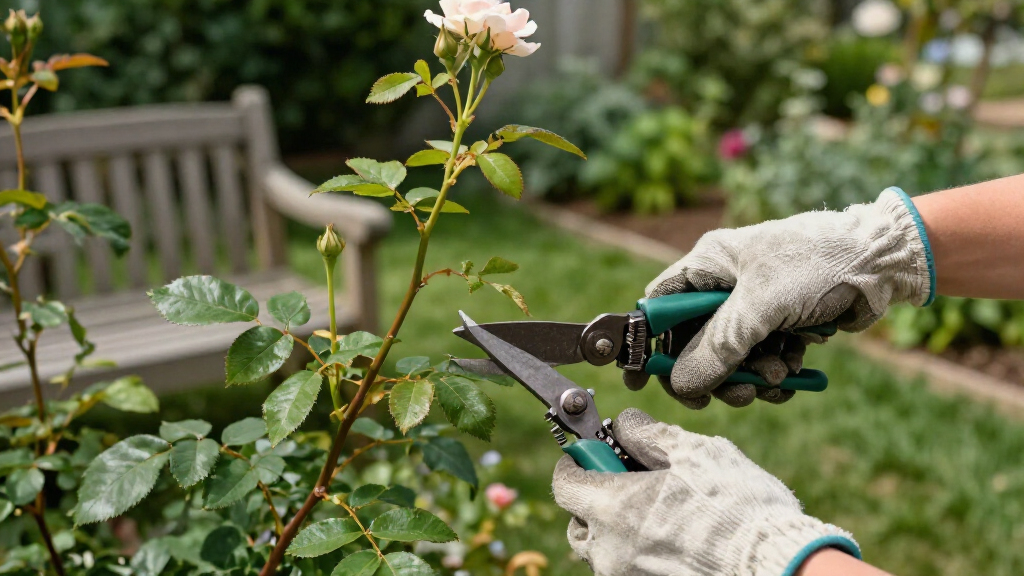
I compared these 14 manual bypass pruners on the factors that change day-to-day pruning: stated cutting capacity, blade and construction materials, handle length and grip design, and the maintenance or replacement options described for each model. Bypass shears are intended for live stems, so I gave priority to tools whose stated capacity and build suit regular garden trimming rather than treating a material label or accessory as proof of better cutting.
The ranking favors versatility and buyer fit. The Fiskars Professional leads for its stated 1-inch capacity and broad usefulness; compact and lower-capacity models rank better for lighter work than for thick branches. Established Felco and forged Corona options earn attention for buyers prioritizing robust or serviceable tools, while Japanese-steel and feature-focused models serve narrower preferences. I also weigh drawbacks: a larger tool may be tiring or awkward for small hands, higher capacity is no reason to force cuts beyond the tool’s limit, and blade material does not replace cleaning, sharpening, or checking replacement-part availability.
| garden pruning shear | Blade type | Hand orientation |
|---|---|---|
| Fiskars Professional Bypass Pr | Bypass | — |
| Fiskars Bypass Pruning Shears | Bypass | Ambidextrous |
| Felco F-11 Pruning Shears | Anvil | Right |
| Gerossi 7-Inch Bypass Pruning | Bypass | Ambidextrous |
| KAKURI Japanese Pruning Shears | — | Ambidextrous |
| DECERK 8.5-Inch Professional B | Bypass | Ambidextrous |
| VOTREK 8.5-Inch Bypass Pruning | Bypass | Ambidextrous |
| Felco F-2 Classic Manual Hand | Anvil | Right |
| Corona BP 3180D Forged Classic | Bypass | Ambidextrous |
| Kimura 8-Inch Pro Bypass Pruni | Bypass | Ambidextrous |
| Haus & Garten ClassicPRO Bypas | — | Ambidextrous |
| Kimura 8-Inch Japanese Yasugi | — | — |
| TONMA 8.1-Inch Japanese Stainl | — | Ambidextrous |
| gonicc 8-Inch Professional Byp | — | Ambidextrous |
Factors to Consider When Choosing Best Garden Pruning Shears
Choosing garden shears is less about finding the biggest cutting number and more about matching the tool to your plants, hands, and maintenance habits. These broader checks can help you avoid buying a pruner that feels wrong after a few minutes or struggles with your typical stems.
Match Cutting Capacity to Your Usual Stems
Think about the diameter of the stems you prune most often, not the thickest branch you might encounter once a year. A tool with a higher stated capacity gives you more headroom, but it does not make every cut effortless or protect a blade from misuse. Forcing a bypass pruner through wood beyond its limit can damage the cutting edge or strain your hand. If your garden includes woody limbs thicker than a hand pruner is designed for, use loppers or a pruning saw instead. Buyers who mainly deadhead flowers or trim soft new growth can favor control and a comfortable grip over maximum capacity. Keep a small margin between your routine stem size and the tool’s stated limit.
Choose a Handle That Fits Your Hand
Handle length and opening width shape how much control and leverage a pruner offers. A longer tool may reach farther or help with leverage, yet can be tiring if it is heavy or difficult to open repeatedly. Small hands may find a compact model easier to control, while larger hands may prefer more room around the grip. If possible, check the handle’s maximum opening and whether the design accommodates left-handed use before buying. Glove thickness matters too: a handle that feels roomy bare-handed can pinch or restrict movement with gardening gloves. Do not equate a professional label with universal comfort; fit is personal.
Understand What Blade Material Can—and Cannot—Tell You
Steel names can help compare likely priorities, but they do not predict the complete cutting experience. Blade geometry, edge quality, heat treatment, and how the tool is maintained all affect performance. A stainless blade may appeal to gardeners working in damp conditions because corrosion resistance can reduce one source of upkeep, while other steel types may call for more attention to drying and storage. Coatings can help with sap or surface protection, but they can wear and do not remove the need to clean the blade. Before paying extra for a material claim, check whether replacement blades are available and whether the manufacturer explains sharpening or care. A well-maintained, correctly sized pruner is more useful than a neglected blade with an impressive label.
Decide How Much Repairability Matters
Garden shears are exposed to sap, grit, moisture, and repeated force, so the ability to service a tool can affect its useful life. Look for clear information on replacement blades, springs, bolts, and other wear parts if you prune often or want to keep one tool for years. A simpler, less serviceable model can still make sense for occasional light work, especially when easy handling matters more than long-term parts support. Check how the tool comes apart before assuming repairs will be straightforward; some designs need specific components or tools. Also consider whether sharpening is practical for you or whether you would rather replace a basic pruner when its edge wears. Maintenance expectations should fit your habits, not just your intentions.
Pick Bypass Shears for the Right Kind of Cut
Bypass pruners use two passing blades and are generally suited to live stems where a clean cut matters. They are not a universal substitute for anvil pruners, which may suit some dry or dead material but can crush living stems more readily. For healthy shrubs, roses, and fresh growth, focus on alignment between the blades and a clean, sharp edge. If you often cut dry, brittle material, consider whether a bypass design is still the best tool for that specific task rather than choosing by category name alone. Avoid twisting the pruner while the blades are closed around a stem, since sideways force can affect alignment. Matching the cut type to the plant helps protect both the plant and the tool.
Treat Accessories and Extra Features as Secondary
A sheath, locking mechanism, or coating can make storage and handling more convenient, but none compensates for poor fit or inadequate cutting capacity. A sheath is useful if you carry tools around the garden, while a reliable lock matters for safe storage in a shed or tool bag. Look for a lock that is easy to operate with the hand you use to prune and that does not interfere with the cutting motion. Extra features also add parts that may need cleaning or adjustment. Compare those conveniences against the basics: blade alignment, grip comfort, spring action, and access to replacement components. Pay for an accessory when it solves a real problem in your routine, not simply because it appears in the package.
Frequently Asked Questions
Should I choose a 1-inch pruner if I sometimes cut thick branches?
Choose a 1-inch stated capacity only if it covers the stems you routinely cut and the tool still fits your hand. Capacity figures are a guide, not a promise that every branch at that diameter will cut easily; wood hardness, dryness, and blade sharpness all affect the effort. If thick branches are occasional, use loppers or a pruning saw rather than forcing a hand pruner. For frequent cuts near the limit, prioritize a robust design and a comfortable grip. A smaller, easier-to-control pruner may be the better everyday tool for mostly thin growth.
Are Japanese-steel pruning shears worth choosing over a standard steel model?
They may suit buyers who specifically value the blade material or want a particular cutting feel, but the steel name alone does not establish that a pruner will outperform another model. Blade shape, edge finish, handle fit, and upkeep all matter. Compare the care instructions and check whether replacement blades or other parts are available. If you garden in wet conditions, account for how the blade needs to be dried and stored. Choose a Japanese-steel model for its complete design and your preferences, not as a shortcut to judging cutting quality.
Is a bypass pruner a good choice for dead branches?
Bypass pruners are generally best suited to live stems, where their passing blades can make a clean cut. They can cut some dry material, but brittle or hardened branches may require extra force and can put more stress on the edge. For frequent deadwood removal, an anvil pruner, loppers, or a pruning saw may be a better fit depending on branch size. Keep live and dead material in mind when selecting a tool for a mixed garden. Do not twist the handles to force a stuck cut; change tools if the branch is beyond the pruner’s comfortable range.
What should I prioritize if my hands are small or pruning causes fatigue?
Start with handle opening, tool weight, and how comfortably the grip sits in your hand, rather than focusing only on cutting capacity. A compact model can offer more control, while a long or wide-opening design may make repeated cuts uncomfortable. Check whether the lock and release are easy to operate without shifting your grip. If you wear gloves, assess fit with gloves on, since they can change how much room you need. For frequent pruning, a tool that feels comfortable through repeated opening and closing is a better choice than one with features you rarely use.
Should I pay more for a pruner with replaceable parts?
Replaceable parts are most useful if you prune often, want to maintain one tool over time, or would rather replace a worn blade than the whole pruner. For occasional light gardening, a straightforward model may serve well without extensive repair options. Before choosing a serviceable design, confirm which parts are available and how easy they are to obtain; the possibility of repair is less useful without accessible components. Regular cleaning and sharpening still matter, even on a tool built for maintenance. Let your pruning frequency and willingness to care for the tool guide this decision.
Conclusion
For most gardeners who want one versatile hand pruner, I recommend the Fiskars Professional Bypass Pruning Shears as the best overall pick because its stated 1-inch capacity gives it room for a broad range of routine cuts. The Fiskars 5/8-inch model is my best value-style choice for lighter pruning, while the Felco F-2 is the best premium-minded option for buyers who place a high priority on a classic, serviceable tool. Beginners should start with a pruner that fits their hand and covers their typical stems; the compact Fiskars is a sensible place to compare if their work is mostly light. For specific needs, consider the Corona BP 3180D if forged construction is a priority, or look at the Japanese-style KAKURI, Kimura Yasugi Steel, and TONMA models if blade material and design are central to your choice. Match the tool to your usual cuts and hand fit, and use loppers or a saw for branches beyond its capacity.