
To prevent overheating or chilling your chicks, use a brooder temperature chart that aligns with their age. Adjust the heat gradually based on behavioral signs like huddling or panting, and use reliable thermometers for accurate readings. Keep an eye on your chicks’ activity and feather puffiness to gauge comfort. Monitoring these factors helps maintain the perfect environment for healthy growth. Continue exploring to learn how to fine-tune your brooder for ideal chick health.
Key Takeaways
- Regularly monitor chick behavior; huddling indicates cold, while spreading out suggests overheating.
- Adjust brooder temperature gradually by 5°F increments to prevent stress or shock.
- Use accurate thermometers at chick level to maintain recommended temperatures per age group.
- Ensure proper insulation and minimal drafts to prevent temperature fluctuations.
- Recognize signs of overheating (panting, spreading) and chilling (huddling, sluggishness) for timely adjustments.
Why Maintaining the Right Brooder Temperature Matters for Chick Health
Maintaining the correct brooder temperature is essential because young chicks are highly sensitive to cold and heat stress, which can affect their growth and overall health. Proper brooder insulation helps keep the temperature stable, preventing drafts and heat loss. Using the right heating sources, like heat lamps or brooders, ensures chicks stay warm without overheating. When the brooder isn’t well-insulated, heat escapes, forcing you to increase heating output, which can cause uneven temperatures. Conversely, poor insulation can also trap excess heat, risking overheating. Effective insulation plays a crucial role in maintaining consistent temperatures and reducing energy consumption. Consistent temperatures promote healthy development, reduce stress, and prevent health issues. Additionally, understanding projector technology can help in designing optimal lighting conditions for brooding environments, ensuring the space remains comfortable and healthy for the chicks. Incorporating insulation techniques can further enhance temperature stability and energy efficiency in your brooder setup. Properly monitoring temperature with reliable thermometers helps detect any fluctuations early, ensuring optimal conditions at all times. Furthermore, integrating professional services for consultation or installation can help optimize your brooder system for better energy efficiency and chick health.
How to Use a Brooder Temperature Chart Effectively
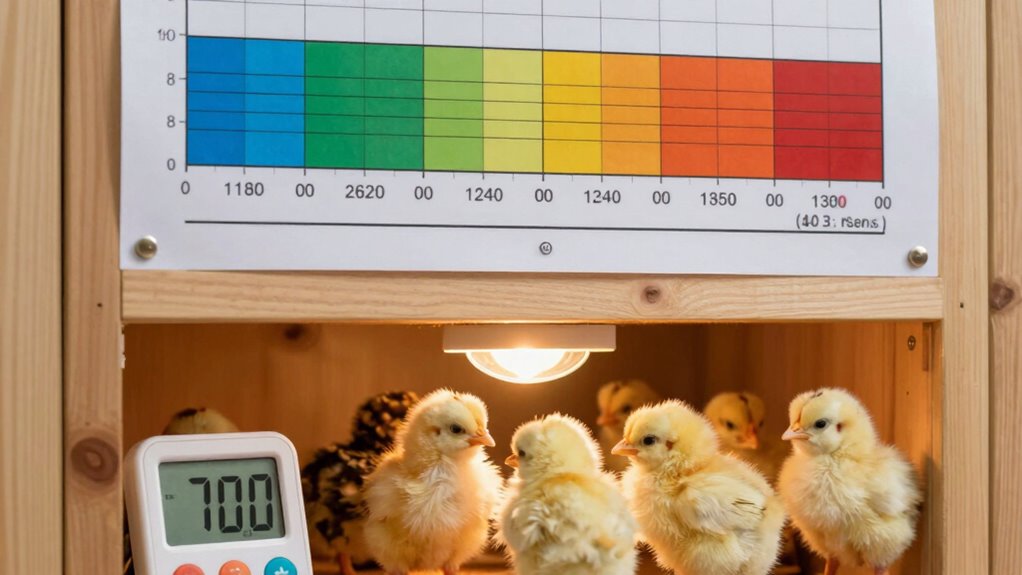
To use a brooder temperature chart effectively, you need to understand how to interpret its guidelines and adjust your heat sources accordingly. Start by monitoring temperature sensors placed at chick level for accurate readings. These sensors help you track the brooder’s actual temperature rather than relying solely on the thermometer in the heating equipment. When readings fall outside the recommended range, adjust your heating equipment—either increase or decrease heat output—to maintain ideal conditions. Consistently checking sensor data ensures your chicks stay comfortable and healthy. Remember, rapid changes can stress chicks, so make gradual adjustments. Proper calibration of temperature sensors is crucial for reliable data and effective management. Additionally, sensor placement impacts the accuracy of your readings, so position sensors thoughtfully. Accurate sensor calibration ensures your adjustments are based on reliable data, preventing unnecessary fluctuations. Regular sensor maintenance is also important to keep your readings accurate over time. By accurately reading your temperature sensors and fine-tuning your heating equipment, you’ll create a stable environment that promotes proper growth and prevents overheating or chilling. Monitoring tools are essential for maintaining a calm, organized brooding space and ensuring your chicks thrive.
Temperature Guidelines for Different Chick Ages
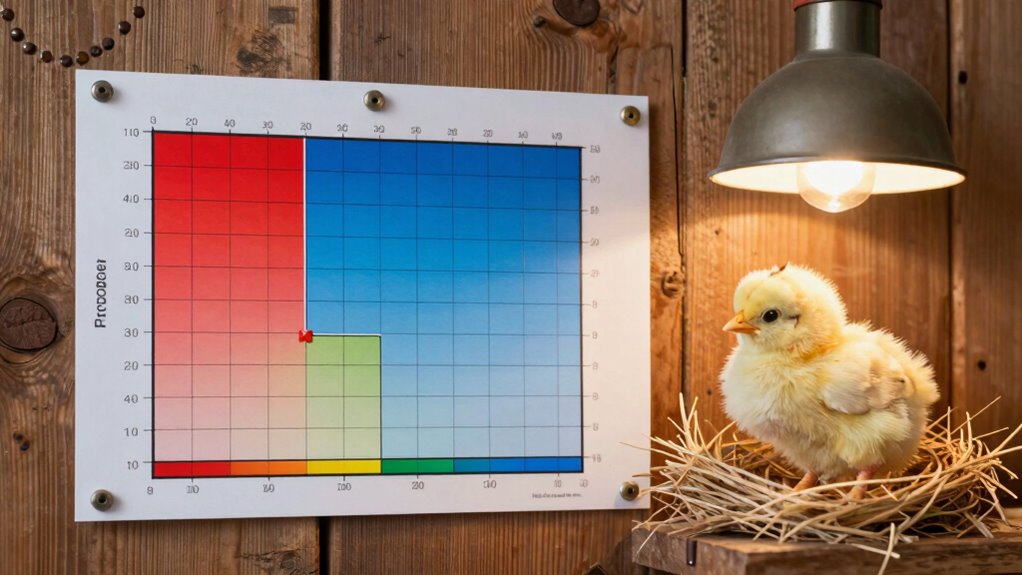
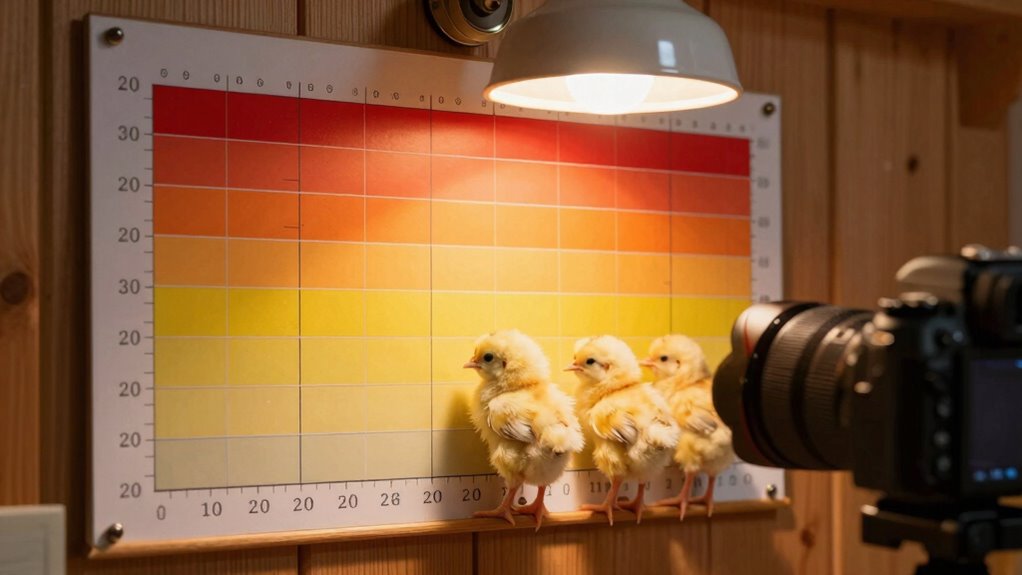
As chicks grow, their temperature needs change markedly to stay healthy and comfortable. Understanding temperature zones helps you adapt the brooder to support proper thermal regulation. Young chicks, in their initial days, require higher temperatures to maintain warmth. As they mature, their tolerance for cooler temperatures increases, and their thermal regulation improves. Use this guideline to tailor the brooder environment:
| Age Range | Temperature Zone (°F) | Notes |
|---|---|---|
| 0-1 week | 90-95 | Keep heat source close |
| 2-3 weeks | 85-90 | Gradually reduce heat |
| 4-6 weeks | 80-85 | Allow cooler zones |
| 7+ weeks | 75-80 | Prepare for outdoor transition |
Adjusting temperatures according to these zones guarantees chicks develop proper thermal regulation skills without overheating or chilling.
Signs Your Chicks Are Too Hot or Too Cold

You can tell if your chicks are too hot or too cold by watching their behavior and appearance. If they huddle together and stay close to the heat source, they’re likely cold; if they spread out and pant, they might be too hot. These signs also affect their growth and survival, so recognizing them early helps keep your flock healthy. Monitoring temperature and maintaining a consistent safe environment is essential for their well-being. Additionally, understanding behavioral cues can help you craft engaging ways to educate others about proper chick care and temperature management. Recognizing temperature regulation signals allows for more accurate assessments of their comfort levels and promotes better health outcomes. Incorporating visual and auditory cues can further enhance your ability to interpret their needs effectively.
Chick Behavior Changes
Chicks are highly responsive to temperature changes, and their behavior offers clear clues about whether they’re too hot or too cold. If they’re too hot, you’ll notice them spreading out and seeking cooler spots, often with rapid pecking behavior and shallow, quick breathing. Their feather development may appear uneven as they try to cool down. Conversely, if they’re too cold, chicks tend to huddle close together under the heat source, with sluggish pecking and less movement. Their feathers may look fluffed up as they conserve heat, and they might chirp more frequently, signaling discomfort. Paying attention to these behavioral cues helps you adjust the brooder temperature promptly, ensuring your chicks stay comfortable and healthy as they develop their feathers.
Physical Appearance Clues
When observing your chicks’ physical appearance, their feathers and overall posture reveal much about their comfort levels. Proper feather development and eye clarity are key indicators of health and temperature. If they appear huddled under a heat source, they might be cold, with fluffed-up feathers and slow movements. Overheated chicks often spread out, pant, and have damp-looking feathers. You may notice their eyes look dull or half-closed when they’re too cold. Conversely, chicks with bright, alert eyes and smooth feather development are likely comfortable. Check for signs like tail bobbing, spreading wings, or clustering away from the heat source, all signaling discomfort. Recognizing these physical clues helps you maintain the ideal brooder temperature for healthy growth. Monitoring their behavioral cues alongside physical signs provides a more complete understanding of their comfort and helps prevent temperature-related stress. Being aware of their thermal regulation abilities can further aid in adjusting the environment effectively.
Survival and Growth Rates
Are your chicks growing steadily and thriving as they should? Survival and growth rates are key indicators of proper brooder temperature. If they’re not thriving, it might be due to environmental factors like temperature fluctuations or drafts, which can overwhelm their genetic resilience. When chicks are too hot, they may huddle under the heat source or spread out, showing signs of distress. Conversely, too cold, and they might huddle excessively or grow slowly. Healthy growth and consistent survival rates suggest the environment suits their needs. Remember, each breed has different resilience levels, so monitor their behavior closely and adjust temperature accordingly. Proper environmental management ensures suitable development and minimizes stress, helping your chicks reach their full growth potential.
Tips for Adjusting Your Brooder Temperature
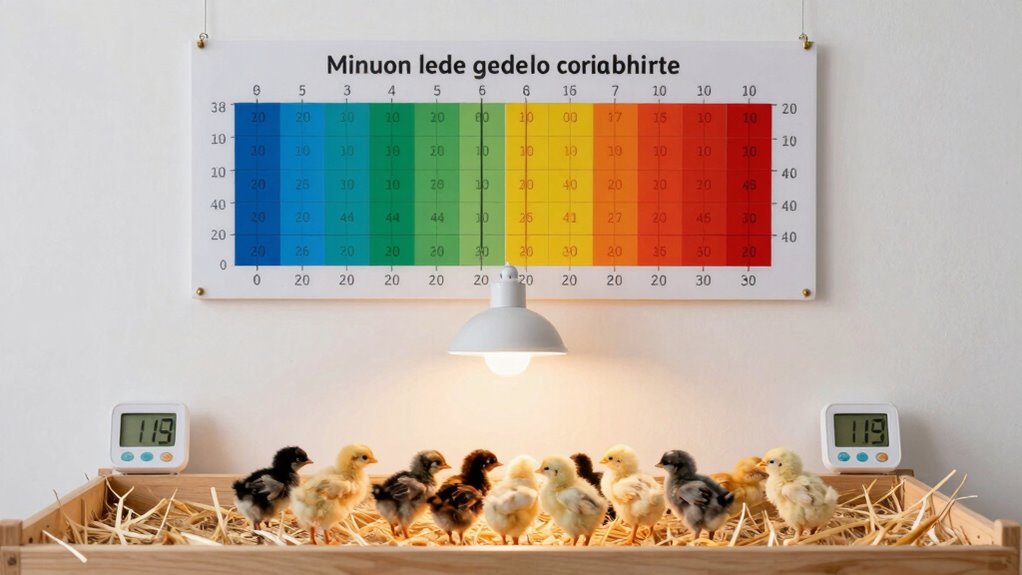
To keep your chicks comfortable, watch how they behave and look for signs they’re too hot or cold. Make small adjustments to the temperature instead of large jumps to prevent stressing them. By paying close attention and changing gradually, you’ll help your chicks stay healthy and happy. Monitoring their behavioral cues can help you fine-tune the temperature more effectively. Incorporating smart automation can assist in maintaining consistent conditions without constant manual adjustments. Regularly performing seasonal checklists ensures your brooder remains optimal for your chicks’ needs throughout the year. Understanding small appliance operation and limitations allows you to better maintain a safe environment for your chicks. Educating yourself on digital safety can help prevent potential hazards associated with using electrical equipment in the brooder.
Monitor Chicks’ Behavior
Monitoring your chicks’ behavior is essential for maintaining the correct brooder temperature. By observing their actions, you can identify signs of discomfort or distress that indicate temperature issues. Look for behavior cues such as huddling under the heat source, spreading out, or restless movement. If chicks crowd together, they may be cold; if they’re scattered and panting, they might be overheated. Notice if they are sleeping comfortably in the middle or near the edges of the brooder. Their chick comfort depends on these subtle cues, guiding you to make necessary adjustments. Understanding chick behavior can help you fine-tune the environment to keep your chicks healthy and thriving. Additionally, paying attention to proper brooder setup ensures optimal temperature regulation.
Adjust Temperature Gradually
When you notice signs of discomfort in your chicks, such as crowding or panting, it’s important to adjust the brooder temperature carefully. Sudden changes can stress your chicks and waste energy. Instead, make gradual adjustments, using reliable temperature sensors to monitor conditions precisely. For example, if your chicks bunch together near the heat source, lower the temperature slightly, about 5°F at a time. Keep a close eye on their behavior over the next few hours before making further changes. To help you stay organized, consider this quick reference:
| Problem | Adjustment | Tips |
|---|---|---|
| Too cold | Raise temperature slightly | Use sensors for accurate readings |
| Too hot | Lower temperature gradually | Check chicks’ behavior regularly |
| Comfortable | Maintain current setting | Ensure energy conservation |
This approach keeps your chicks comfortable while conserving energy.
Tools to Help You Keep the Correct Brooder Temperature
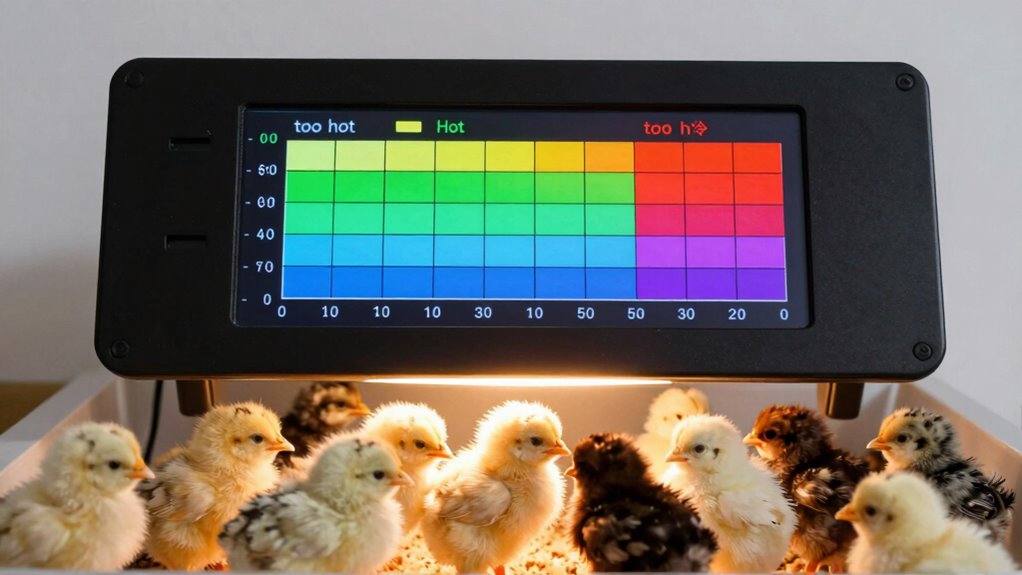
Keeping the brooder temperature just right is essential for healthy chick development, and the right tools make this task much easier. Accurate thermometers ensure you get precise readings, helping you maintain proper temperature zones within the brooder. Investing in a reliable thermometer improves thermometer accuracy, so you can confidently monitor changes and avoid overheating or chilling your chicks. A digital thermometer with a probe can give instant, precise readings at chick level. A thermostat or heat lamp with adjustable settings helps you regulate heat consistently. A infrared thermometer allows quick spot checks without disturbing chicks. Additionally, a temperature chart or app can help track trends over time, ensuring your brooder stays within the ideal temperature zones for healthy growth.
Troubleshooting Common Brooder Temperature Problems

Troubleshooting brooder temperature issues requires quick identification and action to prevent health problems in your chicks. Temperature fluctuations often signal that your equipment malfunctions or the heat source isn’t consistent. Check your heat lamp, thermostat, or heating pad to make certain they’re working properly. If the temperature suddenly drops or rises, verify that the bulb isn’t loose, burnt out, or dirty, and replace or clean it as needed. Sudden changes may also indicate drafts or inadequate insulation. Use a reliable thermometer to monitor the temperature regularly. When you notice persistent fluctuations, recalibrate your equipment or consider upgrading to more dependable gear. Acting swiftly helps maintain a steady environment, keeping your chicks healthy and comfortable.
Frequently Asked Questions
How Often Should I Check Brooder Temperature During the Day?
You should perform daily checks of your brooder temperature to guarantee your chicks stay comfortable. During the day, monitor the temperature at least every 2 to 3 hours, especially when chicks are young or the weather changes. Consistent temperature monitoring helps you catch any fluctuations early, preventing overheating or chilling. Keep an eye on their behavior and adjust the heat source as needed for ideal comfort and growth.
Can External Weather Affect My Brooder’s Temperature Settings?
Did you know that outdoor temperatures can influence indoor brooder conditions by up to 15°F? Yes, external weather definitely affects your brooder’s temperature settings. Seasonal adjustments are essential, especially during sudden temperature shifts. You should regularly monitor and adjust your heating source to compensate for outdoor temperature changes, ensuring your chicks stay warm without overheating. Keeping an eye on weather forecasts helps maintain a stable environment for healthy growth.
What Are the Long-Term Effects of Consistently Incorrect Brooder Temperatures?
Consistently incorrect brooder temperatures can harm chick health and stunt growth development. If it’s too hot, chicks may become stressed, develop dehydration, or suffer heat exhaustion. If it’s too cold, they might get chilled, leading to weak immune systems and slow growth. Over time, these issues can cause long-term health problems and reduce overall viability. Maintaining proper temperatures guarantees healthy, active chicks with ideal growth potential.
Is It Necessary to Use a Heat Lamp in All Climates?
In all climates, using a heat lamp isn’t always necessary. You should consider climate adaptation and explore alternative heating options, like heated pads or infrared heaters, especially in milder or variable environments. These solutions can provide consistent warmth without the risks of overheating or chilling. Adjusting your heating method based on your local climate guarantees your chicks stay comfortable and healthy as they grow.
How Do I Transition Chicks From Brooder to Outdoor Environment Safely?
To shift chicks safely from the brooder to the outdoors, start with outdoor acclimation by placing them outside for short periods each day. Gradual transition helps them adapt to the new environment and temperature fluctuations. Increase their outdoor time gradually over a week, guaranteeing they’re protected from predators and harsh weather. Always monitor their behavior and comfort, making adjustments as needed to guarantee a smooth, safe outdoor transition.
Conclusion
Maintaining the right brooder temperature is like keeping a cozy blanket around your chicks—too hot or too cold, and they won’t thrive. By using a temperature chart and watching their behavior, you can guarantee they stay comfortable and healthy. Adjust quickly when needed, using helpful tools and tips. When you get it right, watching your chicks grow strong feels as satisfying as watching a sunrise—bright and full of promise.