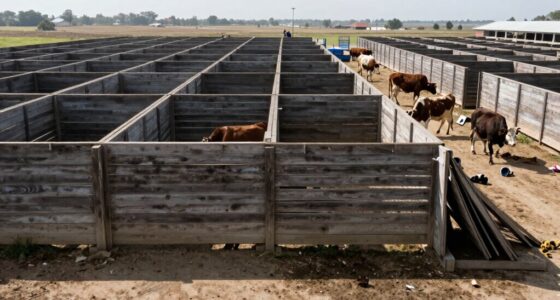
Ignoring proper orientation of calf hutches can cause them to overheat or trap moisture, putting your calves at risk. Without ideal placement, airflow is restricted, leading to damp, stale air that promotes bacteria and mold growth. Poor positioning also allows excessive heat build-up, stressing young calves and weakening their immune systems. Understanding how to position hutches to avoid these issues will help you create a healthier, more comfortable environment for your calves. Keep exploring to learn more.

Get garden gear delivered free — and shop member deals
- Fast, free delivery on millions of items
- Access to Prime Big Deal Days deals on October 6–7
- Prime Video, Amazon Music and more included
Key Takeaways
- Incorrect orientation allows excessive sunlight exposure, raising interior temperatures and causing overheating.
- Poor site placement restricts airflow, trapping humid air and increasing dampness inside the hutch.
- Ignoring prevailing wind directions reduces ventilation, leading to stale, moisture-laden environments.
- Lack of shade and improper positioning cause walls and roofs to heat up, intensifying indoor warmth.
- Improper orientation impairs insulation, making it difficult to regulate temperature and humidity levels.

Proper orientation of calf hutches is essential for maintaining a healthy and comfortable environment for young calves. When you position the hutches incorrectly, you risk exposing calves to excessive heat or dampness, which can compromise their health and growth. One of the key factors to consider is ventilation efficiency. If the hutches face the wrong direction, airflow may be restricted, leading to poor ventilation. This causes stale, humid air to stay inside, increasing moisture levels and creating a damp environment that promotes the growth of bacteria and mold. Poor ventilation also hampers the removal of excess heat, making the interior uncomfortably hot during warm weather, which can stress the calves and impair their immune systems.
In addition to ventilation, material insulation plays a vital role in maintaining a stable environment inside the hutches. When hutches are poorly oriented, the materials used may not effectively regulate temperature or moisture. For example, if a hutch is placed where it receives direct sunlight for most of the day, the walls and roof may absorb and radiate that heat, causing the interior temperature to soar. Conversely, if the hutches are shaded or oriented away from prevailing winds, they might trap cold, damp air, making the environment too moist and chilly for calves. Proper orientation allows you to optimize the insulation properties of the hutch materials, preventing extreme temperature fluctuations and moisture buildup. Additionally, understanding the interaction of sun and wind with the hutch location can help you make better orientation decisions to improve comfort and health for the calves. Recognizing the importance of proper site selection is fundamental to designing a suitable environment for young livestock.
You should pay close attention to how the sun and wind interact with the hutch location. Positioning the hutches to avoid harsh afternoon sun minimizes overheating and reduces the need for additional cooling measures. At the same time, orienting them to catch prevailing breezes enhances ventilation efficiency, helping to keep the air inside fresh and dry. Correct site selection also considers local climate conditions, which can significantly influence the effectiveness of your orientation choices. When you consider these factors, you’ll notice a marked improvement in calf comfort and health. Proper orientation also reduces maintenance needs, as damp, poorly ventilated environments are more prone to mold and bacterial growth, which can require frequent cleaning and treatment.
As an affiliate, we earn on qualifying purchases.
Frequently Asked Questions
How Does Orientation Affect Calf Health During Different Seasons?
You’ll see that orientation greatly impacts calf health across seasons. Proper orientation promotes good ventilation techniques, preventing excess heat or dampness, especially in hot weather. When calves can socialize comfortably, their stress levels decrease, boosting immunity. In colder months, correct orientation minimizes drafts, keeping calves warm. By paying attention to orientation, you guarantee consistent ventilation and socialization, helping calves stay healthy year-round and reducing illness caused by environmental stressors.
What Materials Best Prevent Heat Buildup in Calf Hutches?
Did you know that proper insulation can reduce heat buildup in calf hutches by up to 30%? You should prioritize materials like insulated panels and reflective barriers that enhance ventilation strategies. Insulation materials such as foam boards or polystyrene help keep calves cool in summer and warm in winter, preventing dampness and overheating. Combining these with good airflow ensures your calves stay comfortable and healthy year-round.
Are There Specific Guidelines for Hutch Placement in Various Climates?
Yes, there are specific guidelines for hutch placement based on climate. You should prioritize good hutch ventilation to prevent overheating and dampness, ensuring fresh air circulates effectively. Additionally, place hutches in shaded areas or use shade placement strategies to protect calves from direct sunlight and excessive heat. Adjust placement according to your climate, and always monitor conditions to maintain a comfortable environment for the calves.
How Can I Monitor Humidity Levels Inside Calf Hutches Effectively?
Think of monitoring humidity like keeping a delicate dance in perfect harmony. You can do this by using sensors that are regularly calibrated to guarantee accurate readings. Data logging helps you track humidity levels over time, revealing patterns and issues before they escalate. This proactive approach allows you to maintain a comfortable, healthy environment inside the calf hutches, preventing dampness or heat stress that could harm your calves.
What Are Quick Fixes for Dampness or Heat Issues in Hutches?
To fix dampness or heat issues quickly, improve ventilation by opening vents or adding fans to increase airflow. Use insulation techniques like adding reflective barriers or insulating panels to keep temperatures stable and reduce dampness caused by condensation. Regularly check and clear any obstructions in ventilation paths, and consider temporary shading or waterproof covers to protect hutches from direct sunlight or rain. These steps help create a healthier environment for your calves.
Conclusion
Ignoring orientation turns calf hutches into hot, damp retreats, where comfort is sacrificed. Yet, when you consider direction, you craft a haven that stays cool and dry. It’s a simple choice—neglect the orientation and face unhealthy conditions, or embrace it and foster healthier calves. The difference is clear: a hutch that’s too hot or damp versus one that’s just right. Your decision shapes their health and future—don’t let neglect tilt the balance.
Fall yard work Picks
leaf blowers
As an affiliate, we earn on qualifying purchases.