
Poor ventilation in your chicken coop is a silent mistake that can seriously harm your flock’s health, causing respiratory issues, stress, and reduced productivity. If you don’t guarantee proper airflow, humidity and ammonia buildup can threaten their well-being and attract pests. Properly designed vents, strategic placement, and seasonal adjustments keep the air fresh and safe. Keep an eye out for problems, and you’ll discover how to prevent costly mistakes that could wreck your flock.
Key Takeaways
- Sealing vents completely in winter traps moisture and ammonia, causing respiratory problems and flock health issues.
- Overlooking proper placement of vents leads to poor airflow, stagnation, and increased humidity in the coop.
- Relying solely on insulation without adequate ventilation causes moisture buildup, mold, and bacteria growth.
- Ignoring seasonal adjustments prevents proper airflow regulation, risking drafts and temperature swings.
- Neglecting regular inspection and maintenance of vents allows blockages and predator entry, harming flock safety and health.
Why Proper Chicken Coop Ventilation Matters for Healthy Chickens

Proper ventilation is essential for keeping chickens healthy because it helps regulate temperature, reduce moisture, and prevent the buildup of harmful gases. When your coop isn’t well-ventilated, it can lead to poor brooder temperature control, risking chills or overheating for young chicks. Adequate airflow also helps dry out excess moisture from droppings and humidity, reducing disease risks. Additionally, good ventilation supports predator proofing by preventing strong odors that might attract predators or pests. Properly ventilated coops keep the environment fresh and safe, ensuring your chickens stay comfortable and healthy. Without it, you increase the chances of respiratory issues and stress, which can weaken your flock. Prioritizing ventilation is a simple yet vital step to maintain a safe, healthy chicken coop.
How to Tell If Your Coop Has Ventilation Problems
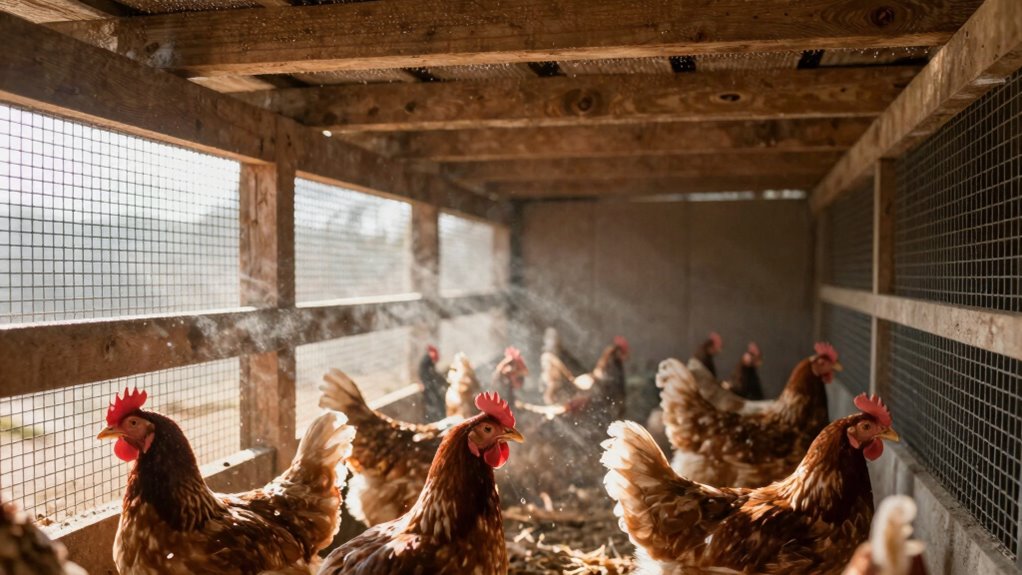
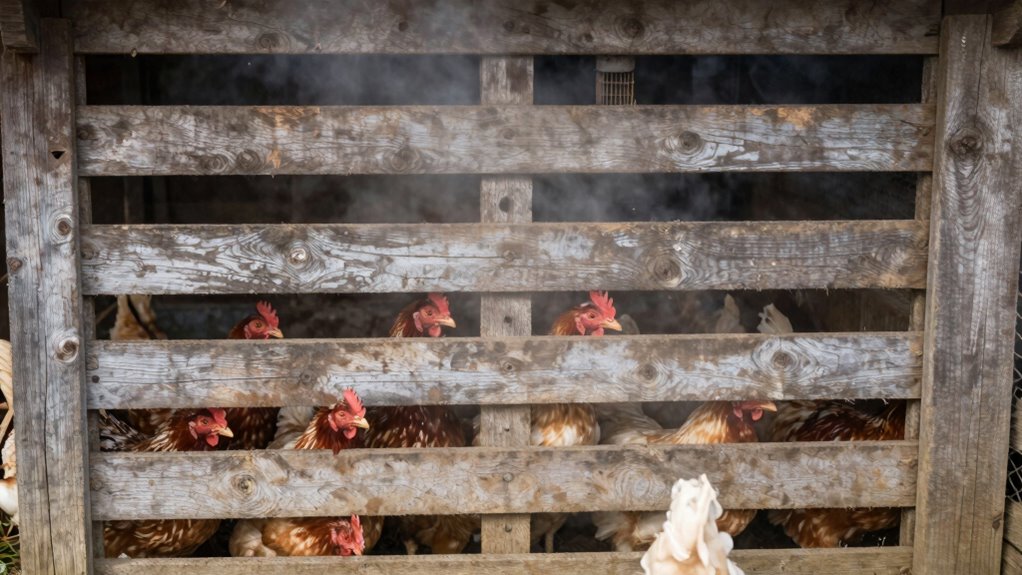
If your chicken coop isn’t ventilated properly, signs of poor airflow will quickly become apparent. Many people believe ventilation myths, like closing vents in winter or sealing the coop tight, but these can trap moisture and harmful gases. To check for ventilation issues, observe your coop’s interior during different times of day. Look for excess humidity, condensation on walls, or stale smells, which indicate inadequate airflow. You can also use airflow sensors to measure air exchange rates; if they show low circulation, your ventilation needs improvement. Pay attention to whether fresh air enters easily and stale air exits. Proper ventilation isn’t just about opening windows—it’s about ensuring balanced airflow to keep your flock healthy. Additionally, understanding the correct ventilation techniques can help you optimize airflow and avoid common mistakes. Ensuring proper air exchange rates is essential for maintaining an optimal environment and preventing respiratory issues in your chickens. Regularly inspecting your ventilation setup and making adjustments based on environmental conditions can greatly enhance your flock’s well-being.
How Poor Airflow Affects Your Chickens’ Health and Productivity

When airflow in your chicken coop is poor, it can quickly compromise your flock’s health and productivity. Stale, humid air traps ammonia from droppings, leading to respiratory issues, especially for broody hens who spend more time nesting. Poor ventilation also encourages the growth of mold and bacteria, weakening your chickens’ immune systems. Additionally, inadequate airflow can make it easier for predators to access the coop, as stale air often signals vulnerability. Over time, chickens may become stressed, resulting in decreased egg production and weight gain. Broody hens may struggle to hatch healthy chicks if air quality remains poor. Ensuring proper airflow keeps the environment fresh, reduces disease risk, and deters predators from exploiting weak ventilation gaps. Proper Free Floating ventilation is essential to maintain a healthy, productive flock and prevent silent health issues from developing. Maintaining proper airflow helps to prevent the buildup of harmful gases and ensures your chickens remain comfortable and healthy. Regularly inspecting and adjusting ventilation systems can prevent air quality deterioration and promote optimal flock health. Being aware of ventilation standards can help you create a more effective airflow system for your coop.
What Features Make a Coop’s Ventilation Effective?
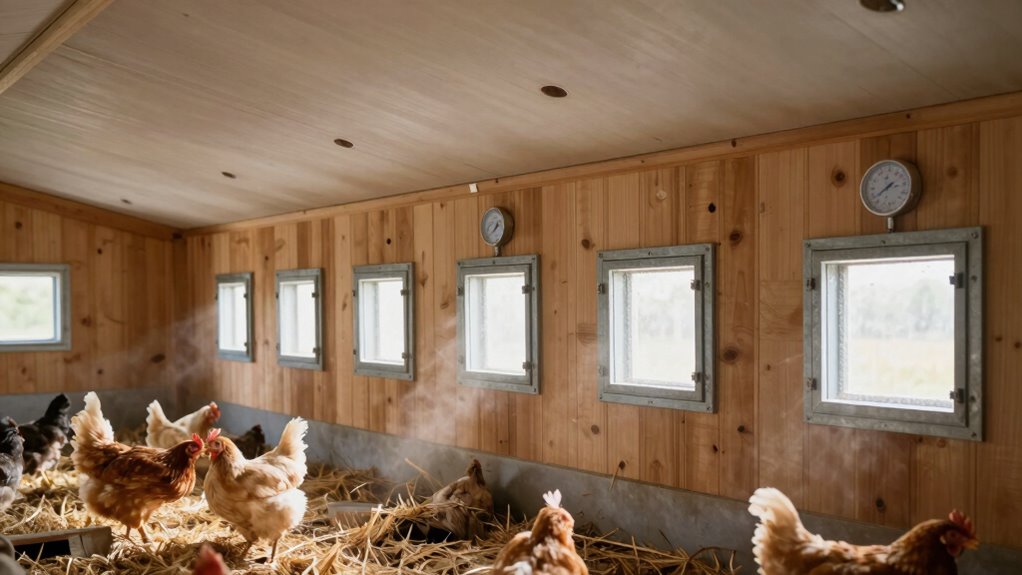
Effective ventilation in a chicken coop combines thoughtful design features that promote continuous airflow and prevent stagnant air pockets. Key features include strategic placement of vents to create ideal airflow patterns, ensuring fresh air circulates without drafts. Using durable ventilation materials like metal or weatherproof wood helps maintain integrity and control humidity. Properly designed vents should allow warm, moist air to escape while drawing in cooler, fresh air. Incorporate adjustable openings to regulate airflow as needed. Here’s a quick overview: airflow patterns
| Feature | Description | Benefits |
|---|---|---|
| Vent placement | High and low for airflow circulation | Prevents stagnation |
| Vent materials | Weather-resistant, durable materials | Long-lasting, easy to clean |
| Adjustable vents | Can be opened or closed as needed | Controls airflow and temperature |
Additionally, understanding ventilation principles helps optimize airflow and maintain a healthy environment for your flock. Proper placement and design of vents play a crucial role in maintaining air quality, which is essential for the health and productivity of your chickens. Recognizing how airflow dynamics work enables you to create a more effective ventilation system that benefits your flock’s overall wellbeing.
Easy Ways to Improve Airflow in Your Coop
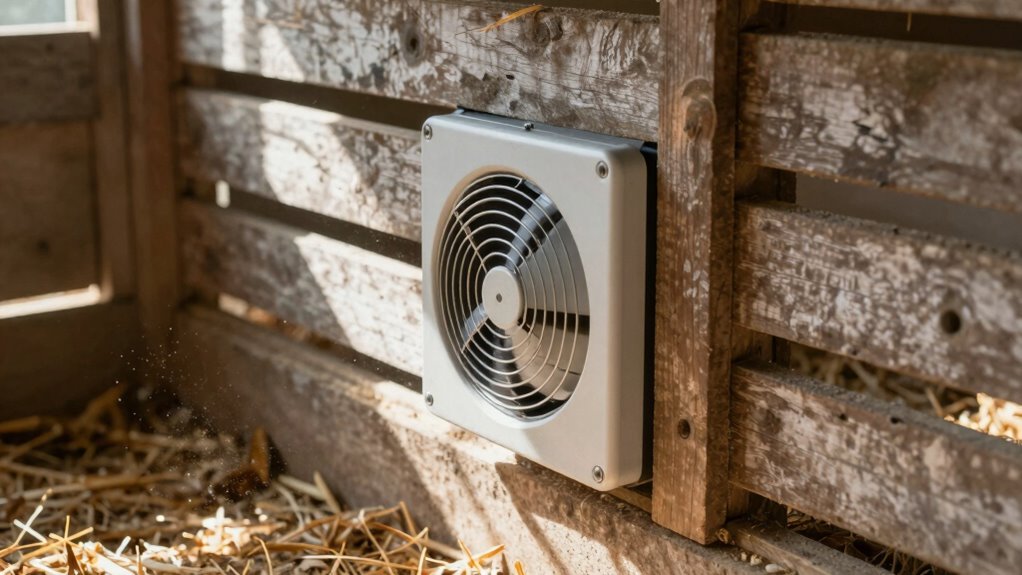
You can boost airflow in your coop by maximizing natural ventilation through strategic placement of windows and vents. Installing adjustable vents allows you to control airflow based on weather and season. These simple steps make it easier to keep the air fresh and healthy for your chickens. Incorporating connected equipment and monitoring with smart sensors can further optimize ventilation and maintain a healthier environment. Understanding ventilation principles can help you design a more effective airflow system tailored to your coop’s needs, especially when considering air exchange rates to prevent moisture buildup and ammonia buildup. Additionally, familiarizing yourself with airflow dynamics ensures you can better adapt your ventilation system to seasonal changes and weather conditions. Knowing proper airflow patterns is crucial for preventing stagnant air and ensuring consistent ventilation throughout the coop.
Maximize Natural Ventilation
Maximizing natural ventilation is one of the easiest ways to improve airflow in your chicken coop. Start by ensuring your coop has well-placed predator proof vents on opposite sides to promote cross-ventilation. Proper ventilation reduces moisture buildup and keeps your flock comfortable. While chicken coop insulation helps regulate temperature, it can also trap stale air if not balanced with good airflow. Use open vents that allow fresh air to enter and stale air to escape without creating drafts. Avoid covering vents with materials that block airflow or compromise security. Regularly check that vents remain predator-proof and unobstructed. Incorporating air exchange principles ensures continuous fresh air circulation, which is essential for maintaining a healthy environment. Properly designed ventilation systems can also help in filtering out dust and allergens, contributing to better respiratory health for your chickens. Additionally, understanding airflow dynamics can help optimize the placement and size of vents for maximum efficiency. Considering air circulation patterns can further enhance the effectiveness of your ventilation setup. Improving natural ventilation not only enhances air quality but also prevents respiratory issues, keeping your chickens healthier and happier. Understanding ventilation is essential for creating a healthy environment and preventing issues related to poor airflow.
Install Adjustable Vents
Installing adjustable vents offers a simple way to fine-tune airflow in your chicken coop. These vents let you control fresh air intake and exhaust, helping maintain the right humidity and temperature. Combine adjustable vents with automatic fans for automated climate management, especially during extreme weather. Proper insulation techniques around the vents prevent drafts that could stress your flock. When set correctly, adjustable vents improve ventilation without causing temperature fluctuations. They also allow you to respond quickly to changing weather conditions, reducing the risk of respiratory issues. Regularly check and adjust your vents to ensure ideal airflow. Proper ventilation is a key factor in preventing moisture buildup and maintaining healthy airflow in your coop. This simple upgrade keeps your chickens comfortable, healthy, and reduces the chances of moisture buildup that can lead to mold or disease.
Common Mistakes That Worsen Ventilation Problems
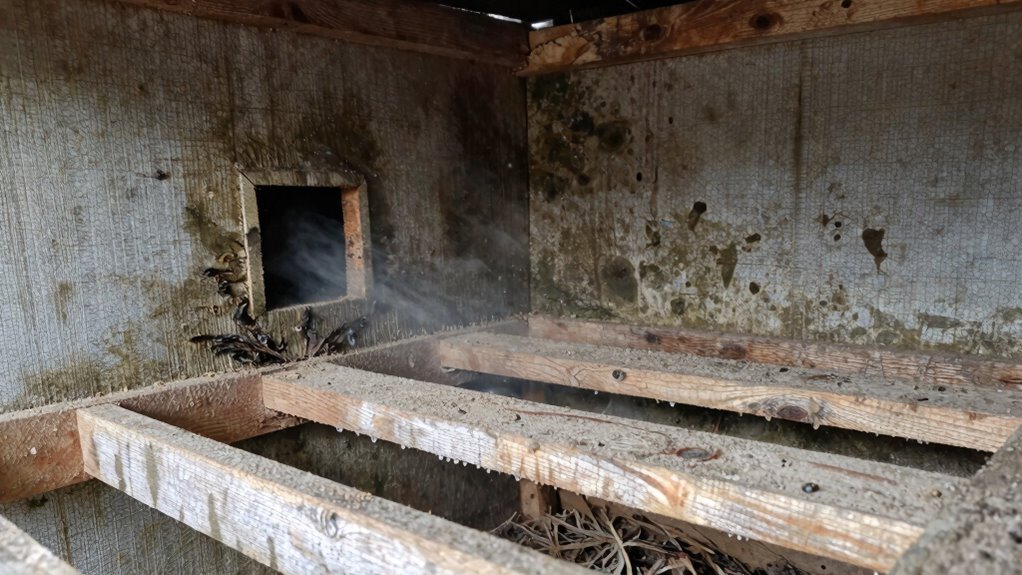
One of the most common mistakes that worsens ventilation problems in a chicken coop is sealing it too tightly without providing proper airflow. When you focus solely on coop insulation to keep warmth in, you might unintentionally block ventilation, creating stale, humid air. Instead, avoid sealing all gaps completely; instead, consider ventilation upgrades that balance airflow and insulation. Proper upgrades include adding adjustable vents or exhaust fans, ensuring fresh air circulates without causing drafts. Neglecting this balance can lead to respiratory issues and poor flock health. Remember, good ventilation isn’t about sealing the coop airtight—it’s about designing a system that maintains airflow while conserving heat. Properly combining insulation with effective ventilation upgrades keeps your chickens comfortable and healthy.
How to Choose the Best Ventilation System for Your Coop

Choosing the right ventilation system starts with understanding airflow optimization techniques that keep air fresh without causing drafts. You’ll also want to take into account vent placement strategies that promote consistent circulation and prevent moisture buildup. By focusing on these points, you can ensure a healthy environment for your chickens.
Airflow Optimization Techniques
Selecting the right ventilation system for your chicken coop is essential to maintaining healthy, comfortable conditions for your flock. To optimize airflow, ensure you balance fresh air intake with proper exhaust methods. Use adjustable vents or windows to control air movement based on seasonal changes, promoting good air quality and effective temperature control. Incorporate fans or ridge vents strategically to prevent stagnant air and moisture buildup, which can cause respiratory issues. Avoid drafts by positioning vents correctly, and consider using baffles or windbreaks to direct airflow smoothly. Regularly monitor conditions with thermometers and hygrometers, adjusting ventilation as needed. Proper airflow techniques help maintain consistent temperature and fresh air, reducing stress and preventing health problems in your flock.
Vent Placement Strategies
Proper vent placement plays a key role in guaranteeing your coop’s airflow works effectively. To optimize vent placement, position vents high on the walls or roof to promote natural airflow, allowing warm, moist air to escape. Keep vents on opposite sides to encourage airflow direction, creating a consistent cross-breeze that removes humidity and odors. Avoid placing vents directly in the path of prevailing winds, which can cause drafts and stress your chickens. Instead, aim for strategic locations that facilitate gentle air movement without creating chills. Adjusting vents seasonally helps maintain proper airflow. When planning vent placement, consider the coop’s size, orientation, and local climate to ensure airflow direction supports health and comfort for your flock year-round.
Seasonal Tips for Maintaining Good Ventilation Year-Round
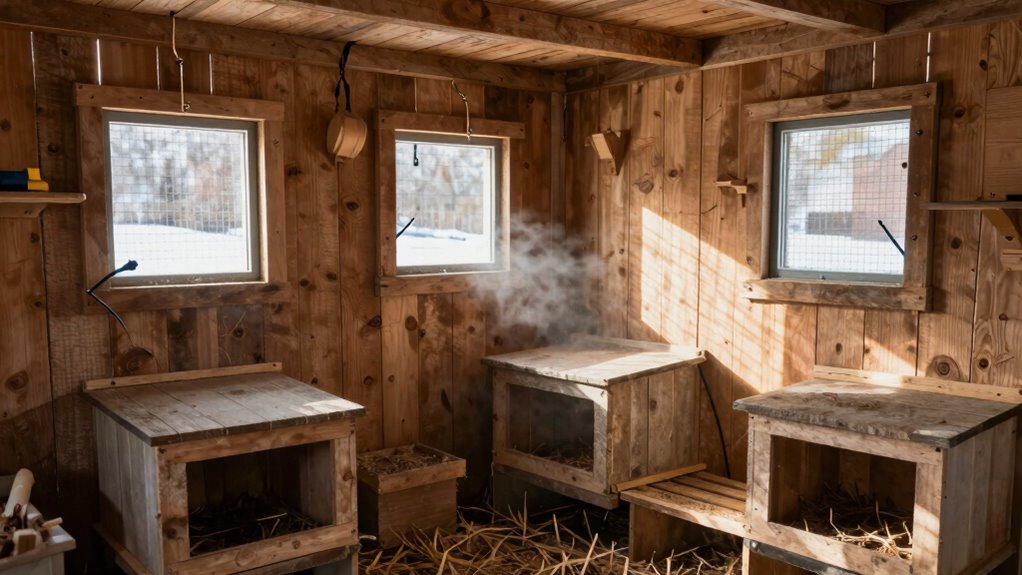
Maintaining good ventilation in your chicken coop throughout the year requires paying attention to seasonal changes and adjusting accordingly. In colder months, use complementary heating to keep your flock warm without blocking airflow. Ensure vents are positioned to promote airflow while preventing drafts that could chill your chickens. During winter, monitor humidity levels and increase ventilation gradually to prevent moisture buildup, which can cause respiratory issues. In summer, boost airflow to reduce heat stress, but always protect your flock from predators by securing vents with predator-proof screens. Regularly check for blockages or debris that could obstruct airflow. By adjusting ventilation strategies seasonally, you keep your chickens healthy, comfortable, and safe year-round.
Troubleshooting Ventilation Issues: When to Call an Expert
When ventilation problems persist despite your efforts to adjust vents and keep the coop well-maintained, it’s a sign that you might need professional help. Sometimes, DIY fixes can’t resolve underlying issues or may even worsen the problem. Recognize when to call an expert to ensure proper airflow and prevent health risks for your flock.
| Ventilation Myths | Reality |
|---|---|
| Opening windows always helps | Proper ventilation balances airflow without drafts |
| DIY fixes solve all issues | Some problems require expert assessment |
| More ventilation is better | Over-ventilating can cause stress and drafts |
| Sealing all gaps fixes problem | Proper airflow needs controlled openings |
| Ventilation is only seasonal | Year-round proper ventilation is essential |
Frequently Asked Questions
Can Poor Ventilation Cause Respiratory Illnesses in Chickens?
Yes, poor ventilation can cause respiratory illnesses in chickens. When ventilation systems fail to maintain proper air quality, ammonia buildup and moisture increase, creating a harmful environment. Chickens breathe in poor air, which irritates their respiratory tracts and spreads disease. Ensuring your ventilation systems are effective helps keep air quality high, reducing health risks and keeping your flock healthy and productive.
How Does Humidity Impact Coop Ventilation Effectiveness?
Humidity can turn your coop into a brewing storm if not managed well. It hampers airflow efficiency, making ventilation less effective and trapping moisture inside. When humidity control falters, it’s like trying to breathe through a damp cloth—your chickens suffer. To keep the air fresh and dry, make sure proper ventilation, especially during humid days. This keeps your flock healthy, preventing respiratory issues and creating a cozy, breezy sanctuary.
Are There Specific Ventilation Needs for Different Chicken Breeds?
Yes, you should consider breed-specific airflow and ventilation customization. Different chicken breeds have unique needs; for example, large or fluffy breeds like Orpingtons require more airflow to prevent overheating and moisture buildup, while smaller or more delicate breeds may need less. Adjust your ventilation system accordingly, ensuring each breed’s comfort and health. Monitoring their behavior helps you fine-tune airflow, creating an ideal environment tailored to each flock’s specific needs.
What Are the Signs of Mold Growth Due to Poor Airflow?
Imagine a silent invader—mold—that sneaks in when airflow maintenance falters. You’ll notice musty odors, visible fuzzy patches, and increased respiratory issues among your chickens. These signs signal mold growth due to poor airflow. To prevent this, guarantee proper ventilation, remove moisture promptly, and keep the coop dry. Regular checks are your best defense against mold, safeguarding your flock’s health and productivity.
How Can I Balance Ventilation and Predator Protection?
To balance ventilation and predator protection, you should install predator-proof vents that allow natural air exchange without creating entry points. Position vents high enough to prevent predators from reaching inside and use sturdy covers or screens to block access. Regularly inspect vents for damage, ensuring airflow stays consistent while keeping predators out. This approach maintains fresh air for your flock without risking their safety from predators.
Conclusion
Ignoring your coop’s airflow is like leaving your chickens in a sauna with no escape—eventually, they’ll start plotting their escape routes. Proper ventilation isn’t just a fancy feature; it’s the silent hero preventing respiratory drama and feathered fevers. So, don’t be that person who forgets to open a window or install a vent. Give your flock fresh air, or they might just start pecking through the walls in rebellion!