To provide safe waterfowl housing, guarantee you offer a sturdy, predator-proof enclosure with secure fencing and lockable doors. Incorporate a clean pond or water source for swimming, but make sure it’s protected from predators by barriers or fencing. Use netting or covers to prevent aerial attacks. Regularly inspect and maintain the structure, and keep a watchful eye on their environment. Keep going to discover more tips for protecting your ducks and geese effectively.

Get garden gear delivered free with Prime
- Fast, free delivery on millions of items
- Prime Video, Amazon Music and more included
- Member-only deals all year
Key Takeaways
- Provide secure, predator-proof enclosures with sturdy fencing and covered areas to prevent attacks.
- Ensure waterfowl housing has lockable doors, reinforced barriers, and escape-proof features.
- Incorporate natural vegetation and hiding spots to offer shelter and reduce predator visibility.
- Maintain clean, secure water sources accessible only to your waterfowl to deter predators.
- Regularly inspect fencing and shelter for vulnerabilities, reinforcing weak points promptly.
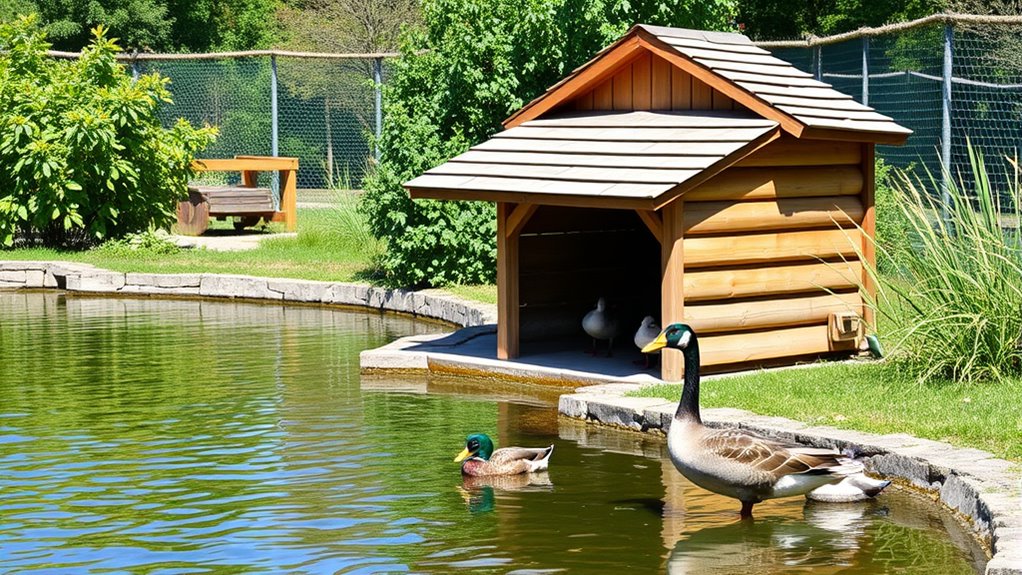
Caring for ducks and geese requires understanding their specific needs to keep them healthy and happy. One vital aspect is their feeding habits, which vary throughout the year. Ducks and geese are primarily grazers and foragers, so providing a balanced diet is essential. You should offer a mix of commercial waterfowl pellets, fresh greens, and occasional grains. Avoid processed foods or bread, which can cause health issues. As they feed, they’re naturally inclined to forage in water and on land, so creating a space that mimics their natural environment helps maintain their health. During the molting process, which typically occurs annually in late summer or early fall, their feeding habits change. They require more protein during molting to support feather regrowth, so supplement their diet with higher-protein foods like legumes, insects, or specialized molting feed. You’ll notice their feathers falling out and growing back, and during this time, they might be less active and require extra care to make sure they don’t become stressed or malnourished.
A key part of caring for waterfowl is understanding their molting process because it affects their mobility and vulnerability. During molting, ducks and geese shed old feathers and grow new ones, which can take several weeks. This process leaves them less waterproof and more susceptible to cold and predators, so you need to adjust their environment accordingly. Provide a warm, dry shelter where they can rest comfortably and avoid harsh weather, especially during heavy molting. Keep their water clean and accessible, as they need to bathe often to keep their new feathers in top condition and to facilitate the molting process. Be aware that during this period, they might spend more time resting and less time foraging, so monitor their food intake to make sure they’re getting enough nutrients to support feather regrowth.
Paying attention to their feather health and nutritional needs during molting ensures they recover quickly and stay resilient. Understanding their feeding habits and molting process helps you better meet their needs at every stage. It’s also important to observe their behavior during molting, as stress or nutritional deficiencies can prolong the process or cause health problems. Offer them a nutritious, well-balanced diet that adapts to their changing needs, and make certain their environment provides safety and comfort during this vulnerable time. By paying close attention to these aspects, you help keep your ducks and geese healthy, vibrant, and resilient, enabling them to thrive in your care. Proper nourishment and awareness of their molting cycle are fundamental to maintaining happy, content waterfowl.
predator-proof duck and goose enclosure
As an affiliate, we earn on qualifying purchases.
As an affiliate, we earn on qualifying purchases.
Frequently Asked Questions
How Do I Introduce New Ducks or Geese to Existing Flocks?
You should start by quarantining new ducks or geese for at least two weeks to prevent disease. Then, gradually introduce them to the existing flock using supervised interactions in a neutral space. During this period, monitor their behavior closely, and guarantee the new birds are healthy. Gradual integration helps reduce aggression and stress, making the transition smoother for everyone involved.
What Are Common Health Issues Specific to Waterfowl?
Waterfowl face common health issues like waterfowl diseases that can strike unexpectedly, like a storm on a calm pond. You need vigilant flock health management to catch symptoms early—respiratory problems, bumblefoot, and parasites often hide beneath the surface. Regular cleaning, proper nutrition, and quarantine help keep these troubles at bay, ensuring your flock stays healthy and lively, dancing on the water’s surface with vigor.
How Often Should I Clean Waterfowl Housing?
You should clean waterfowl housing at least once a week to maintain good hygiene and prevent disease. Regular cleaning, or cleaning frequency, is essential for housing maintenance and keeping your ducks and geese healthy. Remove soiled bedding, debris, and algae buildup. During colder months or if you notice increased mess, consider cleaning more often. Consistent maintenance guarantees a clean environment, reduces health risks, and promotes happy, healthy waterfowl.
What Is the Best Diet for Growing Ducks and Geese?
Did you know that providing a balanced diet guarantees healthy growth for your ducks and geese? For ideal Duckling nutrition, offer a high-quality starter feed rich in protein, then shift to grower and finisher feeds. Follow Goose feeding guidelines by including grains, greens, and occasional treats like insects. Avoid processed foods, and always keep fresh water nearby. Your attention to their diet helps them thrive and develop strong, vibrant feathers.
How Can I Prevent Waterfowl From Escaping Their Enclosure?
To prevent waterfowl from escaping, you should focus on effective fencing strategies and enclosure security. Use sturdy, tall fencing like welded wire or poultry netting buried a few inches underground to deter digging. Make certain gates are secured with latches and check regularly for gaps or damage. Adding visual barriers or natural features can also discourage attempts to fly or squeeze through, keeping your ducks and geese safely contained.
Conclusion
By providing a safe haven, you nurture your waterfowl like a gentle guardian. Your care becomes their sanctuary, a symbol of trust and protection amid the unpredictable world. When you create a sturdy home and shield them from threats, you’re not just safeguarding their lives—you’re fostering a bond rooted in compassion. In doing so, your ducks and geese become more than pets; they’re symbols of harmony, thriving peacefully under your watchful, loving eye.
Fall yard work Picks
leaf blowers
As an affiliate, we earn on qualifying purchases.