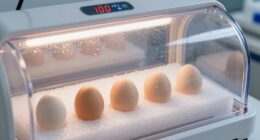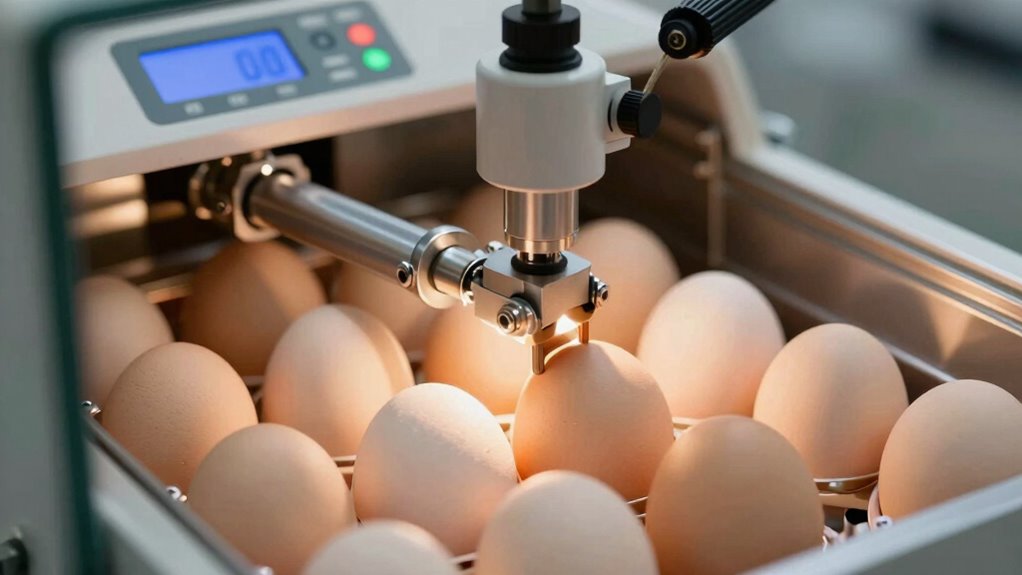

The key setting to prevent late-stage embryo losses is adjusting the egg turn angle to about 45 degrees on each side. This tilt promotes proper embryo positioning, supports gas exchange, and helps regulate humidity. Make certain you turn eggs every 1-2 hours consistently, monitoring for any malfunctions. Fine-tuning these settings creates ideal conditions for hatch success. Keep in mind, mastering these adjustments can markedly boost your hatch rates—discover more tips to enhance every stage.
Key Takeaways
- Ensure the turn angle is approximately 45° on each side to prevent embryo sticking and support proper development.
- Maintain a consistent turn interval every 1-2 hours aligned with embryo stage and incubation conditions.
- Regularly verify the turner’s operation, avoiding malfunctions like misaligned racks or motor failures.
- Adjust turn timing and angles based on humidity and embryo growth to optimize hatch success.
- Monitor egg orientation and turner performance routinely to minimize late-stage embryo losses.
Why Egg Turners Are Critical for Successful Hatching
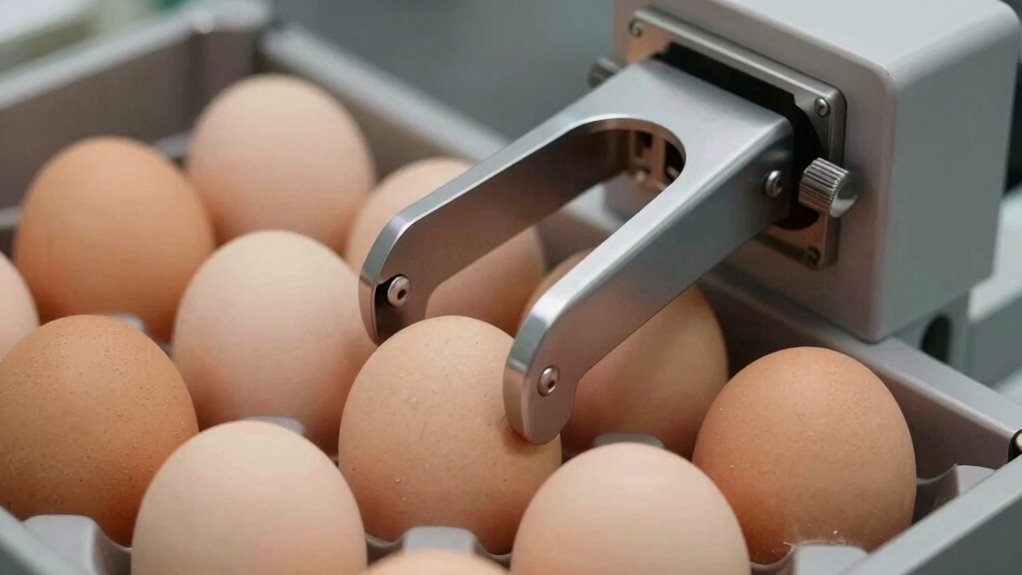
Egg turners are essential because they guarantee the developing embryos stay in the ideal position for healthy growth. Proper turning helps maintain optimal egg shell thickness by preventing the embryo from sticking or damaging the shell. Consistent movement also keeps the incubation temperature evenly distributed, avoiding hot or cold spots that could hinder development. Without turning, embryos might settle in a position that complicates hatching or causes deformities. Turners ensure the embryo stays centered, reducing the risk of late-stage losses. They help mimic natural conditions, where a hen regularly shifts her position. Additionally, temperature regulation is crucial for successful incubation, and egg turners support this by promoting uniform heat distribution. By maintaining proper shell integrity and steady temperature, egg turners considerably increase your chances of a successful hatch, making them a vital piece of incubation equipment. Proper turning also reduces the likelihood of embryo dehydration and ensures air cell development, which is vital for hatching success. Regular turning also stimulates embryo development, helping to promote uniform growth and viability.
How Egg Turners Support Embryo Development
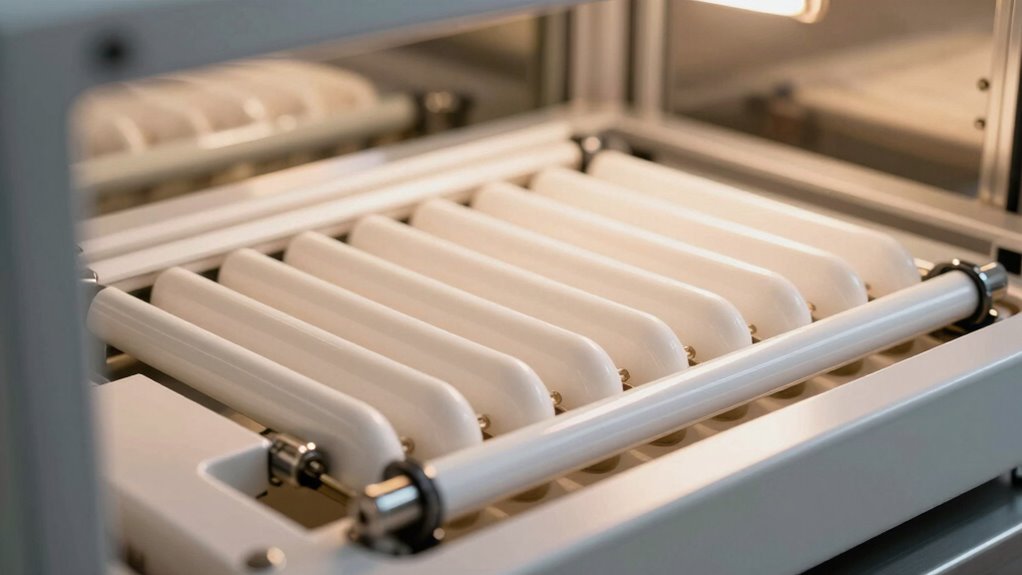
Since consistent movement is key to healthy embryo development, egg turners play a vital role in maintaining ideal conditions inside the incubator. By gently rotating eggs, turners ensure even embryo nourishment, preventing the embryo from sticking to the shell and promoting uniform growth. This embryo nourishment is crucial for healthy development and hatchability. This movement also helps regulate temperature distribution, avoiding hot spots that could harm the developing embryo. Proper egg turning mimics natural conditions, encouraging proper cell division and preventing developmental issues. Regular movement maintains a stable environment, reducing the risk of late-stage losses caused by embryo dehydration or uneven heat exposure. Additionally, integrating connected equipment with automated controls can optimize incubation parameters further. Implementing precise control systems can enhance overall incubation success rates. In fact, advanced egg turners often feature automated monitoring, which provides real-time data to further improve hatch outcomes. Overall, egg turners are essential tools that support consistent embryo development, giving your hatch the best chance for success.
How to Set Egg Turners to Maximize Hatch Success
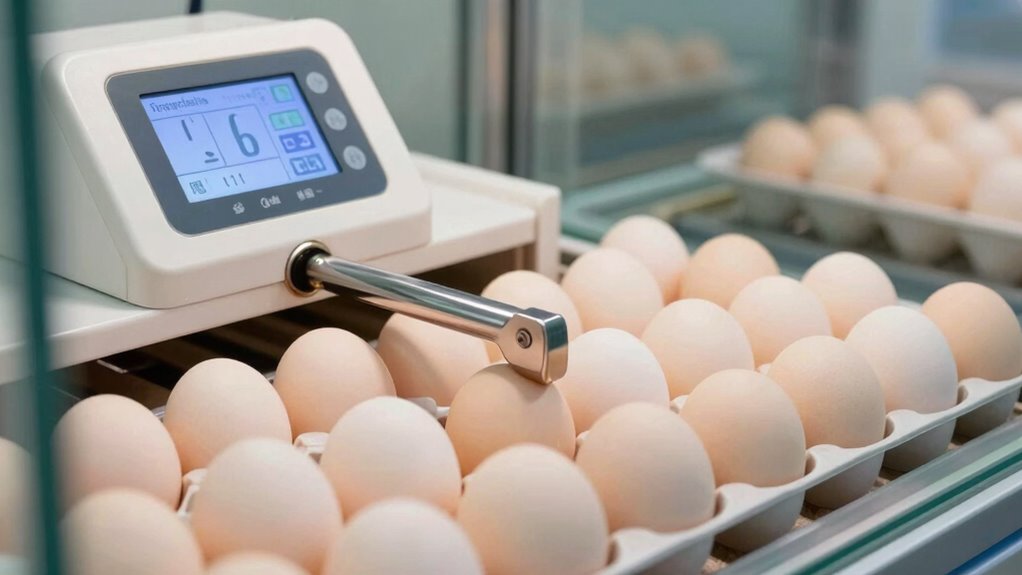
To maximize hatch success, you need to set your egg turner correctly. Focus on maintaining the proper turn angle and a consistent rotation schedule to keep embryos healthy. Don’t forget to adapt settings based on humidity levels to ensure ideal conditions throughout incubation. Understanding the importance of proper egg positioning can further improve hatch rates by preventing embryo damage during development. Proper essential oil selection for incubation environments can also contribute to a healthier hatch process by supporting embryo development. Incorporating smart monitoring systems can help track environmental conditions in real-time, enabling more precise adjustments for optimal hatch outcomes. Additionally, creative storytelling can be used to develop engaging educational content about best incubation practices, encouraging more successful hatch rates.
Proper Turn Angle
Setting the proper turn angle on your egg turner is essential for guaranteeing a successful hatch. Typically, a 45-degree tilt on each side is recommended, mimicking natural turning behavior. This angle helps prevent the embryo from sticking to the shell and promotes proper development. Be sure your incubation temperature stays consistent, as fluctuations can affect the embryo’s response to turning. Humidity control is also vital; maintaining ideal humidity supports proper egg moisture levels during turning. Avoid over- or under-rotating, which can cause stress or developmental issues. Regularly check the turn angle to guarantee it remains steady, and adjust if necessary. Ensuring the consistent environment includes stable temperature and humidity is critical for healthy embryo growth and hatch success. Proper turn angle, combined with stable temperature and humidity, creates the perfect environment for healthy embryo growth and hatch success. Proper turn angle is a key factor in preventing late-stage losses and ensuring a high hatch rate. Additionally, monitoring piercing care and hygiene during incubation can help prevent infections that might negatively impact hatch outcomes. Maintaining proper incubation conditions overall is fundamental for a successful hatch.
Consistent Rotation Schedule
Maintaining a consistent rotation schedule is essential for ensuring healthy embryo development and a successful hatch. By turning the eggs regularly, you prevent the embryo from sticking to the shell and promote even development. Set your egg turner to rotate at consistent intervals, ideally every 2-4 hours, to mimic natural incubation patterns. Consistency in turn timing supports stable incubation temperature and humidity control, which are critical for hatch success. Fluctuations in rotation can disrupt temperature regulation and cause stress to the embryo. Keep your incubator environment steady, and ensure your turner operates smoothly without interruptions. Monitoring and maintaining this consistent schedule helps maximize hatch rates and reduces late-stage losses, giving your chicks the best chance to hatch healthy and strong. Additionally, understanding incubation conditions can further optimize hatch outcomes.
Adjusting for Humidity
Adjusting egg turner settings to optimize humidity levels is essential for successful hatching. Proper humidity control prevents late-stage dehydration or excess moisture, which can cause embryo issues. To manage this, focus on balancing humidity levels with your temperature regulation efforts. You can imagine the incubator as a delicate environment, where:
- Moisture visibly condenses on the incubator walls when humidity is too high
- The air feels slightly damp but not wet during ideal conditions
- You see water droplets forming on eggshells when humidity is too low
- The humidity gauge indicates a steady, specific range for hatch success
- Monitoring external factors such as cloud-based monitoring systems can help maintain optimal conditions more precisely
Adjusting the turner settings should be paired with monitoring humidity levels closely. This ensures eggs receive just enough moisture, supporting healthy development through the incubation process.
Common Egg Turning Mistakes and How to Avoid Them
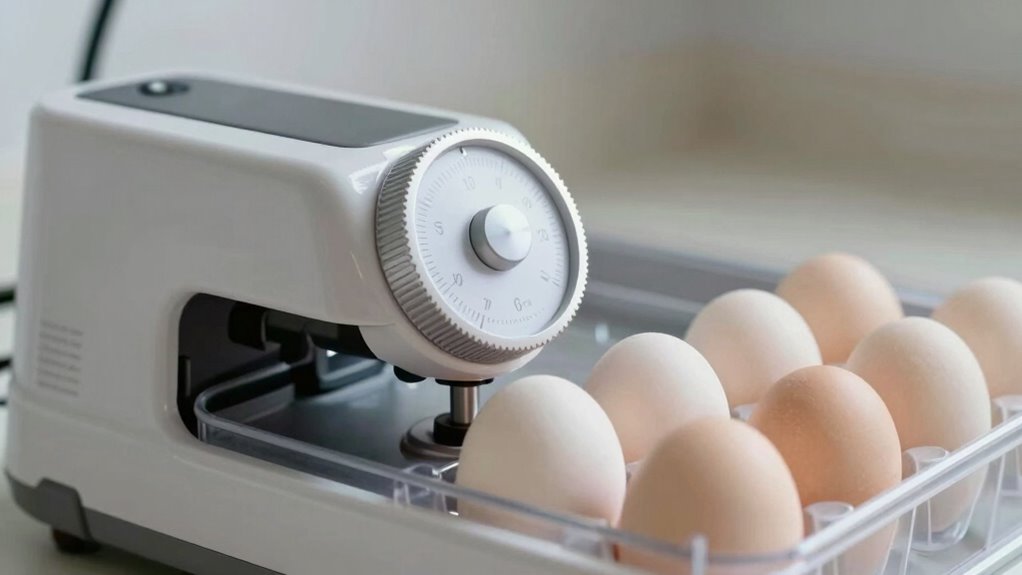
One common mistake in egg turning is handling the eggs too roughly or frequently, which can damage the delicate developing embryos. If you rely solely on manual turning, it’s easy to overdo it or forget, leading to inconsistent intervals. Automatic rotation systems help maintain a steady, gentle turn without your constant intervention, reducing the risk of injury. Additionally, if you switch between automatic rotation and manual turning, inconsistency can occur, disrupting embryo development. To avoid this mistake, choose a turning method that suits your setup and stick with it. Whether you prefer automatic rotation or manual turning, handle eggs gently, and ensure the turns are consistent. Proper, gentle handling prevents embryo damage and promotes healthy development through every stage. Additionally, understanding the best egg turning techniques can further improve hatch success rates. Maintaining a consistent turning schedule also supports egg embryo health, which is crucial for successful incubation. Regularly monitoring and adjusting your turning process based on incubation conditions can further enhance hatch outcomes. Incorporating automatic turning systems can further ensure reliable and gentle turns, minimizing human error and optimizing embryo development. Being aware of the cultural significance of symbols related to strength and resilience can inspire patience and diligence during incubation.
How to Determine the Best Turn Interval and Duration
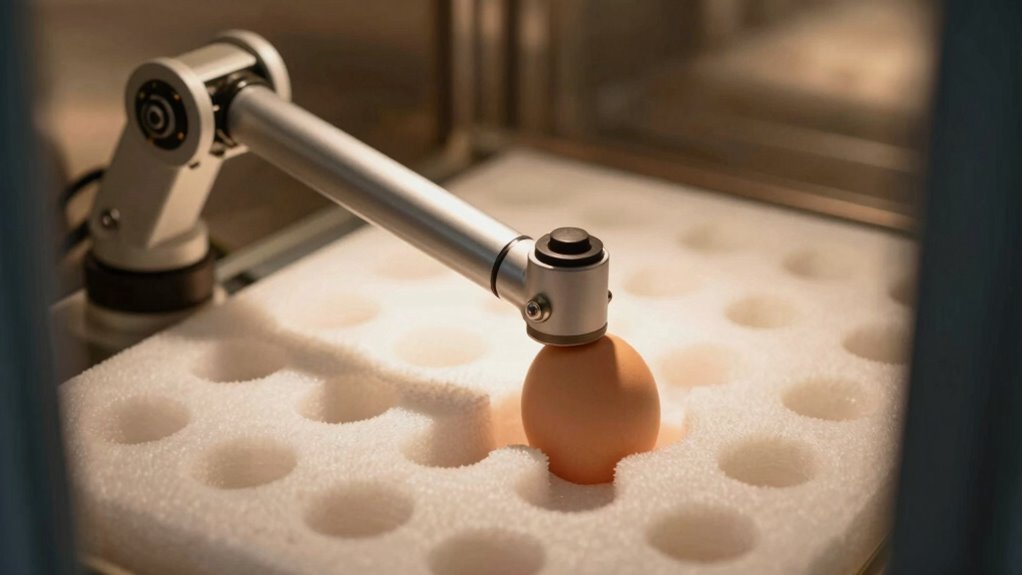
Determining the best turn interval and duration is essential for successful incubation, as it guarantees the developing embryo receives consistent movement without stress. To find the right balance, consider these factors:
- The ideal incubation temperature that supports steady development
- Proper humidity control to prevent dehydration or excess moisture
- Egg size and shell thickness influencing how often you turn them
- The embryo’s growth stage, which may require adjustments in turn frequency
- Monitoring family photoshoot fails to identify and prevent common issues that could affect incubation placement or handling. Typically, turning every 1-2 hours works well, but monitor humidity levels and temperature stability closely. Too much or too little movement can hinder development, so observe the eggs and adjust accordingly. Fine-tuning the turn interval ensures suitable conditions for healthy hatchlings.
How Egg Turn Settings Affect Late-Stage Chick Losses

Your egg turn settings, especially tilt angle and turn timing, directly impact late-stage chick survival. If the tilt is too steep or adjustments are delayed, it can cause damage or prevent proper hatching. Fine-tuning these parameters helps reduce chick losses during the final incubation phase.
Impact of Tilt Angle
The tilt angle of egg turners plays a essential role in late-stage chick development, as improper angles can increase the risk of chick mortality just before hatching. If the tilt is too steep or too shallow, it can hinder the chick’s movement, disrupting incubation temperature and humidity control critical for healthy development. You might notice the eggs shifting unevenly, or chicks struggling to position themselves properly. Visualize:
- Eggs resting at awkward angles, preventing proper gas exchange
- Chicks pressing against the shell, risking internal injuries
- Embryos failing to turn adequately, leading to developmental issues
- Increased moisture buildup or dehydration inside eggs due to poor humidity regulation
Maintaining the correct tilt angle ensures consistent conditions, supports proper embryo positioning, and minimizes late-stage losses.
Timing of Turn Adjustments
Proper timing of turn adjustments during incubation is vital for minimizing late-stage chick losses. Adjusting egg rotation frequency at the right moments ensures the embryo develops correctly, reducing the risk of deformities or mortality. Maintaining ideal incubation temperature paired with timely turn changes helps prevent issues like heat stress or improper fluid distribution. Typically, turning should be consistent and gradually decreased as hatch time approaches, aligning with the embryo’s developmental needs. If turns are delayed or performed too early, it can disrupt embryo positioning and blood flow, increasing late-stage mortality. Regularly monitoring and adjusting the turn schedule ensures the embryo remains properly oriented, supported by the correct incubation temperature. This careful coordination of timing and egg rotation frequency is essential for healthy hatch outcomes.
Troubleshooting Egg Turner Problems That Hurt Hatch Rates

Egg turner problems can substantially reduce hatch success if not addressed promptly. Malfunctions or misalignments can disrupt proper incubation temperature, leading to uneven warming or cooling that harms developing embryos. When hatchery automation fails to operate correctly, eggs may stay stationary or rotate improperly, increasing the risk of late-stage losses. Common issues include:
Egg turner issues can severely impact hatch success and embryo development.
- Turners not rotating at scheduled intervals
- Motor failures or jammed components
- Broken or misaligned egg racks
- Sensors providing false readings, causing incorrect adjustments
Monitoring and Adjusting Egg Turners for Better Hatch Results
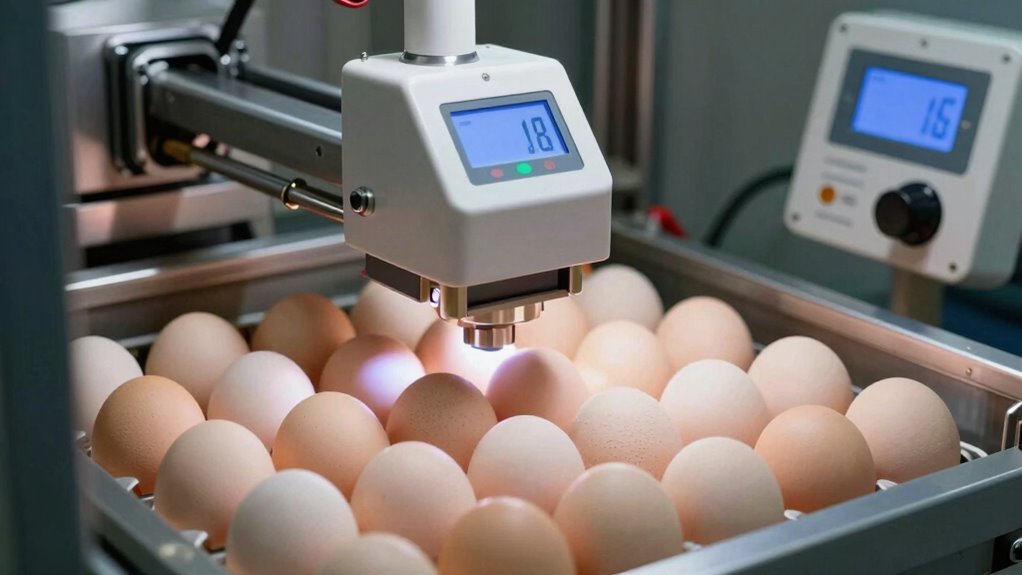
Regularly monitoring your egg turners is essential to guarantee they’re functioning correctly and providing ideal conditions for hatch success. Check egg orientation frequently to ensure eggs are positioned properly, preventing embryo damage or misalignment. Adjust the turners if you notice eggs aren’t rolling smoothly or if some remain static. Ventilation control also plays a critical role; ensure air circulation isn’t obstructed, and humidity levels stay within desirable ranges. Proper ventilation helps maintain consistent temperature and prevents mold or excess moisture. Keep an eye on the turner’s operation, listen for irregular noises, and verify that timing settings are accurate. Making timely adjustments to egg orientation and ventilation control enhances hatch rates and reduces late-stage losses. Consistent monitoring is your best tool for successful hatching.
Best Egg Turner Settings for Different Bird Species
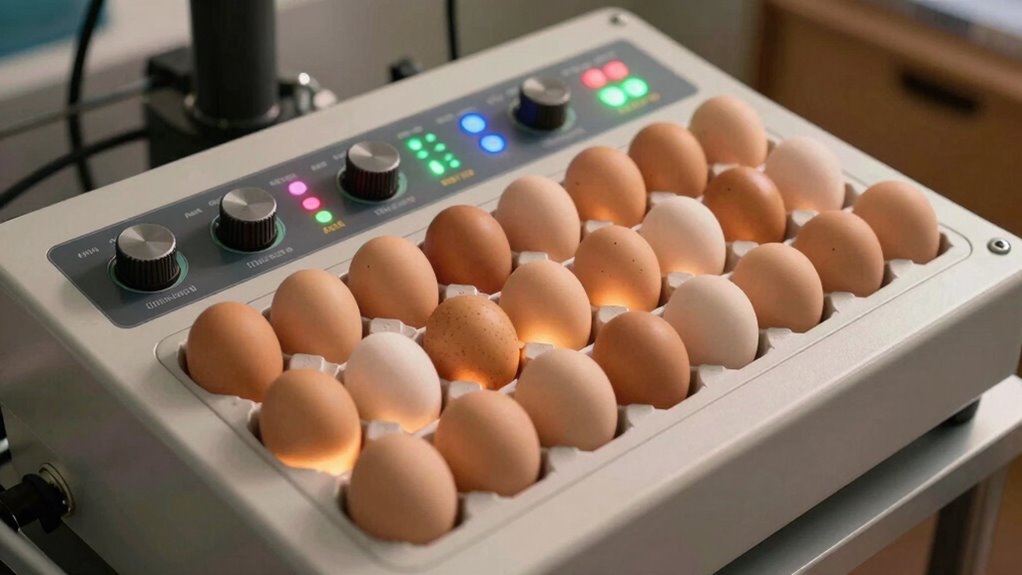
Different bird species often require specific egg turner settings to maximize hatch rates. Adjusting turner speed and angle ensures eggs are turned gently, preserving egg shell integrity. For larger birds like ducks, slow, steady turns prevent shell cracking, while smaller birds like quail benefit from quicker, more frequent adjustments. Lighting conditions influence how you set your turner; dim environments may need longer incubation periods, affecting turn frequency. Visualize:
- Eggs gently rotating on a smooth, consistent path
- Egg shells remaining uncracked and firm
- Light filtering softly through the incubator, creating calm conditions
- Turners moving in a steady, predictable rhythm that mimics natural movements
Tailoring these settings helps maintain shell strength and creates ideal lighting conditions, reducing stress on developing chicks and preventing late-stage losses.
Frequently Asked Questions
How Do Environmental Factors Influence Optimal Egg Turn Settings?
Environmental factors like humidity impact and temperature fluctuations directly influence your ideal egg turn settings. You need to adjust the turn interval when humidity levels are high or low to prevent embryo dehydration or overhydration. Similarly, temperature fluctuations can cause eggs to expand or contract, so you should modify turn settings accordingly to maintain consistent conditions. Staying attentive to these factors ensures healthier development and reduces late-stage losses.
Can Automatic Egg Turners Adapt to Different Incubation Stages?
Think of an automatic egg turner as a dance partner that’s always in sync. It can adapt to different incubation stages through automatic calibration, adjusting egg orientation as needed. This guarantees proper positioning during each phase, reducing risks like late-stage losses. You don’t need to manually change settings; instead, the turner intelligently responds to stage changes, maintaining ideal conditions for successful hatchings.
What Are Signs of Incorrect Egg Turning During Incubation?
If your eggs show uneven hatch rates or chicks are weak at hatch, your egg rotation might be off. Signs of incorrect egg turning include eggs sticking to the shell, deformities, or delayed hatch times. Maintaining incubation consistency with proper egg rotation is essential. You should also notice if the eggs aren’t turning enough or are turned too often, which can lead to developmental issues. Adjust your turner settings to guarantee proper rotation.
How Often Should Egg Turner Settings Be Reviewed or Adjusted?
You should review your incubator calibration and egg rotation frequency daily during incubation. Adjust the egg turner settings if you notice inconsistencies or if the eggs aren’t rotating properly. Regular checks ensure proper egg positioning, preventing late-stage losses. Keep a log of adjustments and monitor for any signs of improper turning. Staying vigilant helps maintain ideal conditions, increasing hatch success and reducing the risk of embryo damage.
Are There Specific Egg Turner Settings for Fragile or Large Eggs?
You should adjust egg turner settings specifically for fragile eggs and large eggs to improve hatch success. Research shows that improper turning can increase late-stage losses by up to 20%. For fragile eggs, reduce the turning speed and increase the interval between turns to prevent damage. Large eggs may require slightly longer intervals and gentle handling. Tailoring these settings assists in safeguarding delicate eggs and ensures uniform development.
Conclusion
Remember, proper egg turner settings are key to successful hatching. By paying attention to turn intervals, duration, and avoiding common mistakes, you can markedly reduce late-stage chick losses. Regular monitoring and adjustments ensure your eggs develop ideally. As the saying goes, “A stitch in time saves nine”—taking proactive steps now can prevent costly losses later. Keep fine-tuning your setup, and you’ll give your hatch every possible chance to thrive.