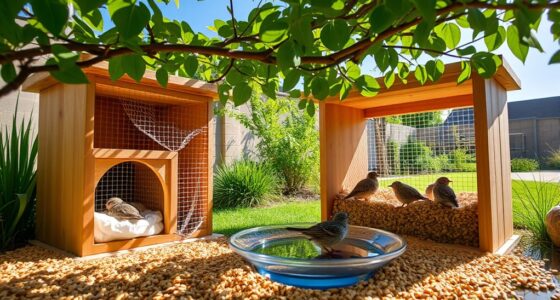
To optimize egg production, guarantee your poultry receives a balanced diet rich in essential nutrients, including vitamins and minerals, to support egg-laying and shell quality. Use high-quality, fresh ingredients like corn and soy, and supplement as needed to fill any gaps. Proper feeding practices, such as avoiding moldy feed and adjusting formulations for age and season, help prevent deficiencies and boost resilience. Keep exploring for more tips to maximize your flock’s productivity.
Key Takeaways
- Provide a balanced diet with essential nutrients, vitamins, and minerals to support high egg production.
- Use high-quality, fresh feed ingredients, properly stored to maximize digestibility and prevent contamination.
- Incorporate nutritional supplements to address deficiencies and strengthen eggshell quality.
- Adjust feed formulation based on the bird’s age, seasonal changes, and production stage.
- Implement proper feeding practices to prevent deficiencies, promote health, and ensure consistent egg yield.
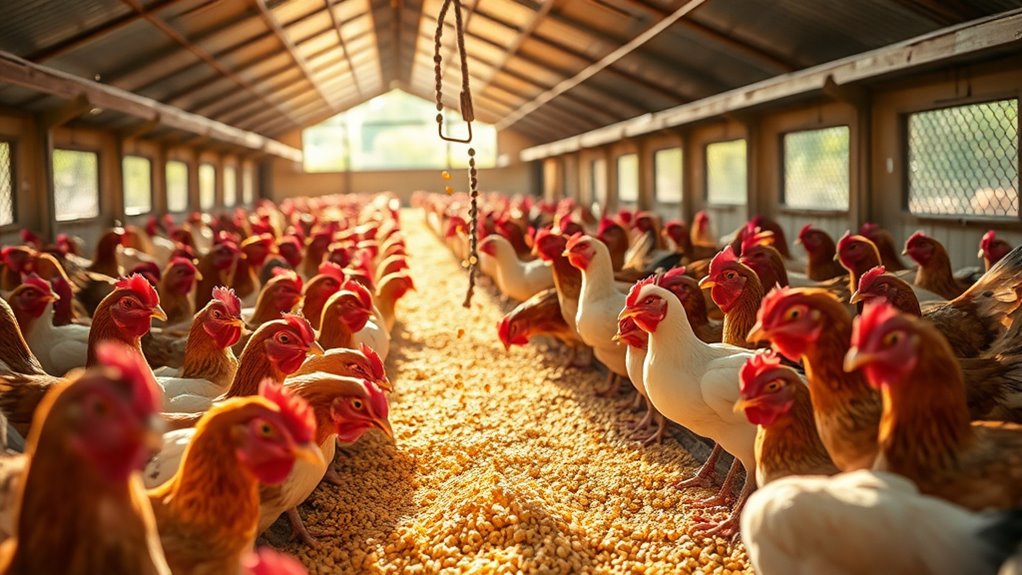
Feeding poultry properly is essential for maintaining healthy and productive flocks. When you focus on providing a balanced diet, you ensure your birds have the energy and nutrients needed for optimal egg production. One of the key factors to consider is the inclusion of nutritional supplements, which can fill gaps in their diet and enhance overall health. These supplements, such as vitamins and minerals, support immune function, improve shell quality, and boost laying rates. However, simply adding supplements isn’t enough—you need to pay close attention to the quality of the feed ingredients you use. High-quality ingredients contribute to better digestibility and nutrient absorption, which directly influence your flock’s performance. Low-quality feed ingredients, on the other hand, can lead to deficiencies, health issues, and inconsistent egg production.
To maximize egg production, start by sourcing feed ingredients from reputable suppliers. Look for ingredients that are fresh, free from mold, contaminants, and fillers. The freshness and integrity of your ingredients directly impact the nutritional content and your birds’ ability to utilize those nutrients effectively. Incorporate a mix of grains, protein sources, and fiber to create a well-rounded diet. For example, corn and soy are common staples, but supplementing with other grains or insect-based proteins can diversify nutrient intake. When selecting nutritional supplements, opt for those that are specifically formulated for poultry and are compatible with your feed ingredients. This ensures your birds receive the right balance of calcium, phosphorus, amino acids, and other vital nutrients necessary for consistent egg production. Additionally, understanding the importance of feed ingredient quality can help prevent nutritional deficiencies and promote overall flock health.
Monitoring feed ingredient quality is crucial throughout the feeding process. Regularly inspect your feed for signs of spoilage or contamination, and keep storage conditions optimal to prevent mold and pest infestation. Also, adjust your feed formulation as your flock ages or as seasonal changes occur, since nutritional needs can vary. Incorporating high-quality ingredients and appropriate supplements doesn’t just improve egg quantity but also enhances shell strength and overall bird health. Remember, a well-nourished flock is more resilient against diseases and stressors, leading to fewer disruptions and more reliable production.

Manna Pro Omega Egg Maker, Chicken Feed Supplement for Laying Hens, Poultry Food with Omega-3 Fatty Acids, Digestion Support with Fortified Vitamins & Minerals, 5 lbs
SUPPLEMENT FOR LAYING HENS: Manna Pro Omega Egg Maker is a specially crafted supplement designed to support the…
As an affiliate, we earn on qualifying purchases.
As an affiliate, we earn on qualifying purchases.
Frequently Asked Questions
What Are the Best Supplements for Boosting Egg Quality?
To boost egg quality, you should focus on providing a proper nutrient balance and strategic supplement timing. Incorporate supplements like calcium, omega-3s, and vitamins to support shell strength and yolk richness. Feed these supplements at the right times, such as calcium before laying peaks. Regularly monitor your hens’ health and adjust supplements accordingly, ensuring they get what they need for consistent, high-quality eggs.
How Does Weather Affect Poultry Feeding Schedules?
Weather critically impacts your poultry feeding schedules. During seasonal changes, you should adjust feeding routines based on temperature management; in colder weather, provide higher energy feeds to keep hens warm and maintain egg production. Conversely, in hot weather, offer cooler, more frequent feedings to prevent heat stress. Properly managing these adjustments ensures your flock stays healthy and productive year-round, regardless of weather fluctuations.
Can Organic Feed Improve Egg Production Rates?
Organic nutrition can boost egg production by providing better feed efficiency and natural nutrients. When you choose organic feed, you’re offering hens wholesome, chemical-free nourishment that supports healthier, more productive layers. This natural approach often results in stronger hens laying more eggs consistently. Plus, organic feed enhances overall flock health, leading to improved egg quality and quantity—making it a smart choice for sustainable, successful egg production.
How Often Should I Rotate Feed Types?
You should rotate feed types every few weeks to promote feed rotation and diet diversity, which helps prevent nutrient deficiencies and reduces feeding boredom. Switching up your poultry’s diet keeps their digestion healthy and guarantees they get a balanced mix of essential nutrients. Regular feed rotation also encourages consistent egg production. Monitor your birds and adjust the rotation schedule as needed, always aiming for a varied, nutritious diet to support ideal laying.
What Are Signs of Nutritional Deficiencies in Hens?
Think of your hens like a car needing regular tune-ups; signs of nutritional deficiencies include pale combs, soft shells, or reduced egg production. Vitamin deficiencies may cause ruffled feathers or lethargy, while mineral imbalances can lead to thin shells or uneven yolks. If you notice these signs, it’s a clear indicator to review their diet, ensuring they get the right balance of nutrients to stay healthy and productive.
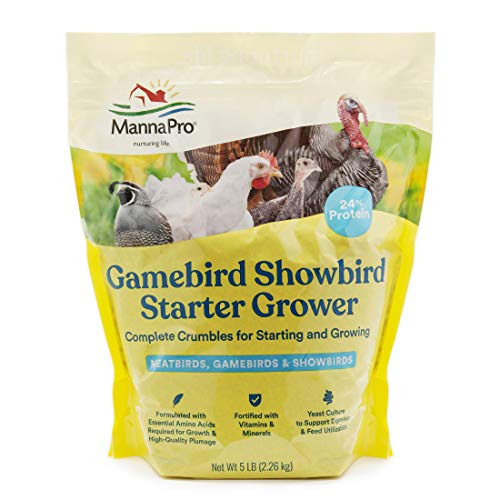
Manna Pro Gamebird & Showbird Crumbles – Premium Poultry Feed for Chickens, Ducks, Gamebirds, Turkeys & Bantams – Fortified with Vitamins & Minerals – Healthy Complete Diet – 5 lb Bag
HIGH-QUALITY PROTEIN SOURCES: With 24% protein, this formula supports fast, efficient growth and helps develop strong muscles and…
As an affiliate, we earn on qualifying purchases.
As an affiliate, we earn on qualifying purchases.
Conclusion
By choosing the right feed, you create a vibrant, bustling flock where hens eagerly peck and scratch, their feathers shimmering in the sunlight. Imagine the clatter of eggs landing softly in your basket, a proof to your careful attention. With proper feeding, you nurture healthy, happy birds that thrive and produce abundant eggs. Your dedication transforms your coop into a lively, fruitful haven — a true paradise for poultry and for you.

Premium Poultry Calcium Supplement for Bone Health & Egg Production-Chick’N Calcium from Chick’N Swell Brand- for All Poultry. 16.8 oz
BLEND OF SOURCES OF CALCIUM : Chick’N Calcium from the Chick’N Swell product line is made from a…
As an affiliate, we earn on qualifying purchases.
As an affiliate, we earn on qualifying purchases.

Manna Pro 7-Grain Ultimate Chicken Scratch – Non-GMO Scratch Grain Treat for Chickens, Hens and Other Birds – Natural Multigrain Blend for Poultry and Backyard Flocks – 10 lb Bag
7 GRAINS: Our scratch grains for chickens offer a high-protein, high-fiber blend of corn, wheat, milo, barley, oats,…
As an affiliate, we earn on qualifying purchases.
As an affiliate, we earn on qualifying purchases.