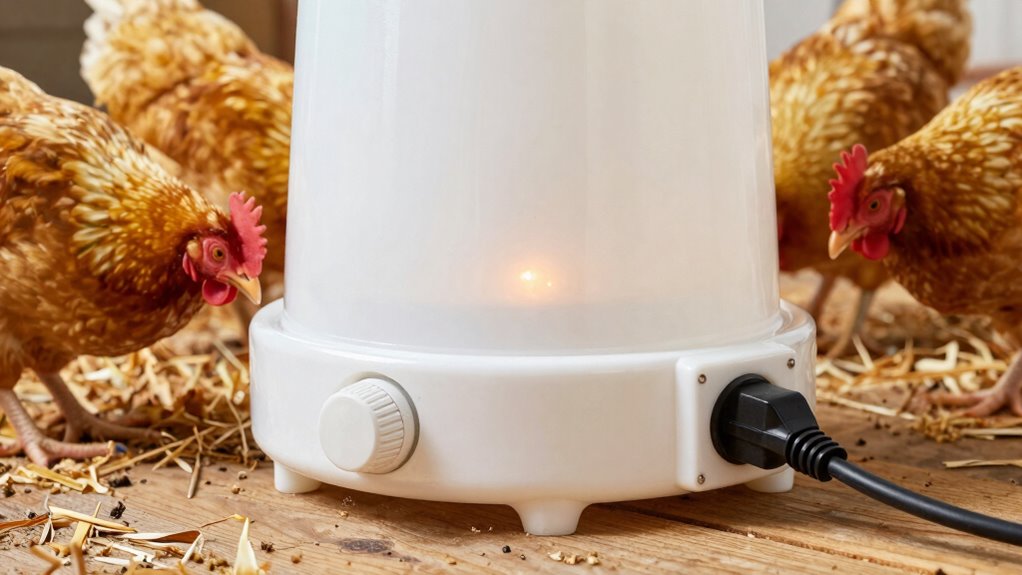

To keep your heated poultry waterer safe, always choose models with UL or ETL certifications and confirm proper installation with grounded outlets and GFCI protection. Regularly inspect electrical cords and connections for damage, keep wiring dry, and maintain proper insulation to prevent freezing. Position the waterer on a stable, shaded surface away from hazards. Following these safety steps helps avoid shocks, fires, and frozen lines—continue exploring for detailed safety tips and best practices.
Key Takeaways
- Verify that the waterer has UL or ETL safety certification before installation.
- Use outdoor-rated, waterproof electrical cords and ensure proper grounding to prevent shocks.
- Insulate water lines with foam or rubber to prevent freezing during cold weather.
- Regularly inspect electrical wiring, thermostats, and heating elements for damage or malfunction.
- Position waterers on stable, shaded surfaces, elevated and away from water spills to reduce fire and contamination risks.
What Are the Risks of Heated Poultry Waterers?

While heated poultry waterers help prevent freezing during cold weather, they also pose certain risks. One major concern is maintaining the correct water temperature; if it gets too hot, it can scald your birds, while inadequate heating might still allow freezing. Poor water filtration can lead to bacteria buildup, increasing the risk of disease transmission among your flock. Faulty wiring or electrical components pose shock hazards or fire risks if not properly installed or maintained. Additionally, inconsistent water temperature can cause stress or dehydration. Ensuring your heated waterer has reliable water filtration helps keep water clean and safe. Regular safety checklists and proper wiring basics are essential to prevent electrical issues. Proper calibration and temperature control are crucial for safe operation. Always monitor the device regularly to prevent overheating, electrical issues, and contamination, safeguarding your poultry’s health and your property. Incorporating vetted electrical components can also reduce the risk of electrical failures and improve overall safety. To further reduce hazards, understanding electricity safety best practices is highly recommended.
How Do I Choose a Safe, Certified Heated Waterer?
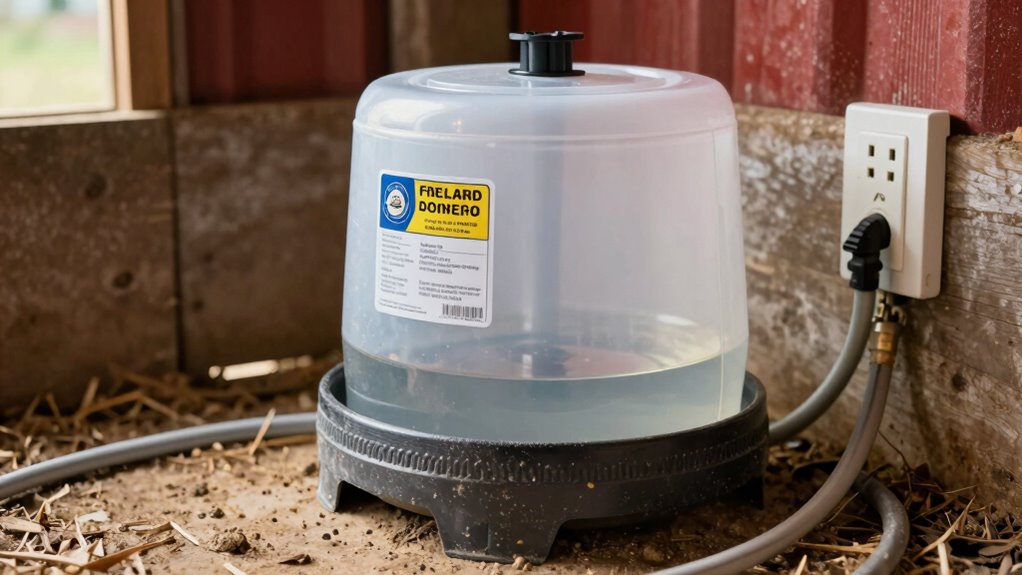
Choosing a safe, certified heated waterer starts with verifying that it meets recognized safety standards, such as UL (Underwriters Laboratories) or ETL (Intertek) certification. These safety certifications ensure the product has been tested for electrical safety, fire resistance, and durability. Always check the product label or packaging for certification marks before purchasing. Certification standards are vital because they indicate the waterer complies with strict safety guidelines, reducing the risk of shocks or fires. Avoid models without proper safety certifications, even if they seem cheaper or more convenient. Investing in a waterer with reputable safety certifications provides peace of mind, knowing it’s designed to operate safely around your poultry and in your environment. Reputable safety certifications are essential for ensuring the product meets industry safety benchmarks. This is the first step toward safe, reliable heated water for your flock. Additionally, selecting a waterer with proper electrical components can prevent malfunctions that lead to shocks or fires. Properly inspecting the electrical wiring and components during installation is crucial for electrical hazard prevention. Implementing these standards helps prevent electrical hazards and ensures long-term safe operation. Incorporating proper installation practices further reduces potential risks associated with electrical systems in outdoor settings.
How Can I Install My Waterer Safely and Correctly?

To install your heated waterer safely, start by ensuring proper electrical grounding to prevent shocks. Next, choose a stable, protected spot where the waterer won’t get wet or damaged. Finally, perform regular maintenance checks to keep everything working correctly and safely.
Proper Electrical Grounding Techniques
Proper electrical grounding is essential to guarantee safe operation of your poultry waterer. It helps prevent shocks and fires by ensuring any stray electrical current safely dissipates. Use proper grounding techniques, such as connecting the waterer’s cord to a grounded outlet and ensuring the grounding wire is intact. Regularly inspect your setup for loose connections or damaged wires.
| Step | Action |
|---|---|
| 1 | Use a grounded outlet with a three-prong plug |
| 2 | Check grounding wire integrity regularly |
| 3 | Avoid extension cords; install permanent wiring |
| 4 | Use a GFCI outlet for extra electrical safety |
| 5 | Consult a professional electrician if unsure |
Correct Placement of Waterer
Ensuring your poultry waterer is installed in the right location is crucial for safety and efficiency. Placement considerations include placing the waterer where it’s easily accessible for your birds but away from hazards like electrical outlets or equipment. Proper waterer positioning helps prevent water spills that could create slip hazards or damage electrical components. Keep the waterer on a stable, level surface to avoid tipping or water spillage. Avoid placing it directly under overhangs or areas prone to flooding or excessive moisture. Make sure it’s in a shaded spot if possible, to reduce freezing risk in cold weather. Additionally, proper placement can help prevent accidental electrical shocks and reduce fire hazards. By carefully choosing the right location, you’ll promote safe access for your poultry while minimizing electrical and fire hazards related to improper placement.
Regular Maintenance Checks
Regular maintenance checks are essential to keep your poultry waterer safe and functioning properly. Regularly inspect for waterer cleaning needs to prevent bacteria build-up and ensure your birds stay healthy. Clean the waterer thoroughly, removing any debris or algae that may interfere with proper operation. Check the power cord and heating element for damage, and replace any frayed wires immediately. Temperature regulation is crucial; verify the thermostat is working correctly to prevent the water from freezing or overheating. Test the waterer regularly to guarantee it maintains a consistent temperature, especially during cold weather. Keep the area around the waterer dry and free of obstructions. Consistent maintenance helps prevent shocks, fires, and frozen lines, ensuring your poultry stays safe and hydrated.
What Are Essential Electrical Safety Tips?

To keep your poultry waterer safe to use, you need to follow essential electrical safety tips. Always inspect electrical cords for damage or wear before plugging in your heater. Use cords rated for outdoor or wet environments to prevent shocks. Keep cords and plugs away from water and poultry, and avoid stretching or pinching them. Install clear safety signage around the waterer to remind everyone of potential hazards. Make sure your electrical connections are secure and grounded properly. Unplug the waterer when not in use or during cleaning. Regularly check for loose connections or frayed cords, and replace damaged parts immediately. Proper electrical grounding is crucial to prevent electrical failures and ensure safety. Additionally, being aware of waterproof electrical components can significantly reduce the risk of electrical issues. Following these electrical safety tips helps prevent shocks, fires, and electrical failures, ensuring a safe environment for your poultry.
How Do I Maintain My Waterer to Prevent Freezing?
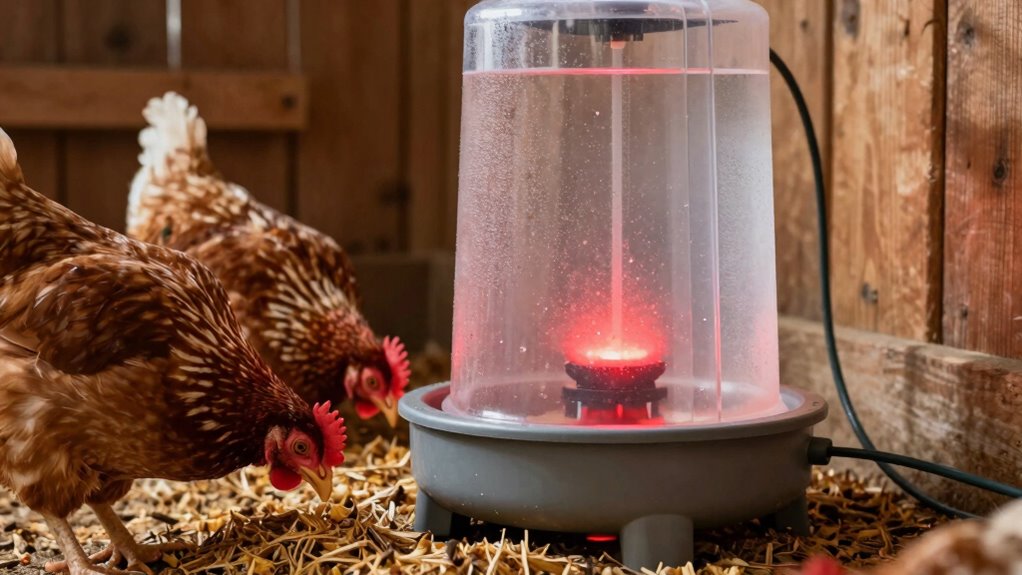
To keep your poultry waterer from freezing, you should insulate the water lines to retain heat. Using reliable heating devices can provide extra protection during cold snaps, but regular maintenance checks are vital to guarantee everything works properly. Stay proactive to prevent freezing and keep your birds hydrated year-round. Additionally, consider installing UST projectors and ALR screens to monitor and ensure optimal conditions in your poultry area during winter months.
Insulate Water Lines
Insulating your water lines is essential to prevent freezing during cold weather. Proper water line insulation helps maintain a consistent temperature, reducing the risk of frozen pipes that can disrupt your poultry’s water supply. Use quality safety equipment designed for outdoor or farm use, such as foam or rubber pipe insulators, to wrap around exposed lines. Ensure all connections are tight and well-covered, especially in vulnerable areas. Check insulation regularly for signs of wear or damage, replacing it as needed. Proper insulation techniques can further enhance your system’s resilience against freezing temperatures. Incorporating vetted insulation materials ensures durability and effectiveness in harsh conditions. Additionally, understanding water chemistry can help you prevent mineral buildup that might compromise insulation effectiveness. Regularly flushing and testing your water can help maintain optimal water quality, preventing blockages and extending system lifespan. Insulating your water lines not only keeps water flowing but also minimizes the chance of costly repairs or frozen-bolt hazards. Pool terminology understanding the basics of water chemistry and hydraulics can further help you optimize your system’s performance. Taking these steps creates a safer, more reliable water system for your poultry, even in the coldest months.
Use Heating Devices
Using heating devices is an effective way to prevent your poultry waterer from freezing. Installing a reliable water heater guarantees a steady supply of unfrozen water, especially during cold snaps. Make sure your heater complies with safety regulations to avoid electrical hazards or fires. Regularly check that the heater remains properly grounded and free of damage. Consider using thermostats to maintain consistent temperatures and prevent overheating. Additionally, selecting appropriate power backup options ensures continuous operation during outages. Proper maintenance and inspection of heating devices can extend their lifespan and ensure safety. Understanding the importance of safety standards helps prevent accidents and ensures the proper use of heating equipment. Familiarizing yourself with electrical safety practices can further reduce risks associated with heating devices. Protect your flock by providing continuous access to water. Reduce stress and health risks caused by frozen lines. Avoid costly repairs from burst pipes or broken equipment. Ensure safety by adhering to all safety regulations and guidelines. Investing in quality heating devices and monitoring their operation keeps your poultry healthy and safe, giving you peace of mind during harsh winter months.
Regular Maintenance Checks
Regular maintenance checks are essential to keep your poultry waterer from freezing. Start with an inspection checklist to identify potential issues, such as cracks, leaks, or blockages that could impair heating performance. Ensure safety equipment like thermostats, cords, and switches are in good condition and functioning correctly. Regularly test the heating device to confirm it operates at the proper temperature and responds to thermostat adjustments. Check wiring for frays or damage, replacing any compromised parts immediately. Keep the area around the waterer clear of debris and snow to prevent interference. Consistent inspections help catch problems early, reducing the risk of freezing, electrical shocks, or fire hazards. Staying vigilant with a thorough checkup ensures your poultry stay hydrated safely throughout winter. Additionally, paying attention to heater quality can significantly impact the safety and efficiency of your poultry waterer. Proper installation practices are also crucial to ensure safe operation and to prevent potential hazards.
How Do I Troubleshoot Common Safety Problems?
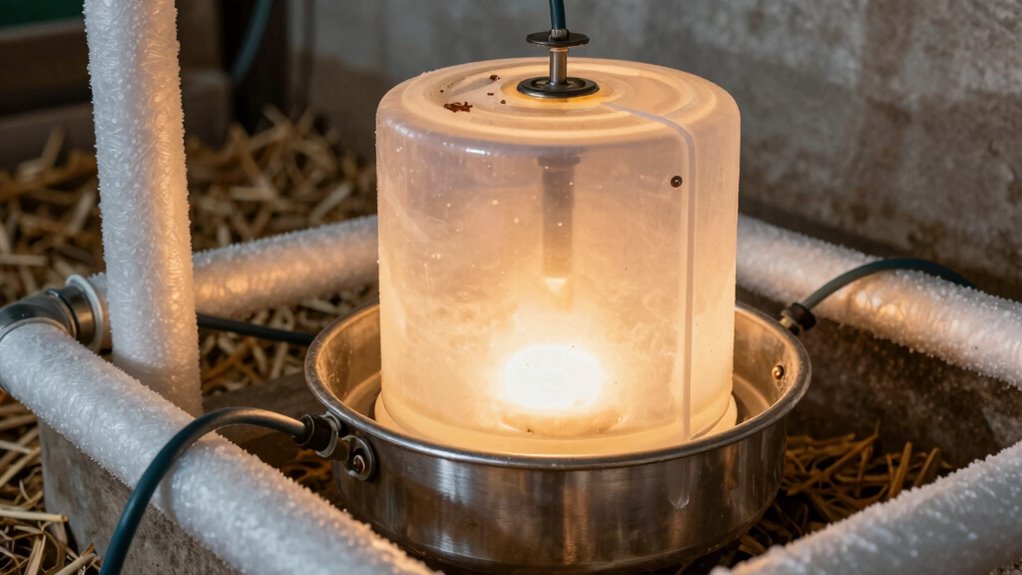
When you notice issues with your heated poultry waterer, it’s important to identify the root cause promptly to guarantee your flock’s safety. Start by checking the electrical insulation; damaged or worn insulation can cause shocks or fires. Ensure the water temperature isn’t too high, which can harm your birds or cause malfunctions. If you experience inconsistent heating, inspect the power source and wiring connections.
- Feel for exposed wires or frayed insulation that could lead to shocks
- Test the water temperature to prevent overheating or freezing
- Verify the thermostat is functioning correctly
- Look for signs of electrical damage or corrosion
Address these issues immediately to avoid safety hazards and keep your poultry safe and healthy.
What Are Best Practices for Using the Waterer in Winter?
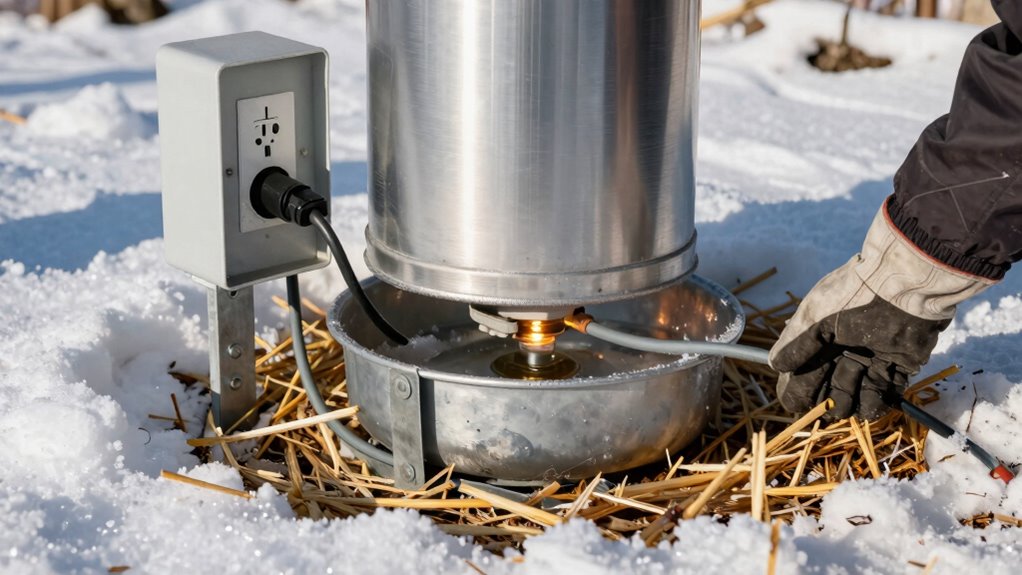
Maintaining a heated poultry waterer during winter requires specific practices to guarantee it functions safely and effectively. To ensure winter readiness, check the electrical connections regularly for damage or corrosion, preventing shocks and fires. Keep the waterer elevated off the ground to avoid snow and ice buildup, which can cause freezing or damage. Use a thermostatic waterer that automatically adjusts heating to prevent freezing and conserve energy. Regularly monitor water levels and cleanliness to support poultry hydration, especially in cold weather when birds tend to drink more. Insulate electrical cords and the base of the waterer to reduce heat loss and prevent frozen lines. Following these best practices helps keep your flock hydrated and safe throughout the winter season.
What Should I Do If I Suspect an Electrical or Safety Issue?
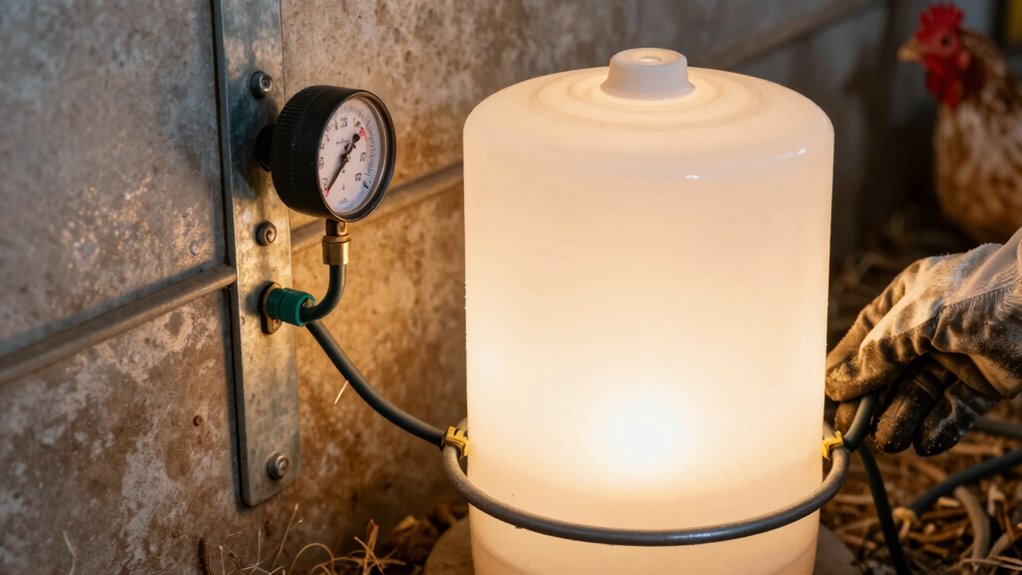
If you notice any signs of electrical or safety issues with your poultry waterer, take immediate action to prevent accidents or injuries. Your first step should be to disconnect the power supply and avoid using the waterer until it’s inspected. Follow emergency procedures by contacting a qualified electrician to assess the problem. Conduct thorough safety inspections to identify potential hazards like exposed wiring or faulty connections. Keep your flock safe by staying vigilant and acting quickly.
- Shut off power immediately to prevent shocks or fires
- Avoid touching exposed wires or damaged components
- Call a professional for urgent repairs or replacements
- Keep a fire extinguisher nearby in case of sparks or fire risks
Frequently Asked Questions
Can Heated Poultry Waterers Cause Electrical Fires?
Heated poultry waterers can cause electrical fires if not properly maintained. Faulty wiring or damaged cords increase the fire risk, and exposed electrical components may cause electrical shock. Always inspect your waterer regularly for wear, make sure it’s grounded correctly, and use a waterer designed for poultry. Properly installed and maintained units profoundly reduce the risk of electrical shock and fire, keeping your flock safe and your property secure.
What Safety Features Should I Look for in a Waterer?
You should look for a waterer with reliable safety features like temperature controls to prevent overheating and ground fault protection to avoid electrical shocks. These features help keep your poultry safe and the system functioning properly. Make certain the waterer is certified by safety standards organizations, and regularly check for any signs of wear or damage. Proper maintenance and safety features reduce risks of fires, shocks, and freezing lines.
Are There Specific Outdoor Electrical Codes for Poultry Waterers?
You should follow outdoor electrical standards when installing poultry waterer wiring. For example, a farm experienced a short circuit due to improper wiring, causing a fire. To prevent this, always use outdoor-rated cords and waterproof connectors, and guarantee your wiring meets local electrical codes. These standards address grounding, insulation, and circuit protection, helping you avoid shocks and fires while keeping your poultry safe and your waterer functional in all weather conditions.
How Often Should I Inspect My Waterer for Safety Hazards?
You should inspect your poultry waterer weekly to guarantee safety. During your inspection routine, look for signs of electrical hazards, such as frayed cords, exposed wiring, or corrosion. Check for ice buildup or leaks that could cause frozen lines or electrical shorts. Regular hazard identification helps prevent shocks, fires, and freezing issues, keeping your poultry safe and your waterer functioning properly. Stay vigilant and address problems promptly.
Is It Safe to Leave a Heated Waterer Unattended Overnight?
It’s generally safe to leave a heated waterer overnight if you’ve maintained proper electrical safety and water heater upkeep. Regular waterer inspections ensure no electrical issues or leaks develop. However, always check for frayed cords, secure connections, and proper insulation. If your waterer is well-maintained and designed for continuous use, unattended overnight use shouldn’t pose risks, but ongoing waterer maintenance and safety checks are vital for peace of mind.
Conclusion
By following these safety tips, you’ll keep your heated poultry waterer running smoothly and your flock safe as the winter winds blow. Think of it as tending a delicate flame—you want it to warm without burning or freezing. Stay vigilant, perform regular checks, and never take shortcuts. With careful attention, your waterer will be a reliable safeguard, ensuring your chickens stay hydrated and healthy all season long.