
Honey extractors save you time by quickly spinning honey from frames, reducing manual work and increasing capacity. But to really maximize efficiency, you need a well-planned extraction room layout. A good flow minimizes unnecessary movement, prevents contamination, and protects your bees. Organizing the space for smooth progressions from incoming frames to honey jars makes a big difference. Keep watching to discover how combining the right equipment with smart design boosts your honey harvests.
Key Takeaways
- An optimized extraction room layout streamlines process flow, reducing unnecessary movement and saving time during honey extraction.
- Proper placement of equipment and workstations minimizes bottlenecks and enhances operational efficiency.
- Clear sequencing from incoming frames to storage ensures a smooth, uninterrupted harvesting process.
- Good airflow and ventilation support equipment performance and maintain a healthy environment for bees and workers.
- Regular maintenance and hygiene practices prevent delays caused by equipment breakdowns or contamination.
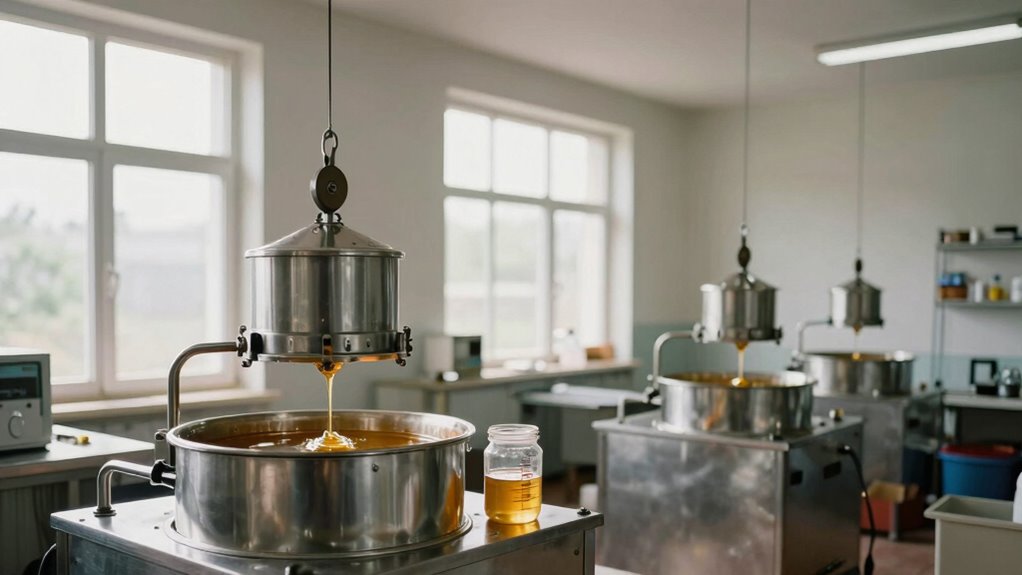
If you’re looking to streamline your honey harvesting process, honey extractors are a game-changer. They considerably cut down the time you spend manually crushing and straining honey, allowing you to process larger quantities efficiently. With an extractor, you can quickly spin out honey from frames without damaging the bees or compromising bee health. This efficiency means your hive stays healthy because you’re not overharvesting or stressing the bees, which is vital for maintaining strong colonies. Plus, a well-maintained extractor ensures consistent performance, preventing breakdowns that could slow you down and impact bee health indirectly by prolonging extraction time.
Using a honey extractor speeds up harvests and keeps your bees healthy and stress-free.
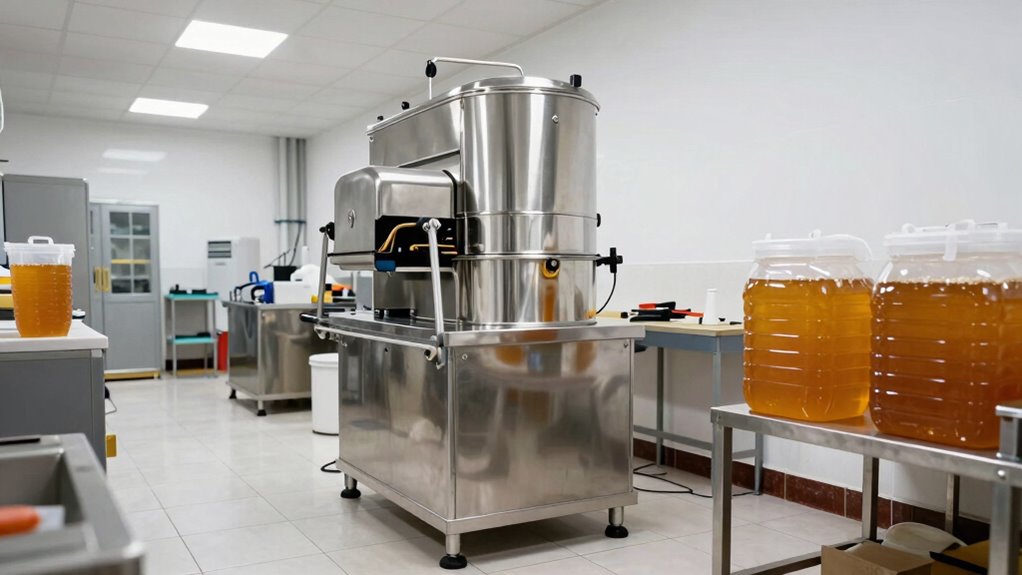
However, even with the best extractor, the extraction room’s layout plays a key role in maximizing efficiency. Many beekeepers underestimate the importance of a well-thought-out flow plan. Without a logical setup, you might find yourself wasting time moving frames back and forth or creating bottlenecks that slow down the entire process. An ideal flow plan minimizes unnecessary movement, reducing the risk of contaminating honey or damaging frames. It’s necessary to organize the space so that incoming frames, extraction, filtering, and storage are in a seamless sequence. This not only saves time but also cuts down on potential errors that can occur when processes are disorganized. Additionally, understanding the biodiversity of your local environment can help you develop more sustainable and bee-friendly practices within your extraction setup. Incorporating proper airflow and ventilation can further optimize the environment for both your equipment and your bees, ensuring a healthier and more efficient workspace. Implementing efficient layout design can significantly enhance overall productivity and reduce operational stress.
Extractor maintenance is another vital factor. Regularly cleaning and inspecting your honey extractor prevents buildup of residues that could harbor bacteria or mold, which could threaten bee health. Proper maintenance also extends the lifespan of your equipment, ensuring it operates smoothly during peak harvest times. Neglecting this can lead to mechanical issues that slow down extraction, cause spillage, or even contaminate your honey. Keeping your extractor in top shape means fewer interruptions and less risk to your hive’s health. When you’re diligent about maintenance, you protect your investment and keep the entire honey harvest process efficient. Incorporating proper cleaning procedures into your routine is essential for maintaining both hygiene and operational longevity.
Efficiency isn’t just about speed; it’s about creating a system that preserves bee health, minimizes waste, and maximizes productivity. A well-designed extraction room with thoughtful flow planning and proper extractor maintenance helps you achieve that. It ensures you’re not just saving time but also maintaining the quality of your honey and the health of your bees. Proper airflow and ventilation are also crucial components of a well-optimized extraction environment, which can further improve overall efficiency. Ultimately, investing in both a good extractor and a smart layout results in a more sustainable, profitable honey operation. When your process runs smoothly from hive to jar, you’ll find that honey extraction becomes less of a chore and more of a well-orchestrated routine.
As an affiliate, we earn on qualifying purchases.
Frequently Asked Questions
How Do Honey Extractor Sizes Vary for Different Hive Types?
You’ll find honey extractor sizes vary based on hive compatibility and extractor capacity. For smaller Langstroth hives, compact extractors work well, while larger Dadant or Warré hives need bigger models. Consider your hive types and honey volume to choose an extractor that fits your needs. Proper sizing guarantees efficient honey extraction, saves time, and prevents bottlenecks in your workflow. Always match your extractor capacity to your hive setup for smooth operation.
What Safety Precautions Are Needed When Operating Honey Extractors?
Think of safety as your honey’s guardian. When operating honey extractors, you need to wear protective gear like gloves and goggles to prevent injury. Always check electrical safety—ensure cords are intact and unplug equipment when not in use. Keep your workspace dry and clear of clutter, and follow manufacturer instructions carefully. These precautions protect you from potential hazards, letting you focus on your hive’s sweet reward safely.
Can Honey Extractors Be Used for Other Bee Products?
Yes, you can use honey extractors for other bee products like beeswax recovery and pollen collection. With proper cleaning and adjustments, extractors efficiently separate beeswax from honey, making beeswax recovery easier. For pollen collection, you might need specialized screens or setups, but using extractors helps you gather pollen without damaging the combs. Always guarantee equipment is thoroughly cleaned between uses to prevent cross-contamination and maintain hive health.
What Maintenance Is Required for Honey Extractors?
You need to follow a regular cleaning schedule to keep your honey extractor in top shape, removing wax and debris after each use. Additionally, lubrication frequency is vital; apply food-grade lubricant to the bearings and moving parts every few uses to prevent rust and guarantee smooth operation. Proper maintenance extends the lifespan of your honey extractor, keeps it functioning efficiently, and assures your honey remains uncontaminated.
Are Manual or Electric Extractors More Efficient?
Manual extractors are like steady horses—reliable but slower, while electric ones are race cars zooming ahead. Electric extractors offer automation benefits, drastically reducing labor and boosting efficiency. If you’re after speed and less physical effort, go electric. They streamline honey extraction, saving time and energy. Manual extractors work well for small-scale needs, but if you want to keep pace with the busy hive, electric models are your best bet.
Conclusion
By investing in honey extractors, you can substantially cut down your honey harvesting time, allowing you to focus on other essential tasks. However, don’t overlook your extraction room’s layout—poor flow can negate those time savings. Imagine a beekeeper who redesigned their space, creating a smooth, logical workflow; they doubled their efficiency and reduced stress. With the right equipment and a well-planned room, you’ll maximize productivity and enjoy a more enjoyable honey harvest.