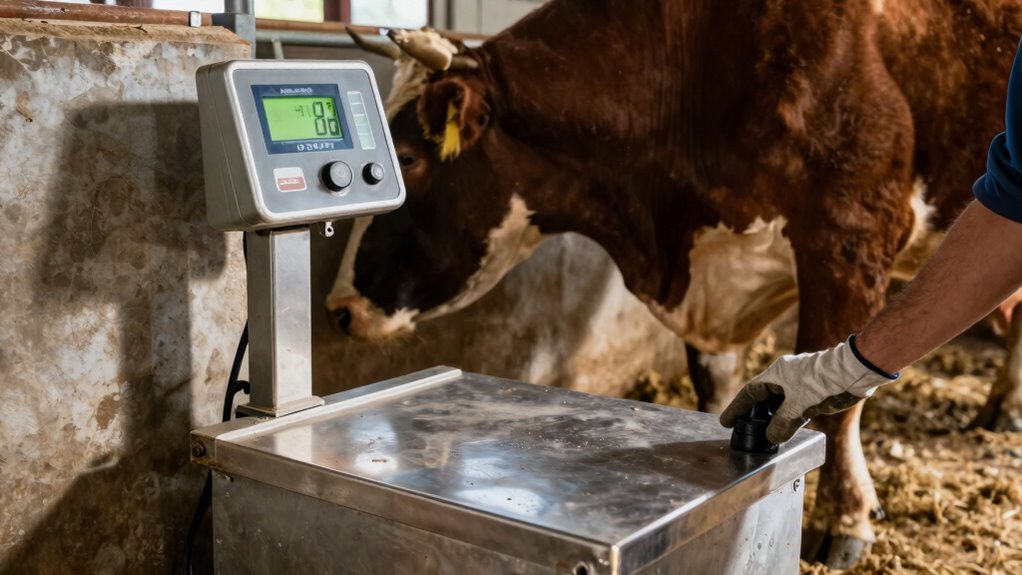

To stop guessing weights, make certain your livestock scale is properly calibrated and maintained regularly. Look for signs like inconsistent readings or physical damage, and perform calibration at recommended intervals based on usage and environment. Use certified weights, keep records, and inspect your scale often to maintain accuracy. Proper calibration helps optimize health monitoring and feed management, boosting your farm’s profitability. Keep exploring to learn simple steps to keep your scale precise and reliable.
Key Takeaways
- Regularly calibrate livestock scales using certified weights to ensure accurate and reliable measurements.
- Perform calibration on a flat, stable surface and follow manufacturer guidelines for precision.
- Schedule calibration frequency based on usage, environmental factors, and signs of inconsistent readings.
- Conduct physical inspections for damage and wear that could compromise scale accuracy.
- Maintain detailed records of calibration dates, results, and maintenance to monitor scale performance effectively.
Why Accurate Livestock Weights Are Critical for Your Farm’s Success
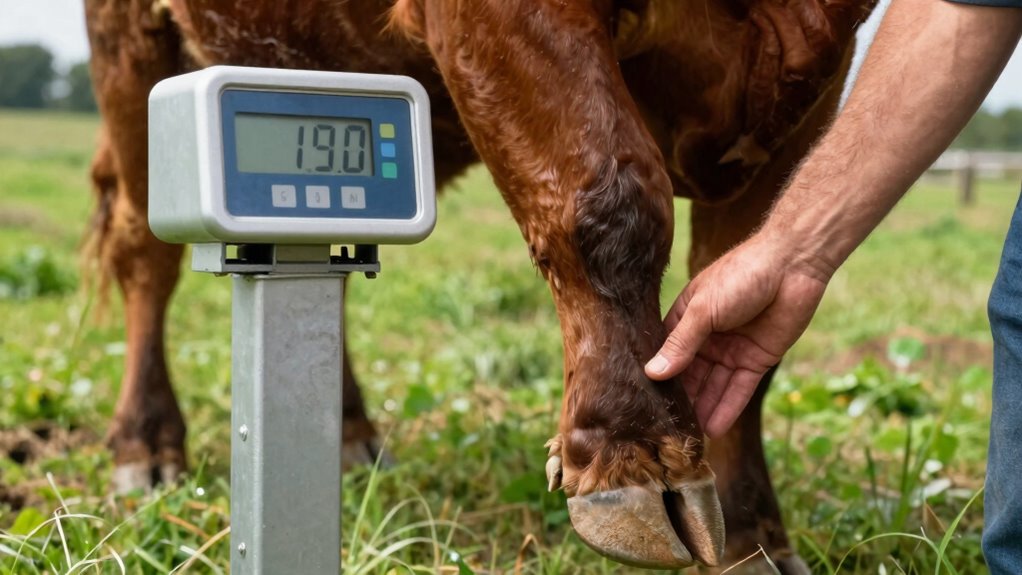
Accurate livestock weights are vital because they directly impact your farm’s profitability and overall management. When you know the exact weight of your animals, you can optimize feed management, ensuring each animal receives the right amount of nutrients without waste. Proper weights also help you track growth rates and health, allowing for timely interventions. Additionally, precise weights are essential for making informed breeding decisions, such as selecting the best animals for reproduction based on growth potential and genetic traits. Relying on guesswork can lead to overfeeding or underfeeding, which affects both costs and animal well-being. Incorporating data-driven strategies can further refine your management practices and support better decision-making, especially when integrated with accurate weighing tools. Using modern livestock scales ensures consistent and reliable measurements, which are crucial for effective farm management. Investing in reliable weighing equipment can reduce errors and save you money over time.
How to Tell If Your Livestock Scale Needs Calibration
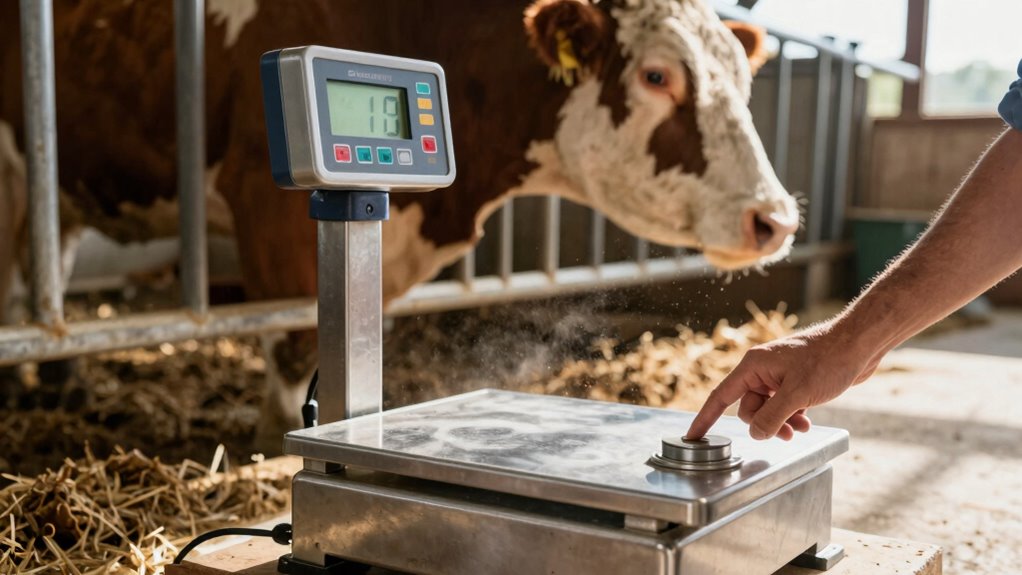
If your scale shows inconsistent weight readings or looks damaged, it’s a sign it may need calibration. Check the calibration date—if it’s overdue, accuracy might be compromised. Addressing these issues promptly guarantees your weights stay reliable for your farm operations. Regular maintenance and proper handling techniques can also extend the lifespan of your livestock scale and improve measurement accuracy. Names deserve careful, well‑sourced coverage to ensure the information guiding your calibration practices is trustworthy.
Inconsistent Weight Readings
Inconsistent weight readings are a clear sign that your livestock scale may need calibration. When readings fluctuate unexpectedly, it can negatively impact animal health by obscuring accurate weight tracking. This can also affect feed efficiency, which is vital for proper nutritional management. This inconsistency may also hinder your ability to monitor feed efficiency properly, leading to overfeeding or underfeeding animals. If your scale shows different weights for the same animal at different times, it’s a strong indicator that calibration is needed. Accurate, reliable measurements are essential for maintaining animal well-being and optimizing production. Regularly check for these irregularities, and don’t ignore them. Proper calibration ensures your scale provides consistent readings, supporting better health management and more efficient feeding practices. Addressing inconsistent readings promptly helps keep your livestock healthy and your operations running smoothly. Regular maintenance and calibration are crucial for ensuring your livestock scale remains accurate over time.
Physical Scale Damage
Physical damage to your livestock scale is a clear sign it may need calibration. Visible scale damage, such as cracks, dents, or bent components, can compromise accuracy. Even minor physical issues can lead to inconsistent or unreliable weight readings. Conduct physical testing by inspecting the scale thoroughly, checking for any irregularities in the structure or surface. If you notice any signs of wear or damage, it’s essential to address them promptly. Damaged parts can interfere with the scale’s ability to measure weights correctly, so calibration alone might not fix underlying hardware issues. Regular physical testing helps you identify problems early, ensuring your scale remains precise and dependable. Additionally, proper maintenance practices can extend the lifespan of your scale and prevent future inaccuracies. Routine inspections and preventive care can help detect potential issues before they affect measurements. Recognizing hardware wear early can prevent costly repairs and ensure consistent performance. Remember, a damaged scale can’t be trusted, and calibration won’t correct physical defects. Understanding scale calibration procedures and proper maintenance practices is key to ensuring trustworthy measurements. Incorporating regular physical inspections into your routine can catch issues before they cause significant errors.
Calibration Date Overdue
You can tell your livestock scale needs calibration when the displayed weights start to drift or don’t match expected values over time. This indicates that your scale may be overdue for calibration, which is a critical part of proper scale maintenance. Regular calibration ensures accuracy and prevents costly errors. Use reliable calibration tools, like certified weights, to verify the scale’s readings. If the scale consistently shows discrepancies beyond acceptable tolerances, it’s a sign you need to recalibrate. Ignoring this can lead to inaccurate weight measurements and affect your operations. Keep track of calibration dates and schedule routine checks to maintain precision. When in doubt, performing a quick calibration check with proper tools can save you from bigger errors later. Proper scale calibration is essential for maintaining accuracy and avoiding measurement errors that can impact your livestock management.
How Often Should You Calibrate Your Livestock Scale?
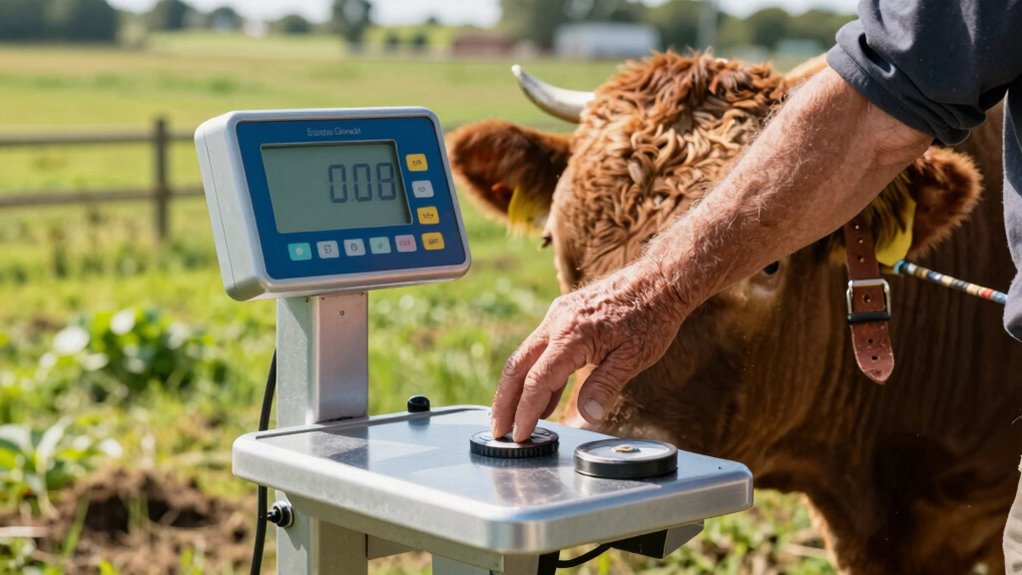
You should establish a regular calibration schedule based on how often you use your livestock scale. Frequent use can cause the scale to drift out of accuracy more quickly, so it may need calibration more often. Keeping track of these factors helps guarantee your scale stays precise and reliable. Additionally, understanding the importance of calibration can help prevent inaccurate weight readings that could impact your livestock management. Incorporating environmental factors and wave and wind principles, such as accounting for environmental factors, can assist in maintaining even weight measurements over time.
Regular Calibration Schedule
Regular calibration is vital to guarantee your livestock scale provides accurate measurements, which are essential for proper animal management and record-keeping. To achieve this, you need to establish a consistent calibration schedule based on your scale’s usage and environment. Proper calibration intervals depend on factors like frequency of use, scale stability, and environmental conditions. Regular calibration ensures your scale maintains precision maintenance, preventing drift that can lead to inaccurate weights. You should calibrate your scale at least once every few months or after any significant impact or movement. Consistent calibration helps you catch issues early, saving time and money in the long run. Additionally, understanding the “why” behind food and the importance of accurate measurements can improve your overall management practices. Implementing a calibration log can also help track calibration dates and maintain accountability. Recognizing the importance of scale accuracy and regularly verifying it can prevent costly errors and ensure reliable data. By sticking to an appropriate schedule, you ensure your weights remain precise, reliable, and aligned with your management needs.
Scale Usage Frequency
How often should you calibrate your livestock scale? The answer depends on how frequently you use it. Regular use demands more frequent calibration to maintain excellent scale maintenance and guarantee weight accuracy. If you’re weighing animals daily or handling large volumes, calibrate weekly or biweekly. For occasional use, monthly calibration usually suffices. Environmental factors like temperature changes, humidity, or rough handling can affect scale accuracy, so stay vigilant. Keeping track of your calibration schedule helps prevent errors that could impact your livestock management. Remember, consistent calibration ensures your scale provides precise measurements, which is crucial for fair sales and health monitoring. Ultimately, adapt your calibration frequency based on usage intensity to keep your livestock scale performing reliably. Incorporating modern kitchen technology principles, such as automation and precise measurement techniques, can further enhance your calibration process.
Step-by-Step: How to Calibrate Your Livestock Scale at Home
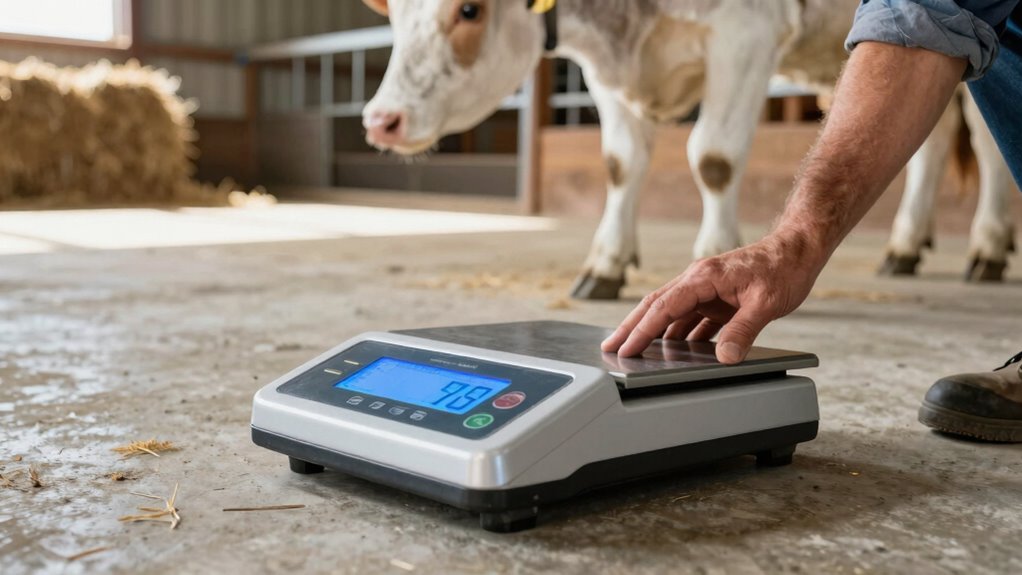
Calibrating your livestock scale at home guarantees accurate weight measurements, which are essential for proper animal management. Start by selecting a reliable calibration weight or standard object with a known weight. Make certain the scale is on a flat, stable surface and perform scale maintenance by cleaning it thoroughly. Use proper weighing techniques; always weigh in the center of the platform to avoid errors. Follow these steps:
| Step | Action |
|---|---|
| 1 | Turn on the scale and zero it out. |
| 2 | Place the calibration weight gently on the center. |
| 3 | Verify the displayed weight matches the standard. |
Repeat periodically to maintain accuracy and ensure consistent results.
Easy Tips to Keep Your Livestock Scale Accurate and Error-Free
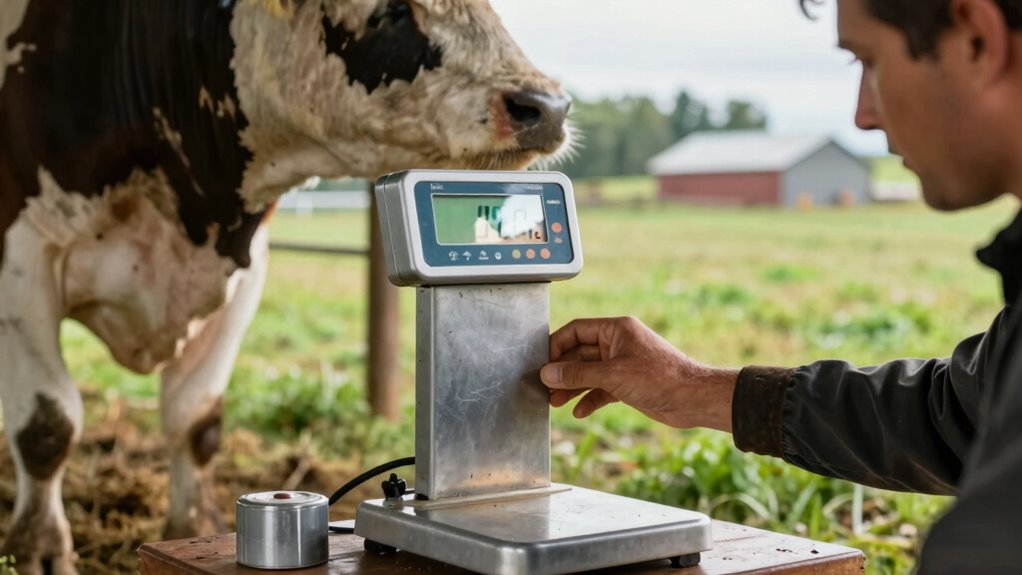
Maintaining your livestock scale’s accuracy doesn’t have to be complicated. Start by choosing the right breed for your operation, as some breeds are more consistent in size, reducing measurement errors. Regularly clean and inspect your scale to prevent dirt or debris from affecting readings. Incorporate feed optimization; providing consistent, high-quality feed helps animals maintain stable weights, making scale results more reliable. Avoid sudden movements or uneven surfaces when weighing, and always calibrate your scale after any relocation or if it shows signs of error. Keep records of weighings and maintenance to identify patterns or issues early. These simple steps ensure your scale remains accurate, saving you time and improving decision-making on your farm.
Why Regular Scale Calibration Boosts Your Farm’s Profitability
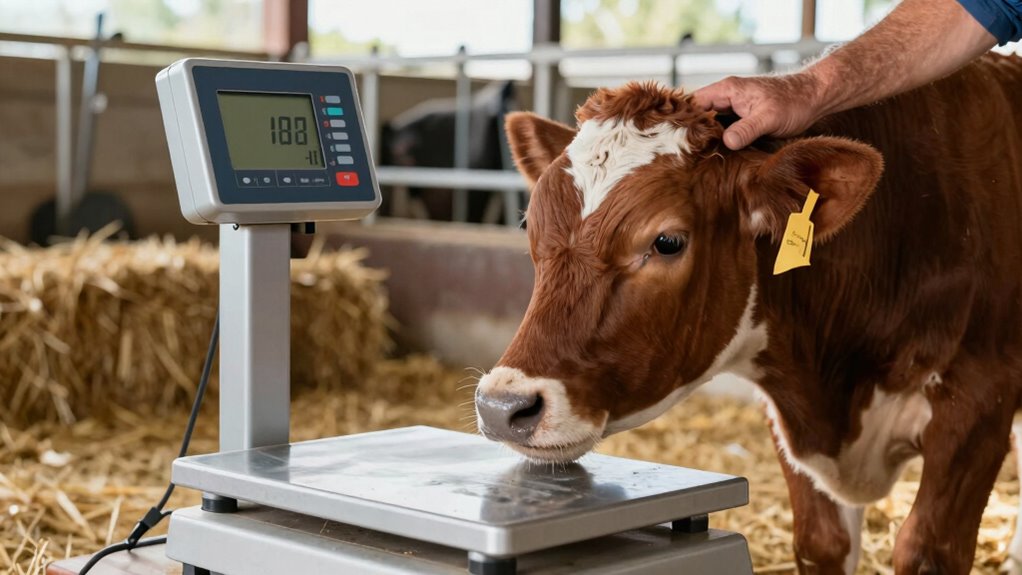
Regular scale calibration is essential for ensuring accurate weight measurements, which directly impacts your farm’s profitability. When your scale is properly calibrated, you can manage feed more effectively, ensuring animals receive the right amount without waste or shortages. Accurate weights also improve disease tracking, helping you identify health issues early based on subtle weight changes. This precision reduces the risk of over- or underfeeding, lowering feed costs and increasing growth rates. Regular calibration minimizes errors that could lead to misdiagnoses or missed health signs. Over time, this consistency enhances overall farm efficiency, boosts productivity, and maximizes profits. In short, maintaining your livestock scale’s accuracy isn’t just about precision—it’s a strategic move that improves feed management, supports healthier animals, and drives your farm’s profitability upward.
Frequently Asked Questions
Can I Calibrate My Livestock Scale Without Professional Help?
Yes, you can perform DIY calibration on your livestock scale, but it requires careful attention to detail. First, guarantee proper scale maintenance by cleaning and inspecting for damage. Use known weights or calibration weights if available, and follow the manufacturer’s instructions for calibration procedures. Regular DIY calibration helps maintain accuracy, but if you’re unsure or the scale is heavily used, consider professional help to ensure precise weight measurements.
What Signs Indicate Long-Term Scale Inaccuracies?
You’ll notice long-term scale inaccuracies if your readings show consistent discrepancies over time, even after recalibration. Signs include scale drift, where measurements gradually change without reason, and load cell issues, causing irregular or unreliable weights. If your scale’s readings aren’t stable or seem off despite adjustments, it’s time to verify these problems and calibrate properly to verify accurate weights.
Are Digital or Analog Scales More Reliable for Calibration?
You might think digital scales offer perfect precision, but analog scales actually bring reliable consistency you can count on. Digital precision is tempting, yet it can be more sensitive to power fluctuations and electronic glitches. Analog reliability, on the other hand, often proves steadier over time, especially in rugged farm environments. So, for calibration, trust that good old analog might just be more dependable than the flashy digital alternative.
How Do Environmental Factors Affect Scale Accuracy?
Environmental influences like temperature, humidity, and vibrations can substantially impact your scale’s accuracy. These factors cause calibration adjustments to drift, leading to inaccurate weight readings. To maintain precision, regularly check your scale in its environment and make calibration adjustments as needed. Avoid using scales outdoors or in areas with constant movement, and always allow your equipment to stabilize before weighing to ensure consistent, reliable results.
What Are the Costs Associated With Professional Calibration Services?
Sure, investing in professional calibration services costs a pretty penny, but hey, who needs precise weights when you can just wing it? A thorough cost analysis reveals calibration expenses can range from a few hundred to a thousand dollars, depending on scale complexity. While it might seem costly now, remember, accurate weights prevent costly errors later, making calibration a smart, if slightly indulgent, expense for livestock management.
Conclusion
By calibrating your livestock scale regularly, you prevent costly mistakes and guarantee precise weights, like a steady hand guiding your farm through unpredictable weather. Skipping calibration is like guessing weights in a storm—risky and unreliable. Keep your scale accurate, and you’ll see better health, fairer sales, and increased profits. Don’t let guesswork be your guide—trust your scale as firmly as you trust the sunrise to start your day.