To effectively fix winter waterer freeze problems, choose high-quality materials and reliable insulation, such as foam boards or blankets, combined with energy-efficient heaters like thermostatic or electric models. Proper installation and regular maintenance are key to preventing freezes and damage. Affordable solutions like low-wattage heaters or DIY insulation can also work well. Stay vigilant and responsive to issues—if you keep these tips in mind, you’ll be better prepared to keep your livestock hydrated and safe this winter.
Key Takeaways
- Choose high-quality, durable materials and advanced insulation to prevent waterer freezing and extend lifespan.
- Install energy-efficient heaters with automatic shutoff and proper insulation for reliable freeze protection.
- Regularly inspect, clean, and maintain waterers and heating systems to ensure effective operation throughout winter.
- Use affordable DIY insulation solutions like foam boards or blankets combined with low-wattage thermostats for cost-effective protection.
- Monitor system performance regularly, and seek professional help for complex issues to keep livestock water accessible and safe.
Why Waterer Freezes Are a Major Livestock Care Concern
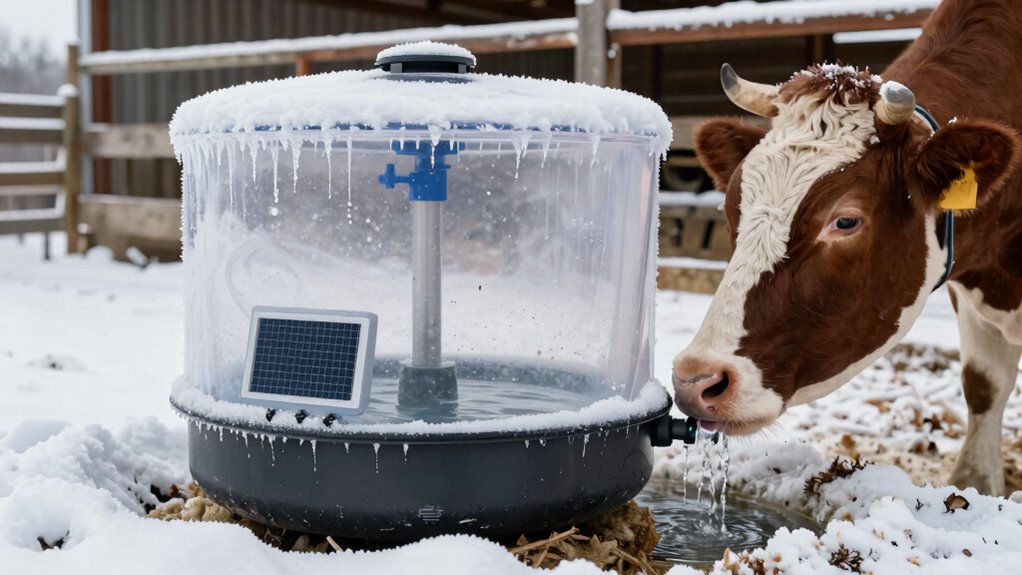
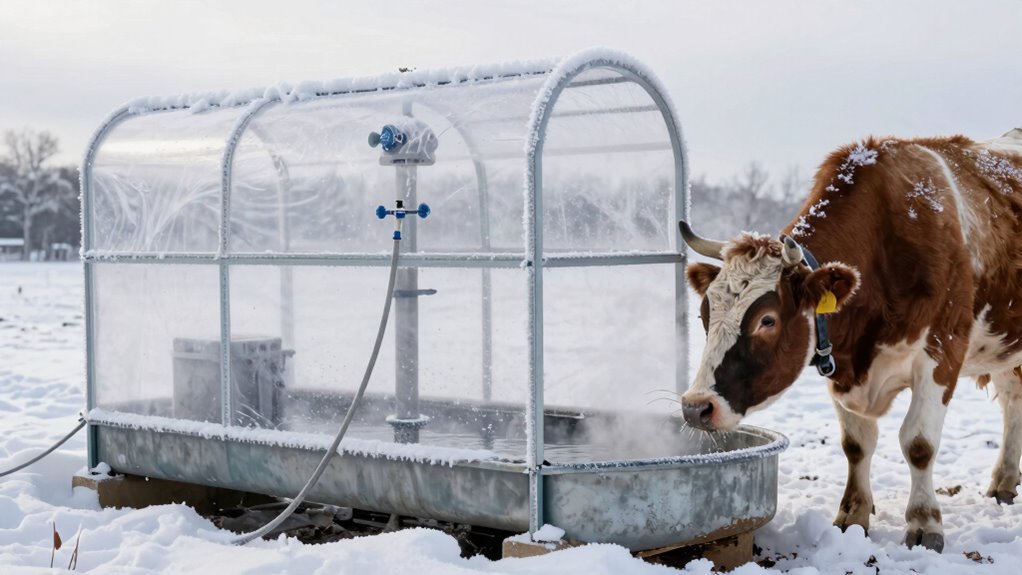
Freezing waterers pose a serious threat to livestock health and productivity. When water freezes, it blocks access, forcing animals to go without water, which can lead to dehydration and stress. Poor water quality resulting from freezing can promote bacterial growth, increasing the risk of illness. Without reliable access to fresh, liquid water, livestock can’t stay properly hydrated, impacting growth, milk production, and overall well-being. Dehydration also weakens their immune system, making them more susceptible to disease. Additionally, constantly thawing and refreezing can damage the waterer itself, leading to costly repairs. Ensuring your waterers stay unfrozen is critical for maintaining water quality and livestock hydration, both essential for ideal health and productivity during the cold months. Understanding livestock needs is key to selecting effective freeze protection solutions. Incorporating proper insulation can further help prevent freezing and maintain consistent water access, especially when combined with reliable heating methods.
How to Choose the Right Freeze Protection for Livestock Waterers
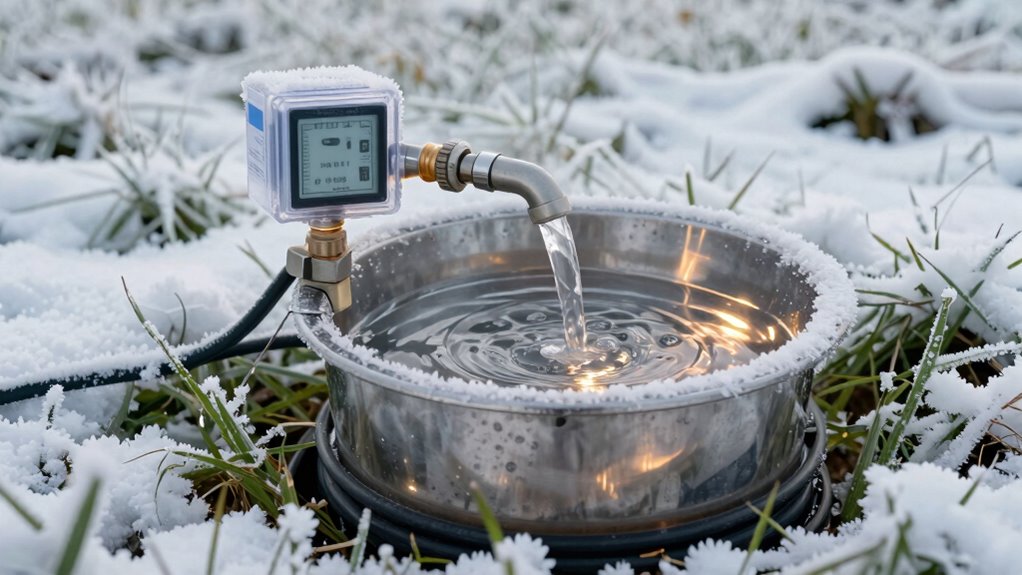
Choosing the right freeze protection for your livestock waterers starts with understanding the different options available and how they suit your operation. You want a system that prevents freezing effectively while managing power consumption and safety features like automatic shutoff. Consider electric heaters, heated waterers, and thermostatically controlled devices. Each has unique benefits depending on your climate and waterer size. For example, electric heaters with automatic shutoff turn off once the water is warm enough, saving energy. Here’s a quick overview:
| Option | Key Feature |
|---|---|
| Electric Heater | Automatic shutoff, moderate power use |
| Heated Waterer | Continuous operation, high power use |
| Thermostatic Device | Precise temperature control |
| Insulation Cover | Passive freeze prevention |
| Combination System | Balance of efficiency and safety |
Selecting the appropriate system also involves understanding temperature regulation to ensure optimal performance in winter conditions. Proper energy efficiency is crucial for cost-effective and sustainable operation during cold months. Additionally, implementing passive insulation techniques can significantly reduce energy needs and provide extra protection from freezing temperatures. Considering system maintenance and monitoring can further enhance reliability and prevent unexpected failures during harsh winter weather.
Comparing Livestock Waterer Heaters: Which Is Best?
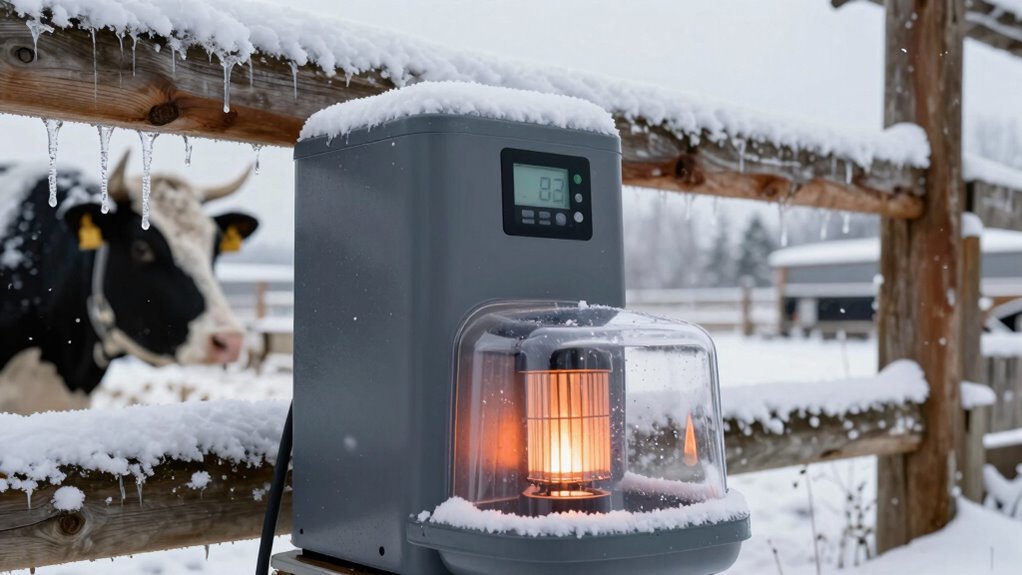
When choosing a livestock waterer heater, you need to consider energy efficiency, ease of installation, and durability. These factors determine how well a heater performs and how long it lasts in your conditions. Comparing these points helps you find the best option for your setup and budget. Incorporating reliable safety measures ensures long-term performance and prevents potential hazards during winter months. Additionally, understanding industry trends can help you select the most innovative and cost-effective solutions available. Staying informed about technological advancements can further enhance your waterer’s performance and resilience in harsh winter conditions. Regularly reviewing safety standards can also ensure your setup remains compliant and safe over time. Learning from industry leaders can provide valuable insights into the most effective waterer protection strategies.
Energy Efficiency Ratings
Evaluating the energy efficiency ratings of livestock waterer heaters is essential to determine which option offers the best performance with the lowest operating costs. Higher efficiency models consume less power, saving you money and reducing environmental impact. Some heaters integrate solar panels for renewable energy, decreasing reliance on grid power. Others feature built-in power backup options, ensuring continuous operation during outages. When comparing ratings, look for models with energy-star certifications or low wattage consumption. These indicators help identify the most cost-effective and eco-friendly choices. Keep in mind, a more efficient heater combined with solar panels or a reliable power backup can considerably enhance winter water supply without skyrocketing energy bills. Understanding energy efficiency ratings can also help you make more sustainable choices overall. Additionally, considering performance during cold weather can ensure your livestock waterer remains functional even in harsh winter conditions, especially if the heater’s thermal insulation is rated highly. For extra assurance, check that the heater’s design minimizes heat loss through effective insulation techniques to maximize energy savings. Moreover, selecting models with advanced temperature control systems can optimize energy use and maintain consistent water temperatures in freezing conditions.
Ease of Installation
Installing livestock waterer heaters can vary considerably in complexity, making ease of installation a key factor in your decision. You want a heater with straightforward installation simplicity, so setting it up doesn’t become a frustrating project. Look for models with clear instructions and minimal components, as these are typically more user friendly to set up. Some heaters come with pre-wired cords or easy-access mounting brackets, saving you time and effort. If you’re not tech-savvy, choosing a unit with simple plug-in options can make all the difference. The goal is to find a heater that requires minimal tools and effort, allowing you to focus on caring for your livestock instead of wrestling with complex installation procedures. Installation simplicity can significantly reduce setup time and frustration. Additionally, choosing models with clear instructions can further streamline the process and prevent unnecessary complications. To further ease installation, look for units with user-friendly design features that simplify mounting and connection steps. Ensuring the proper installation of your heater is also essential for safety and effectiveness during winter. Moreover, selecting a model with quick-connect fittings can facilitate easier setup and maintenance.
Durability and Material
Choosing a livestock waterer heater that can withstand harsh winter conditions means paying close attention to durability and materials used. Material selection plays a vital role in guaranteeing the heater’s longevity and performance in freezing temperatures. Look for heaters made from durable, weather-resistant materials like stainless steel or high-quality plastics, which resist corrosion and cracking. Durability factors include how well the heater withstands repeated freeze-thaw cycles, exposure to moisture, and physical impacts. Cheaper or poorly constructed models may fail prematurely, leading to water outages and livestock stress. Prioritizing high-quality materials and solid construction ensures your heater remains reliable through tough winters, providing consistent freeze protection and peace of mind. Incorporating nanotechnology advancements in material science is increasingly helping to enhance the durability and resilience of outdoor equipment like livestock waterer heaters. This innovative approach improves material strength and extends the lifespan of outdoor equipment significantly. Additionally, selecting heaters with advanced insulation materials can further improve their ability to perform reliably in extreme cold conditions.
How to Install and Maintain Your Freeze Protection System
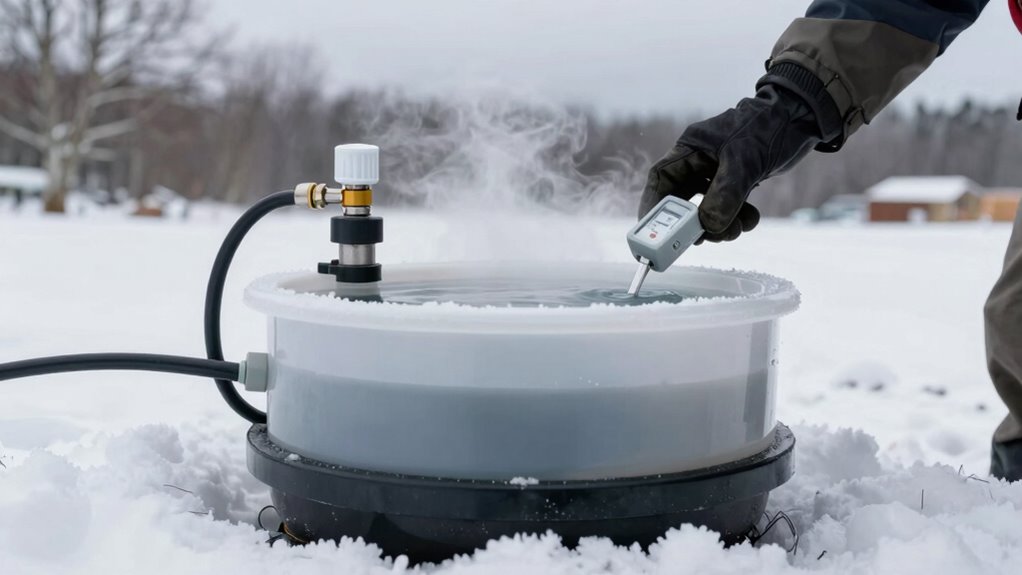
To guarantee your livestock waterer stays functional during freezing temperatures, proper installation and regular maintenance are essential. Start by securely installing your freeze protection system, ensuring all connections are tight and insulated. Use automatic timers to control heaters or de-icing devices, so they run at ideal times without wasting energy. Check the timers regularly to confirm they’re functioning correctly. Keep an eye on power outages, since they can disable your system when you need it most; consider installing a backup power source or alarm to alert you if power is lost. Clean and inspect your system frequently, removing any debris or ice buildup. Proper upkeep guarantees your waterer remains operational, providing livestock with a reliable water source throughout winter’s worst conditions.
Affordable Freeze Prevention Solutions for Your Waterers
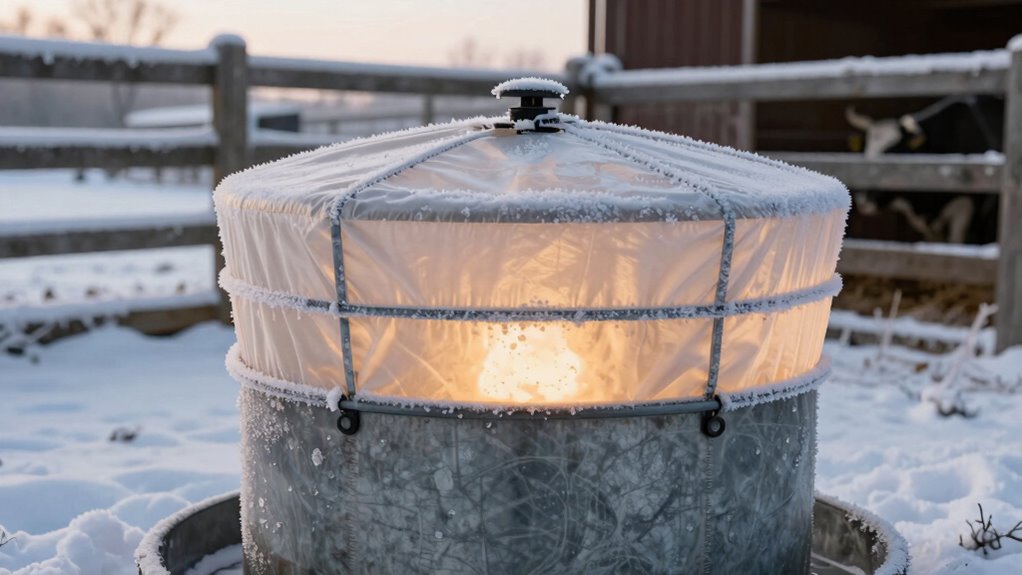
Keeping your livestock waterers from freezing doesn’t have to break the bank. You can use cost-effective heating methods, DIY insulation tips, and affordable thermostats to protect your water supply. Let’s explore how these budget-friendly solutions can keep water flowing all winter long.
Cost-Effective Heating Methods
When it comes to preventing waterer freezes without breaking the bank, affordable heating methods can be highly effective. You don’t need expensive systems—simple solutions work well. Consider solar solutions that harness sunlight to keep water from freezing, especially in sunnier months. Smart thermostats can help regulate heat efficiently, turning on only when temperatures drop. Other budget-friendly options include:
- Insulated waterer covers
- Low-wattage heated mats
- Battery-operated heated waterers
- Using existing electrical outlets with timers
- Combining solar with minimal electric heating
These methods save money while ensuring your livestock always have access to unfrozen water. By choosing smart, cost-effective heating options, you’ll protect your waterers all winter long without overspending.
DIY Insulation Tips
Affordable insulation techniques can markedly reduce the risk of your waterer freezing, especially when combined with other low-cost heating methods. Using simple DIY techniques, you can effectively insulate your waterer with readily available insulation materials like foam boards, straw, or old blankets. Wrap the waterer tightly, ensuring no gaps for cold air to enter, and secure the insulation to withstand wind and movement. You might also consider adding a snug cover or custom-built insulation box. These DIY techniques are inexpensive and easy to implement, providing a barrier against cold temperatures. Proper insulation reduces heat loss, helping your livestock access unfrozen water longer. With a bit of effort, you can protect your waterer from freezing without breaking the bank.
Low-Cost Thermostats
Installing a low-cost thermostat is one of the simplest and most effective ways to prevent your waterer from freezing. Smart thermostats are available at affordable prices and can automatically regulate heater operation, saving energy and reducing costs. These low-cost options are easy to install and program, giving you peace of mind during harsh winters.
Consider these benefits:
- Precise temperature control to prevent freezing
- Easy setup and user-friendly interfaces
- Compatibility with existing waterer heaters
- Remote monitoring via smartphone apps
- Cost-effective solutions to protect livestock waterers
Troubleshooting Freeze Protection Problems : When to Call a Pro

If your livestock waterer isn’t functioning properly despite your efforts, it might be time to call in a professional. Severe winter storms can damage components or cause electrical issues you might not detect yourself. When the waterer repeatedly freezes, or if you notice persistent leaks or electrical problems, a pro can diagnose the root cause safely. Ensuring proper freeze protection isn’t just about convenience; it’s crucial for livestock safety during harsh conditions. Attempting DIY fixes beyond basic troubleshooting can risk injury or further damage. A professional has the expertise to inspect electrical wiring, insulation, and heating elements thoroughly. Don’t delay calling in an expert if problems persist—properly functioning waterers are essential to keep your animals healthy and hydrated through the coldest winter days.
Frequently Asked Questions
How Often Should I Check My Waterer’s Freeze Protection System During Winter?
You should verify your waterer’s freeze protection system at least once a day during winter weather. Regular checks ensure livestock hydration isn’t interrupted by frozen water. Pay attention to any signs of system failure, especially during cold snaps. Consistent inspections help prevent waterer freezing, keeping your animals healthy and hydrated in harsh conditions. Don’t forget, frequent monitoring is key to effective winter protection for your livestock’s water supply.
Can I Retrofit My Existing Waterer With Freeze Protection Features?
Think of your waterer as a fortress needing extra defenses against winter’s assault. Yes, you can retrofit it with freeze protection features by upgrading heater systems or adding waterer insulation. These heater upgrades and insulation improvements help keep the water from freezing, even in the coldest weather. Just make certain your existing waterer can accommodate these modifications, and you’ll keep water flowing freely all winter long.
What Are the Signs That My Waterer Heater Is Failing?
If your waterer heater is failing, you’ll notice heater malfunctions like it not turning on or staying on, causing uneven water temperature. Water flow issues may also occur, such as reduced or blocked flow, because the heater isn’t effectively preventing ice buildup. Keep an eye out for freezing water, strange noises, or inconsistent operation, as these are clear signs your heater needs inspection or replacement to guarantee your livestock always have access to unfrozen water.
Are Solar-Powered Freeze Protection Options Effective in Cold Climates?
Back in the day, folks relied on trusty water heaters, and today, solar power can be just as reliable. Solar-powered freeze protection options are effective in cold climates, especially when paired with efficient water heaters. They harness sun energy to keep water from freezing, reducing energy costs and dependency on grid power. As long as your solar system is properly installed and maintained, it can provide consistent freeze protection even in harsh winter conditions.
How Does Livestock Behavior Affect the Efficacy of Freeze Protection Measures?
Your livestock’s behavior greatly influences freeze protection effectiveness. If animals are hesitant to access water, especially in cold weather, their hydration and water consumption decrease, risking health issues. Ensuring easy, reliable access encourages consistent drinking, which helps maintain proper hydration. Active animals that readily drink from protected waterers stay well-hydrated, making your freeze prevention measures more effective. Observe their habits regularly and adjust your system to keep water accessible and appealing.
Conclusion
Now that you know the smart ways to protect your livestock waterers from freezing, the key is taking action before winter hits full force. But what if your current system isn’t enough? The next cold snap could surprise you, and a frozen waterer can turn into a bigger problem than you think. Stay ahead of the freeze—your animals depend on it. Are you ready to uncover the hidden solutions that could save you from unexpected winter woes?