
To manage parasites in sheep and goats naturally, focus on rotational grazing to break parasite life cycles and allow pastures to rest for at least 30 days. Incorporate antiparasitic herbs like garlic, wormwood, and chicory into their diet to boost immunity and prevent infestations. Combining these methods with close monitoring of animal health and maintaining a holistic, environmentally friendly approach can reduce reliance on drugs. Keep exploring natural strategies to guarantee your flock stays healthy and resilient.
Key Takeaways
- Use herbal remedies like garlic, wormwood, and chicory to naturally deworm sheep and goats.
- Implement rotational grazing to disrupt parasite life cycles and reduce pasture contamination.
- Combine herbal supplements with strategic grazing schedules to enhance animals’ immunity and prevent infestations.
- Rest pastures for at least 30 days to allow parasite larvae to die off naturally.
- Monitor animal health closely and incorporate holistic, environmentally friendly management practices.
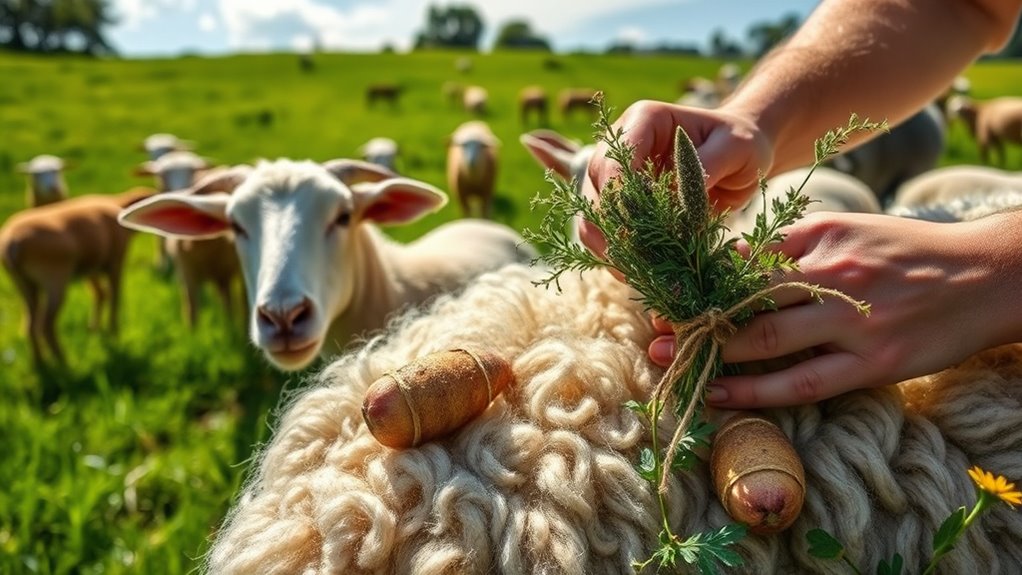
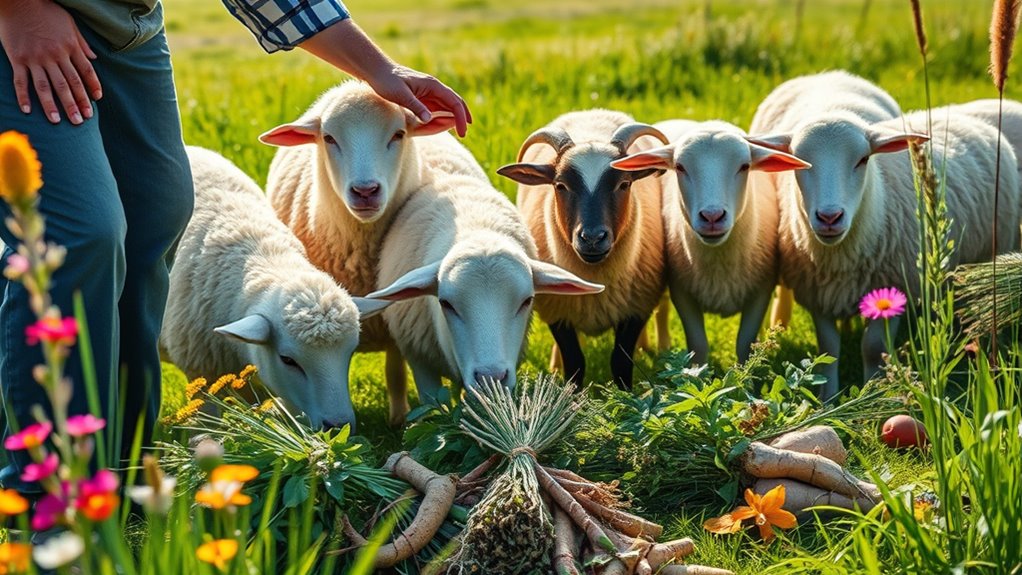
Are you looking for effective ways to control parasites in your sheep and goats without relying solely on chemicals? If so, exploring herbal remedies and implementing rotational grazing can markedly reduce parasite loads naturally. Herbal remedies involve using specific plants that have antiparasitic properties, which can strengthen your animals’ immune systems and help them resist infestations. Plants like garlic, wormwood, and chicory are known for their natural deworming effects. Incorporating these herbs into your animals’ diet or providing them as supplements can serve as a proactive measure to keep parasite levels in check. These remedies are especially appealing because they’re affordable, environmentally friendly, and reduce the risk of drug resistance developing among parasites.
Alongside herbal remedies, rotational grazing stands out as an essential management strategy. This practice involves moving your sheep and goats between different pastures, rather than allowing them to graze the same area continuously. By rotating your livestock, you interrupt the life cycle of parasites, which typically lay eggs on the pasture and hatch into larvae that infect your animals. Giving the pasture time to rest allows the larvae to die off naturally, lowering the chances of reinfection. You’ll want to divide your grazing land into multiple paddocks, ensuring each gets a rest period of at least 30 days, or longer if possible. During this time, the pasture recovers, and parasite larvae die due to exposure to sunlight, drying, and other environmental factors. This method reduces the parasite burden without the need for constant chemical dewormers, which can become less effective over time.
Combining herbal remedies with rotational grazing creates a holistic approach to parasite management. For example, administering herbal supplements before and during grazing season can boost your animals’ natural defenses, while strategic grazing minimizes their exposure to infective larvae. Both methods emphasize prevention over treatment, which is key to maintaining a healthy flock or herd. You should always monitor your animals closely for signs of parasitism, such as weight loss, diarrhea, or anemia, and adjust your management practices accordingly. Incorporating spiritual awareness into your farm management can help you stay attuned to subtle signs of health and imbalance in your animals. With patience and consistency, these natural strategies can markedly reduce your reliance on chemical dewormers, promote sustainable farming, and improve the overall health of your sheep and goats.
Top picks for "manag parasit sheep"
Open Amazon search results for this keyword.
As an affiliate, we earn on qualifying purchases.
Frequently Asked Questions
Can Natural Parasite Management Completely Eliminate All Parasite Risks?
Natural parasite management can’t completely eliminate all risks, but it markedly reduces them when you use holistic grazing and integrated farm practices. Rotating pastures and avoiding overstocking help break parasite life cycles. Incorporating diverse grazing strategies and natural supplements strengthens your animals’ resilience. While it’s not foolproof, combining these methods creates a healthier environment, lowering parasite loads and promoting overall flock health naturally.
How Do I Identify Specific Parasites Affecting My Sheep or Goats?
Think of parasite identification as revealing a secret code, revealing the hidden threats inside your flock. You can do this through fecal testing, which acts like a detective’s magnifying glass, spotting eggs and larvae. By analyzing the results, you identify specific parasites affecting your sheep or goats. This targeted approach helps you tailor natural management strategies, turning the tide against parasites and keeping your animals healthy and strong.
Are There Any Herbs Particularly Effective for Parasite Control?
You can use herbs like garlic, wormwood, and neem in herbal formulations for parasite control. These herbs are known for their natural anthelmintic properties and can help with parasite detox. Incorporate them into your animals’ diet or create teas and supplements. Regular use of these herbal formulations supports your sheep and goats’ health, reducing parasite loads naturally and minimizing the need for chemical treatments.
What Are the Signs of Parasite Resistance to Natural Treatments?
You notice your goats still show parasite symptoms despite natural treatments. This indicates resistance, which can be confirmed through resistance testing and analyzing genetic markers. For example, if fecal egg counts remain high after treatment, it signals resistance. Early detection helps you adapt your management plan, ensuring you monitor signs like persistent anemia, weight loss, or poor coat condition—clear signs that parasites are no longer responding to your natural approach.
How Often Should Natural Parasite Management Strategies Be Implemented?
You should implement natural parasite management strategies regularly, ideally seasonally, to keep parasite levels in check. Use seasonal treatments before high-risk periods and practice pasture rotation to reduce exposure. Consistent application helps prevent resistance buildup and maintains herd health. Monitor your animals closely and adjust your approach based on environmental conditions and parasite risks, ensuring a sustainable, natural control method that keeps your sheep and goats thriving year-round.
Conclusion
By choosing natural parasite management, you’ll protect your sheep and goats without relying on harsh chemicals. Imagine your animals thriving, grazing freely without the stress of chemical treatments. Some worry natural methods won’t be effective, but with consistent rotation and herbal remedies, you’ll see healthier, happier livestock. Trust in nature’s balance, and watch your flock flourish, free from parasites and chemicals. Your farm’s future is brighter when you work with nature, not against it.