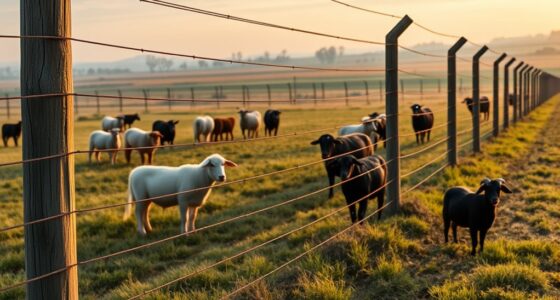
To effectively manage your pasture for sheep, implement grazing rotations to prevent overgrazing and allow rest periods for plant recovery. This promotes high-quality forage, supports soil health, and helps control weeds naturally. Keep predator threats in check with secure fencing and guard animals to reduce stress and injuries. Maintaining soil fertility through testing and proper amendments is vital for lush pasture growth. Continue exploring these strategies to foster a sustainable and healthy environment for your flock.
Key Takeaways
- Implement grazing rotations to prevent overgrazing and promote healthy pasture recovery.
- Schedule rest periods for paddocks to allow forage regrowth and maintain soil health.
- Combine grazing management with predator control to ensure a safe environment for sheep.
- Regularly test and amend soil to sustain optimal forage quality and pasture productivity.
- Use integrated pasture practices to enhance flock health, land sustainability, and long-term profitability.

Effective pasture management is vital for maintaining healthy, productive sheep. One of the key elements to achieving this is guaranteeing that your pasture remains fertile and resilient. Soil fertility plays a critical role because healthy soil produces nutritious forage, which directly influences your sheep’s growth, wool quality, and overall health. Regularly testing your soil helps you understand its nutrient levels and pH balance, allowing you to make targeted amendments such as lime or fertilizer. By boosting soil fertility, you promote lush, vigorous pasture growth that can withstand grazing pressure and seasonal changes. When your pasture is thriving, your sheep get better nutrition, which reduces the need for supplemental feed and supports their immune system. Additionally, healthy pastures are less prone to erosion and weed invasion, further maintaining a balanced ecosystem. Ensuring proper soil testing helps you optimize your pasture management strategies effectively.
Equally important is predator control, which safeguards your flock from potential threats while grazing. Predators like coyotes or stray dogs can cause significant stress and loss if left unmanaged. Implementing effective predator control measures, such as secure fencing, guard animals like llamas or Donkeys, and regular patrols, keeps your sheep safe and reduces the risk of injury or death. When predators are kept at bay, your sheep can graze confidently, which promotes better grazing habits and less stress-induced health issues. Maintaining a secure environment also means you can rotate pastures more effectively, knowing your flock is protected, and grazing can be managed sustainably.
Grazing rotations are vital because they allow you to rest and rejuvenate your pastures while preventing overgrazing. Rotations involve moving your sheep from one paddock to another, giving grazed areas time to recover and regrow. This practice helps maintain soil fertility naturally, as pasture plants and roots restore nutrients over time. Rest periods also allow for natural weed control, reducing the need for chemical herbicides. As you rotate, you’re maximizing forage production, ensuring that your sheep always have access to high-quality pasture. This method also minimizes soil compaction, which can hinder plant growth and reduce soil fertility. Proper grazing rotation, combined with soil fertility management, ensures your land remains productive and sustainable over the long term.
Incorporating grazing rotations alongside predator control creates a balanced environment that promotes healthy pasture growth and sheep well-being. It’s a proactive approach that ensures your flock has access to nutritious forage, while your land remains sustainable and protected from external threats. Proper management of soil fertility through fertilization and rotation, combined with vigilant predator control, will set a strong foundation for a thriving sheep operation. This integrated approach not only enhances the health and productivity of your sheep but also preserves the land for future grazing seasons, making your pasture management both effective and sustainable.
Frequently Asked Questions
How Do I Select the Best Pasture Species for Sheep Grazing?
You should choose pasture species that thrive in your soil’s fertility levels and support diverse plant growth. Opt for a mix of grasses and legumes to enhance pasture diversity, which benefits sheep health and productivity. Test your soil first, then select species adapted to those conditions. Incorporating a variety of plants guarantees better resilience, prevents overgrazing, and provides balanced nutrition for your sheep throughout the grazing season.
What Are Signs of Nutritional Deficiencies in Pasture-Fed Sheep?
Think of your sheep as a finely tuned instrument—any discord signals issues. Signs of nutritional deficiencies include dull coat, weight loss, and poor growth. Watch for mineral deficiencies like zinc or selenium, and parasite indicators, which can mimic deficiency symptoms. These signs suggest your pasture may lack essential nutrients, or parasites are affecting your flock’s health. Regular monitoring helps you catch problems early and keep your sheep thriving.
How Often Should I Rotate Sheep Between Pastures?
You should rotate your sheep between pastures every 1 to 3 weeks, depending on pasture health and forage availability. Regular pasture monitoring helps you identify overgrazed areas and signs of nutritional deficiencies, ensuring ideal sheep health. Rotations prevent overgrazing, promote healthy grass growth, and reduce parasite buildup. Adjust the timing based on grass growth rate and sheep condition, and always keep an eye on pasture quality to maintain healthy, thriving sheep.
What Predator Risks Should I Consider in Pasture-Based Sheep Systems?
You should stay vigilant about predator risks like coyotes, dogs, and birds of prey. Predator monitoring helps you spot threats early, while effective fencing strategies keep sheep safe. Though open pastures offer freedom, they also invite predators, so combine regular surveillance with sturdy fencing to protect your flock. Balancing pasture use with these safety measures ensures your sheep graze freely without undue danger.
How Can I Manage Pasture Weeds Effectively for Sheep Health?
To manage pasture weeds effectively for sheep health, you should prioritize weed control through targeted grazing and timely mowing. Incorporate pasture renovation by reseeding with desirable grasses to outcompete weeds. Regularly monitor your pasture for invasive species, and consider organic or chemical treatments carefully. Maintaining healthy, dense pasture swards reduces weed infestations, ensuring your sheep graze on nutritious, disease-free forage. This proactive approach promotes overall flock health and pasture sustainability.
Conclusion
By mastering grazing rotations and pasture management, you’ll keep your sheep healthy and your land thriving. Think of your pasture as a well-tuned orchestra, each part working in harmony to create a symphony of health and productivity. With careful planning and attentive care, you’ll steer your flock toward lush pastures and vibrant health. Remember, a well-managed pasture is the foundation for happy sheep and a prosperous farm—your fields are the canvas, and you’re the artist.