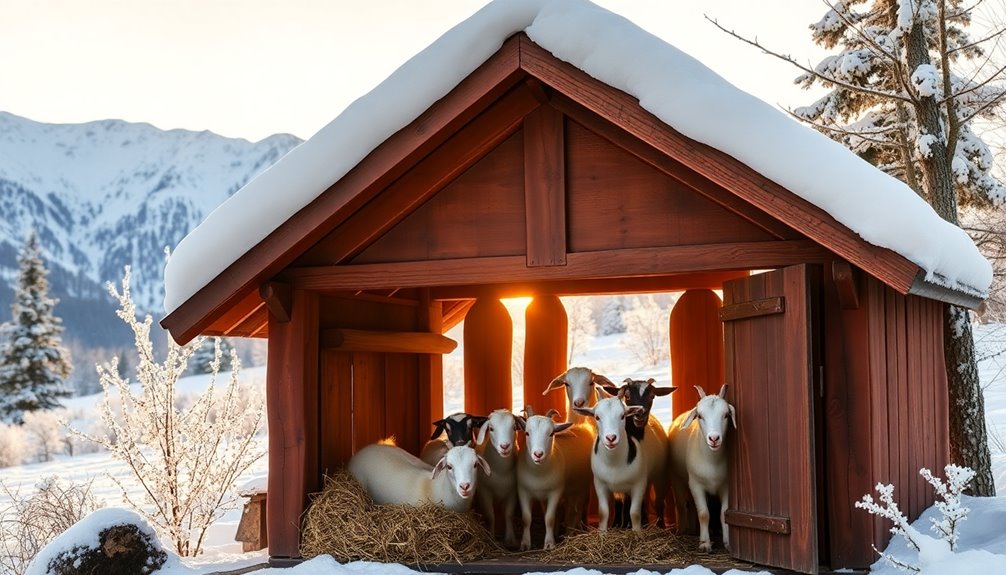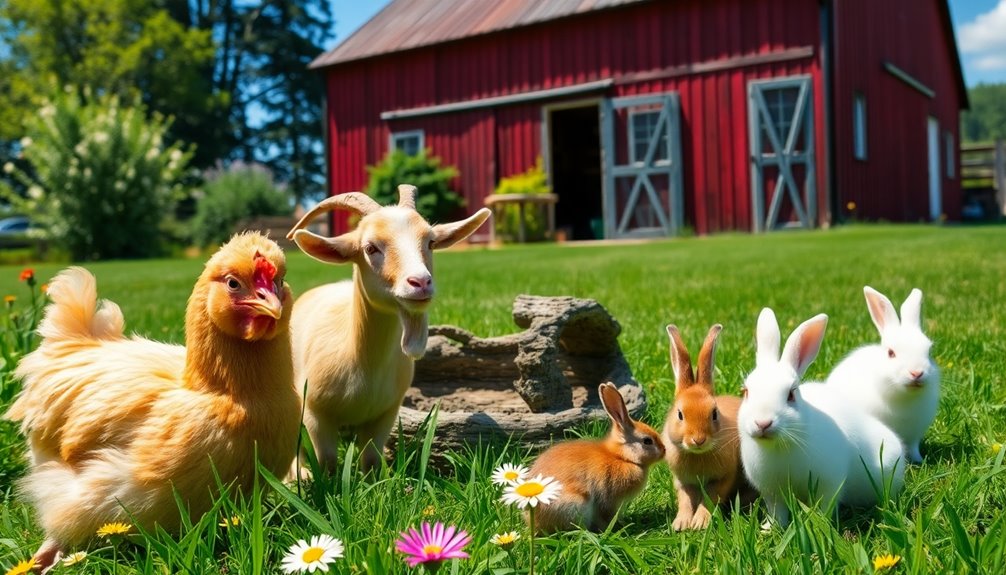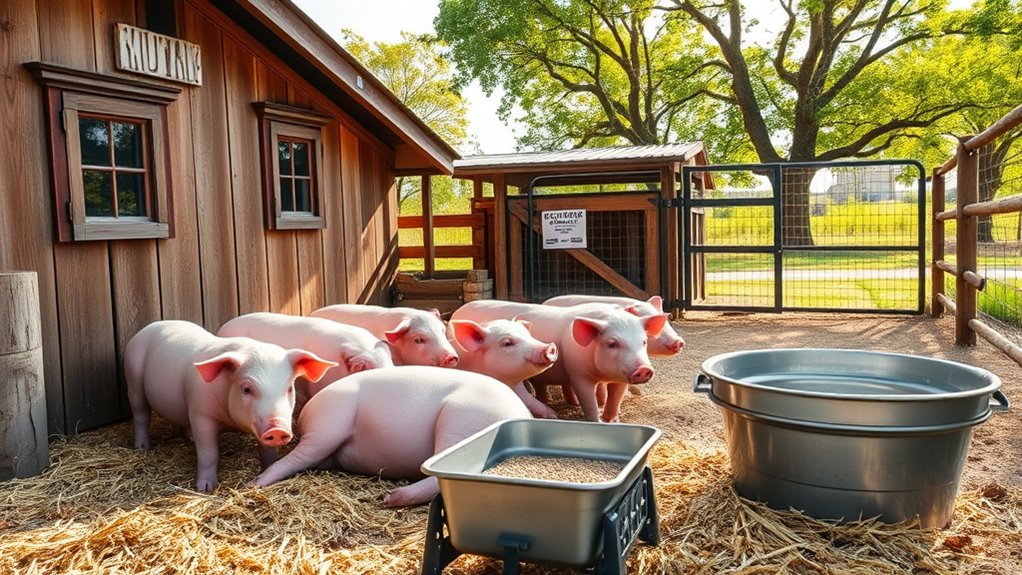

To keep pigs healthy on your homestead, provide clean, secure housing with good ventilation and enough space to reduce stress and prevent disease. Feed them a balanced diet tailored to their breed’s needs, and monitor their health regularly for signs of illness. Implement strict biosecurity measures like vaccination, hygiene, and parasite control to prevent outbreaks. The more you learn about proper care practices, the better you’ll guarantee your pigs thrive and stay productive.
Key Takeaways
- Provide clean, well-ventilated housing with adequate space to reduce stress and prevent disease.
- Offer a balanced diet tailored to pig breed needs to boost health and productivity.
- Implement strict biosecurity measures, including vaccinations and hygiene protocols, to prevent disease spread.
- Conduct regular health checks and monitor for signs of illness or distress for early intervention.
- Choose hardy, disease-resistant breeds suited to your climate and environment for long-term health benefits.
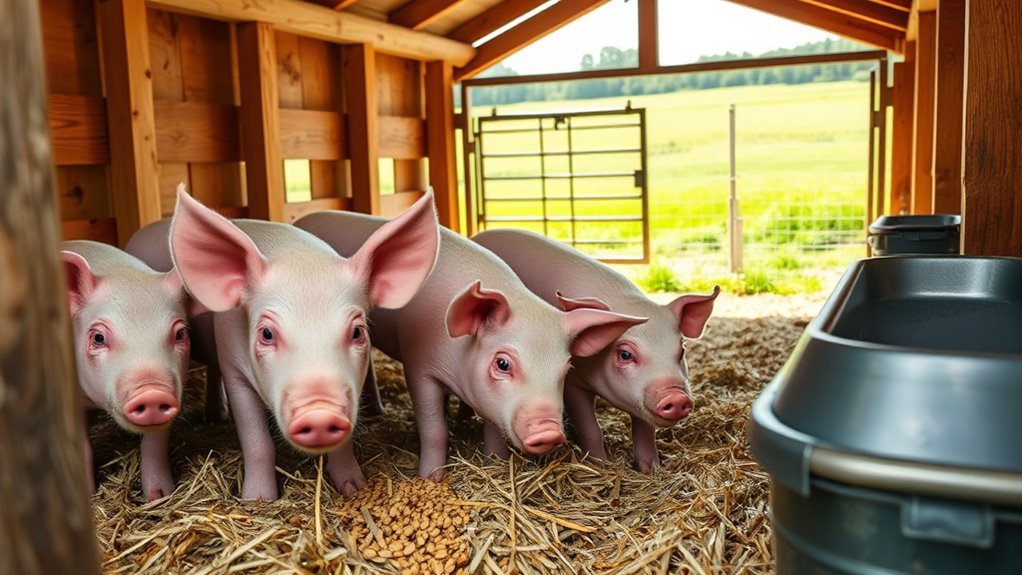
Have you ever considered raising pigs on your homestead? If so, one of the most vital aspects to focus on is ensuring pig health. Healthy pigs are the foundation of a successful homestead operation, and good health starts with thoughtful breed selection. When choosing a breed, consider your climate, space, and your goals—whether you want heritage breeds known for resilience or commercial breeds for faster growth. Proper breed selection can reduce health issues down the line, as some breeds are more resistant to common diseases and parasites. Once you’ve picked the right breed, you’ll want to pay close attention to their overall well-being, including nutrition, housing, and biosecurity measures, to keep your pigs thriving.
Choosing the right pig breed and prioritizing health are key to a successful homestead.
The health of your pigs hinges not only on genetics but also on your management practices. Regular health checks, prompt treatment of illnesses, and maintaining clean living conditions are essential. Vaccinations and parasite control should be part of your routine to prevent outbreaks that can decimate your herd. Remember, healthy pigs are more productive, produce better meat, and require fewer costly vet visits. Good pig health also means monitoring for signs of distress, lameness, or unusual behavior, which can signal underlying issues. Investing time in understanding the specific health needs of your chosen breed helps you catch problems early and implement preventative measures.
Breed selection plays a big role in your herd’s resilience. For example, heritage breeds like Gloucestershire Old Spots or Tamworths tend to be hardy and adaptable, making them excellent choices for beginner homesteaders. They’re often more resistant to diseases and can handle diverse environments better than some commercial breeds. If you’re aiming for faster growth and higher yields, you might lean toward breeds like Yorkshire or Duroc, but be aware that these may require more intensive health management. Knowing the characteristics and vulnerabilities of your chosen breed allows you to tailor your care and biosecurity protocols effectively, reducing the risk of disease and ensuring your pigs stay healthy. Additionally, understanding the vibrational energy or emotional state of your pigs can help you create a more harmonious environment that supports their overall health and resilience.
In the end, your success with raising pigs depends heavily on your ability to select the right breed and prioritize their health. By investing in proper breed selection and maintaining vigilant health practices, you set a solid foundation for a productive and sustainable pig operation on your homestead. Keep learning about your pigs’ needs, stay proactive with health checks, and create a clean, secure environment—your pigs will thank you with healthy growth and quality meat.

2 Story Solid Wood Rabbit/Bunny Hutch with 2 Large Main Rooms, Indoor Outdoor Rabbit House Guinea Pig Cage Pet House for Small Animals with Ventilation Door Removable Tray Waterproof Roof (Grey)
👍👍👍New Upgraded! Quality plastic trays will never leak or rusty. 100% Finnish spruce timber and treated with water-based…
As an affiliate, we earn on qualifying purchases.
As an affiliate, we earn on qualifying purchases.
Frequently Asked Questions
How Do I Introduce New Pigs to an Existing Herd Safely?
You should introduce new pigs to your herd safely by first implementing quarantine procedures for at least two weeks. During this time, observe their health and prevent direct contact with existing pigs. When ready, introduce them gradually, allowing time for establishing a social hierarchy without aggression. Supervise interactions closely, and make certain all pigs are healthy and vaccinated to minimize disease risks and smooth integration.
What Are Common Signs of Pig Illness to Watch For?
You should watch for symptoms like lethargy, coughing, sneezing, abnormal discharges, or loss of appetite. Look for changes in behavior or posture, such as reluctance to move or standing apart from the herd. If you notice any signs of illness, prioritize symptoms identification and seek veterinary consultation promptly. Early detection and professional advice help prevent the spread of disease and guarantee your pigs stay healthy and thriving.
How Can I Prevent Pig Escape From the Homestead?
Like the walls of Troy, your homestead needs strong defenses. You should use effective fencing strategies, such as sturdy, high fences or electric wire, to keep pigs in. Incorporate predator deterrents like motion-activated lights or noise devices to prevent outside threats. Regularly inspect and repair fencing to guarantee there are no weak spots. Staying vigilant and proactive helps prevent pig escapes and keeps your animals safe, just as a well-defended city stands strong.
What Are the Best Practices for Pig Waste Management?
You should focus on effective pig waste management by implementing composting techniques to turn manure into valuable fertilizer while minimizing odors. Regularly clean their pens to reduce waste buildup and practice waste reduction strategies like spreading manure on your fields or using it in compost bins. Properly managed waste not only keeps your homestead cleaner but also promotes healthy pigs and a more sustainable environment.
How Do I Handle Pig Behavioral Issues Humanely?
To handle pig behavioral issues humanely, focus on enrichment activities like providing toys and varied environments to keep them engaged. Encourage social bonding by allowing pigs to interact regularly in a safe, supervised space. This reduces stress and unwanted behaviors. Always observe their cues, and if issues arise, address them calmly and patiently, reinforcing positive behaviors. This approach promotes a happy, healthy environment for your pigs.

Wild Harvest Advanced Nutrition Guinea Pig, Complete And Balanced Diet, 8 Pounds
ADVANCED NUTRITION DIET: Created especially for guinea pigs.
As an affiliate, we earn on qualifying purchases.
As an affiliate, we earn on qualifying purchases.
Conclusion
Now that you know the essentials of housing, feeding, and biosecurity, you’re ready to turn your homestead into a pig haven. With proper care, your pigs will thrive like champions, transforming your land into a lively, productive paradise. Remember, a well-maintained pig pen isn’t just a coop — it’s the heart of a thriving farm. So, roll up your sleeves and give your pigs the best home they deserve—your success depends on it!
pig biosecurity vaccines and hygiene supplies
As an affiliate, we earn on qualifying purchases.
As an affiliate, we earn on qualifying purchases.

Pig Farming 101: Understanding Pig Types, Sizes, Feeding Strategies for Maximum Health, Growth, and parasite control
As an affiliate, we earn on qualifying purchases.
As an affiliate, we earn on qualifying purchases.