
To raise healthy, meat-producing turkeys, you should provide a balanced diet with grains, protein, vitamins, and minerals, ensuring fresh water is always available. Protect your flock with sturdy fencing, secure housing, and netting to guard against predators like foxes and hawks. Regular husbandry practices, such as good sanitation and safe housing at night, help reduce stress and promote growth. Continuing with these tips can help you successfully raise a thriving, meat-ready flock.
Key Takeaways
- Provide a balanced diet with grains, proteins, vitamins, and minerals, and ensure fresh water is always available.
- Use commercial feeds formulated for turkeys, supplementing with greens and kitchen scraps in moderation.
- Protect turkeys with sturdy fencing, secure housing, and netting to guard against predators like foxes and hawks.
- House turkeys indoors at night and reinforce structures regularly to prevent predator intrusions.
- Employ husbandry practices that reduce stress, promote health, and support proper growth for optimal meat production.
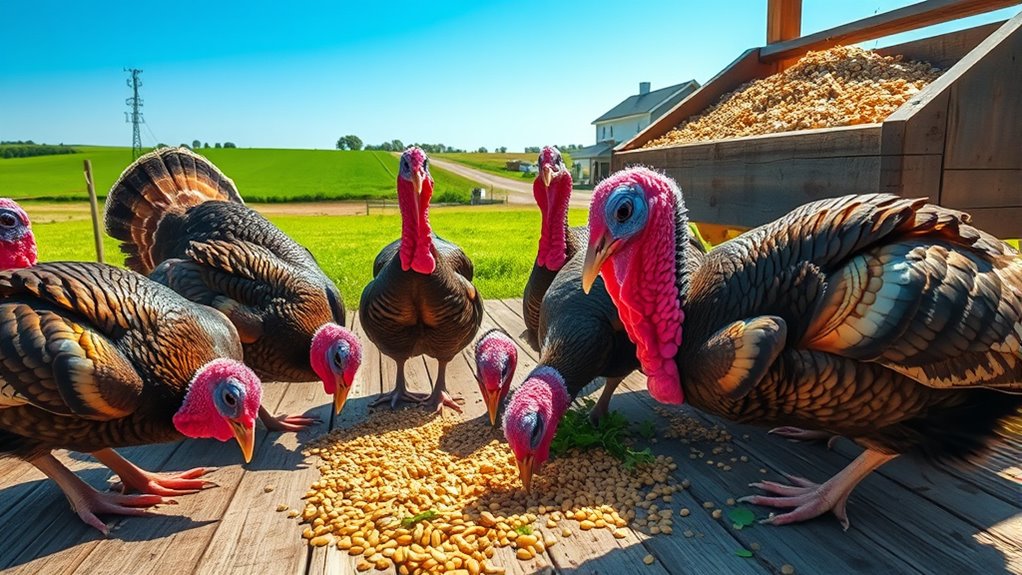
Have you ever wondered what it takes to raise healthy turkeys for meat? The process involves understanding turkey nutrition and ensuring predator protection from the start. Proper turkey nutrition is essential because healthy, well-fed birds grow faster and produce better meat. You need to provide a balanced diet that includes the right mix of grains, protein, vitamins, and minerals. Commercial turkey feeds are formulated to meet these needs, but you can also supplement with fresh greens and kitchen scraps in moderation. Always guarantee clean, fresh water is available, as hydration is critical for digestion and overall health. As your turkeys grow, adjust their diet to accommodate their changing nutritional requirements, especially during the rapid growth phases to prevent issues like leg problems or obesity.
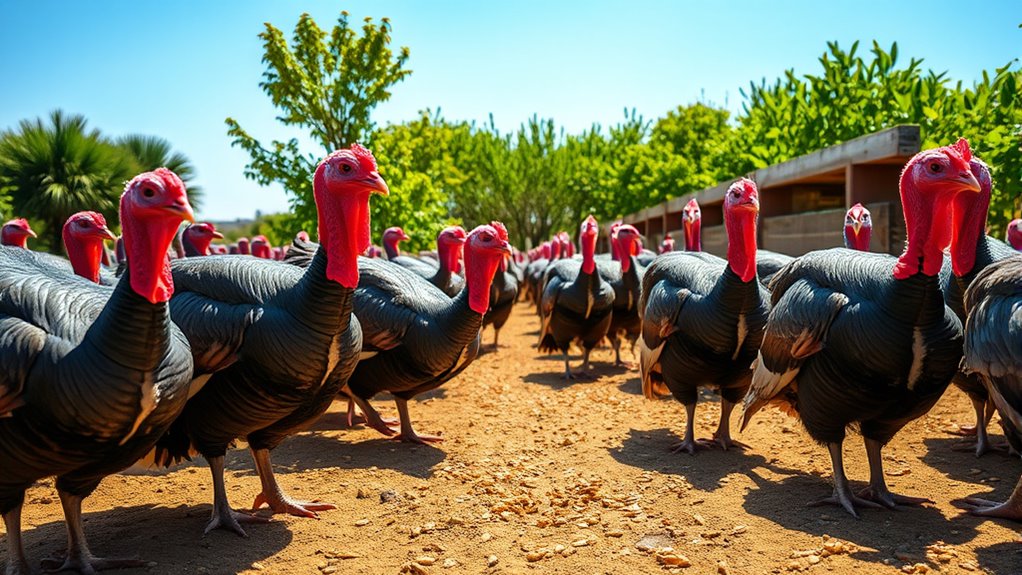
Predator protection is equally important because turkeys, especially when free-ranging, are vulnerable to predators like foxes, raccoons, hawks, and coyotes. To safeguard your flock, start by providing secure housing. Use sturdy fencing, preferably buried a few inches underground to prevent digging predators from gaining access. Cover outdoor runs with netting or wire mesh to defend against aerial attacks from hawks or owls. During the night, make sure your turkeys are safely housed inside a predator-proof coop, with solid walls, secure latches, and no gaps where predators could slip through. Regularly inspect the housing for weaknesses and reinforce them as needed. It’s also wise to keep the area clean and remove any debris or hiding spots that could attract predators or give them cover.
Beyond physical barriers, consider using motion-activated lights or alarms around the coop to deter nocturnal predators. If you’re raising turkeys on a larger scale, employing guard animals like dogs trained to protect poultry can add an extra layer of security. Remember, predator protection isn’t just about defense; it’s about creating a safe environment so your turkeys can thrive and reach their full potential for meat production.
Additionally, implementing proper husbandry techniques can significantly reduce stress and improve overall flock health. Balancing good turkey nutrition with vigilant predator protection forms the foundation of successful turkey husbandry. When your birds are well-fed, they grow stronger and healthier, and when they’re protected from predators, they’re less stressed and less likely to suffer injuries or losses. Together, these practices ensure your flock remains healthy, productive, and ready for the table. Raising turkeys for meat demands attention to detail, but with proper nutrition and protection, you’ll be well on your way to a successful and rewarding venture.
Frequently Asked Questions
How Do I Prevent Turkeys From Fighting or Bullying?
To prevent turkeys from fighting or bullying, you should monitor their social hierarchy closely and make certain they have enough space to establish it naturally. Providing environmental enrichment, like perches and scattered feed, keeps them occupied and reduces aggression. Introducing new birds gradually helps prevent disputes. Keep the environment clean and stress-free, as a calm setting supports harmonious interactions, minimizing fighting and promoting healthy social bonds among your turkeys.
What Are Common Health Issues in Meat Turkeys?
You should watch for common health issues like respiratory problems, leg injuries, and infections in your meat turkeys. Regular turkey vaccination helps prevent diseases, while parasite control reduces internal and external parasites like worms and mites. Keep their living environment clean, provide proper nutrition, and monitor their behavior closely to catch issues early. Ensuring good husbandry practices keeps your turkeys healthy and thriving.
How Can I Improve Turkey Meat Flavor Naturally?
Want to unlock richer, more flavorful turkey meat? Start with a natural diet rich in whole grains, vegetables, and quality protein sources. Make sure your turkeys reach the proper age—usually around 14-20 weeks—before processing. This combination allows natural fat development and muscle growth, enhancing flavor. Keep stress low and provide fresh water, and you’ll notice a delicious difference that’s all natural, with no additives needed.
What Are the Best Practices for Turkey Waste Management?
To manage turkey waste effectively, you should follow proper waste disposal regulations and adopt composting methods like aerobic composting or using compost bins. Regularly remove manure and bedding to prevent odors and pests. Composting turkey waste correctly transforms it into nutrient-rich fertilizer, reducing environmental impact. Always check local regulations to guarantee compliance and consider integrating waste management into your overall husbandry practices for a cleaner, healthier operation.
How Do I Select the Right Turkey Breed for Meat Production?
You should focus on breed selection based on your specific goals, like growth rate and meat quality. Choose fast-growing breeds such as Broad Breasted White, which provide quick returns, or heritage breeds if you prefer traditional flavor and slower growth. Consider your climate and management skills, as some breeds adapt better. By matching breed traits with your needs, you’ll guarantee efficient meat production and a successful operation.
Conclusion
So, now you’re a turkey-taming maestro, turning feathered farmhands into plump, juicy mains. With proper feeding and husbandry, you’ll have a flock so happy they might just start their own Thanksgiving parade. Just remember, if your turkeys start strutting like runway models, you’re doing it right. Soon, you’ll be the proud chef of a feast fit for royalty—just watch out for those sneaky gobbles, or they might gobble up your dinner plans!