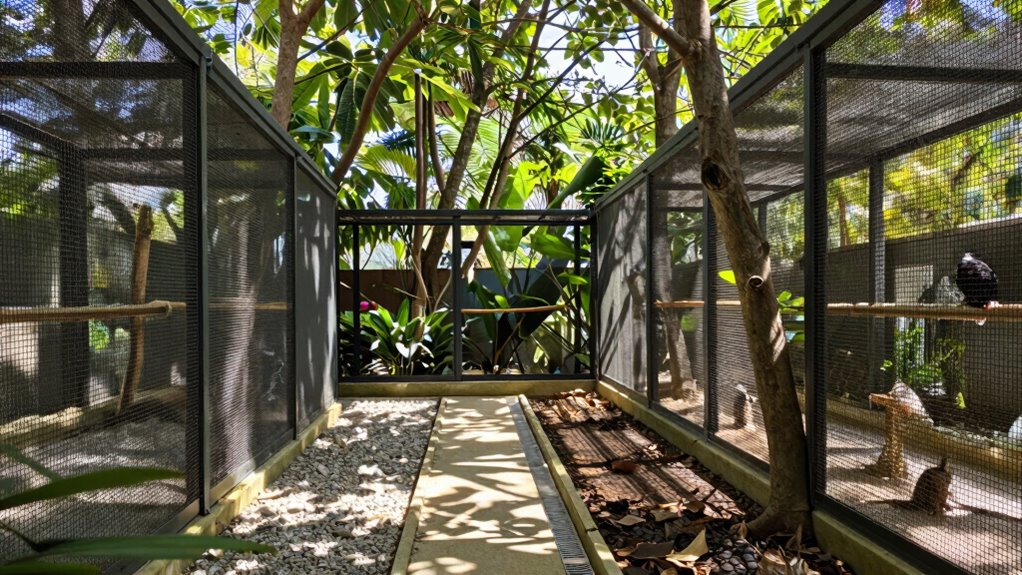

When designing your walk-in aviary, you need to guarantee there’s ample shade to prevent overheating and support natural bird behaviors. Proper drainage is essential to keep water flowing away, avoiding muddy spots, mold, and pests. Predator protection requires secure fencing, burying gates, and overhead covers to keep your birds safe from both ground and aerial threats. Focusing on these elements helps create a safe, healthy environment—learn more about how to implement these critical features effectively.

Get garden gear delivered free with Prime
- Fast, free delivery on millions of items
- Prime Video, Amazon Music and more included
- Member-only deals all year
Key Takeaways
- Incorporate shade structures like trees, cloths, or pergolas to regulate temperature and support natural bird behaviors.
- Design proper drainage using slopes, gravel, or permeable paving to prevent waterlogging and maintain a dry environment.
- Use secure fencing, buried bases, and overhead covers to protect against predators from all directions.
- Ensure enclosure materials facilitate good airflow, temperature control, and humidity regulation for bird health.
- Integrate natural and structural elements to create a safe, comfortable, and enriching habitat for birds.
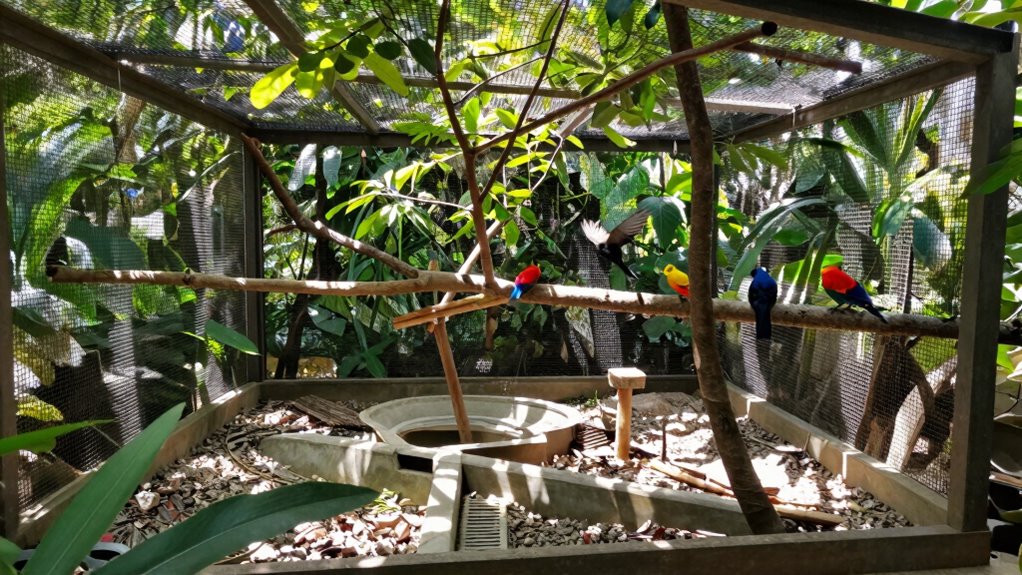
When designing walk-in aviaries, you need to prioritize shade, drainage, and predator protection to guarantee a safe and comfortable environment for your birds. Bird safety hinges on thoughtful enclosure design that accounts for these essential elements. Shade is necessary because it helps regulate temperature, preventing overheating during hot days. Without adequate shading, your birds could suffer heat stress, which affects their health and behavior. Integrate trees, shade cloths, or pergolas to ensure ample coverage, especially in areas exposed to direct sunlight. Proper shade also creates a more natural environment, encouraging natural behaviors and reducing stress.
Prioritize shade, drainage, and predator protection for a safe, healthy, and enriching aviary environment.
Drainage is equally critical. Water must flow away efficiently to prevent puddles, which can lead to muddy conditions and attract pests or predators. Poor drainage can cause waterlogging, increasing the risk of illness and discomfort for your birds. Incorporate a well-planned slope into the aviary floor, and use materials like gravel or permeable paving to facilitate quick drainage. Regularly check and maintain these systems to avoid blockages. Good drainage not only keeps the enclosure dry but also minimizes the growth of mold and bacteria, safeguarding bird health. Additionally, incorporating proper enclosure design principles ensures that all these features work together effectively. Understanding environmental control is vital for maintaining a healthy habitat for your birds. Properly managing ventilation within the aviary also plays a significant role in maintaining optimal air quality and temperature. A comprehensive approach to enclosure management is essential for long-term bird well-being. Maintaining appropriate humidity levels is also crucial, as it influences bird comfort and respiratory health.
Protection from predators is a non-negotiable aspect of enclosure design. Your aviary should be secure from potential threats like raccoons, cats, or birds of prey. Use durable fencing with small enough gaps to prevent entry, and reinforce the base with buried fencing or concrete to deter digging predators. Overhead netting or roof covers are essential to keep out aerial predators and prevent birds from escaping. Additionally, consider installing motion-activated lights or alarms to scare away intruders. Your goal is to create an environment where your birds feel safe from threats and can flourish without constant worry.
All these elements—shade, drainage, and predator protection—must work together seamlessly. A well-designed aviary balances natural features with structural security, promoting bird safety and well-being. When you focus on these core aspects, your enclosure becomes more than just a space; it becomes a secure habitat where your birds can thrive. Remember, each detail contributes to their overall health and happiness, making your efforts worthwhile. Properly planning your walk-in aviary ensures that your feathered friends enjoy a safe, comfortable, and enriching environment every day.
As an affiliate, we earn on qualifying purchases.
Frequently Asked Questions
What Materials Are Best for Constructing Walk-In Aviaries?
You should choose materials like galvanized steel, heavy-duty aluminum, or durable PVC for constructing walk-in aviaries, as they offer excellent material durability. These options are also cost-effective, balancing affordability with longevity. Metal frames with secure wire mesh provide strength and predator protection, while the mesh allows for proper ventilation and shade. By selecting these materials, you guarantee your aviary is sturdy, safe, and budget-friendly.
How Often Should Predator-Proofing Be Inspected and Maintained?
You should inspect and maintain predator-proofing monthly to guarantee your aviary stays safe. Regular checks help you spot and fix vulnerabilities like predator entry points or damaged mesh before an attack occurs. Follow safety protocols strictly during inspections, and reinforce weak spots immediately. Consistent maintenance keeps predators out and your birds secure, giving you peace of mind knowing your aviary remains a safe environment.
Are There Specific Plants That Help Provide Shade Naturally?
Sure, because relying solely on shade trees and native plants is *definitely* enough to keep your aviary cool and predator-proof. In reality, planting shade trees and native plants offers natural relief from heat, providing much-needed cover. You get the dual benefit of supporting local ecosystems while shading your birds. Just remember, nature’s shade isn’t a substitute for proper predator-proofing, but it’s a fantastic, low-maintenance start.
What Is the Ideal Size for Different Bird Species?
The ideal size for a bird enclosure varies by species. Smaller birds like finches need at least 2×4 feet, while larger parrots require 8×8 feet or more. Make certain your aviary has good ventilation to promote airflow and prevent overheating. A spacious design, combined with shade, drainage, and predator-proofing, keeps your birds healthy and comfortable. Adjust dimensions based on activity needs and space to provide a safe, enriching environment.
How Do I Prevent Mold and Mildew in the Aviary?
You can prevent mold and mildew by ensuring proper ventilation to reduce humidity and moisture buildup. Regular cleaning routines are essential; remove droppings, old bedding, and debris promptly. If you imagine a fresh, airy space where airflow keeps surfaces dry, you’ll see how good ventilation and consistent cleaning stop mold from thriving. Addressing ventilation issues early and sticking to routine cleanings keeps your aviary healthy and mold-free.
Conclusion
You’d think creating a safe, comfortable walk-in aviary would be straightforward, right? Yet, it’s amusing how many overlook simple essentials like shade, proper drainage, and predator deterrents. Ironically, these small details often make or break your aviary’s success. So, next time you plan your setup, remember—what seems minor can turn your paradise into a predator’s playground or a swamp. Don’t let your birds’ safety be the one thing you forget!
Fall yard work Picks
leaf blowers
As an affiliate, we earn on qualifying purchases.