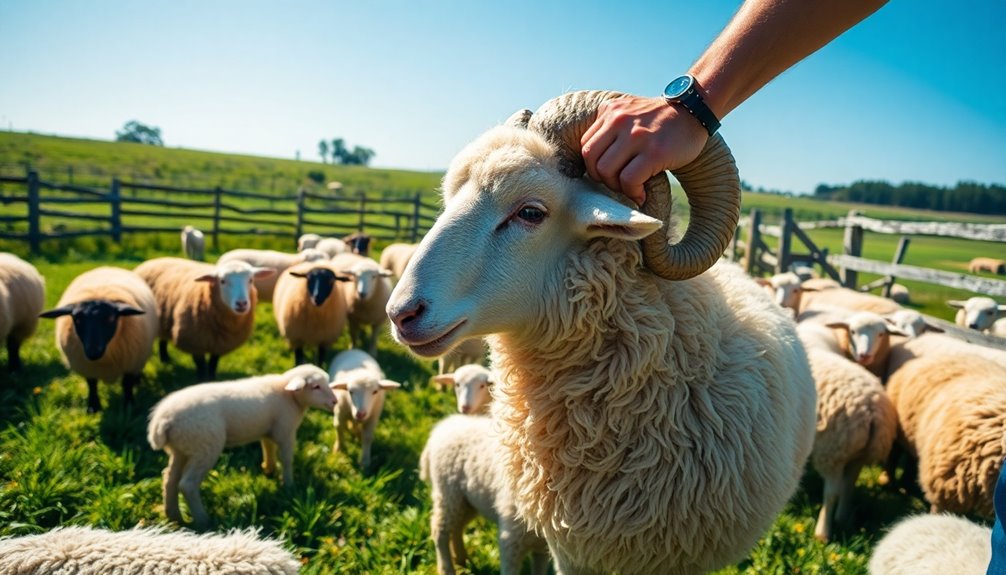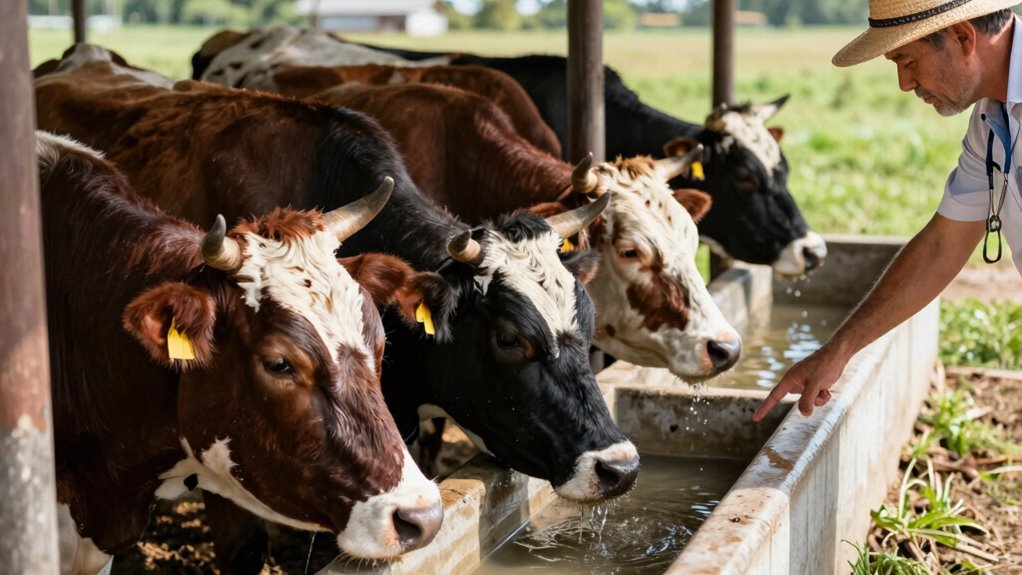
If your livestock refuse water, it’s likely due to poor quality, temperature issues, or difficulty accessing the source. Contaminated, stale, or cold water can deter animals from drinking, while dirty or hard-to-reach troughs make it harder for them to hydrate. Ensuring clean, fresh water at a comfortable temperature and providing easy access can encourage drinking. Keep these factors in check, and you’ll see improved water intake; more tips to help are just ahead.

Get garden gear delivered free with Prime
- Fast, free delivery on millions of items
- Prime Video, Amazon Music and more included
- Member-only deals all year
Key Takeaways
- Poor water quality, such as contaminants or algae, can make water unappealing or unsafe for livestock.
- Uncomfortable water temperatures, either too hot or cold, discourage animals from drinking.
- Dirty, cracked, or hard-to-access water troughs reduce livestock’s willingness to drink.
- Sudden changes or unfamiliarity with water sources cause livestock to hesitate or refuse water.
- Lack of regular maintenance and proper management can lead to contamination and decreased water intake.
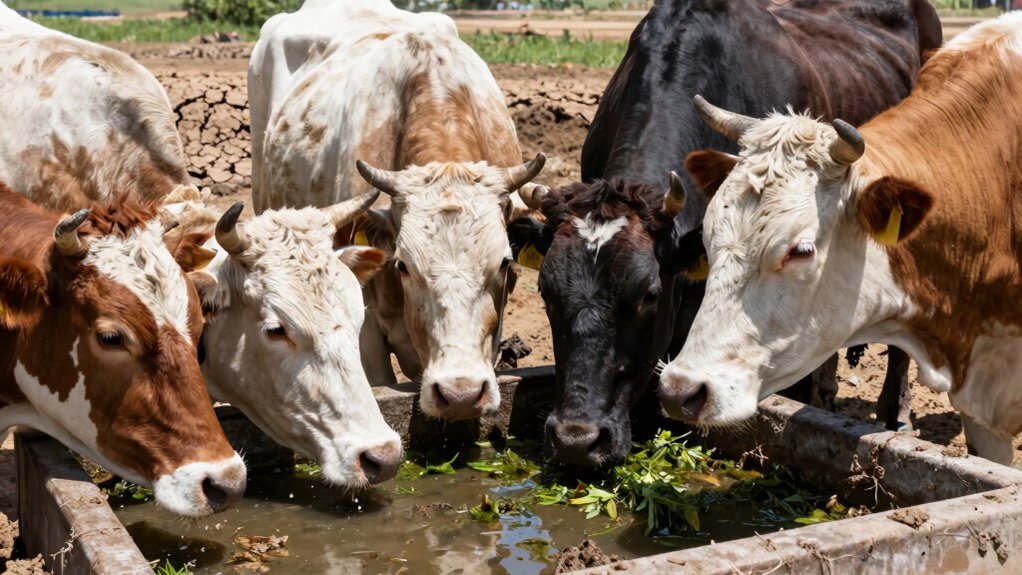
One common reason livestock refuse water is poor water quality. Even if the water appears clean, it may contain contaminants, algae, or pollutants that make it unpalatable or unsafe. For example, high levels of minerals, bacteria, or chemicals can alter the water’s taste and smell, discouraging animals from drinking. Additionally, stagnant water sources tend to develop unpleasant odors and can harbor harmful microorganisms, further reducing their hydration behavior. You need to regularly test water sources to guarantee water quality remains high, removing any debris or algae that might develop. Installing proper filtration or treatment systems can also improve water palatability and safety. Ensuring that water sources are free from harmful microorganisms is essential for maintaining livestock health. Monitoring water temperature can also help prevent refusal, as animals are more likely to drink when the temperature is appropriate for their comfort. Temperature plays a significant role as well. Excessively cold or hot water can deter livestock from drinking, especially if their natural instinct is to seek a more comfortable, neutral temperature. During hot weather, animals may prefer cooler water, so providing chilled or aerated water can encourage drinking. Conversely, in cold weather, heated water or insulated tanks may be necessary to prevent water from freezing or becoming too cold to drink comfortably. Ensuring the water temperature aligns with their hydration needs helps maintain their hydration behavior and prevents dehydration. The situation can also be influenced by the delivery system. If water troughs are dirty, cracked, or difficult to access, animals may choose not to drink. Regular cleaning, maintenance, and guaranteeing easy access help promote water intake. Additionally, sudden changes in water sources or supply can cause animals to hesitate or refuse to drink, especially if they’re wary of unfamiliar sources. Consistency in water delivery and minimizing disruptions can help keep their hydration behavior normal. In short, maintaining high water quality, providing suitable temperatures, and guaranteeing easy access are vital steps to prevent livestock water refusal. By paying close attention to these factors, you can support healthy hydration behavior and avoid the risks associated with dehydration.
As an affiliate, we earn on qualifying purchases.
Frequently Asked Questions
Can Water Temperature Affect Livestock Water Intake?
Yes, water temperature can affect your livestock’s drinking behavior. If the water is too cold or too hot, they might refuse to drink, leading to dehydration. Livestock generally prefer water that’s comfortably warm or cool, around their body temperature. By maintaining ideal water temperature, you encourage consistent drinking, which supports their health and productivity. Always monitor water temperature to ensure it’s appealing and suitable for your animals.
Do Certain Breeds Refuse Water More Than Others?
Ever wonder if certain breeds refuse water more than others? Yes, breed preferences and water refusal patterns vary; some breeds are pickier or more sensitive to water quality and temperature. For example, some cattle may avoid water if it’s too cold or tastes off, while others tolerate less-than-ideal conditions. Recognizing these breed-specific behaviors helps you adjust management strategies, ensuring all livestock stay hydrated and healthy.
How Does Water Quality Impact Livestock Drinking Behavior?
Water quality directly impacts your livestock’s drinking behavior. If water has contamination like bacteria, algae, or chemical residues, animals may refuse to drink, risking dehydration. To encourage hydration, you should implement effective hydration strategies, ensuring clean, fresh water. Regularly test water sources for contamination and maintain proper sanitation. Providing palatable, high-quality water helps animals stay properly hydrated and promotes overall health and productivity.
Are There Specific Signs Indicating Water Aversion?
You can tell livestock are refusing water if you notice signs of dehydration, like dry mouths, sunken eyes, and lethargy. Behavioral changes, such as decreased interest in drinking, increased restlessness, or unusual vocalizations, also indicate water aversion. These signs suggest they’re not getting enough water, possibly due to water quality issues or discomfort. Addressing these signs promptly helps guarantee your animals stay healthy and properly hydrated.
Can Supplements Replace the Need for Water?
You can’t replace water with supplements, no matter how fancy they sound. Hydration strategies include providing fresh water and encouraging drinking, not relying solely on nutritional supplements. Supplements can support your livestock’s health, but they’re no substitute for hydration. Ignoring water needs risks dehydration and health issues. Keep water accessible and appealing; trust me, your animals will thank you for it, not just a vitamin boost.
Conclusion
If your livestock are refusing water, addressing issues like water quality, temperature, and access can make a big difference. Keep in mind, studies show that dehydration in animals can reduce productivity by up to 20%, impacting your farm’s profitability. Regularly check water sources, guarantee clean and fresh water, and monitor your animals’ behavior. By taking these steps, you’ll help keep your livestock healthy, hydrated, and thriving—ultimately boosting your farm’s success.
Fall Picks
fall essentials
As an affiliate, we earn on qualifying purchases.