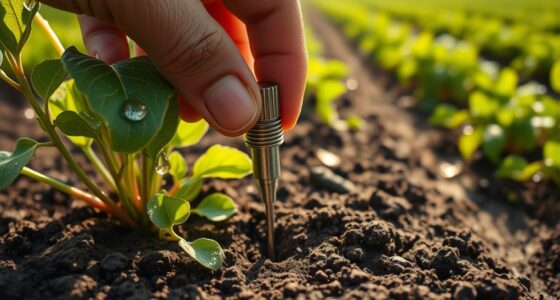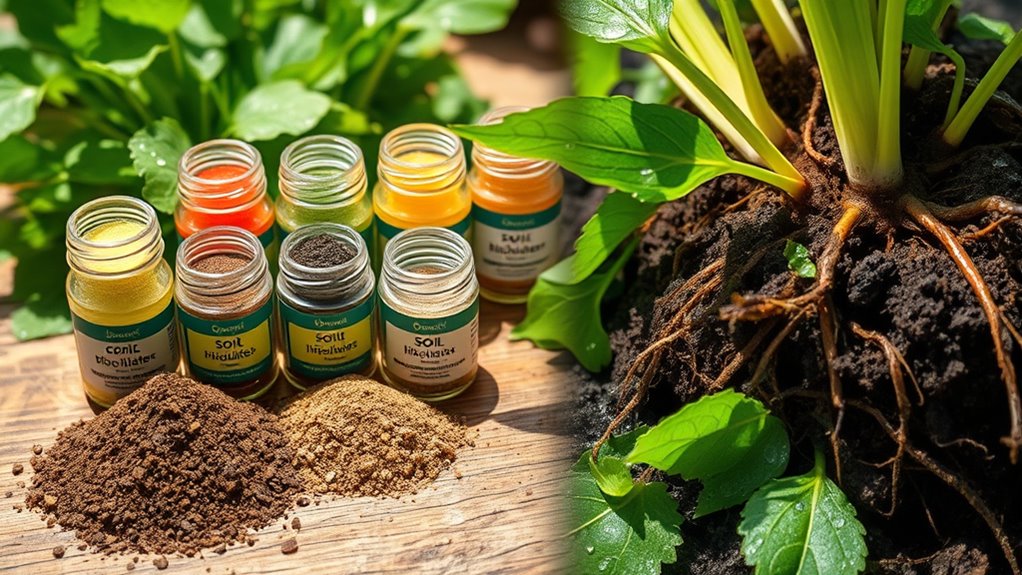

Biofertilizers and soil microbial inoculants are natural tools you can use to boost your crop yields sustainably. They introduce beneficial microorganisms like nitrogen-fixing bacteria, phosphate-solubilizers, and mycorrhizal fungi directly into your soil or on roots. These microbes improve nutrient availability, enhance soil health, and support plant growth while reducing reliance on chemical fertilizers. If you want to discover how these biological solutions can transform your farming practices, keep exploring further.
Key Takeaways
- Biofertilizers and soil microbial inoculants introduce beneficial microorganisms that improve nutrient availability and promote sustainable crop growth.
- They enhance soil health by increasing microbial diversity, improving structure, and supporting nutrient cycling.
- These biological solutions reduce dependence on chemical fertilizers, lowering environmental pollution and soil degradation.
- Microbial inoculants assist in nutrient fixation, solubilization, and uptake, leading to healthier, more resilient plants.
- Implementing biofertilizers promotes eco-friendly farming practices and long-term soil vitality.
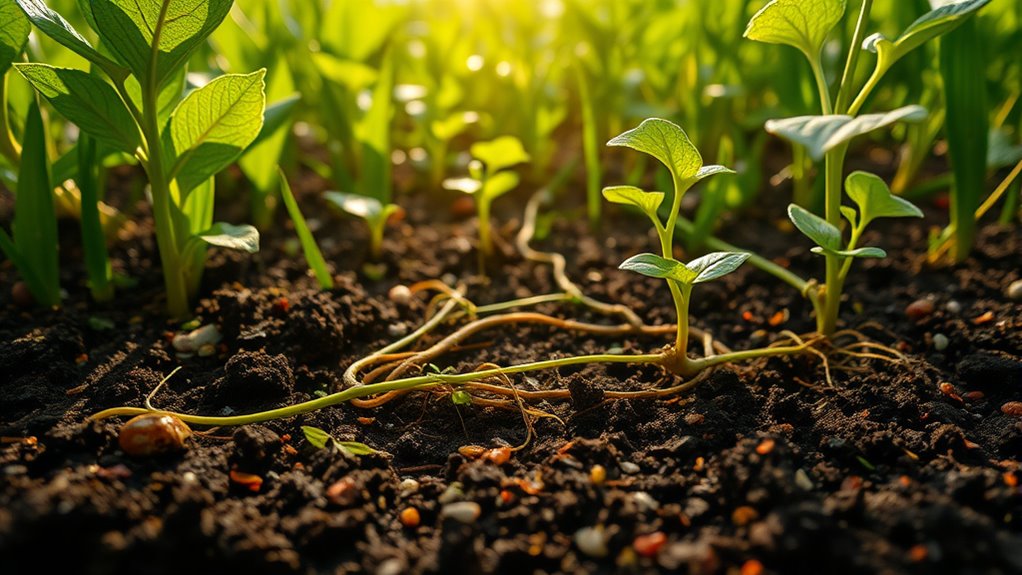
Have you ever wondered how farmers boost crop yields naturally? One effective way is by using biofertilizers and soil microbial inoculants. These natural solutions work with the existing ecosystem to enhance plant growth and improve soil health. Unlike chemical fertilizers, biofertilizers introduce beneficial microorganisms that support the soil’s biological activity, leading to healthier plants and more sustainable farming practices.
When you apply biofertilizers, you’re essentially adding helpful microbes directly to the soil or plant roots. These microbes, such as nitrogen-fixing bacteria, phosphate-solubilizing bacteria, or mycorrhizal fungi, play a crucial role in nutrient cycling. They help convert nutrients into forms that plants can easily absorb, which directly boosts plant growth. This natural process reduces the need for chemical inputs, making your farming more environmentally friendly. As a result, your crops can develop stronger roots, healthier foliage, and higher yields.
Soil health is at the core of this approach. When beneficial microbes thrive, they improve soil structure, increase nutrient availability, and promote microbial diversity. Healthy soil is more resilient against pests, diseases, and environmental stresses. Microbial inoculants help maintain this balance by suppressing harmful pathogens and encouraging beneficial organisms, creating a dynamic and self-sustaining soil ecosystem. This balance leads to better water retention, aeration, and organic matter breakdown, which all contribute to robust plant growth.
Using biofertilizers is also a practical way to enhance sustainability. They minimize reliance on synthetic fertilizers that can degrade soil quality over time. Because these inoculants promote natural nutrient processes, they help maintain long-term soil productivity. Plus, they reduce pollution risks associated with runoff and leaching, protecting nearby water sources.
Incorporating environmental innovations such as microbial inoculants into your farming routine can lead to more sustainable practices and healthier ecosystems. You’re investing in a system that supports continuous plant growth while conserving resources. This approach aligns with eco-friendly practices, reduces input costs, and encourages biodiversity within your fields. Over time, you’ll notice improved soil structure, increased crop yields, and healthier plants, all achieved through the power of nature’s microscopic allies.
Frequently Asked Questions
How Do Biofertilizers Compare to Chemical Fertilizers in Cost?
Biofertilizers are generally more cost-effective than chemical fertilizers upfront, but your economic benefits come in the long run through improved soil health and crop yields. You’ll notice long-term savings as biofertilizers reduce the need for repeated chemical inputs, lowering your expenses over time. While initial costs might be similar or slightly higher, investing in biofertilizers pays off by enhancing soil fertility naturally and supporting sustainable farming practices.
Are Biofertilizers Suitable for All Types of Soil?
You might be surprised to learn that biofertilizers aren’t suitable for all soil types. Soil compatibility varies, and some soils with low microbial diversity or extreme pH levels may not support effective inoculation. Before applying, test your soil to make certain it can nurture beneficial microbes. When the conditions align, biofertilizers can boost plant growth sustainably, but mismatched soils might limit their benefits. Always consider your soil’s unique needs first.
What Are the Shelf Life and Storage Requirements for Microbial Inoculants?
Microbial inoculants typically have a shelf life of 6 to 12 months, depending on the product. To maintain shelf stability, you should store them in a cool, dry place away from direct sunlight. Keep containers tightly sealed to prevent moisture and oxygen exposure, which can diminish viability. Proper storage conditions, like refrigeration if recommended, help ensure your inoculants stay effective until you’re ready to use them.
Can Biofertilizers Be Used Alongside Pesticides and Herbicides?
Using biofertilizers alongside pesticides and herbicides is like walking a tightrope—you need to be cautious. Compatibility concerns arise because some chemicals can harm beneficial microbes. To keep everything balanced, apply biofertilizers at different times than pesticides or herbicides, ideally when these chemicals won’t affect the microbes. Proper application timing helps ensure your biofertilizers work effectively without interference, boosting your crop health naturally.
How Quickly Do Biofertilizers Impact Crop Yields?
You’ll see crop yield improvements within a few weeks to a few months, depending on microbial activity rates and crop type. Typically, biofertilizers boost yields as the microbes enhance nutrient availability and soil health. While some benefits might be visible early, ideal effects often occur after a full growing season. Consistent application and proper soil conditions help speed up these crop yield timelines, maximizing your results efficiently.
Conclusion
By choosing biofertilizers and soil microbial inoculants, you can boost crop yields naturally. Imagine applying a specific inoculant, like Rhizobium, to soybean fields; you notice healthier plants and increased nitrogen fixation. This sustainable approach diminishes chemical dependency and improves soil health over time. Embrace these microbial solutions to enhance productivity and ensure a healthier environment for future farming. Your proactive effort can make a real difference in sustainable agriculture.