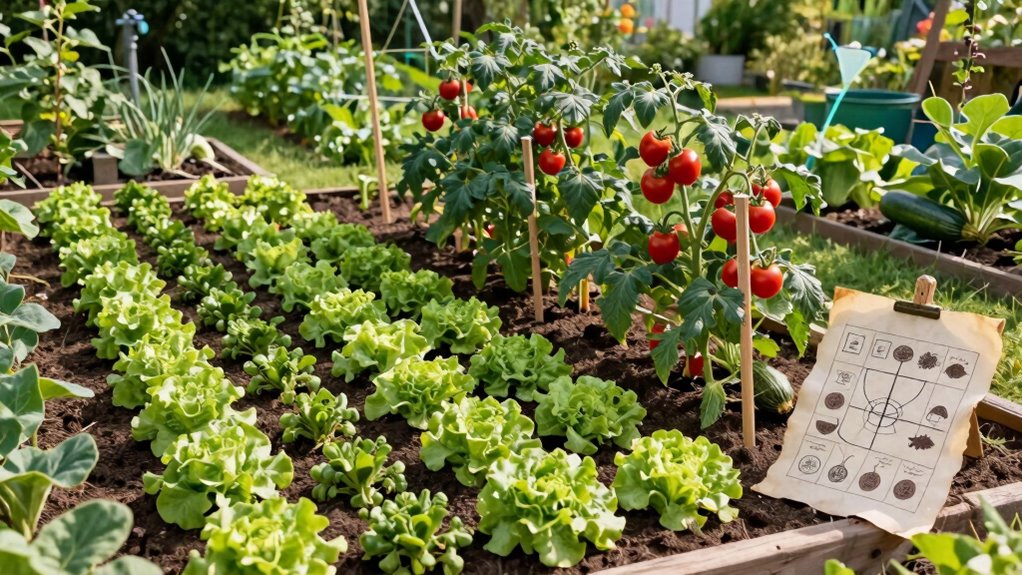

To build a crop plan that prevents garden chaos, start by organizing your garden into sections based on crop families and plan your planting schedule for staggered sowing to extend harvests. Incorporate companion planting to improve growth and deter pests, and rotate crops each year to maintain soil health. Keep detailed records of planting dates, locations, and plant responses to refine your plan over time. Keep going to discover all the tips for a well-structured, productive garden.
Key Takeaways
- Develop a detailed planting schedule with staggered sowing to ensure continuous harvest and reduce overcrowding.
- Implement crop rotation by organizing garden sections based on plant families to prevent soil depletion and pests.
- Use companion planting to optimize plant health, repel pests, and improve flavor, reducing the need for chemical interventions.
- Maintain accurate records of planting dates, locations, and plant performance to refine future crop plans.
- Design a garden layout that groups compatible plants and considers spacing to minimize disease and promote healthy growth.
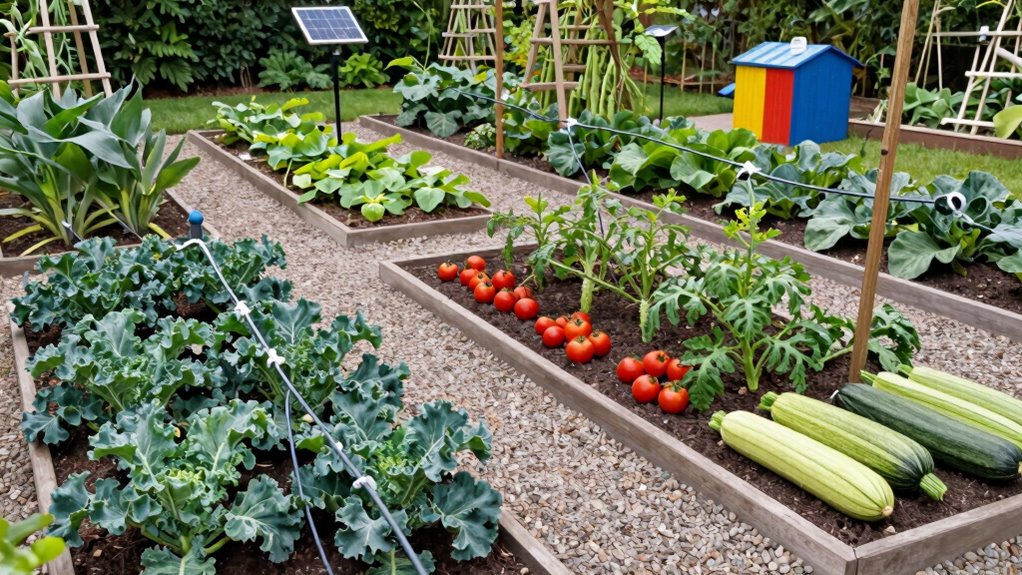
Creating a crop plan is essential for maximizing your farm’s productivity and guaranteeing a successful growing season. When you plan ahead, you can organize your planting schedule to avoid chaos and make the most of your land. One of the most effective strategies is to incorporate companion planting, which involves pairing certain plants together to improve growth, deter pests, and enhance flavor. For example, planting basil near tomatoes can help repel pests and boost tomato health. By understanding which plants thrive together, you can design your garden layout to promote natural pest control and better yields.
Plan your garden with companion planting to boost growth, deter pests, and increase yields naturally.
Equally important is implementing a solid crop rotation system. This means changing the location of plant families from year to year, preventing soil depletion and reducing disease buildup. For instance, if you grow legumes in one bed one year, you should switch to root vegetables or leafy greens the next season. This practice not only maintains soil fertility but also disrupts pest and disease cycles that tend to target specific crops. When you plan crop rotation carefully, you guarantee that your soil stays healthy and your plants grow strong. Additionally, choosing the right soil nutrients for each crop can further optimize growth and health.
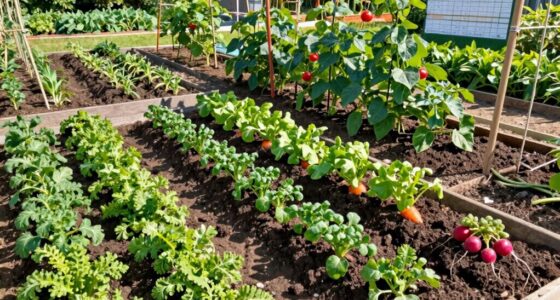
To build an effective crop plan, start by evaluating your available space and deciding what vegetables, herbs, or fruits you want to grow. Consider your climate, growing season length, and personal preferences. Once you know what to plant, break your garden into sections based on the crop families you want to rotate. Map out each section for the upcoming season, assigning different plant groups to different areas each year. This way, you prevent planting the same crops in the same soil repeatedly, which can cause nutrient depletion and increase pest problems. Incorporating plant compatibility knowledge into your planning can help you make better decisions about which crops to grow together or apart.
Additionally, think about the timing of your plantings. Staggering sowing dates helps you extend your harvest and avoid overcrowding. Use succession planting to maximize space and keep a continuous supply of produce. When planning, incorporate companion planting principles to determine which crops should be placed together and which should be kept apart. For example, avoid planting carrots where onions or leeks are growing, as they can compete for nutrients or hinder each other’s growth. Understanding crop compatibility can significantly improve your garden’s success rate. Furthermore, considering plant spacing ensures each plant has enough room to grow healthily and reduces the risk of disease spread.
Finally, maintain a detailed garden calendar or journal. Record what you plant, where, and when, along with notes on how plants respond. This record helps you refine your crop rotation and companion planting strategies over time, leading to a more organized, productive garden. With a well-thought-out crop plan, you prevent garden chaos, promote healthy plants, and enjoy a bountiful harvest season after season.
vegetable garden crop rotation plan
As an affiliate, we earn on qualifying purchases.
As an affiliate, we earn on qualifying purchases.
Frequently Asked Questions
How Often Should I Rotate My Crops Each Season?
You should rotate your crops every season to maintain soil fertility and promote crop diversity. This practice helps prevent soil depletion and reduces pest and disease buildup. By changing up your plant families annually, you keep your garden healthy and productive. Make a plan to shift crops between beds each year, and include legumes or cover crops to naturally enrich your soil, ensuring ongoing garden success.
What Tools Are Best for Planning a Crop Layout?
You should use tools like garden planners, spreadsheets, and apps that support companion planting and crop succession strategies. These tools allow you to visualize layouts, track planting dates, and optimize space. By integrating these tools into your planning, you can effectively manage crop diversity, improve plant health, and guarantee a continuous harvest. They help you stay organized, adaptable, and proactive in creating a thriving, well-structured garden.
How Do I Account for Seasonal Weather Changes?
You account for seasonal weather changes by researching your area’s seasonal climate considerations and tracking weather patterns. Use weather impact strategies like selecting hardy crops for colder months and choosing quick-maturing varieties for unpredictable seasons. Incorporate crop rotation and protect plants with row covers or mulches. Planning around frost dates and adjusting planting times guarantees your garden adapts smoothly to weather fluctuations, leading to a more successful and chaos-free harvest.
Can I Grow Multiple Crops in the Same Space?
Yes, you can grow multiple crops in the same space by practicing companion planting and crop succession. Companion planting involves pairing plants that benefit each other, like tomatoes and basil, to optimize space and health. Crop succession means planting new crops after harvesting to maximize yield. By combining these techniques, you prevent garden chaos, guarantee efficient use of your space, and extend your harvest throughout the season.
How Do I Manage Pests Within My Crop Plan?
Think of your garden as a balanced ecosystem, like a thriving jungle. To manage pests, use companion planting—pairing plants that naturally repel insects with your crops. This acts as natural pest control, reducing the need for chemicals. Regularly inspect plants for signs of pests, encourage beneficial insects, and rotate crops to break pest cycles. This approach keeps your garden harmonious and pest-free, just like a well-tended rainforest.
Conclusion
By planning your crops carefully, you can prevent chaos and boost your garden’s productivity. Remember, rotating crops can reduce soil disease and improve yields—studies show that crop rotation can increase vegetable production by up to 20%. With a clear plan, you’ll save time, avoid pests, and enjoy a more bountiful harvest. So, take the time to strategize; your garden will thank you with healthier plants and abundant produce.