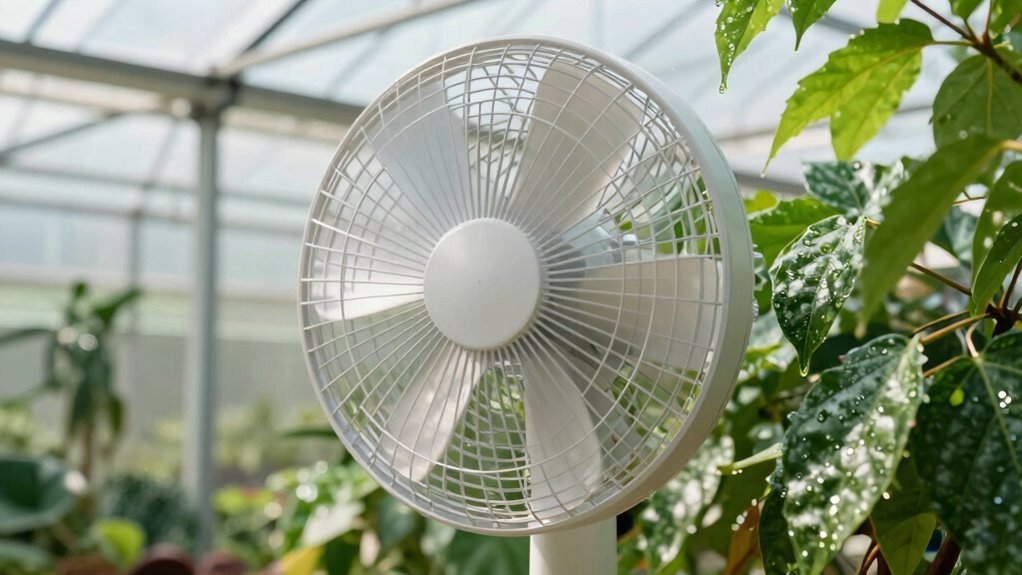

Using circulation fans matters because still, humid air creates the perfect environment for fungi and bacteria to thrive. Proper airflow reduces moisture on leaves and stems, making it harder for pathogens to settle. Positioning fans correctly and maintaining them guarantees even air movement without damaging plants. When you manage airflow well, you help prevent disease and promote healthier growth. Keep going to discover how specific strategies can optimize your plant environment even further.

Get garden gear delivered free with Prime
- Fast, free delivery on millions of items
- Prime Video, Amazon Music and more included
- Member-only deals all year
Key Takeaways
- Circulation fans reduce humidity and prevent stagnant air, decreasing environments where diseases thrive.
- Proper airflow discourages fungal, bacterial, and pathogen development by drying leaves and stems.
- Fans help eliminate pockets of still, humid air that promote disease spread.
- Consistent airflow prevents moisture buildup on plant surfaces, reducing disease risk.
- Well-maintained fans ensure even air distribution, creating an environment less favorable for plant pathogens.
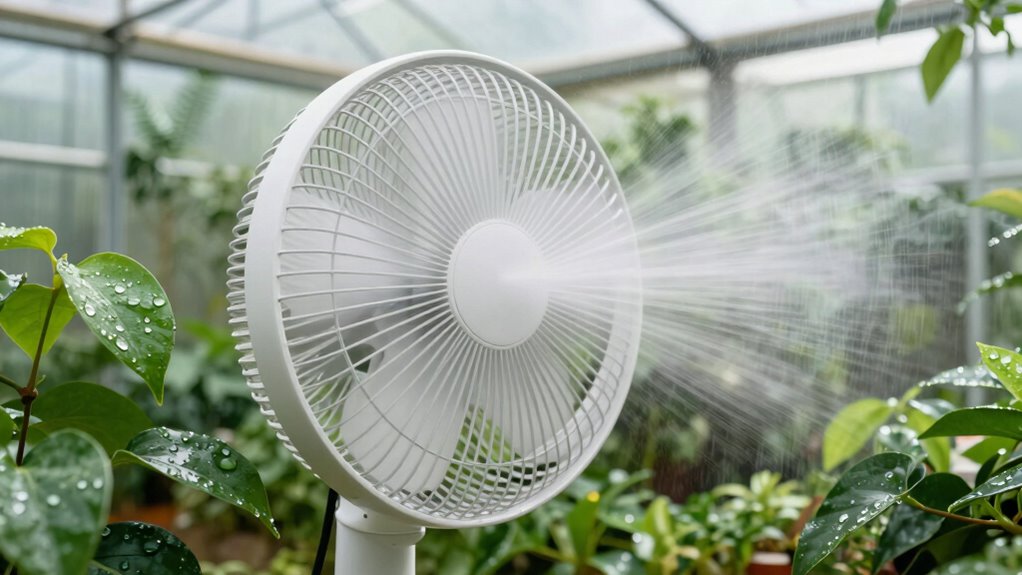
Circulation fans are a common tool in plant cultivation, but their use can inadvertently influence the spread of plant diseases. While these fans help keep air moving, if not used correctly, they can create conditions that promote disease development. To truly benefit your plants, you need to focus on airflow optimization, making certain that the movement of air reduces humidity and prevents the buildup of stagnant, moist environments where pathogens thrive.
Proper airflow is essential for disease prevention. When fans are positioned correctly and run at appropriate speeds, they circulate air evenly across your plants, reducing pockets of still, humid air. This constant movement helps lower the humidity levels around your plants, making it harder for fungi, bacteria, and other pathogens to settle and infect. Without adequate airflow, moisture can linger on leaves and stems, creating a perfect environment for disease to take hold. So, your goal should be to guarantee that your fans promote a gentle, consistent breeze—not a strong gust that can damage plants or spread spores.
Proper airflow reduces humidity, preventing disease while promoting healthy plant growth.
You should also pay attention to fan placement. Positioning fans at the right height and angle ensures that air reaches all parts of the canopy without causing unnecessary stress to the plants. Avoid directing airflow directly at the leaves for extended periods, as this can cause physical damage or desiccation, which may open the door for secondary infections. Instead, aim for a pattern that encourages cross-ventilation, which helps dry out excess moisture and keeps the environment less hospitable for disease-causing organisms. Regularly inspecting and maintaining your fans is another key step. Dust buildup or mechanical issues can reduce airflow efficiency, leading to uneven circulation. When airflow becomes inconsistent, some areas may remain moist longer than others, increasing the risk of localized disease outbreaks. By keeping your equipment clean and functioning properly, you help maintain a healthy environment that discourages pathogen growth. Additionally, selecting the appropriate airflow equipment is crucial to achieve the desired circulation without causing undue stress. Proper fan maintenance ensures consistent performance and prevents the buildup of dust and debris that can impair airflow. Understanding the relationship between airflow and humidity can also assist in fine-tuning your environmental controls, as high humidity levels are a key factor in disease proliferation.
Ultimately, your goal with circulation fans is to strike a balance. You want enough airflow to prevent stagnant, humid conditions that foster disease, but not so much that your plants are stressed or damaged. When properly managed, airflow optimization becomes a powerful tool in disease prevention, helping you grow healthier, more vigorous plants. Remember, in the battle against plant diseases, good ventilation and careful fan management are just as vital as other cultural practices like sanitation and proper watering.
As an affiliate, we earn on qualifying purchases.
Frequently Asked Questions
How Often Should Circulation Fans Be Cleaned for Optimal Performance?
You should clean your circulation fans at least once a month for best performance. Regular fan maintenance helps prevent dust buildup, which can reduce airflow and spread plant diseases. Establishing a consistent cleaning schedule guarantees your fans stay efficient and keep the air moving properly. Use a damp cloth or a gentle brush to remove dust and debris, and check for any mechanical issues during each cleaning session.
Can Circulation Fans Help Reduce Humidity Levels in a Greenhouse?
You might wonder if circulation fans can reduce humidity levels in a greenhouse. They do help by improving airflow patterns, which promote even moisture distribution and prevent stagnant, humid spots. Better airflow discourages disease development and keeps humidity in check. While fans alone won’t drastically lower humidity, they’re a valuable tool in disease prevention, creating a healthier environment for your plants by reducing excess moisture.
Are There Specific Fan Types Better for Certain Plant Species?
Yes, certain fan types suit specific plant species better. For delicate plants, use oscillating fans to create gentle airflow, avoiding direct, harsh drafts. For larger or more robust plants, axial fans provide strong, consistent airflow, promoting healthy growth. Proper fan placement is essential; position fans to optimize airflow patterns, ensuring even distribution without causing stress or damage. Tailoring fan choice and placement helps maintain ideal conditions for each plant type.
How Do Circulation Fans Impact Energy Consumption?
Ever wondered how circulation fans impact your energy bills? They can boost energy efficiency when used properly, but poor fan maintenance might lead to higher consumption. Regularly cleaning and inspecting fans guarantees they run smoothly, saving you money. While fans do consume some power, their role in preventing plant diseases and promoting healthy growth makes the energy trade-off worthwhile. Proper use and upkeep optimize their benefits without excessive energy use.
What Safety Precautions Are Necessary When Using Circulation Fans?
When using circulation fans, you need to prioritize safety. Guarantee proper fan placement, keeping fans away from water or wet areas to prevent electrical hazards. Always wear safety gear like gloves and goggles when installing or maintaining fans to protect yourself from potential injuries. Regularly inspect fans for damage and keep cords out of walkways to avoid tripping. These precautions help you operate fans safely and effectively while minimizing risks.
Conclusion
By now, you see how circulation fans are essential in preventing plant diseases, especially since still air is a breeding ground for trouble. When you keep the air moving, you’re not just stirring the pot—you’re cutting off the silent spread of disease. Think of circulation fans as your plant’s best defense, like a breath of fresh breeze in a crowded room. Keep the airflow steady, and your plants will thank you for it.
Halloween Picks
halloween
As an affiliate, we earn on qualifying purchases.