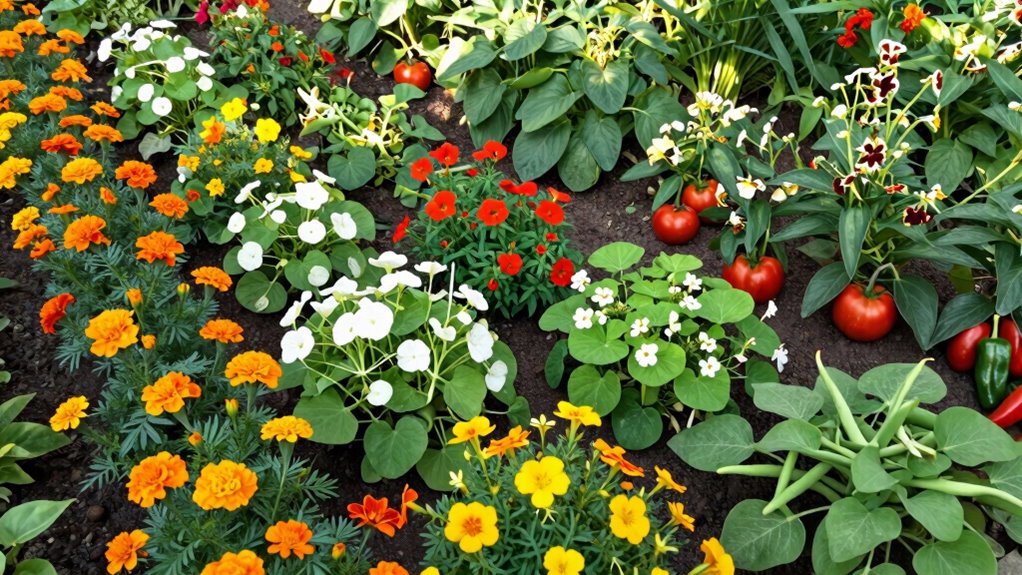

To use companion flowers without crowding your crops, space them properly to avoid competition for nutrients and sunlight. Plant flowers like marigolds or nasturtiums at intervals around your vegetables, keeping a respectful distance from roots. Mix in nectar-rich blooms to attract pollinators without overcrowding the space. Spread flowers across your garden to attract beneficial insects broadly. If you want to learn more about balancing flowers and crops effectively, keep exploring these strategies.

Get garden gear delivered free with Prime
- Fast, free delivery on millions of items
- Prime Video, Amazon Music and more included
- Member-only deals all year
Key Takeaways
- Plant companion flowers at a slight distance from main crops to prevent competition for nutrients and space.
- Choose flowers with different growth habits to avoid overshadowing or overcrowding vegetables.
- Space flowers evenly across the garden to attract beneficial insects without congesting plant areas.
- Incorporate staggered blooming times to maintain benefits without overcrowding during peak growth.
- Select low-growing or spreading flowers that won’t overshadow or compete with crop roots.
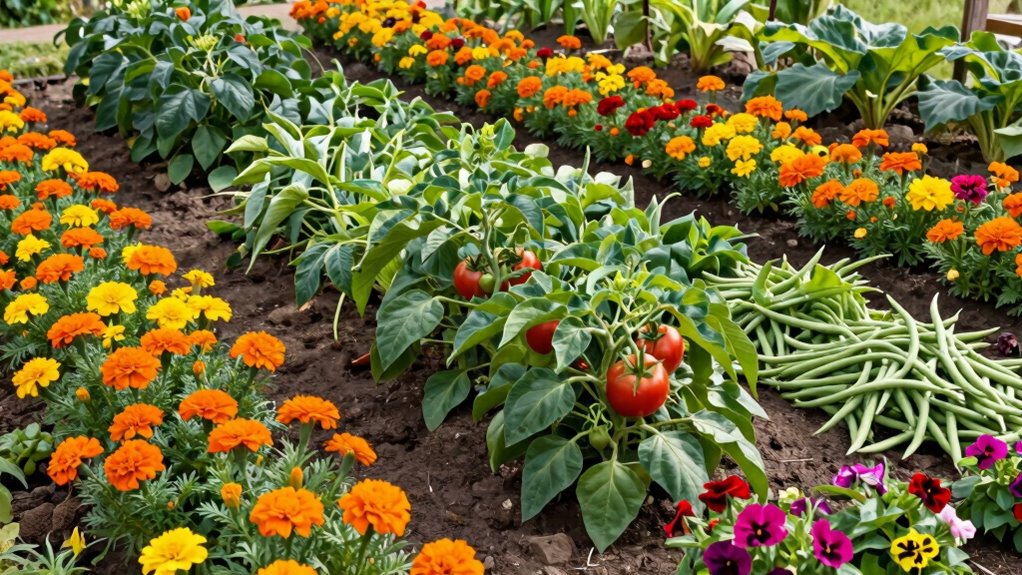
Companion flowers can transform your garden by enhancing plant health, attracting beneficial insects, and reducing pests. When you choose the right flowers, you create a natural ecosystem that supports your crops without overcrowding them. To avoid crowding your vegetables or fruits, plant companion flowers strategically—spacing them properly and selecting species that won’t compete for nutrients or sunlight. This approach guarantees that both your crops and flowers thrive while working together to improve pest control and attract pollinators effectively.
Strategically plant companion flowers to support your crops, attract beneficial insects, and promote healthy, thriving gardens.
A key benefit of companion flowers is their ability to assist with pest control. By planting flowers like marigolds, nasturtiums, or calendula near your vegetables, you encourage beneficial insects such as ladybugs, hoverflies, and parasitic wasps. These insects prey on common pests, like aphids and whiteflies, naturally reducing the need for chemical interventions. Since these flowers don’t take up much space when positioned thoughtfully, they serve as pest-fighting allies without crowding your main crops. You should avoid planting them too close to the roots of your vegetables to prevent competition for water and nutrients, but positioning them at a slight distance often yields maximum pest control benefits.
Attracting pollinators is another crucial role that companion flowers play in your garden. Bright, nectar-rich blossoms draw bees, butterflies, and hummingbirds, which are essential for pollination. When you plant flowers like zinnias, cosmos, or borage near your fruiting crops, you improve pollination rates, leading to healthier, more abundant yields. To ensure these pollinators visit your garden regularly, stagger the planting of flowers and choose a variety of species that bloom at different times. This continuous flowering provides a steady source of nectar, encouraging pollinators to stay and visit your crops frequently. Additionally, selecting pollinator-friendly plants can further optimize this process. Using flower diversity can also attract a broader range of beneficial insects and pollinators, enhancing your garden’s productivity.
You also want to be mindful of spacing when planting companion flowers. Instead of planting in dense clusters, spread them out in a pattern that complements your crop layout. This way, the flowers attract beneficial insects and pollinators across the garden, rather than just in one concentrated area. Proper spacing also prevents your companion flowers from overshadowing or competing with your main plants for sunlight and nutrients, maintaining a balanced ecosystem. Furthermore, understanding the growth habits of your chosen flowers can help you plan their placement more effectively.
In short, using companion flowers without crowding your crops involves thoughtful selection and placement. Focus on flowers that attract pollinators and beneficial insects, and keep them at a respectful distance from your main plants. Incorporating proper plant spacing and selecting flowers that support your garden’s health promotes a thriving, balanced ecosystem. This strategy boosts pest control naturally, enhances pollination, and keeps your garden thriving without sacrificing space or health for your vegetables and fruits.
marigold flower seeds for companion planting
As an affiliate, we earn on qualifying purchases.
As an affiliate, we earn on qualifying purchases.
Frequently Asked Questions
Which Flowers Are Best for Specific Crop Types?
You should select flowers like marigolds for vegetables, which enhance pollination benefits and deter pests, or nasturtiums for leafy greens, improving pollination and adding aesthetic appeal. Consider bloom size and color to complement your crops’ aesthetics without overcrowding. Flowers like zinnias work well with berries, attracting pollinators, while also enhancing your garden’s look. Matching flowers to crop types guarantees the best pollination benefits and a pleasing, balanced garden design.
How Often Should I Plant Companion Flowers?
You should plant companion flowers every few weeks during the growing season to maximize pollination benefits and soil health enhancement. Regular planting guarantees a continuous attractant for pollinators, boosting crop yields, while also maintaining healthy soil through diverse root systems. This consistent approach prevents gaps, so your garden benefits from ongoing ecological support. Keep an eye on flowering times to align planting intervals with pollinator activity for the best results.
Can Companion Flowers Attract Pests?
Yes, companion flowers can attract pests if you’re not careful. However, many companion flowers are designed to attract beneficial insects like ladybugs and pollinators, which help control pest populations naturally. To minimize pest attraction, choose flowers that attract beneficial insects rather than pests, and plant them strategically so they support your crops without drawing unwanted pests. Proper planning guarantees you get the benefits without increasing pest problems.
Are There Native Flowers Suitable for Companion Planting?
Yes, native flowers are excellent for companion planting. For example, planting purple coneflowers attracts native pollinators, boosting wildflower biodiversity and helping crops thrive. These flowers create a natural habitat for beneficial insects, reducing pests and encouraging pollination. By choosing native plants, you support local ecosystems and enhance biodiversity, all while providing attractive, functional companions to your crops. Native flowers are a sustainable, eco-friendly choice for your garden.
How Do I Prevent Over-Planting With Companion Flowers?
To prevent over-planting with companion flowers, follow planting density guidelines and consider companion flower compatibility. Space your flowers according to recommended distances to avoid crowding, which guarantees proper airflow and growth. Mix flowers that naturally thrive together to enhance compatibility, reducing the risk of competition. Regularly monitor your garden, thinning out excess plants if needed, so your crops and flowers grow healthily without overcrowding.
Conclusion
By carefully choosing and placing companion flowers, you can enhance your garden’s health without overcrowding your crops. Remember to think about the spacing and growth habits of both your flowers and vegetables to maintain a balanced environment. Isn’t it satisfying to create a thriving, pest-resistant garden that looks as good as it functions? With a little planning, you’ll enjoy vibrant blooms and bountiful harvests all season long. Why not give these tips a try and see the difference yourself?
Fall Picks
fall essentials
As an affiliate, we earn on qualifying purchases.