To maximize your garden’s health and productivity, use companion planting benefits like natural pest control and soil enrichment. Pair marigolds with tomatoes to deter nematodes and basil nearby to repel pests like thrips. Incorporate legumes such as beans to fix nitrogen, and plant deep-rooted species like comfrey to loosen soil. Combining beneficial plants creates a resilient, balanced ecosystem that naturally reduces pests and boosts growth. Keep exploring to discover more effective plant pairings and tips for a thriving garden.
Key Takeaways
- Pair aromatic herbs like basil and dill with vegetables to repel pests and attract beneficial insects.
- Plant marigolds near tomatoes and peppers to deter nematodes and aphids naturally.
- Combine legumes such as beans or peas with other crops to fix nitrogen and enrich soil fertility.
- Use deep-rooted plants like comfrey or radishes to improve soil aeration and break up compacted ground.
- Incorporate companion plants that attract beneficial insects, supporting natural pest control and ecosystem balance.

Are you looking for an easy way to boost your garden’s productivity and health? Companion planting offers a natural approach to improving your garden’s overall vitality by pairing plants that support each other’s growth. One significant benefit of this technique is pest control, where certain plants act as natural repellents for common pests, reducing the need for chemical interventions. For example, planting marigolds near tomatoes can deter nematodes and aphids, while basil nearby can repel thrips and mosquitoes. These plant combinations create a protective barrier that keeps harmful insects away, allowing your crops to thrive more easily. Additionally, companion planting enhances soil health by encouraging beneficial interactions among plants and soil microorganisms. Legumes like beans and peas, for instance, fix nitrogen in the soil, enriching it naturally, which benefits neighboring plants. When paired thoughtfully, these plant relationships promote soil enhancement, leading to stronger, healthier plants and increased yields.
Starting with pest control, you’ll find that choosing the right companions can make pest management more effective and less reliant on pesticides. For example, planting aromatic herbs such as dill, coriander, or fennel can attract beneficial insects like ladybugs and parasitic wasps, which prey on harmful pests. This biological control helps maintain a balanced ecosystem within your garden. Furthermore, some plants emit scents or chemical signals that confuse or repel pests, reducing infestations. For instance, onions and garlic, when planted alongside carrots or lettuce, can deter aphids and carrot flies. These natural pest control strategies not only safeguard your plants but also support a more sustainable gardening practice. Incorporating beneficial plant traits into your garden design can amplify these effects and create a more resilient ecosystem.
In terms of soil enhancement, companion planting encourages a dynamic soil environment. Certain plants, like cover crops and legumes, improve soil fertility by fixing nitrogen, which is essential for plant growth. This process reduces the need for synthetic fertilizers and promotes a healthy soil microbiome. You’ll also notice how plants with deep roots, such as comfrey or daikon radishes, can loosen compacted soil, making it easier for shallower roots to access nutrients and water. This natural soil conditioning benefits nearby plants, leading to more vigorous growth. Pairing plants that complement each other’s root structures or nutrient needs ensures that the soil remains fertile and well-balanced.
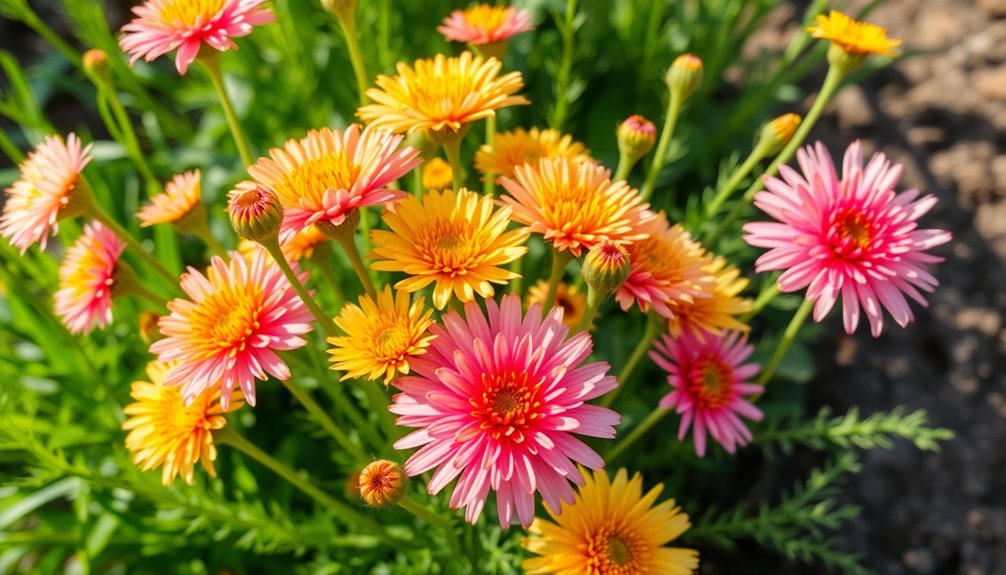
marigold plants for pest control
As an affiliate, we earn on qualifying purchases.
As an affiliate, we earn on qualifying purchases.
Frequently Asked Questions
Which Plants Are Best for Attracting Beneficial Insects?
To attract beneficial insects, plant flowers like marigolds, dill, fennel, and cosmos, which are excellent for pollinator attraction. These plants draw helpful insects like bees and ladybugs, supporting pest control strategies naturally. By including these in your garden, you create a thriving ecosystem that enhances pollination and reduces pests, making your garden healthier and more productive. Keep your planting diverse to maximize beneficial insect activity.
How Do Companion Plants Affect Pest Populations?
Imagine your garden as a bustling fortress, where companion plants act as vigilant guards. They disrupt pest populations through natural pest control and pest repellent strategies, confusing and deterring unwanted invaders. By planting allies like marigolds or basil alongside crops, you create a harmonious ecosystem that keeps pests at bay without chemicals. This symbiotic dance naturally reduces infestations, letting your garden flourish with healthy, thriving plants.
Can Companion Planting Improve Overall Crop Yield?
Yes, companion planting can improve your overall crop yield by leveraging intercropping benefits and increased plant diversity. When you mix different plants strategically, you enhance soil health, reduce pests, and improve pollination, leading to healthier, more productive crops. By diversifying your planting, you also make better use of available space and resources, which boosts your chances for a bountiful harvest.
Are There Any Plants That Should Never Be Paired?
You should avoid pairing plants with incompatible plant pairings, as some plants to avoid can hinder growth or attract pests. For example, avoid planting beans near onions, as they can compete for nutrients, or tomatoes with brassicas, which may attract similar pests. Knowing these plants to avoid helps prevent issues and guarantees a healthier, more productive garden by steering clear of incompatible plant pairings.
How Does Climate Influence Companion Planting Success?
Climate subtly guides your companion planting success by shaping microclimate effects and soil compatibility. When you consider temperature, humidity, and sunlight, you can select plant pairings that thrive together. Warm, humid areas favor certain vegetables, while cooler microclimates suit others. By understanding these climate nuances, you align your garden’s environment with your plants’ needs, allowing harmonious growth and robust yields, even in unpredictable weather.
basil herb for vegetable garden
As an affiliate, we earn on qualifying purchases.
As an affiliate, we earn on qualifying purchases.
Conclusion
Remember, “a weed is just a plant in the wrong place.” By choosing your plant pairings wisely, you can naturally boost growth, repel pests, and create a thriving garden. Companion planting isn’t just about planting side by side; it’s about working with nature to achieve harmony. So, experiment, observe, and enjoy the rewarding process of nurturing a balanced garden. With patience and care, your plants will flourish together, proving that sometimes, two heads—and plants—are better than one.
companion planting kit for vegetables
As an affiliate, we earn on qualifying purchases.
As an affiliate, we earn on qualifying purchases.
legume seeds for nitrogen fixation
As an affiliate, we earn on qualifying purchases.
As an affiliate, we earn on qualifying purchases.