
To prepare compost tea, steep high-quality compost in water with aeration for 12 to 24 hours, ensuring beneficial microbes thrive. Strain the liquid to remove solids and apply it evenly with a sprayer or watering can, preferably early morning or late afternoon. Regular weekly applications help improve soil health, boost plant growth, and suppress diseases. If you want to learn more about mastering compost tea for vibrant, healthy plants, keep exploring the details ahead.
Key Takeaways
- Use high-quality, contaminant-free compost and dilute it with water (ratio 1:5 or 1:10) for brewing compost tea.
- Aerate the mixture continuously for 12-24 hours using an aquarium pump to promote beneficial microbial growth.
- Strain the brewed tea to remove solids, ensuring it remains active and microbial-rich for application.
- Apply compost tea evenly over plants and soil, preferably early morning or late afternoon, focusing on roots and soil surface.
- Use compost tea weekly to enhance soil health, boost plant growth, and suppress soil-borne diseases.
Have you ever wondered how to boost your garden’s health naturally? One effective method is making and applying compost tea, a nutrient-rich liquid that promotes plant growth and soil vitality. The secret lies in harnessing beneficial microbes, tiny organisms that improve soil structure, suppress diseases, and help plants absorb nutrients more efficiently. To maximize these benefits, you need to understand proper brewing techniques, ensuring your compost tea is packed with active, healthy microbes.
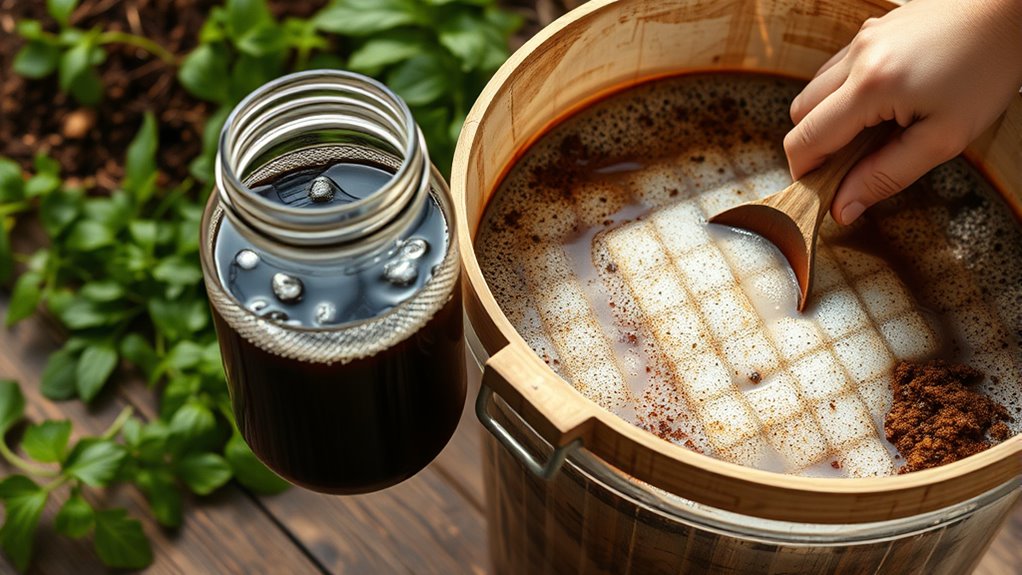
The process begins with selecting high-quality compost, ideally homemade or sourced from a reliable, organic supplier. The compost should be rich in beneficial microbes and free from contaminants. You then steep a small amount of this compost in water—usually a ratio of about one part compost to five or ten parts water—using a suitable container. During brewing, it’s *essential* to aerate the mixture continuously. This aeration supplies oxygen, encouraging the proliferation of beneficial microbes and preventing anaerobic bacteria that could produce foul odors or harmful substances.
Choose high-quality, contaminant-free compost rich in beneficial microbes for optimal brewing.
Using proper brewing techniques involves aerating the mixture for 12 to 24 hours, depending on the temperature and microbial activity. Many gardeners use an aquarium pump or a specialized aeration system to keep the mixture agitated. This process activates and multiplies beneficial microbes, transforming plain water into a potent microbial brew. Avoid over-brewing, as prolonged fermentation can lead to the growth of undesirable bacteria or fungi. Once the brewing process is complete, strain the liquid to remove solid particles, which can clog sprayers or drenchers.
Applying compost tea is straightforward. Use a sprayer or watering can to evenly distribute it over your plants and soil. Early morning or late afternoon applications are ideal, as it allows the microbes to settle and work without immediate exposure to intense sunlight. Focus on the root zones and soil surface to encourage beneficial microbial activity where plants need it most. Regular applications—about once a week—can *considerably* improve soil health, boost plant resilience, and increase crop yields.
In essence, compost tea is an accessible, eco-friendly solution rooted in understanding beneficial microbes and brewing techniques. By carefully selecting compost and properly aerating your brew, you create a powerful, natural fertilizer that nurtures your garden from the ground up. With consistent use, you’ll notice healthier plants, richer soil, and a more vibrant, resilient garden ecosystem—all achieved through the simple, effective practice of making and applying compost tea.
Frequently Asked Questions
How Long Does Compost Tea Last Before Needing to Be Used?
You should use compost tea within 24 to 48 hours for the best results. Its shelf life is limited because beneficial microbes die off quickly, especially if stored improperly. Keep it in a cool, dark place and avoid exposure to sunlight or heat, which can reduce its effectiveness. To maximize freshness, it’s best to apply it as soon as possible after brewing, ideally within the first day or two.
Can Compost Tea Be Applied to Indoor Plants Safely?
Yes, you can safely apply compost tea to indoor plants as it promotes plant health and boosts growth. Just guarantee you dilute the tea properly to prevent over-fertilizing, which can harm indoor plants. For indoor safety, avoid applying too much and use it in well-ventilated areas. Regular use encourages healthy, vibrant plants without risking damage, making compost tea a beneficial addition to your indoor gardening routine.
What Are the Signs of Over-Fertilizing With Compost Tea?
If you over-fertilize with compost tea, you might notice nutrient imbalance, leading to yellowing leaves or stunted growth. Root burn is another sign, causing roots to appear brown or mushy and plants to wilt despite adequate watering. You may also see leaf edges turning brown or crispy. To prevent this, apply compost tea in moderation and observe your plants closely for any adverse reactions.
Is It Necessary to Filter Compost Tea Before Application?
Think of compost tea as a vibrant symphony; you want each note clear and balanced. You should filter compost tea before application to remove any debris or large particles that can clog sprayers or harm plants. Using a fine filtering method guarantees particle removal, allowing nutrients to flow smoothly into your garden. This step helps maximize benefits and keeps your plants thriving without the risk of blockages or uneven distribution.
How Often Should Compost Tea Be Applied to Different Crops?
You should apply compost tea based on crop-specific schedules, typically weekly or biweekly, depending on the plant’s needs and growth stage. For vegetables and annuals, a weekly application often enhances growth and soil health. Fruits and perennials may require less frequent use. Always observe your crops’ responses and adjust the application frequency accordingly, ensuring you don’t overuse, which could lead to nutrient imbalances or disease issues.
Conclusion
Now that you know how to prepare and apply compost tea, imagine the vibrant garden waiting to flourish. But here’s the secret: the true magic lies in how you’ll observe your plants’ transformation over time. Will that boost in nutrients release their full potential? Or will new pests and challenges test your skills? Keep experimenting, stay attentive, and the rewards could be extraordinary. The next great garden breakthrough could be just one brew away—are you ready to discover it?