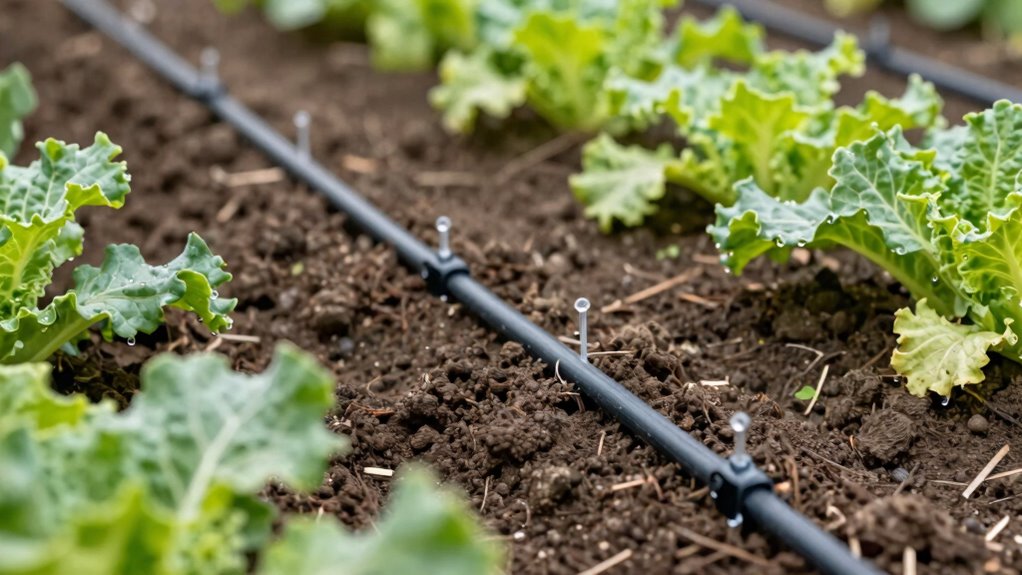

To make your drip irrigation work better in uneven beds, install pressure regulators and adjustable emitters to control water flow across different elevations. Guarantee proper maintenance by checking for clogs and leaks regularly. Use soil amendments to improve bed consistency, and test soil conditions to optimize irrigation. Managing pressure and flow helps deliver even watering, preventing dry spots or overwatering. Keep exploring these strategies to achieve a more efficient, uniform system that your plants will thrive in.

Get garden gear delivered free with Prime
- Fast, free delivery on millions of items
- Prime Video, Amazon Music and more included
- Member-only deals all year
Key Takeaways
- Install adjustable emitters or pressure regulators to ensure even water distribution across uneven terrain.
- Regularly clean filters and check for clogs to maintain consistent flow in the system.
- Incorporate soil amendments to improve bed structure and promote uniform water retention.
- Use flow rate adjustments and pressure regulation to compensate for elevation differences.
- Monitor soil conditions regularly and test for deficiencies to optimize irrigation and soil health.
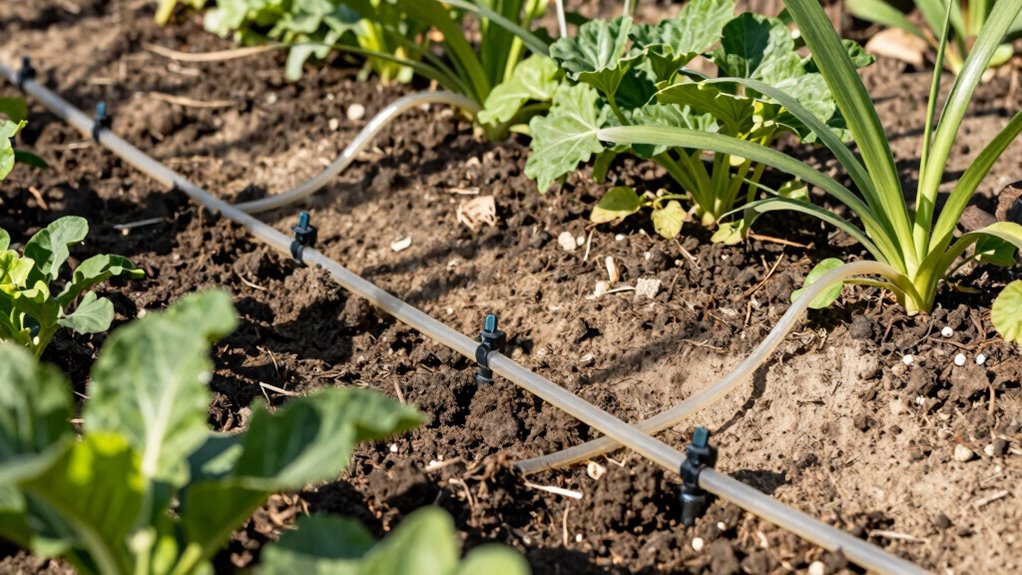
Uneven beds can pose a challenge for effective drip irrigation, causing water to either pool in low spots or drain too quickly from higher areas. When your garden bed isn’t level, the water distribution becomes uneven, making it difficult to deliver consistent moisture to your plants. To improve performance, you need to adjust your system so that it compensates for the terrain’s irregularities. First, consider installing pressure regulators or adjustable emitters that can help control water flow in different sections of your bed. These devices guarantee that water doesn’t just rush through the highest points or puddle in the low spots, promoting better fertilizer delivery and healthier plants.
Use pressure regulators or adjustable emitters to ensure even watering on uneven garden beds.
Proper system maintenance is vital to keep your drip irrigation functioning at its best. Regularly check for clogged emitters, leaks, or blockages that can disrupt even water distribution. Clean out filters and replace worn components to prevent uneven watering, which can hinder fertilizer delivery to your plants’ roots. When your system is well-maintained, it becomes easier to troubleshoot issues related to uneven watering, guaranteeing your plants consistently receive the nutrients and moisture they need. Additionally, understanding water pressure and how it affects flow rates can greatly enhance your system’s performance in uneven terrains. Recognizing how pressure regulation impacts water flow helps you manage the system more effectively across varying elevations. Incorporating flow rate adjustments can further optimize water distribution in complex terrains, ensuring your plants receive the right amount of moisture. Using soil amendments can also help improve the bed’s structure, reducing the gaps that cause uneven water flow and promoting a more uniform distribution. Moreover, soil testing can identify specific deficiencies or issues that might contribute to poor water retention or drainage problems, allowing you to tailor your soil improvements more effectively.
adjustable drip emitters for uneven beds
As an affiliate, we earn on qualifying purchases.
As an affiliate, we earn on qualifying purchases.
Frequently Asked Questions
Can I Use the Same Drip System for Different Crop Types?
Yes, you can use the same drip system for different crop types, but you should consider crop rotation to prevent clogging and guarantee healthy growth. Adjust watering schedules based on each crop’s needs to optimize water conservation. Regularly check and clean emitters to prevent blockages, especially if you’re switching between crops with different water requirements. Proper management helps your drip system stay efficient across various crops.
How Do I Prevent Clogging in Uneven Beds?
To prevent clogging in uneven beds, think of it as giving your system a gentle tune-up. Improve soil aeration to keep debris from settling in your lines and guarantee water distribution remains smooth. Regularly flush the system, filter water before it reaches the emitters, and check for blockages. These simple steps help maintain consistent flow, reduce clogs, and keep your drip irrigation running efficiently across uneven terrain.
What’s the Best Filter Type for Uneven Terrain?
For uneven terrain, a screen filter is your best choice, as it prevents debris from clogging your drip system. Since soil drainage varies, make sure your filter is easy to clean and has a fine mesh to handle sediment. This helps maintain consistent water distribution across slopes and irregular beds, ensuring your plants get steady moisture without blockages. Regularly check and clean the filter to keep everything running smoothly.
How Often Should I Check for Leaks?
You should check for leaks weekly as part of your maintenance schedule. Use leak detection methods like visually inspecting for soggy spots or unusually dry areas, and listen for hissing sounds from the system. Regular checks help you catch leaks early, preventing water waste and ensuring even watering. Staying vigilant keeps your drip irrigation system functioning efficiently, especially in uneven beds where leaks can be harder to spot.
Is It Necessary to Use Pressure Regulators?
Yes, using pressure regulators is necessary because they help maintain consistent pressure throughout your system. This guarantees flow consistency, preventing overwatering or underwatering, especially in uneven beds where pressure can fluctuate. By regulating pressure, you protect your drip emitters from damage and ensure all plants receive an even amount of water. Overall, pressure regulation is essential for efficient, reliable drip irrigation performance, especially on varied terrain.
Conclusion
By fine-tuning your drip irrigation system, you turn a patchy garden into a lush paradise. Remember, just like a well-tuned orchestra, your system needs harmony to thrive. When you address uneven beds with thoughtful adjustments, you’re not just watering plants—you’re nurturing a thriving ecosystem. So, embrace the challenge, and let your garden’s potential blossom, proving that even the most uneven ground can yield the most beautiful harvest when cared for with intention.
Halloween Picks
halloween
As an affiliate, we earn on qualifying purchases.