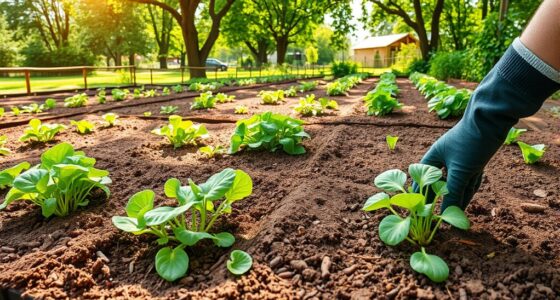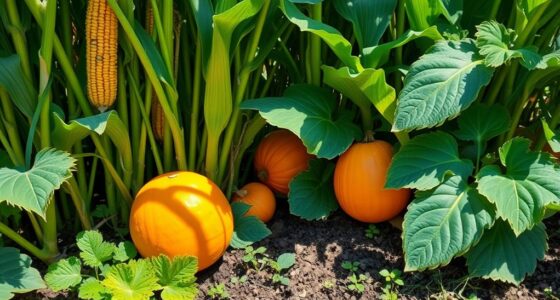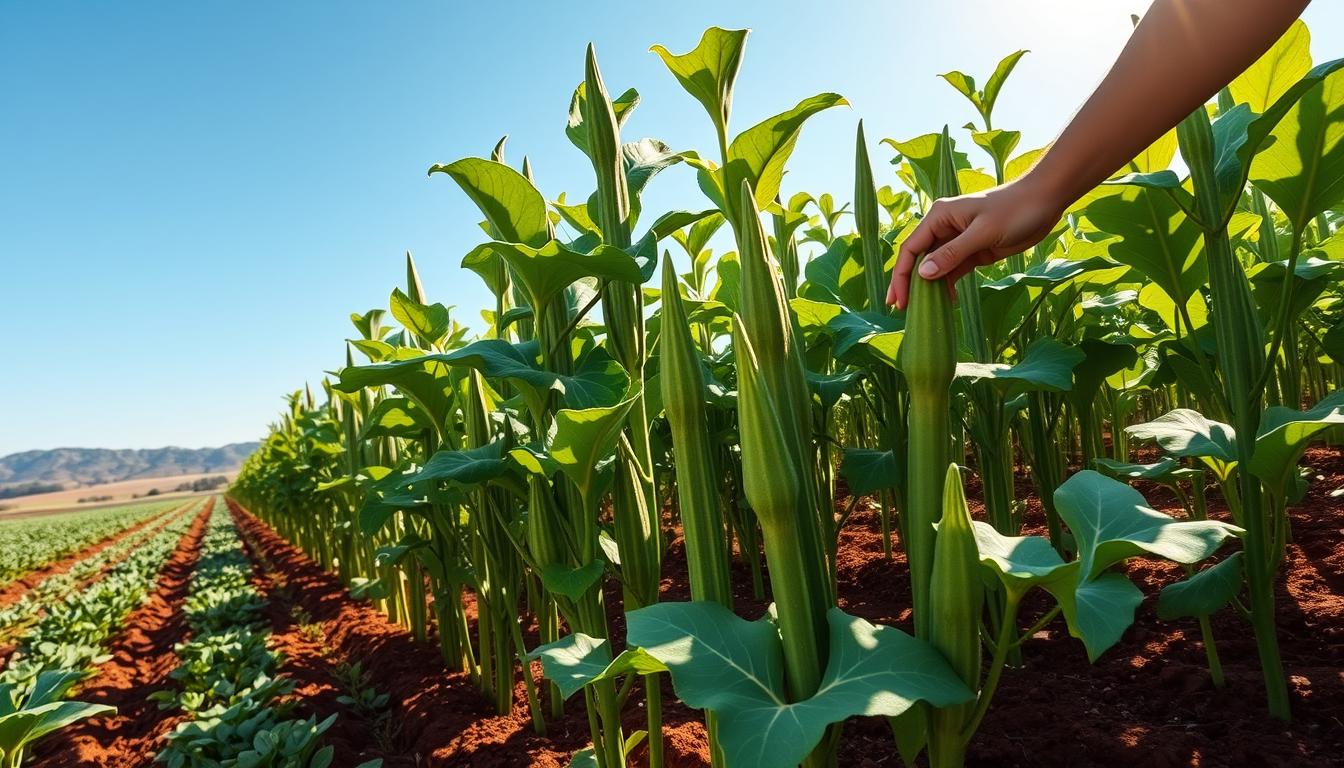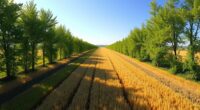
To effectively manage drought-resistant crops like sorghum, millets, and legumes, focus on selecting resilient varieties suited to your local conditions. Use targeted irrigation methods such as drip systems and schedule watering during cooler parts of the day. Incorporate soil conservation techniques like mulching and monitor moisture levels closely. Timing planting appropriately and adopting innovative practices can optimize water use. If you want to explore more strategies, you’ll find practical tips to strengthen your drought management approach.

Get garden gear delivered free — and shop member deals
- Fast, free delivery on millions of items
- Access to Prime Big Deal Days deals on October 6–7
- Prime Video, Amazon Music and more included
Key Takeaways
- Select and breed drought-resistant varieties of sorghum, millets, and legumes with traits like deep roots and water-use efficiency.
- Implement precision irrigation methods such as drip systems and soil moisture sensors to optimize water use.
- Use soil mulching and other conservation practices to reduce evaporation and maintain soil moisture.
- Time planting schedules to match drought-resistant crop traits with local dry season patterns.
- Continuously adopt innovative breeding, irrigation, and water management techniques to enhance crop resilience.

As drought conditions become more frequent and severe, managing drought-resistant crops effectively is essential for sustaining agricultural productivity. You need to focus on crop breeding strategies that enhance drought tolerance, selecting varieties that can withstand water scarcity without sacrificing yield. Crop breeding involves identifying and crossing plant traits that confer resilience, such as deep root systems and efficient water use. By developing improved strains of sorghum, millets, and legumes through targeted breeding programs, you can guarantee these crops perform better under limited water availability. Additionally, integrating advanced irrigation techniques plays a significant role in managing drought-resistant crops. Drip irrigation, for example, delivers water directly to the plant roots, minimizing waste and guaranteeing consistent moisture levels. This method is particularly beneficial for drought-resistant crops, as it maximizes water efficiency and promotes healthy growth even in dry conditions. You should also consider scheduling irrigations during cooler parts of the day to reduce evaporation, further conserving water resources. Combining crop breeding efforts with efficient irrigation practices allows you to optimize water use, enhance crop resilience, and improve overall yields.
Furthermore, adopting precision irrigation technologies, such as soil moisture sensors and automated systems, can help you monitor and control water application accurately. These tools enable you to respond quickly to changing soil moisture levels, preventing over or under-watering, which can stress plants or waste water. In addition to irrigation, soil management practices like mulching can reduce evaporation and maintain soil moisture, complementing your irrigation efforts. You should also pay attention to crop timing; planting drought-resistant varieties at the right time ensures they establish strong root systems before the most severe dry spells occur. Incorporating drought-resistant crop traits into your management practices can significantly improve your farm’s resilience and productivity during dry periods.
Incorporating crop breeding techniques with innovative irrigation methods requires a strategic approach, but the benefits are clear. You’ll be able to sustain crop production during periods of water scarcity, reduce dependence on large water inputs, and improve the resilience of your farming system. The key is to stay informed about new developments in crop genetics and irrigation technology, continually adapt your practices, and select the most suitable varieties for your local conditions. Managing drought-resistant crops isn’t just about planting the right seeds; it’s about integrating multiple approaches to create a sustainable, resilient system that can withstand the challenges posed by climate change and water shortages.
drip irrigation system for drought-resistant crops
As an affiliate, we earn on qualifying purchases.
As an affiliate, we earn on qualifying purchases.
Frequently Asked Questions
What Are the Economic Benefits of Drought-Resistant Crops?
Drought-resistant crops boost your economy by ensuring market stability, even during dry spells, helping you avoid crop failures and financial losses. They also open up new export opportunities, as countries seek reliable food sources and agricultural products. By investing in these crops, you can strengthen your agricultural sector’s resilience, attract trade partners, and create a more secure income stream for farmers and the broader economy.
How Do Drought-Resistant Crops Affect Soil Health?
Drought-resistant crops improve soil health by supporting beneficial soil microbial activity and enhancing nutrient cycling. As you cultivate these crops, they help maintain soil structure and organic matter, reducing erosion and degradation. Their root systems promote microbial diversity, which boosts nutrient availability for future crops. This sustainable approach guarantees healthier soils, better moisture retention, and long-term productivity, making drought-resistant crops a crucial part of resilient agricultural systems.
Are There Any Risks Associated With Cultivating Drought-Resistant Crops?
There is a 15% chance that cultivating drought-resistant crops could lead to unintended consequences. Genetic modification might reduce pest resistance or cause gene flow to wild relatives, risking biodiversity. You should consider these risks, as they could impact ecosystems and crop diversity. While drought-resistant crops offer benefits, it is crucial to weigh potential risks like reduced pest resistance and ecological imbalance before large-scale cultivation.
How Can Farmers Optimize Water Use With These Crops?
You can optimize water use by implementing efficient irrigation systems like drip or sprinkler methods that deliver precise amounts of water directly to the roots. Additionally, practicing crop rotation with drought-resistant crops helps maintain soil health and reduce water demand. These strategies guarantee your crops grow effectively while conserving water, making your farm more sustainable and resilient to drought conditions.
What Are Future Research Directions for Drought-Resistant Crop Development?
You should focus on future research directions like genetic enhancement to improve drought tolerance and climate resilience. Developing advanced breeding techniques and gene editing tools can help create crops that withstand varied environmental stresses. Exploring molecular biology and genomics will open new traits. By prioritizing these areas, you’ll contribute to more sustainable agriculture, ensuring crops like sorghum, millets, and legumes thrive despite changing climate conditions.
Conclusion
By choosing drought-resistant crops like sorghum, millets, and legumes, you can effectively combat water scarcity without sacrificing yields. Some might think these crops can’t meet your needs, but advancements in breeding prove otherwise. With proper management, you’ll find these crops not only survive droughts but thrive, ensuring food security. So, don’t let doubts hold you back—embrace these resilient options and secure a sustainable future for your farm.
Fall yard work Picks
leaf blowers
As an affiliate, we earn on qualifying purchases.