
To manage green manure crops for soil fertility, select species suited to your soil needs and crop schedule. Grow fast-growing cover crops like mustard for rapid organic matter, or longer-season legumes for nitrogen fixation. Time incorporation just before flowering to maximize benefits, and rotate different species to prevent pests and diseases. Consistent monitoring, proper timing, and strategic crop rotation help maintain healthy soil. Keep exploring to discover more techniques for ideal green manure management.
Key Takeaways
- Select appropriate green manure species based on soil needs and crop schedules for optimal nutrient addition.
- Time incorporation at peak biomass, usually before flowering, to maximize organic matter and nutrient return.
- Rotate green manure crops to prevent pest and disease buildup, ensuring healthier soil and plant systems.
- Use fast-growing cover crops for quick organic matter buildup and longer-season legumes for sustained nitrogen fixation.
- Monitor and manage pests and diseases regularly, removing affected plants and practicing crop rotation to maintain soil health.
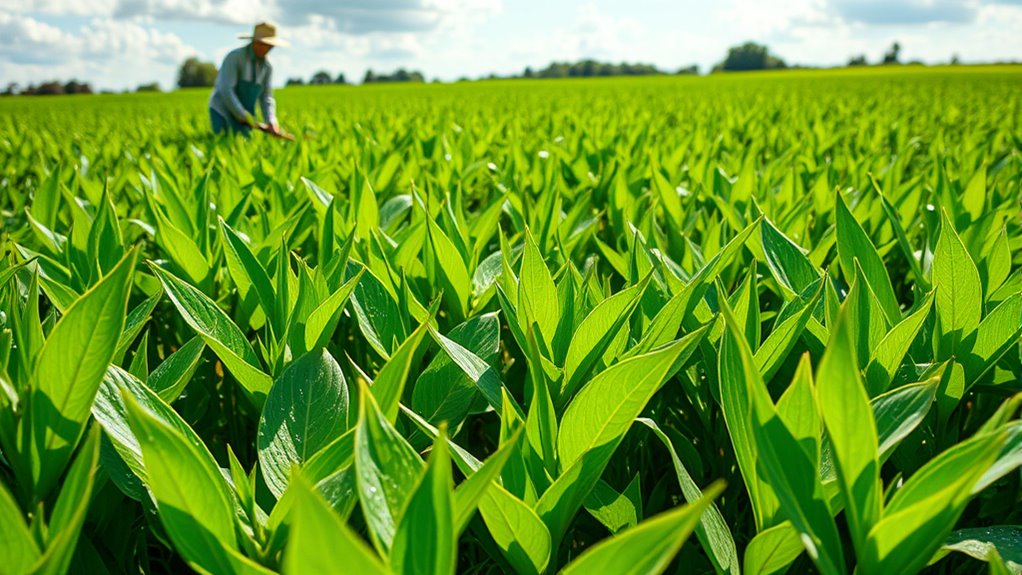
Green manure crops play a vital role in maintaining soil health and fertility, and managing them effectively is essential for a successful farming system. When you incorporate green manure into your cropping plan, you’re not just adding organic matter; you’re also enhancing soil structure, boosting nutrient levels, and supporting overall productivity. One of the most effective ways to maximize these benefits is through strategic crop rotation. By rotating green manure crops with your main cash crops, you prevent the buildup of pests and diseases specific to certain plants, reducing the need for chemical controls. For instance, planting legumes like clover or vetch after a cereal crop interrupts pest cycles and diminishes their population, breaking disease cycles and maintaining a healthier, more resilient soil environment. Crop rotation also helps balance nutrient demand; legumes fix nitrogen, which can then be used by subsequent crops, lowering fertilizer costs and improving sustainability.
Managing green manure crops isn’t just about planting and incorporating them into the soil; it’s about timing and integration. You need to select the right species based on your soil needs and crop schedule. Fast-growing cover crops like buckwheat or mustard can be turned into the soil quickly, providing rapid organic matter buildup and weed suppression. Longer-season crops, such as certain legumes, offer sustained nitrogen fixation and soil improvement. When you decide on the timing of incorporation, aim to do so at the ideal growth stage—usually just before flowering—when the plant biomass is at its peak. This guarantees maximum organic matter and nutrient content return to the soil, promoting fertility. Additionally, understanding the importance of best practices for crop management can further enhance the effectiveness of green manure systems.
Pest management is a critical aspect of green manure crop systems. If left unmanaged, some green manure plants can harbor pests or diseases that might transfer to your main crops. To prevent this, you should regularly monitor your cover crops and remove or terminate any that show signs of pest infestation or disease. Rotating different types of green manure crops also helps break pest and disease cycles, making it less likely for pests to adapt or establish themselves. Additionally, integrating pest-resistant species or using cultural controls can further reduce pest pressure. Proper timing in planting and terminating green manure crops also minimizes the risk of pest problems, as it prevents pests from establishing themselves during vulnerable periods.

Rain Bird DRIPKITBAG Drip Irrigation Repair and Expansion Kit
Convenient and portable storage kit contains 102 professional grade universal Drip irrigation parts
As an affiliate, we earn on qualifying purchases.
Frequently Asked Questions
How Do Green Manure Crops Affect Local Biodiversity?
Green manure crops positively impact local biodiversity by supporting native plant interactions and habitat enhancement. When you plant native species, you promote beneficial insects and pollinators, creating a balanced ecosystem. These crops provide shelter and food for wildlife, encouraging diverse habitats. By integrating green manure, you help preserve native flora and fauna, fostering a healthier environment while improving soil health and sustainability.
What Are the Best Green Manure Crops for Drought-Prone Areas?
Drought-tolerant species like cowpeas, sunn hemp, and chickpeas top the list for drought-prone areas. These hardy herbs help retain soil moisture, making them ideal for dry conditions. By choosing resilient green manure crops, you boost soil fertility while conserving water. Incorporate these plants into your rotation to maximize moisture retention and guarantee healthy, sustainable soil even in the harshest droughts.
How Can Green Manure Crop Management Reduce Pest Problems?
You can reduce pest problems by using green manure crops to promote pest suppression. By selecting diverse crops and practicing crop rotation, you disrupt pest life cycles and prevent infestations. Incorporate cover crops that attract beneficial insects, which naturally control pests. Proper management, like timely planting and mowing, also minimizes pest habitats, creating a less favorable environment for pests and supporting healthier, pest-resistant crops.
What Is the Optimal Timing for Green Manure Crop Incorporation?
The essential timing for green manure crop incorporation is vital—you don’t want it to be too early or too late! Usually, you should incorporate green manure during the flowering stage or just before seed set. Pay close attention to timing considerations and crop rotation scheduling, ensuring you maximize soil fertility benefits. This strategic timing boosts nutrient release and prevents pests, making your soil healthier and more productive.
How Do Green Manure Crops Influence Soil Microbial Communities?
Green manure crops boost soil microbial communities by increasing microbial diversity and stimulating soil enzyme activity. As you incorporate these crops, you create a richer environment that promotes beneficial microbes, which help decompose organic matter and improve nutrient cycling. This enhances soil health, making nutrients more accessible for plants. By fostering diverse microbial populations, you support a resilient soil ecosystem that sustains long-term fertility and crop productivity.

Lanties 25 Pcs Folding Drip Tape Row End System and Garden Landscaping Irrigation Fits for 5/8'' No Dripping Dripless Water Irrigation Kit for Vegetable
Package Includes: you can get 25 pieces of black drip tape row ends for garden drip system and...
As an affiliate, we earn on qualifying purchases.
Conclusion
By effectively managing green manure crops, you can substantially boost your soil’s fertility and health. Incorporating these crops increases organic matter by up to 30%, enhancing nutrient availability and crop yields. Remember to select the right species and timing for incorporation to maximize benefits. With proper management, you’ll not only improve your soil’s productivity but also contribute to sustainable farming practices, ensuring healthier harvests for years to come.

Strongman Premium Drip Irrigation | 1640 ft 5/8" Tape Roll | Smart Regulator | Garden Drip Watering System for Plants, Lawn, Greenhouse | 0.26 GPH | 0.4mm Thickness
✅ PREMIUM VIRGIN PLASTIC – BUILT TO LAST::: Crafted from high-grade virgin plastic, Strongman drip tape offers exceptional...
As an affiliate, we earn on qualifying purchases.

2000FT 5/8" Drip Tape Irrigation Kit, 16 Mil Heavy Duty with 6" Emitter Spacing, Silver Reflective Drip Tape Helps Prevent Pecking & Biting Damage, Heat-Safe for Seedlings, Reinforced PE Material
Premium Performance: Crafted from upgraded reinforced PE material with a thick 16 Mil construction, this drip irrigation tape...
As an affiliate, we earn on qualifying purchases.