
To decide what belongs in your greenhouse, first assess each plant’s needs for light, water, temperature, and humidity. Group plants with similar requirements to promote healthy growth and avoid placing incompatible species together. Consider space and future growth, and adjust microclimates to suit different plants. By understanding these factors and planning carefully, you can create a thriving environment. Want to learn how to optimize your greenhouse setup for success? Keep exploring!

Get garden gear delivered free with Prime
- Fast, free delivery on millions of items
- Prime Video, Amazon Music and more included
- Member-only deals all year
Key Takeaways
- Assess each plant’s light, water, and temperature needs to ensure compatibility within the greenhouse environment.
- Group plants with similar requirements to prevent resource competition and promote healthy growth.
- Consider each plant’s preferred humidity and temperature to avoid stress and disease.
- Plan for future growth and space needs to prevent overcrowding and maintain optimal conditions.
- Use microclimates and environmental controls to tailor conditions for diverse plant needs.
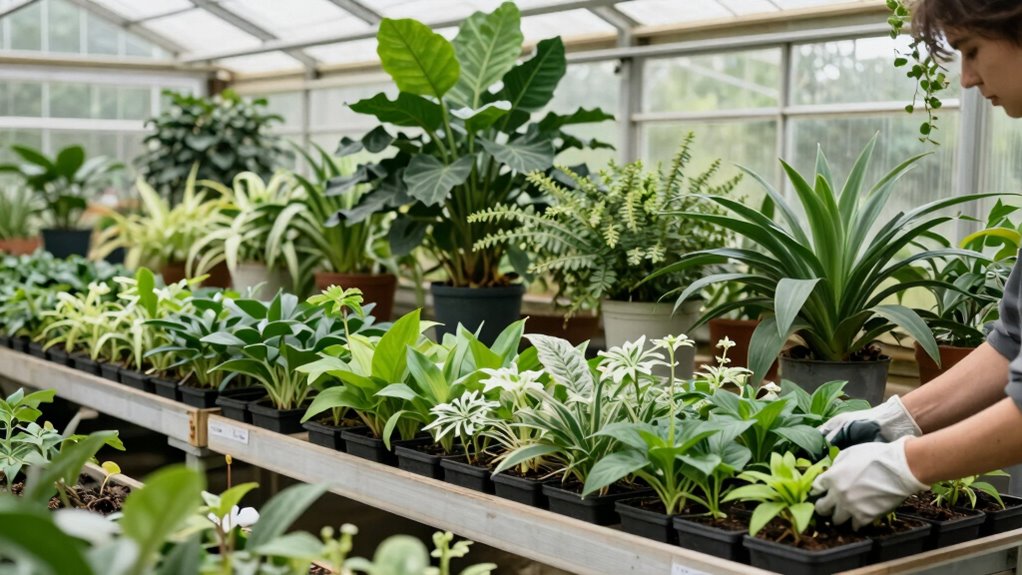
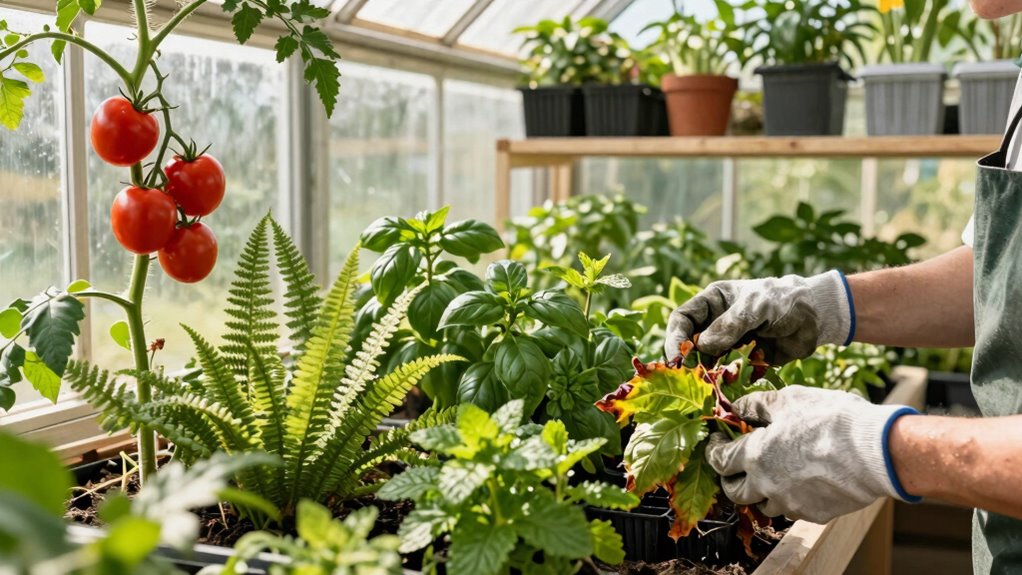
Deciding what belongs in your greenhouse can seem overwhelming, but with a clear plan, you can create an efficient and productive space. One of the first considerations is plant compatibility — understanding which plants thrive together and which might hinder each other’s growth. Grouping plants with similar needs ensures they’ll flourish without competing for resources. For example, tropical plants that prefer high humidity shouldn’t be placed next to succulents that require dry conditions. Think about light, water, and nutrient needs when arranging your plants. Mixing incompatible species can lead to stress, disease, or poor growth, so take the time to research each plant’s preferences before grouping them.
Group plants with similar needs to ensure healthy growth and reduce stress.
Temperature regulation is another essential factor that influences what should go into your greenhouse. Maintaining a stable environment allows your plants to grow at their best and reduces stress. Some plants demand consistent warmth, while others tolerate cooler temperatures. If you plan to grow a variety of species, consider how you’ll regulate temperature—using heaters, fans, or shading systems. For tender plants that need warmer conditions, placing them near heat sources or in the sunniest spots is vital. Conversely, hardier plants can handle cooler zones. Proper temperature regulation not only supports healthy growth but also extends your growing season, especially in colder climates. Incorporating environmental control techniques can help optimize conditions for diverse plant needs. Additionally, understanding microclimates within your greenhouse can help you tailor conditions more precisely for different plant groups. Being aware of microclimate variations allows you to create targeted zones that better meet the needs of specific plants.
As you decide what to include, think about your overall goals—whether you want a lush vegetable garden, a collection of exotic plants, or a combination of both. It’s tempting to fill your greenhouse with everything you love, but practicality matters. Focus on plants that match your climate, your space, and your level of experience. Be mindful of how much light each plant needs and where it should be placed for ideal temperature regulation. Shelving and plant placement can help create microclimates within your greenhouse, allowing you to cater to different plant requirements simultaneously. Understanding plant compatibility and environmental needs is key to a successful setup.
Don’t forget to consider future growth and space. Some plants may need more room to spread out, while others can be kept in smaller containers. Regularly assess your setup to ensure plant compatibility remains intact and that temperature regulation strategies are effective. By planning carefully and understanding the specific needs of your plants, you’ll create a greenhouse environment that’s both efficient and productive. This thoughtful approach ensures your plants stay healthy, your space stays organized, and your gardening efforts pay off.
greenhouse environmental control systems
As an affiliate, we earn on qualifying purchases.
As an affiliate, we earn on qualifying purchases.
Frequently Asked Questions
How Do I Determine the Ideal Temperature for Greenhouse Plants?
To determine the ideal greenhouse plant temperature, you need to know your specific plants’ needs, which influence the greenhouse climate. Usually, most plants thrive between 65-75°F, but some prefer cooler or warmer conditions. Monitor your plant temperature regularly with a thermometer, and adjust heating or cooling systems accordingly. Keep airflow steady and avoid extreme fluctuations, ensuring a stable environment that promotes healthy growth.
What Are the Best Ventilation Practices for Greenhouse Health?
You should prioritize good air circulation and humidity control to keep your greenhouse healthy. Use exhaust fans, vents, or opening windows to promote airflow, preventing stagnant air and mold growth. Maintain proper humidity levels by monitoring with a hygrometer and adjusting ventilation as needed. Regularly inspect and clean your ventilation systems to guarantee they work efficiently, helping your plants thrive in a balanced, healthy environment.
How Often Should I Water My Greenhouse Plants?
Think of your greenhouse plants as delicate singers needing just the right pitch. You should water your plants when the top inch of soil feels dry, usually every 2-3 days, but adjust based on your watering schedule and humidity control. Overwatering can drown roots, while underwatering stresses plants. Keep a consistent routine, monitor soil moisture, and make certain of proper humidity to help your plants thrive in harmony.
What Pests Are Common in Greenhouses and How to Control Them?
You’ll often encounter pests like aphids, whiteflies, and spider mites in your greenhouse. To control them, start with pest identification to accurately target the issue. Use biological control methods such as introducing beneficial insects like ladybugs or predatory mites, which naturally reduce pest populations. Regularly inspect plants, maintain cleanliness, and remove affected foliage to prevent infestations. Combining these steps helps keep your greenhouse pest-free effectively.
How Can I Extend the Growing Season in My Greenhouse?
Think of your greenhouse as your own secret garden, even in winter. To extend your growing season, use season extension techniques like heaters, grow lights, and insulation. Practice crop rotation to keep soil healthy and reduce pests. These methods work together, enabling you to harvest fresh produce longer, regardless of outside weather. With careful planning, your greenhouse can be a year-round oasis for your favorite plants.
Conclusion
Now that you know what to keep in your greenhouse, think of it as a carefully curated treasure chest. By choosing plants that thrive in controlled environments and understanding their needs, you’re cultivating a lush, thriving oasis. Trust your instincts and pay attention to each plant’s preferences — after all, a well-organized greenhouse is like a symphony, where every element plays its part in harmony. Happy gardening!
Halloween Picks
halloween
As an affiliate, we earn on qualifying purchases.