Your choice of greenhouse film directly impacts how much light and heat enter your structure, influencing crop growth and energy costs. Opting for a film with high UV stability guarantees it stays transparent and strong over time, reducing repair needs and replacements. Durable materials withstand environmental stresses, saving you money and minimizing downtime. Selecting the right film can enhance your greenhouse’s efficiency and longevity. Keep exploring to discover how to choose the best options for your needs.
Key Takeaways
- Film transparency impacts light transmission, affecting plant growth and energy costs within the greenhouse.
- UV stability and durability influence heat retention and temperature control over time.
- High-quality films reduce repair needs by resisting tears, impact damage, and environmental stressors.
- Selecting durable, UV-protected films minimizes replacement frequency and maintenance expenses.
- Proper film choices optimize light, heat, and longevity, lowering overall operational and repair costs.
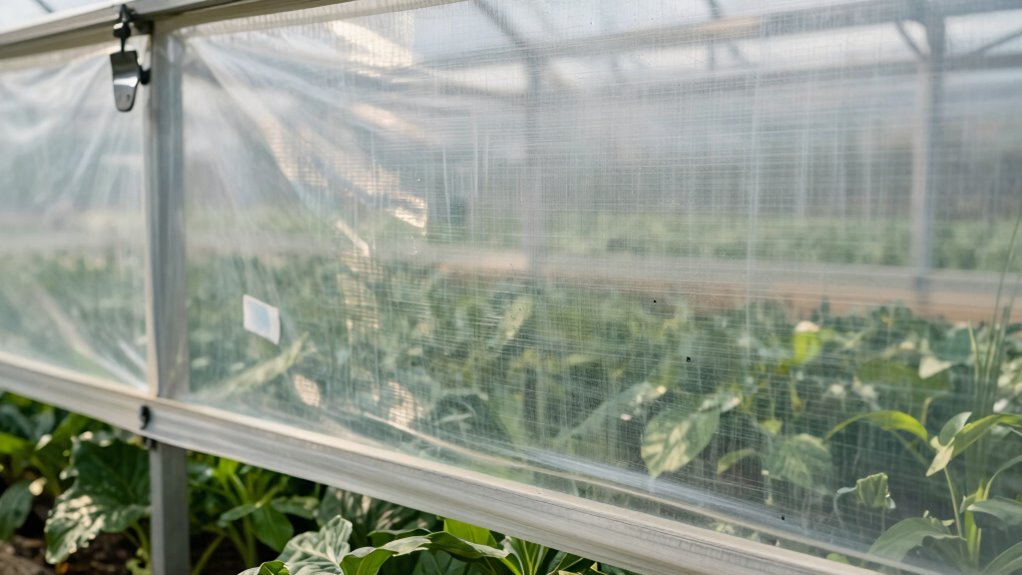
Choosing the right greenhouse film is essential for maximizing your crop yields and ensuring your plants thrive. One of the most critical factors to consider is UV stability. UV stability determines how well the film resists the damaging effects of ultraviolet rays from the sun. If you select a film with high UV stability, you’ll find that it maintains its transparency and strength over time, reducing the need for frequent replacements. This stability not only preserves the quality of the light entering your greenhouse but also helps prevent the film from becoming brittle or discolored, which can block sunlight and hinder plant growth. When UV stability is a priority, you’re investing in a product that offers long-term performance, ultimately saving you money and effort in repairs and replacements. Additionally, choosing a film with high UV stability can contribute to material longevity, ensuring your greenhouse remains protected and functional for years to come.
Material durability is another vital aspect that affects your overall costs and the health of your greenhouse. A durable film withstands the harsh environmental conditions, such as wind, rain, hail, and temperature fluctuations. When you choose a high-durability film, you avoid the frequent repairs or replacements that come with thinner, less resilient materials. This durability translates into fewer maintenance costs and less downtime, allowing your crops to grow undisturbed. Additionally, durable films tend to have better tear resistance and impact strength, preventing tears from small debris or accidental damage during installation or maintenance. As a result, your greenhouse remains sealed and protected for a longer period, ensuring stable conditions for your plants. Incorporating UV protective additives into the film can further enhance its resilience against sun damage and prolong its lifespan. Moreover, films with enhanced durability often feature improved resistance to environmental stressors, contributing to overall cost savings over time. Selecting films with proven UV stability and durability can significantly reduce the need for frequent replacements and repairs, making your investment more cost-effective in the long run.

Farm Plastic Supply – Clear Greenhouse Plastic Sheeting – 6 mil – (25' x 40') – 4 Year UV Resistant Polyethylene Greenhouse Film, Hoop House Green House Cover for Gardening, Farming, Agriculture
- Durable Greenhouse Cover: 6 mil clear polyethylene plastic
- UV Resistant: Anti-aging UV additives for long-term use
- Optimal Light Transmission: Ensures even light and temperature distribution
As an affiliate, we earn on qualifying purchases.
As an affiliate, we earn on qualifying purchases.
Frequently Asked Questions
How Long Does Greenhouse Film Typically Last Before Needing Replacement?
Greenhouse film usually lasts about 3 to 5 years before needing replacement. If you choose a film with strong UV protection and high UV stability, it can extend its lifespan. These features help resist deterioration from sunlight and weather conditions. Regularly inspecting your film for tears, discoloration, or damage guarantees you catch issues early, maintaining ideal light and heat for your plants while reducing long-term repair costs.
Are There Eco-Friendly or Biodegradable Greenhouse Film Options Available?
Oh, absolutely, because saving the planet is obviously just a trendy addition, not essential. You can find biodegradable alternatives and eco-friendly materials for greenhouse films that break down naturally, reducing landfill waste. These innovative options let you grow your plants guilt-free while making a statement about sustainability. So yes, you can have your eco-cake and eat it too, with films that vanish as kindly as your conscience demands.
How Does Film Thickness Impact Heat Retention and Durability?
Thicker greenhouse film improves heat retention by providing better thermal insulation, helping your plants stay warm during colder days. It also enhances durability, protecting against tears and UV damage, which extends its lifespan. Keep in mind, increased thickness might reduce light transmission slightly, so balance it with UV protection to guarantee ideal plant growth. Choosing the right thickness ensures your greenhouse stays warm, protected, and cost-effective over time.
Can Different Films Be Combined for Customized Light and Heat Control?
Yes, you can combine different films for customized light and heat control. Layer customization allows you to tailor the greenhouse environment, while film compatibility guarantees the layers work well together. By blending films, you achieve specific light transmission and heat retention goals, optimizing plant growth and energy efficiency. Just make certain to check compatibility to prevent peeling or clouding, so your greenhouse remains a productive, pleasant space.
What Are the Best Practices for Properly Installing Greenhouse Film?
You should follow best practices like ensuring tight, even installation to prevent gaps, which can affect light and heat. Use proper tools and secure the film with clips or fasteners, maintaining proper tension. Incorporate ventilation strategies to prevent overheating and humidity buildup, and consider pest prevention measures such as sealing edges thoroughly. Regularly inspect and repair any tears promptly to maintain ideal conditions, ultimately saving on repair costs and boosting plant health.
Conclusion
Choosing the right greenhouse film can substantially impact your crop growth and budget. Did you know that improper film selection can increase heating costs by up to 30%? By understanding how different films affect light, heat retention, and repair expenses, you can make smarter decisions that save money and boost productivity. Don’t overlook this essential aspect—investing in quality film today guarantees a more efficient, cost-effective greenhouse tomorrow.