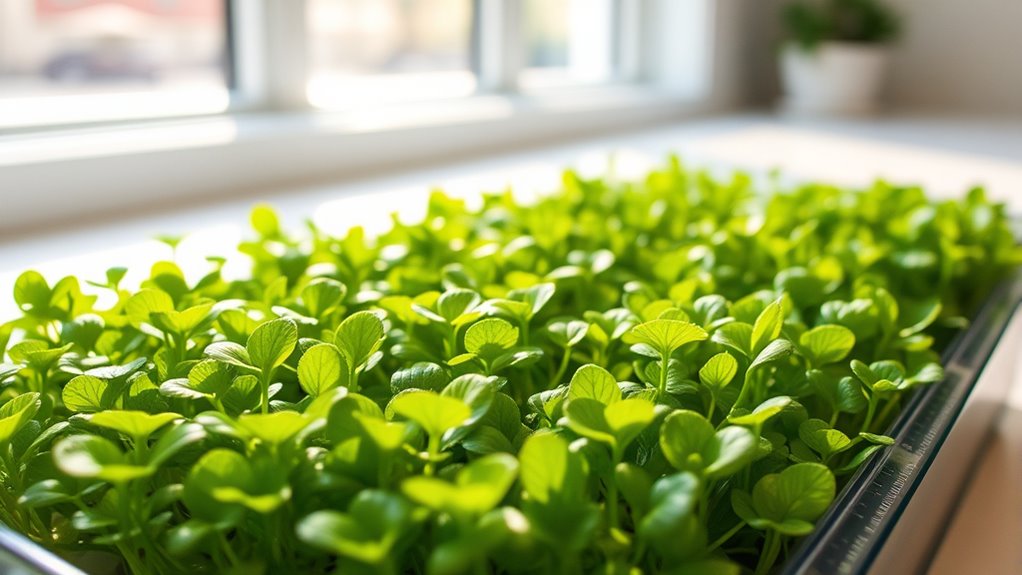

To grow nutrient-dense microgreens at home, start with organic seeds suited for flavor and nutritional value, and choose a well-draining growing medium. Provide 4-6 hours of natural sunlight or use energy-efficient LED grow lights placed about 12-18 inches above your microgreens, ensuring they get 12-16 hours daily. Keep the soil moist but avoid overwatering, and watch for signs of legginess to adjust your lighting. Mastering these steps will help you produce vibrant, healthy microgreens; keep going to discover more tips for ideal growth.
Key Takeaways
- Select organic, nutrient-rich seeds like kale, sunflower, or radish for dense microgreens.
- Provide 4-6 hours of direct sunlight or use full-spectrum LED grow lights for optimal nutrient development.
- Use well-draining soil or microgreens mats and keep the medium consistently moist for healthy growth.
- Ensure proper lighting adjustments based on growth stage to prevent legginess and maximize nutrient density.
- Maintain an ideal environment with balanced watering, adequate light, and proper seed selection for nutrient-dense microgreens.
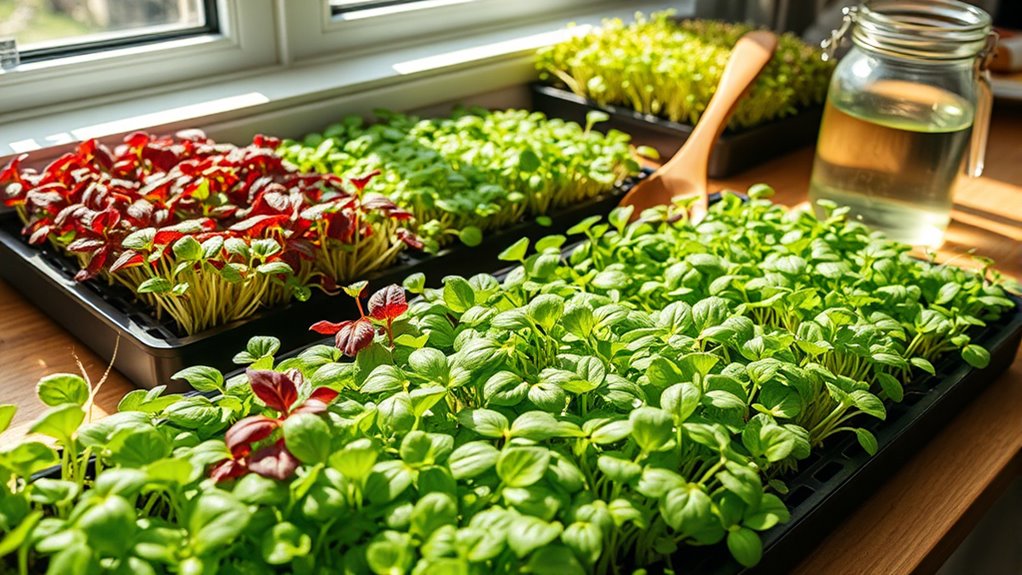
Growing microgreens at home is an easy and rewarding way to add fresh, nutrient-rich greens to your diet. The first step is choosing the right seeds. Your seed selection can influence the flavor, texture, and nutritional profile of your microgreens. Opt for organic seeds when possible, as they’re free from pesticides and chemicals that could affect your health or the growth process. Think about what flavors you enjoy—basil, radish, sunflower, or kale—and select a variety that excites you. Consider the growing period for each type; some microgreens sprout quickly within a week, while others take a bit longer. Pay attention to seed size as well, since small seeds like basil or mustard are easy to work with, especially if you’re just starting out.
Once you’ve selected your seeds, focus on lighting techniques. Microgreens need plenty of light to grow strong and flavorful. If you’re growing indoors, natural sunlight is best, so place your trays near south-facing windows where they’ll receive at least 4-6 hours of direct sunlight daily. If natural light is limited, supplement with grow lights designed for indoor plants. LED grow lights are energy-efficient and can be adjusted for intensity and spectrum, providing the ideal light for photosynthesis. Position the lights about 12-18 inches above your microgreens and keep them on for around 12-16 hours a day. Consistent lighting encourages even growth and helps prevent legginess, where the stems stretch out too long in search of light. If you notice your microgreens leaning or stretching, it’s a sign they need more light.
In addition to seed selection and lighting, pay attention to the quality of your growing medium and watering schedule. Use a well-draining soil mix or a dedicated microgreens growing mat to ensure proper root development. Water your microgreens gently but thoroughly, keeping the soil consistently moist but not soaked. Proper watering combined with adequate lighting supports healthy growth and maximizes nutrient density.

Microgreens Seeds Growing Kit: 5 Micro Green Variety Pack, Broccoli, Beets, Arugula, Spicy, Mild Mix, 100% Non GMO Sprouting Seeds, Organic Microgreen Seed Planting Indoor Garden by Sustainable Sprout
5 DISTINCT MICROGREENS VARIETIES – Swift Harvest Delight: Elevate your culinary experience by cultivating a diverse microgreens garden…
As an affiliate, we earn on qualifying purchases.
As an affiliate, we earn on qualifying purchases.
Frequently Asked Questions
What Are the Best Microgreens for Beginners?
As a beginner, you should start with easy microgreens like radish, sunflower, or broccoli. Focus on seed selection by choosing high-quality, organic seeds for better germination. Prepare your soil by ensuring it’s well-draining and slightly moist. Keep the soil moist and in a bright area. These microgreens grow quickly and require minimal care, making them perfect for beginners wanting to enjoy nutritious greens at home.
How Long Do Microgreens Typically Take to Harvest?
Microgreens typically take about 7 to 21 days to harvest, depending on the variety and growth duration. You should watch for their first true leaves, which signal they’re ready for harvest. To guarantee the best flavor and nutrient density, harvest at the right harvest timing, usually when they’re about 1-3 inches tall. Keep an eye on their growth progress, so you can enjoy fresh, nutrient-packed microgreens at their peak.
Can Microgreens Be Grown Indoors Year-Round?
Imagine a garden of tiny, vibrant green treasures thriving in your window. Yes, you can grow microgreens indoors year-round by providing the right indoor lighting and selecting high-quality seeds. Consistent light mimics the sun, nurturing your greens through every season, while choosing the right seeds guarantees a successful harvest. With dedication, your microgreens will flourish, transforming your space into a perpetual oasis of freshness and health.
What Are Common Pests and How to Manage Them?
You’ll likely encounter pests like aphids, fungus gnats, or spider mites. To manage them, first identify pests through pest identification methods—look for damage or presence on leaves. Use organic pest control options like neem oil, insecticidal soap, or introduce beneficial insects such as ladybugs. Regularly inspect your microgreens and maintain good hygiene to prevent infestations, ensuring your microgreens stay healthy and nutrient-dense.
How Do Microgreens Differ Nutritionally From Mature Greens?
Ironically, microgreens pack a bigger nutritional punch than mature greens. You’ll find higher antioxidant levels and mineral content in those tiny shoots, making them more nutrient-dense per serving. While mature greens are great for volume, microgreens deliver concentrated nutrients in a small package. So, when you eat microgreens, you’re getting more antioxidants and minerals in just a handful, turning a small snack into a powerful health boost.

Garpsen Grow Light, 6000K Full Spectrum Plant Lights for Indoor Growing with Auto Timer 6/12/16H, 5 Dimmable Levels & 3 Color Modes, 552 LEDs Grow Lamp Panel for Seed Starting, Veg and Bloom(4Panels)
[Full Spectrum]: This 4Panel full spectrum grow lights have 552 LEDs. emitting wavelengths from 380nm to 800nm, the…
As an affiliate, we earn on qualifying purchases.
As an affiliate, we earn on qualifying purchases.
Conclusion
Now that you know how easy it is to grow nutrient-dense microgreens at home, there’s no reason to wait. With a little effort, you’ll be cultivating vibrant, healthy greens that pack a punch of vitamins. Think of your kitchen as a mini farm—where every sprout is a step toward better health. So, start today and watch your garden grow, turning every meal into a celebration of freshness and essentiality. Your future self will thank you!
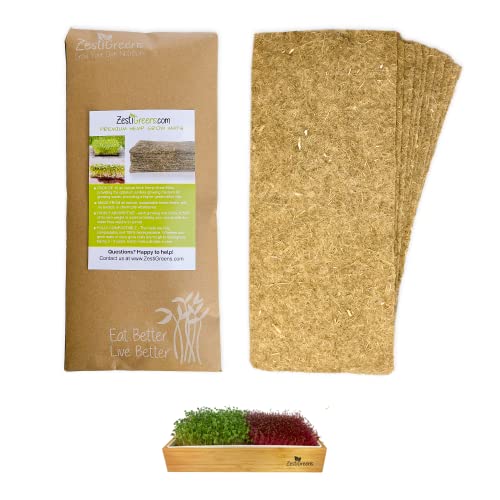
Hemp Mats for ZestiGreens Microgreens & Wheatgrass Kit
🌱 MEASURES 13” x 5.5” and fits the ZestiGreens Hydrophonic Microgreens Growing Kit perfectly (available on Amazon separately.)…
As an affiliate, we earn on qualifying purchases.
As an affiliate, we earn on qualifying purchases.

Back to the Roots Organic Microgreens Grow Kit with Ceramic Planter, Expandable Soil, Organic Seeds, and Germination Lid
Item shape: Rectangular
As an affiliate, we earn on qualifying purchases.
As an affiliate, we earn on qualifying purchases.