To reduce waste, harvest crops at their peak maturity by watching color, firmness, and size indicators, and avoid picking too early or late. Handle produce gently, use clean, breathable packaging, and transport it carefully to prevent damage. Store items in cool, humid environments with good ventilation to slow spoilage. Performing proper sorting and grading before storage helps prevent deterioration. If you want to discover more ways to optimize your harvest and handling practices, keep exploring further.
Key Takeaways
- Harvest crops at peak maturity using color, firmness, and size indicators to ensure optimal quality and reduce waste.
- Maintain proper storage conditions, including temperature and humidity control, to extend shelf life and prevent spoilage.
- Handle produce gently during harvesting and transportation to minimize physical damage and microbial contamination.
- Use clean, breathable packaging and avoid overcrowding to protect produce and reduce waste during transit.
- Regularly monitor storage environments and adjust conditions promptly to prevent spoilage and maximize produce utilization.
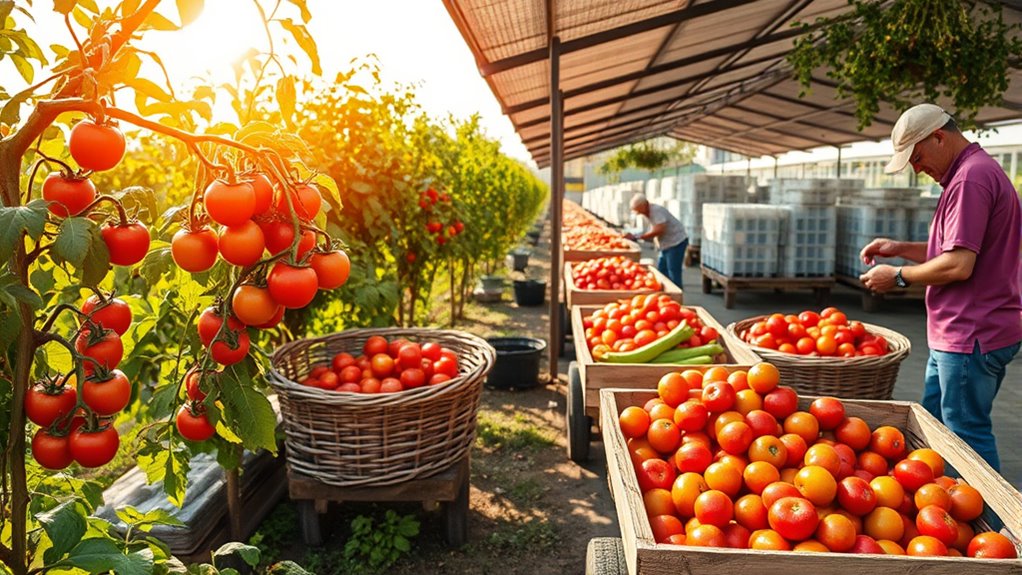
Harvesting and post-harvest handling are essential steps that directly impact the quality and shelf life of your crops. When you harvest at the right crop maturity, you confirm your produce is at its peak flavor, nutrition, and market value. Picking too early can lead to underripe, less flavorful produce that spoils faster, while waiting too long risks overripeness and increased spoilage. To determine the ideal crop maturity, pay close attention to specific indicators such as color, firmness, and size, which signal that your crops are ready for harvest. Timing your harvest correctly not only preserves quality but also minimizes waste, as overripe or underripe produce often deteriorates quickly.
Harvest at optimal maturity to ensure peak flavor, nutrition, and market value while minimizing waste.
Once you’ve harvested your crops, proper post-harvest handling becomes critical. A key aspect is maintaining suitable storage conditions. The environment in which you store your crops influences their longevity and quality. Temperature, humidity, and ventilation must be carefully controlled to slow down respiration and inhibit microbial growth. For example, cooling your produce immediately after harvest can greatly extend shelf life by reducing metabolic activity. Keeping humidity at appropriate levels prevents dehydration or excess moisture, which could lead to mold or rot. Good ventilation helps remove ethylene gas and other ripening agents that accelerate spoilage. Neglecting these storage conditions often results in faster deterioration, increased waste, and financial loss.
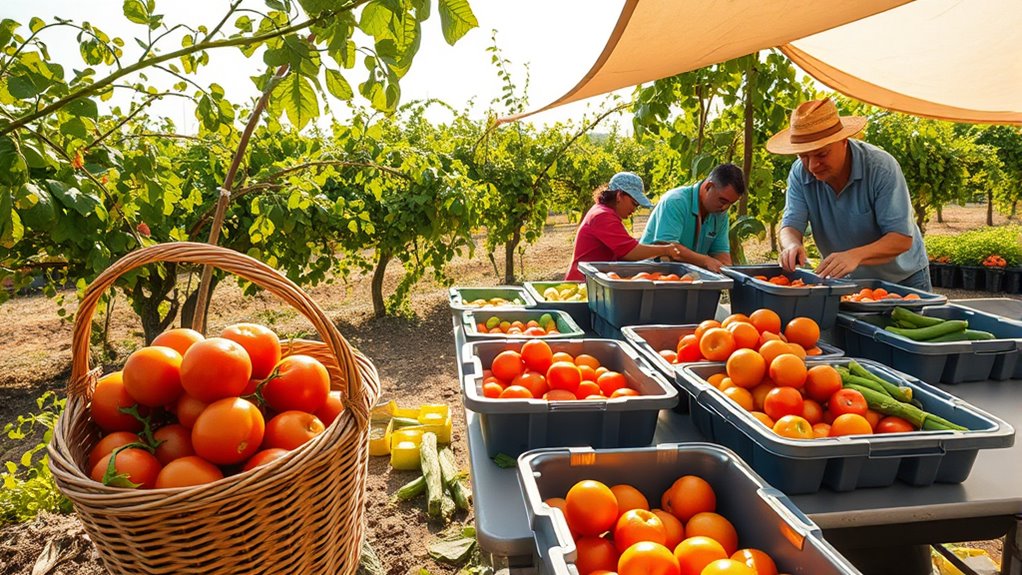
Handling your crops gently during harvesting and transportation is equally important. Rough handling can cause physical damage, creating entry points for pathogens that hasten decay. Use clean containers and avoid stacking heavy loads that can crush delicate produce. Proper handling minimizes bruising, which is a common cause of spoilage and waste. Additionally, sorting and grading your crops before storage allow you to separate ripe or damaged items, ensuring only healthy produce proceeds to sale or further processing. This practice reduces the chances of spoilage spreading and helps you better manage inventory. Incorporating proper packaging techniques, such as using breathable materials, also supports maintaining quality during transit.
In essence, success in reducing waste hinges on your ability to harvest at the right crop maturity and maintain the ideal storage conditions. By paying attention to these factors, you preserve the quality of your crops, extend their shelf life, and maximize your profits. Proper handling and storage are investments that pay off by minimizing losses and ensuring your produce reaches consumers in the best possible condition. It’s a continuous process of monitoring and adjusting that requires your vigilance and care, but the results—less waste, higher quality, and increased profitability—are well worth the effort.
Frequently Asked Questions
How Can Farmers Predict the Optimal Harvest Time?
To predict the ideal harvest time, you should monitor crop maturity by observing color, size, and firmness. Use tools like refractometers to measure sugar levels or other indicators specific to your crop. Keep track of weather patterns and growth stages, as these influence harvest timing. By staying attentive to these signs, you guarantee you harvest when crops are at their peak, maximizing quality and minimizing waste.
What Equipment Minimizes Post-Harvest Damage?
You should use specialized harvesting equipment like harvesters with gentle handling gear to prevent post-harvest damage. Equipment such as padded crates, soft conveyors, and ergonomic tools help reduce bruising and crushing. Proper handling gear ensures delicate produce stays intact during transfer and storage. Investing in quality harvesters and handling gear not only protects your crops but also maintains quality, reducing waste and increasing market value.
How Does Weather Impact Harvesting Decisions?
Weather critically impacts your harvesting decisions. Rain delays can make fields too muddy or slippery, risking crop damage if you harvest too early. Drought impacts, on the other hand, cause crops to mature unevenly, complicating timing. You should closely monitor weather forecasts and soil conditions, adjusting your schedule to avoid delays and minimize waste. Being flexible helps guarantee you harvest at ideal ripeness, reducing post-harvest losses and preserving crop quality.
What Are the Best Storage Practices for Perishable Crops?
To maximize crop preservation, you should store perishable crops in ideal conditions, such as cool, humid environments for fruits and vegetables. Keep storage areas clean and ventilated, and use proper containers to prevent spoilage. Regularly monitor temperature and humidity levels to avoid decay. Proper storage conditions slow down ripening and microbial growth, helping you extend freshness and reduce waste, ensuring your crops stay fresh longer and maintain quality.
How Can Technology Improve Waste Reduction at Harvest?
Ever wondered how technology can boost waste reduction at harvest? You can leverage digital monitoring to track crop conditions in real-time, ensuring ideal harvest timing and minimizing spoilage. Additionally, supply chain optimization tools streamline logistics, reducing delays and overstocking. By integrating these technologies, you make better decisions, cut waste, and improve freshness for consumers. Isn’t it time to harness digital solutions to make your harvest more efficient and sustainable?
Conclusion
By mastering proper harvesting and post-harvest handling, you become the gardener of your future harvest’s destiny. Think of each careful step as planting seeds of sustainability, where your actions bloom into less waste and richer abundance. When you handle with care, you’re nurturing a cycle of growth and renewal—turning simple practices into a harvest of hope. Remember, your mindful touch is the key that unleashes the full potential of every crop you nurture.