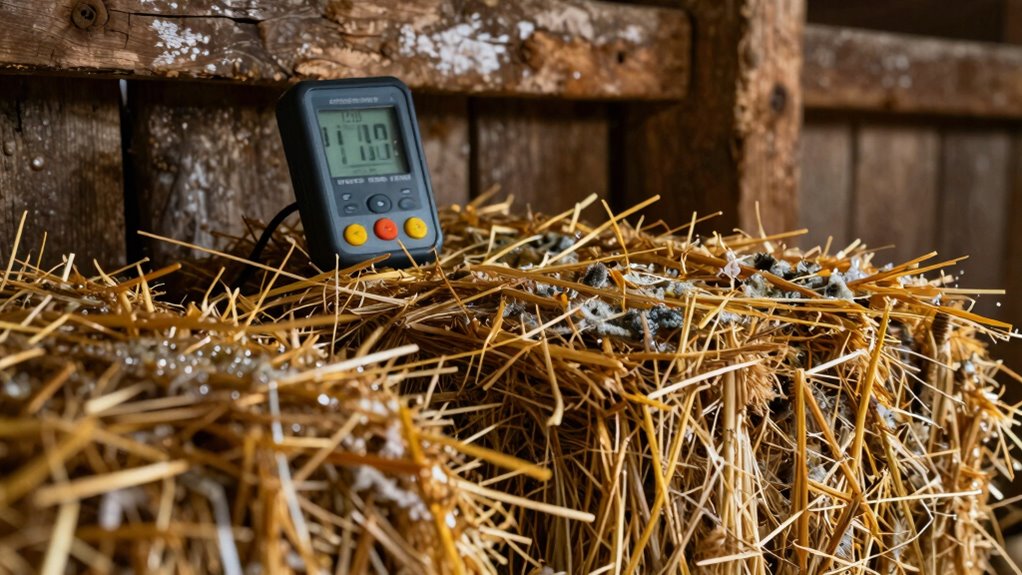

Regular hay moisture testing is vital because it catches issues before mold or spoilage become visible. By monitoring moisture levels accurately, you can prevent mold growth, reduce fire risks, and guarantee safe storage. Proper calibration and maintenance of testing equipment assure trustworthy results, saving you money and stress later. Staying proactive with moisture checks helps you avoid costly damage and safety hazards, making your hay storage safer and more effective. Keep going to discover how to master this process.

Get garden gear delivered free — and shop member deals
- Fast, free delivery on millions of items
- Access to Prime Big Deal Days deals on October 6–7
- Prime Video, Amazon Music and more included
Key Takeaways
- Early moisture testing prevents mold growth by ensuring hay is stored at safe moisture levels before visible signs appear.
- Accurate readings enable timely drying, reducing spoilage and preserving hay quality long before mold onset.
- Regular calibration of moisture meters ensures reliable results, allowing proactive management of hay safety.
- Proper moisture control minimizes fire risk associated with overly moist hay, protecting both storage and livestock.
- Consistent testing and maintenance catch moisture issues early, avoiding costly damage and safety hazards later.
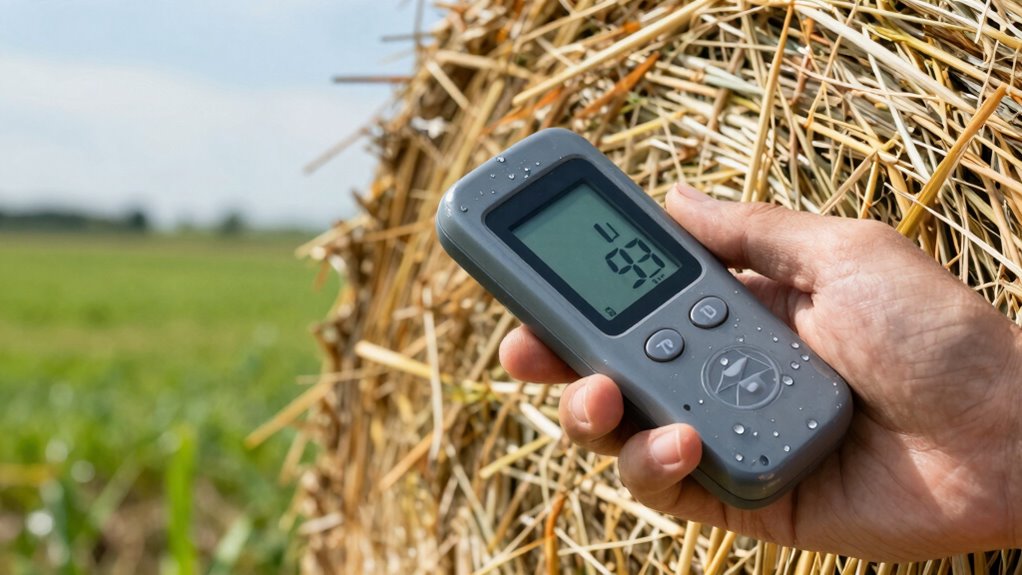
Have you ever wondered why moisture levels are so vital in hay production? The truth is, managing moisture isn’t just about quality; it’s about safety and efficiency too. When you’re baling hay, if the moisture content is too high, you risk mold growth, spoilage, and even barn fires. That’s why proper hay moisture testing should be a top priority before storing or selling your crop. It helps you catch potential problems early, long before mold becomes visible or damage occurs. When you regularly test hay moisture, you’re actively protecting your barn safety. Overly moist hay can be combustible, and storing it without proper moisture levels increases the risk of fires. By testing moisture accurately, you guarantee that your hay is safe to store, reducing hazards for you and your farm.
Another key element in maintaining proper moisture levels is equipment calibration. If your moisture testing tools aren’t calibrated correctly, you might get false readings, leading to either unnecessary drying or dangerous storage conditions. Regular calibration of your moisture meters ensures they give precise, reliable results. This accuracy allows you to make informed decisions about when to bale and store your hay. Proper calibration also extends the lifespan of your equipment, saving you money and preventing costly mistakes. When testing, always follow manufacturer instructions and calibrate your devices periodically, especially if you notice inconsistent readings. This step is vital for consistent, accurate testing and for maintaining high standards of barn safety. Additionally, understanding the importance of proper calibration can help you avoid costly errors and ensure your equipment performs optimally. Incorporating preventative maintenance into your routine can also prolong the lifespan of your tools and ensure reliable results over time. Regularly reviewing your testing procedures and staying updated on best practices is essential for maintaining accuracy and safety standards. Furthermore, staying informed about best practices in moisture testing can enhance your ability to detect issues early and prevent hazards.
As an affiliate, we earn on qualifying purchases.
Frequently Asked Questions
How Often Should Hay Moisture Be Tested During Harvest?
You should test hay moisture daily during harvest to guarantee ideal storage. Regular testing helps you prevent mold growth and preserve quality. Use a moisture calibration tool for accurate readings, especially in varying weather conditions. Consistent monitoring allows you to make timely decisions on drying or storing hay, reducing spoilage and maintaining its nutritional value in hay storage. Staying vigilant is key to successful hay management.
What Tools Are Best for On-The-Spot Moisture Testing?
When it comes to on-the-spot moisture testing, you’ll want a reliable moisture meter. These devices give quick, accurate readings—just make certain you follow proper calibration techniques to keep results consistent. Handheld digital moisture meters are your best bet because they’re easy to use and portable. By regularly checking hay moisture with the right tools and calibration, you’ll stay ahead of mold and ensure top-quality hay for your livestock.
Can Moisture Levels Vary Within a Single Hay Bale?
Moisture levels can indeed vary within a single hay bale due to bale uniformity and moisture distribution. You might find wetter spots where the hay was denser or if moisture wasn’t evenly distributed during baling. To guarantee proper drying, test multiple spots across the bale, especially the core and edges. This helps you accurately assess overall moisture content, preventing mold and spoilage caused by uneven moisture distribution.
How Does Humidity Affect Hay Moisture Readings?
Think of humidity impact on hay moisture readings like a sponge soaking up water—high humidity causes hay to retain more moisture, skewing your readings lower than reality. When you’re hay drying, even a slight increase in humidity can hide excess moisture, risking mold. You need to monitor humidity carefully to get accurate moisture readings, ensuring your hay stays safe and well-dried before storage.
What Are the Economic Benefits of Early Moisture Testing?
Early moisture testing offers significant economic benefits by enabling you to identify issues before mold or spoilage occurs. This proactive approach results in cost savings through reduced waste, lower storage costs, and minimized losses from spoiled hay. Additionally, it assists you in reducing risks associated with mold growth, which can compromise hay quality and safety. Overall, timely testing safeguards your investment and ensures healthier, more valuable hay for your livestock.
Conclusion
Think of hay moisture testing like tending a garden; catching the early signs of overwatering prevents mold from taking hold. Just as a vigilant gardener spots weeds before they spread, testing moisture levels keeps your hay safe and healthy. When you act early, you’re nurturing a crop that’s resilient and rich. Remember, the small effort of testing today guarantees your hay remains strong and mold-free—protecting your harvest for tomorrow’s success.
Halloween Picks
halloween
As an affiliate, we earn on qualifying purchases.