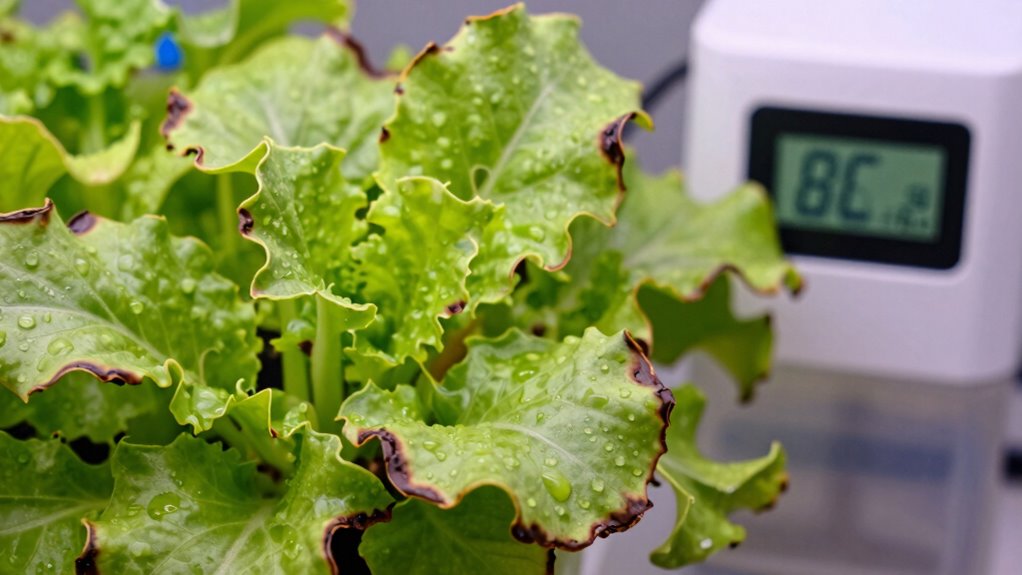

High EC levels in your hydroponic system can cause nutrient burn, signaling that your plants are over-fertilized and the salts are building up. Signs include browning or scorched leaf tips and uneven growth. To prevent this, monitor EC regularly, keep it within the ideal range for your plants, and adjust your nutrient solution accordingly. If you’re unsure how to balance EC properly, more tips await to help keep your plants healthy.
Key Takeaways
- High EC levels often cause leaf tips to turn yellow or brown with scorched edges, indicating nutrient burn.
- Sudden EC fluctuations can stress plants, increasing the risk of nutrient imbalance and burn symptoms.
- Regular EC monitoring helps identify over-fertilization early before visible damage occurs.
- Maintaining EC within optimal ranges for plant growth stages prevents nutrient toxicity and burn.
- Over-fertilizing and neglecting proper adjustments are common causes of nutrient burn linked to elevated EC.
What Is EC and Why Does It Matter in Hydroponics?

EC, or electrical conductivity, measures how well your nutrient solution can conduct electricity, which directly relates to the concentration of dissolved salts and minerals. It’s a vital indicator for maintaining proper nutrient levels in your hydroponic system. When monitoring EC, you’re also helping with pH balancing, since imbalanced salts can affect pH stability. Keeping EC within the ideal range ensures your roots are getting the right amount of nutrients without overloading them. The root zone is especially sensitive to changes in EC; too high, and salts can accumulate, leading to nutrient burn, while too low, plants may struggle to absorb essential nutrients. Regularly checking and adjusting EC helps you maintain a healthy root zone and prevents issues like nutrient imbalance or burn. To enhance cloud-based monitoring solutions, integrating real-time EC sensors can improve your system’s efficiency and accuracy.
How Do You Recognize Signs of Nutrient Burn From High EC?
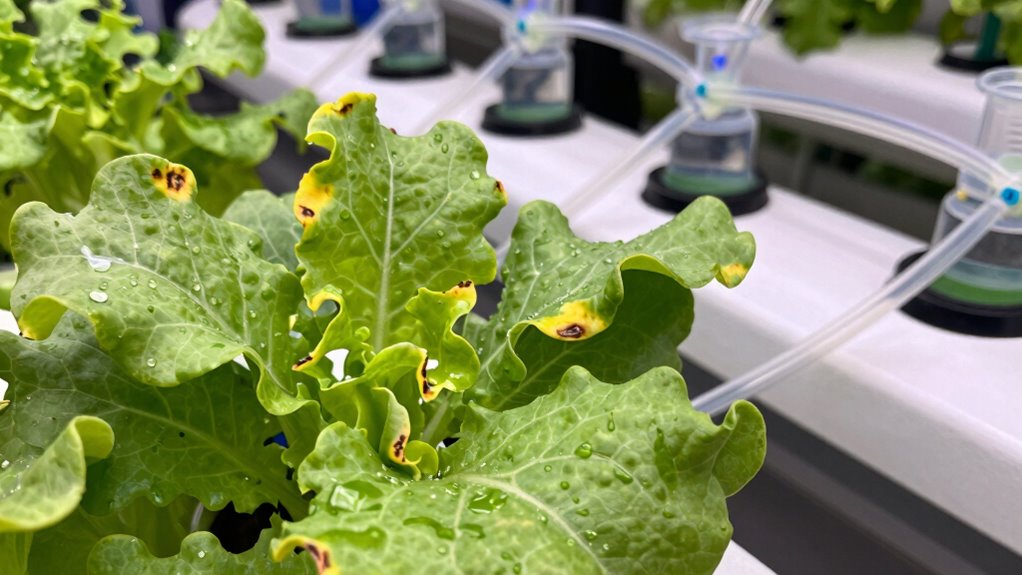
When nutrient levels are too high, your plants will show clear signs of nutrient burn, especially around the edges of the older leaves. You might notice leaf tips turning yellow or brown, with edges curling or scorched-looking. These symptoms can be mistaken for pest infestations, so check carefully for pests before assuming nutrient issues. High EC can also cause uneven growth, with some areas appearing stunted or damaged. Additionally, improper lighting adjustments can exacerbate stress, making nutrient burn more visible. If your plants seem stressed despite ideal light conditions, high EC could be the culprit. Recognizing these signs early helps prevent further damage and ensures you adjust nutrient levels promptly. Regularly monitoring your EC levels and understanding environmental considerations can help maintain a healthy grow environment and prevent issues like nutrient burn. Proper nutrient management and environmental controls are essential for healthy plant development. Being aware of plant stress signals can also aid in early detection of nutrient-related problems. Monitoring EC levels regularly is crucial for preventing nutrient burn and maintaining optimal plant health. Additionally, understanding the role of yarn weight and stitch type can inform better decisions when supporting plant structures or crafting supportive materials. Always monitor your plants closely for these warning signs.
How to Measure and Monitor EC Levels in Your Hydroponic System
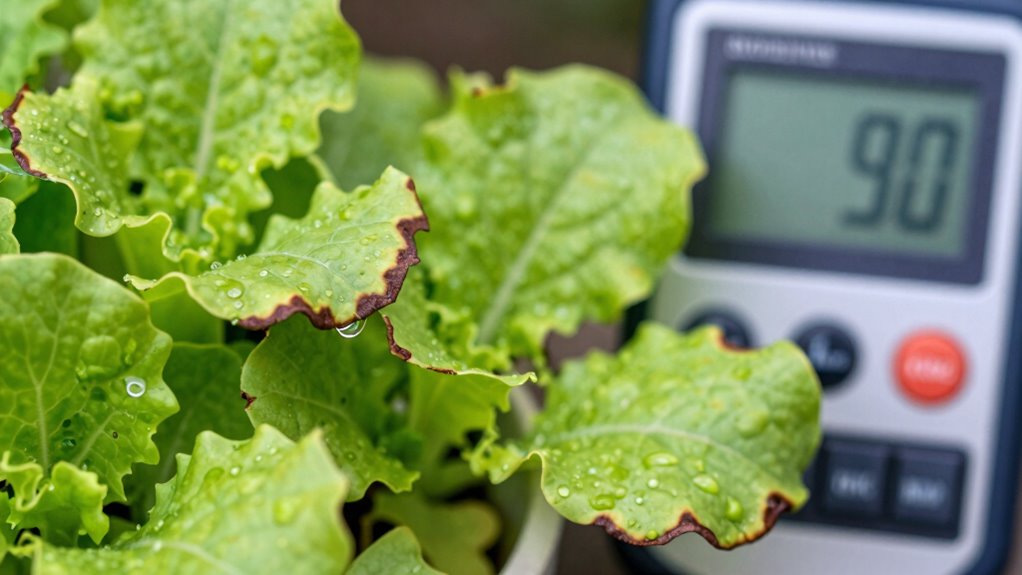
To guarantee your hydroponic plants receive the right nutrient balance, you need to regularly measure and monitor the electrical conductivity (EC) levels in your system. Use a reliable EC meter to test your nutrient solution, making sure to calibrate it frequently for accurate readings. Consistent monitoring helps you catch early signs of nutrient imbalances that could lead to nutrient burn. While checking EC, also assess pest control issues and lighting optimization, as these factors influence plant health and nutrient uptake. Keep detailed records of your readings to identify trends and adjust your nutrient solution accordingly. Proper EC management minimizes the risk of over-fertilization, ensuring your plants thrive without stress, and supports a healthy, pest-free environment. Regularly reviewing market standards can also help you stay aligned with industry best practices for nutrient management. Additionally, understanding the appropriate EC levels for your specific crop type is essential for optimizing growth and preventing nutrient-related problems. Monitoring environmental factors such as temperature and humidity alongside EC levels can further improve your system’s overall health and plant performance.
What Are the Optimal EC Ranges for Different Plants and Growth Stages?

During the vegetative stage, you should aim for an EC range of about 1.5 to 2.0, which supports healthy leaf and stem growth. When your plants shift to flowering, increasing the EC to around 2.0 to 2.5 helps promote bud development. Monitoring these ranges guarantees your plants receive ideal nutrients without risking nutrient burn.
Vegetative Stage EC Range
Understanding the essential EC range during the vegetative stage is crucial for healthy plant growth. During this phase, plants typically thrive with an EC between 1.2 and 2.0. Maintaining this range helps ensure nutrient uptake while minimizing issues like pH fluctuations that can hinder growth. Keep in mind that water quality varies, and high mineral content can influence your EC readings, so adjust accordingly. If your EC is too low, plants may become nutrient deficient; too high, and they risk nutrient burn. Regular monitoring allows you to fine-tune your nutrient solution, balancing EC with proper pH levels. Staying within the ideal EC range supports vigorous vegetative growth and reduces stress caused by imbalanced water quality or fluctuating pH. Additionally, understanding hydraulic flow and how nutrients are delivered to plants can help prevent deficiencies and overfeeding.
Flowering Stage EC Range
In the flowering stage, maintaining the right EC range is essential for maximizing yield and plant health. Typically, a range of 1.8 to 2.2 EC works well for most flowering plants, but it can vary based on species. Proper pest management is vital at this stage to prevent stress, which can cause nutrient imbalances reflected in EC levels. Additionally, lighting optimization supports nutrient uptake, ensuring plants don’t become over- or under-fed. Keep an eye on your EC readings and adjust nutrient solutions accordingly to avoid nutrient burn. If EC levels rise too high, plants may show signs of stress or toxicity. Conversely, too low EC can result in poor flowering. Consistent monitoring and fine-tuning are key to healthy, high-yield flowering plants.
What Causes EC Levels to Fluctuate, and How Can You Prevent It?
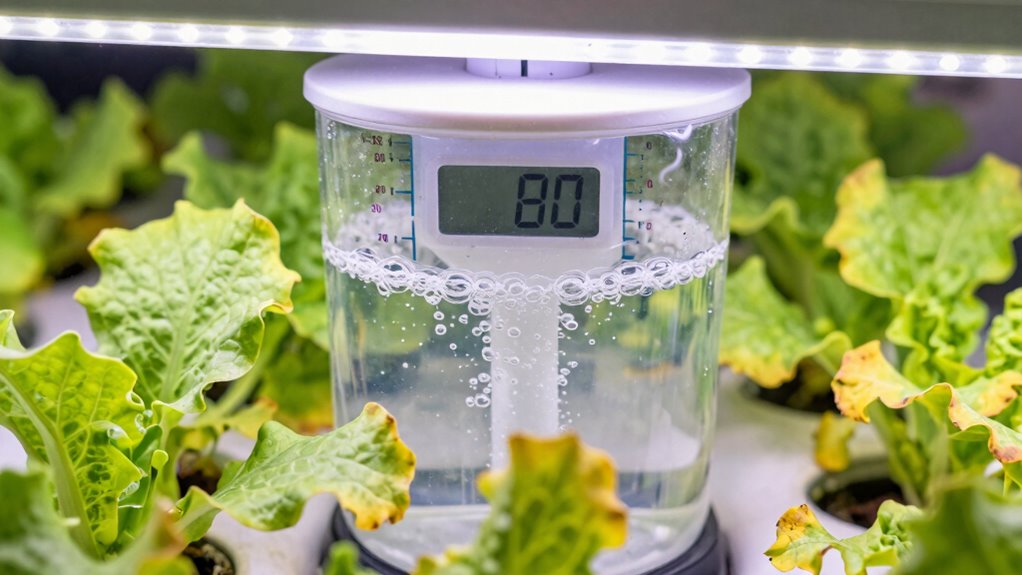
Your EC levels can change due to shifts in nutrient solution composition or environmental factors like temperature and humidity. Regularly monitoring your system helps catch fluctuations early and keeps your plants healthy. By maintaining consistent nutrient mixes and stable conditions, you prevent unexpected EC swings that could harm your crops.
Nutrient Solution Composition
Fluctuations in EC levels often stem from imbalances in your nutrient solution, which can occur if you add nutrients too quickly or forget to regularly monitor and adjust the solution. Maintaining proper nutrient solution composition guarantees stable EC and pH balance, supporting healthy roots. When nutrients are unevenly distributed, the root zone can become stressed, leading to nutrient burn or deficiencies. To visualize this, consider the following:
| Nutrient Level | Effect on EC |
|---|---|
| Too high | Risk of nutrient burn |
| Too low | Poor plant growth |
| Balanced | Healthy root zone |
| Fluctuates | Unstable environment |
Regular testing and precise adjustments keep your solution stable, preventing EC swings that harm your plants. Additionally, understanding nutrient solution composition can help you better manage EC fluctuations and promote optimal plant health. Being aware of how EC levels respond to different nutrient ratios allows for more accurate control over your hydroponic system. Proper monitoring techniques are essential to maintaining a consistent environment for your plants.
Environmental Fluctuations Impact
Environmental factors such as temperature swings, humidity changes, and light intensity can cause EC levels to fluctuate unexpectedly. Sudden shifts in temperature can alter water absorption rates, impacting nutrient concentration. Changes in light intensity influence plant transpiration, which in turn affects nutrient uptake and pH imbalance, leading to unstable EC readings. If humidity drops, plants may transpire more, concentrating nutrients and raising EC; if humidity rises, nutrient uptake slows, lowering EC. To prevent these fluctuations, maintain consistent environmental conditions and monitor pH levels regularly, since pH imbalance can exaggerate the effects of these changes. Maintaining environmental stability is crucial for consistent EC levels. Stable temperature, humidity, and light conditions help keep EC levels steady, reducing the risk of nutrient burn and ensuring your plants stay healthy. Additionally, understanding Free Floating systems can help you better manage nutrient levels by allowing more flexible environmental control. Proper ventilation and airflow also play a vital role in maintaining climatic consistency, further stabilizing EC readings. Regularly checking and adjusting nutrient solution concentration can also help mitigate unexpected fluctuations.
Regular Monitoring Practices
Regular monitoring is essential because EC levels can change unexpectedly due to factors like water absorption rates, transpiration, and nutrient uptake. To prevent fluctuations, check your nutrient solution regularly with a reliable meter. Consistent monitoring helps you catch early signs of nutrient imbalance or burn. Incorporate pest management strategies to avoid plant stress, which can affect nutrient absorption and EC levels. Practicing crop rotation reduces the risk of disease buildup that might influence nutrient uptake efficiency. Adjust your nutrient concentrations based on your readings, ensuring plants receive consistent, balanced nutrition. Being aware of monitoring practices and how they influence nutrient stability allows for more precise control of your hydroponic system. By staying vigilant with regular checks, you can maintain ideal EC levels, preventing nutrient burn and promoting healthy growth in your hydroponic system.
How to Adjust EC Levels to Keep Your Plants Healthy
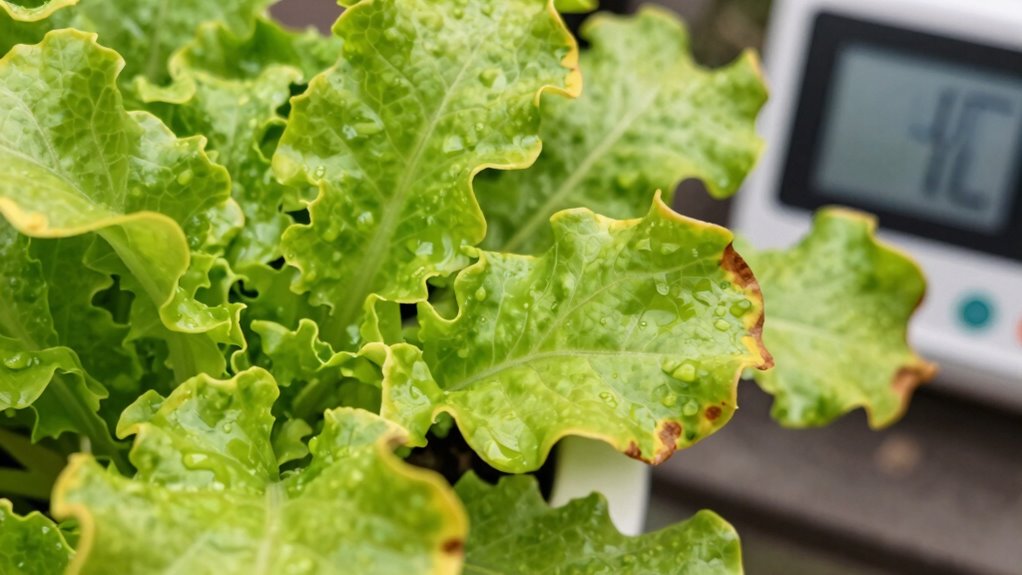
To keep your plants healthy in a hydroponic system, it’s crucial to monitor and adjust the electrical conductivity (EC) levels regularly. If EC is too high, dilute the solution with water; if too low, add nutrients gradually. Here’s how:
- Measure EC daily and compare it to your crop’s ideal range.
- Adjust nutrient concentrations by adding more nutrients for low EC or diluting with water for high EC.
- During pH balancing, guarantee that light optimization isn’t compromised, as light impacts nutrient uptake efficiency. Proper air circulation can influence nutrient absorption and overall plant health.
- Remember that maintaining consistent EC levels helps prevent nutrient imbalances that can lead to deficiencies or burns.
- Regularly inspecting your hydroponic setup ensures all environmental factors work together to promote healthy growth.
- Be aware that nutrient solution management plays a key role in preventing nutrient burn and ensuring optimal plant development. Incorporating biological monitoring can help detect early signs of imbalance before visible damage occurs.
Always keep EC within the suitable range for your plants, and remember that proper pH balancing supports nutrient absorption. Consistent monitoring and precise adjustments help prevent nutrient burn and promote healthy growth.
Common Mistakes That Lead to Nutrient Burn From EC Mismanagement
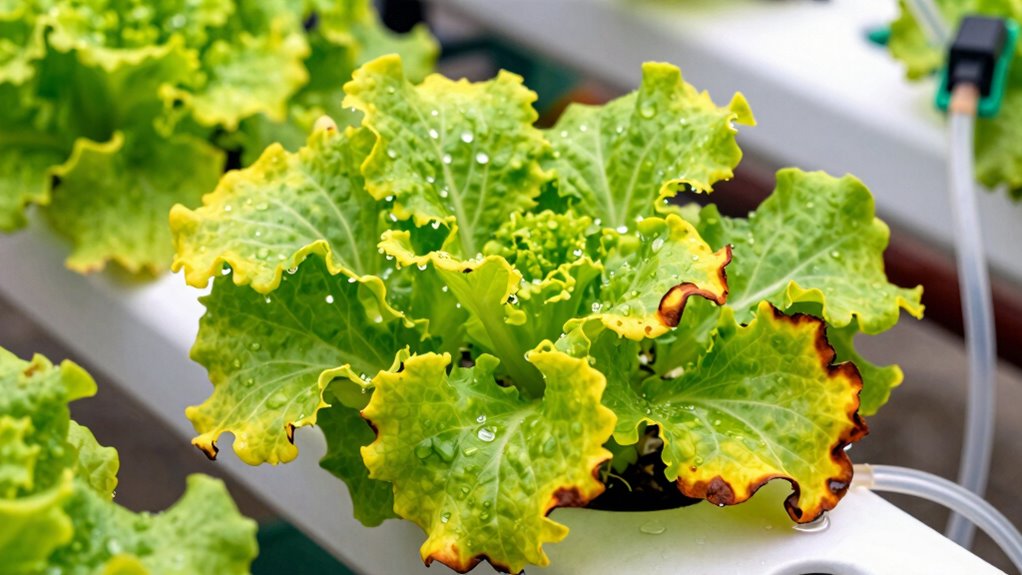
One common mistake that leads to nutrient burn is neglecting to monitor EC levels regularly, which causes you to overlook dangerous fluctuations in nutrient concentration. When you don’t keep a close eye on EC, you risk overfeeding your plants, leading to nutrient buildup and burn. Failing to adjust EC properly can also weaken your pest control, as stressed plants become more vulnerable to pests and disease. Additionally, improper lighting optimization can exacerbate nutrient imbalances, forcing you to rely more heavily on nutrients that, if mismanaged, cause burn. Avoid assuming your plants are fine without checking EC frequently. Regular monitoring helps you catch issues early, ensuring your nutrient levels stay within safe ranges and reducing the risk of nutrient burn caused by mismanagement. Proper nutrient management practices also support healthier plants and prevent nutrient-related issues.
Troubleshooting Nutrient Burn When EC Looks Correct

Even when your EC readings seem normal, nutrient burn can still occur due to underlying issues. A common cause is imbalanced pH, which affects nutrient uptake and root health. To troubleshoot:
- Check your pH balancing: Ensure the nutrient solution’s pH stays within the suitable range for your plants. Incorrect pH can cause nutrient lockout, leading to burn symptoms despite correct EC.
- Inspect root health: Look for signs of root rot or damage. Poor root health can hinder nutrient absorption, causing localized burn even if EC appears safe.
- Review your watering schedule: Overwatering or inconsistent watering can stress roots and disrupt nutrient uptake, resulting in burn symptoms without a change in EC.
Addressing these issues helps prevent damage and promotes healthier plant growth.
Tips for Maintaining Stable EC Levels Over Time

Maintaining stable EC levels over time is essential for healthy hydroponic growth, as fluctuations can stress plants and lead to nutrient imbalances. To achieve this, monitor your water quality regularly, since impurities or inconsistent water sources can cause EC swings. Always check and adjust the pH balance before modifying EC, as pH affects nutrient availability and uptake. Use high-quality water with a consistent baseline EC to prevent sudden changes. When adding nutrients, do so gradually and record your adjustments to track trends. Regularly test your nutrient solution and clean your system to prevent buildup that could skew EC readings. By maintaining proper pH balance and water quality, you ensure your plants receive steady, balanced nutrients, minimizing the risk of nutrient burn.
Frequently Asked Questions
Can Low EC Levels Also Harm My Plants?
Yes, low EC levels can harm your plants because they may signal a nutrient deficiency, which stunts growth and weakens your plants. Additionally, low EC often accompanies pH imbalance, making nutrients less available. Both issues can cause poor development or yellowing leaves. To keep your plants healthy, monitor EC regularly and adjust nutrient levels to prevent deficiencies and maintain proper pH balance.
How Often Should I Test EC in My Hydroponic System?
You should test your EC levels at least once a week to maintain an effective nutrient monitoring schedule. During peak growth, consider testing more frequently, like every few days, to catch any fluctuations early. Consistent EC testing helps you adjust nutrient concentrations, preventing problems like nutrient burn or deficiencies. Keep a record of your readings to identify trends and guarantee your plants receive ideal nutrition throughout their growth cycle.
What Are the Long-Term Effects of Nutrient Burn on Plant Health?
Nutrient burn is like a slow poison, and its long-term effects can severely damage your plants. You might notice chronic nutrient toxicity leading to stunted growth, yellowing leaves, and increased plant stress. Over time, this weakens your plants’ ability to absorb nutrients, resulting in poor yields and vulnerability to diseases. Ignoring these signs can compromise your entire crop, making it essential to manage nutrient levels carefully for healthy, thriving plants.
Does Water Temperature Affect EC Readings?
Yes, water temperature affects EC readings because water quality and temperature stability influence how nutrients dissolve and conduct electricity. When water is too warm, it can cause EC levels to appear higher, while colder water may lower readings. Maintaining consistent water temperature guarantees accurate EC measurements, helping you avoid nutrient imbalances and prevent issues like nutrient burn. Always monitor water temperature to keep your hydroponic system stable and your plants healthy.
Are There Natural Solutions to Reduce EC Without Harming Plants?
Think of your nutrient solution as a garden’s bloodstream—cleanse it naturally. You can lower EC levels with organic alternatives like aquatic plants that absorb excess nutrients or natural water treatments such as beneficial microbes. These solutions act like gentle healers, reducing nutrient concentration without harming your plants. By embracing these natural methods, you create a healthier environment that fosters growth and balances nutrient levels seamlessly.
Conclusion
Monitoring your EC levels is vital—over 70% of hydroponic failures stem from nutrient imbalances. By understanding and maintaining ideal EC ranges, you can prevent nutrient burn and promote healthy growth. Regular testing helps catch fluctuations early, saving you time and resources. Remember, consistent EC management isn’t just about avoiding problems; it’s about giving your plants the best chance to thrive. Stay vigilant, and your hydroponic garden will flourish.