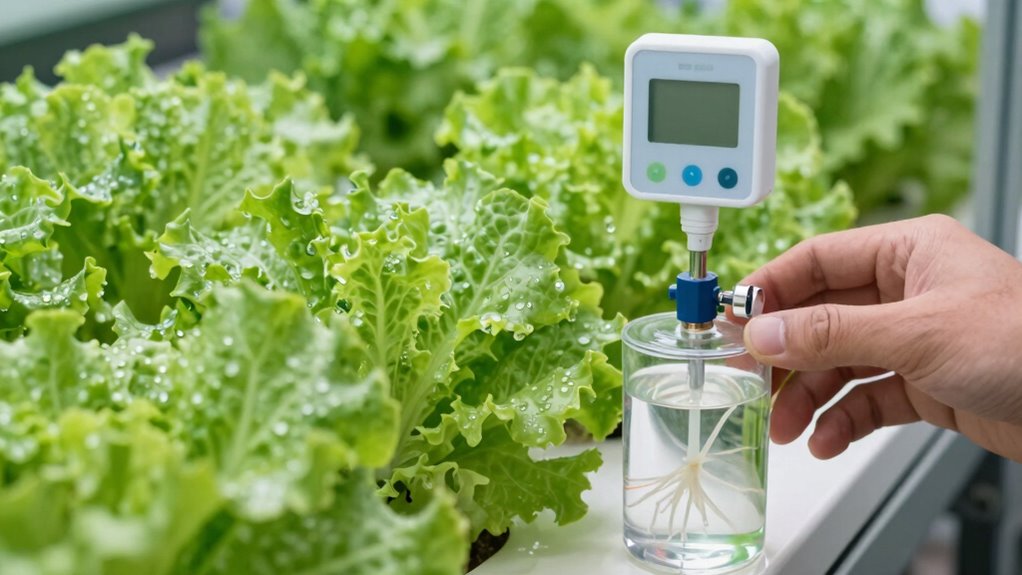

To fix pH drift without constantly chasing numbers, focus on maintaining consistent nutrient levels and using buffers properly. Regularly monitor pH with reliable tools and make gradual adjustments to avoid stressing plants. Guarantee your system stays clean and free of debris or organic buildup. Using stable, buffered solutions can help keep pH steady long-term. Checking for equipment issues or water quality problems is also essential. Keep these tips in mind to maintain a balanced system—more insights await if you keep exploring.
Key Takeaways
- Use buffers properly to stabilize pH and prevent frequent fluctuations.
- Regularly calibrate and check sensors to ensure accurate pH measurement.
- Maintain system cleanliness and proper aeration to support consistent nutrient absorption.
- Make gradual pH adjustments, avoiding sudden changes that stress plants.
- Monitor pH trends over time rather than chasing immediate number fluctuations.
Why pH Stability Is Key to Healthy Hydroponic Plants
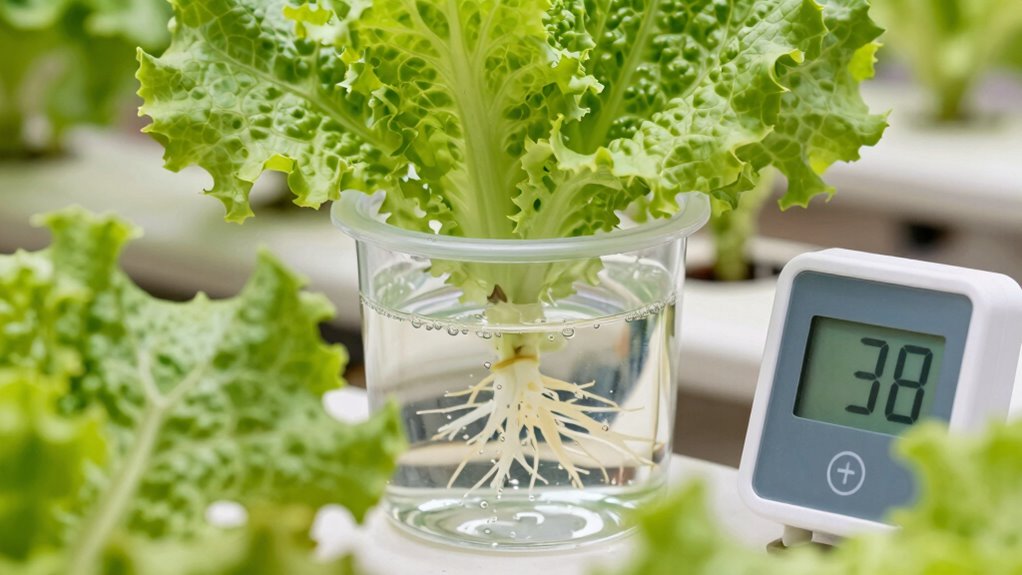
Why is maintaining pH stability essential for healthy hydroponic plants? Because stable pH levels ensure your plants can absorb nutrients efficiently. When pH drifts, it can lock out vital nutrients, causing deficiencies and weak growth. Regular pH calibration is crucial; it keeps your system within the optimal range and prevents fluctuations. Organic amendments can help buffer pH naturally, reducing the need for constant adjustments. Understanding pH buffering can help you maintain a more stable environment, lessening the frequency of adjustments needed. Additionally, using effective pH stabilizers can further support consistent pH levels over time. Monitoring and adjusting pH regularly is vital because consistent pH management minimizes stress on your plants and promotes robust growth. By monitoring and adjusting pH consistently, you create a stable environment that promotes healthy roots and vigorous growth. Avoid letting pH swing wildly, as it stresses plants and hampers nutrient uptake. Maintaining pH stability isn’t just about fixing problems—it’s about creating the right conditions for your hydroponic system to thrive.
Common Causes of pH Fluctuations in Hydroponics Systems

You’ll often see pH fluctuations caused by nutrient imbalances or changes in your system’s water quality. Equipment issues can also disrupt pH levels unexpectedly. Understanding these common causes helps you maintain a stable environment for healthy plant growth. Additionally, proper equipment maintenance plays a crucial role in preventing system malfunctions that lead to pH instability. Regularly inspecting and cleaning components ensures that your system remains free of clogs or corrosion, which can contribute to pH drift.
Nutrient Imbalance Effects
Nutrient imbalances are a common cause of pH fluctuations in hydroponic systems, often resulting from uneven nutrient uptake or improper nutrient formulation. When your plants experience a nutrient deficiency, it can disrupt the balance in the root zone, causing pH swings. For example, missing essential nutrients may lead to acidification or alkalization of the solution, impacting plant health. To visualize this, consider the following:
| Nutrient Imbalance | Effect on pH |
|---|---|
| Nutrient deficiency | pH drifts due to imbalance |
| Excess nutrients | Causes pH to shift unexpectedly |
| Improper formulation | Leads to unstable root zone pH |
| pH-sensitive nutrients | Alter pH balance when imbalanced |
| Uneven uptake | Creates localized pH fluctuations |
Additionally, adopting best CAD practices can help optimize nutrient delivery systems, reducing the likelihood of pH instability.
Equipment and Water Quality
Equipment and water quality are key factors that can cause pH fluctuations in hydroponic systems. Poorly calibrated pH sensors can give inaccurate readings, leading you to make unnecessary adjustments or overlook real issues. Regular pH sensor calibration is essential to maintain accurate measurements and stable pH levels. Water filtration systems also play a crucial role; unfiltered water can introduce contaminants or minerals that cause pH swings. Hard water with high mineral content often results in pH drift, requiring you to adjust more frequently. Ensuring your water is properly filtered and your pH sensor is calibrated will minimize fluctuations, keeping your system stable. Additionally, using quality water sources can significantly reduce pH variability in your hydroponic setup. Maintaining proper water chemistry helps prevent unexpected pH shifts and supports consistent plant health. Proper system maintenance is also vital, as neglected equipment can contribute to pH instability.
How to Quickly Test and Monitor pH Levels Effectively

Wondering how to quickly and accurately check your hydroponic system’s pH levels? The key is using reliable testing methods that give you instant results. pH test strips are simple and affordable, allowing you to dip and read within seconds, making them great for regular monitoring. Digital pH meters offer more precision; just calibrate them regularly and immerse the probe into the nutrient solution. Consistent pH levels are essential because they directly impact plant growth and nutrient uptake. By monitoring pH frequently—at least daily—you can catch fluctuations early and adjust promptly. Regular calibration of your digital meter ensures ongoing accuracy and measurement reliability, which is crucial for maintaining stable pH levels. This proactive approach keeps your system stable, ensuring your plants absorb nutrients efficiently and grow healthy. Quick testing is your best tool for maintaining ideal pH levels without the hassle of chasing numbers later, especially when understanding pH stability is fundamental to successful hydroponics.
Choosing the Best pH Buffer Solutions for Long-Term Stability
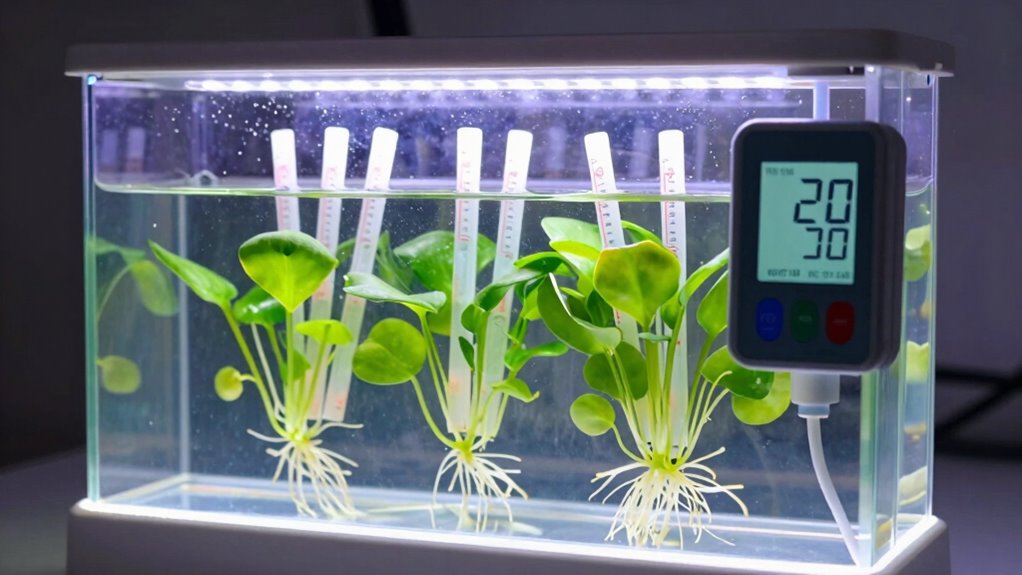
Selecting the right pH buffer solutions is essential for maintaining long-term stability in your hydroponic system. Effective pH buffering ensures your nutrient solution stays within the ideal pH range, reducing drift and maintaining plant health. When choosing a solution, consider its buffering capacity and compatibility with your system’s nutrients. Look for solutions specifically formulated for hydroponics, as they provide consistent pH stabilization without introducing unwanted chemicals. Solution selection should also factor in ease of use and stability over time, minimizing the need for frequent adjustments. Additionally, understanding the cost of ownership can help you choose more sustainable and economical options in the long run. By focusing on appropriate pH buffering agents, you create a stable environment that supports healthy root development and maximizes crop yields while simplifying your maintenance routine. Proper solution selection is key to sustainable hydroponic success. Moreover, using smart monitoring tools can help you track pH levels more accurately and respond proactively to changes. Incorporating long-term stability strategies into your setup ensures consistent plant growth and reduces the effort needed for pH management.
Pros and Cons of Automatic pH Control Systems in Hydroponics

Automatic pH control systems offer a convenient way to maintain consistent pH levels in hydroponic setups, reducing the need for manual adjustments. They help keep water quality stable, which is vital for ideal plant nutrient uptake. However, these systems can be costly upfront and may require regular calibration to guarantee accuracy. While they minimize human error, they might not account for sudden pH shifts caused by changes in water quality or plant activity, leading to potential nutrient imbalances. Relying solely on automation might also reduce your understanding of water chemistry, making troubleshooting harder. Additionally, understanding the role of pH stability in plant health can help you make more informed decisions about system use. Still, if you want steady pH without constant monitoring, these systems can save time and effort, but it’s essential to weigh their benefits against limitations like cost and potential overdependence.
How to Maintain Consistent Nutrient Levels and Prevent pH Swings
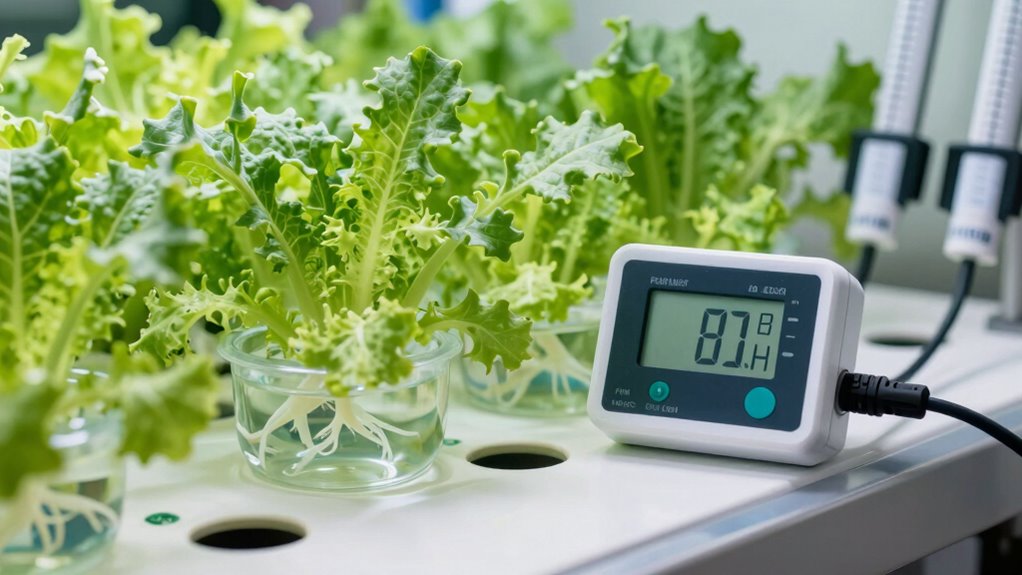
Maintaining consistent nutrient levels and preventing pH swings require careful monitoring and management of your hydroponic system. Your plant genetics influence nutrient uptake, so selecting resilient strains can help stabilize pH. Regularly check nutrient concentrations with a reliable meter, adjusting as needed to avoid deficiencies or excesses that cause pH fluctuations. Incorporate soil amendments, like calcium or magnesium supplements, to buffer pH changes and improve nutrient stability. Consistent feeding schedules prevent sudden shifts, while maintaining proper aeration helps roots absorb nutrients evenly. By understanding your plants’ specific needs and using soil amendments wisely, you can minimize pH swings. Staying vigilant with testing and adjustments creates a stable environment that promotes healthy growth and reduces the need for constant pH chasing.
Easy Steps to Adjust pH With Minimal Stress on Your Plants
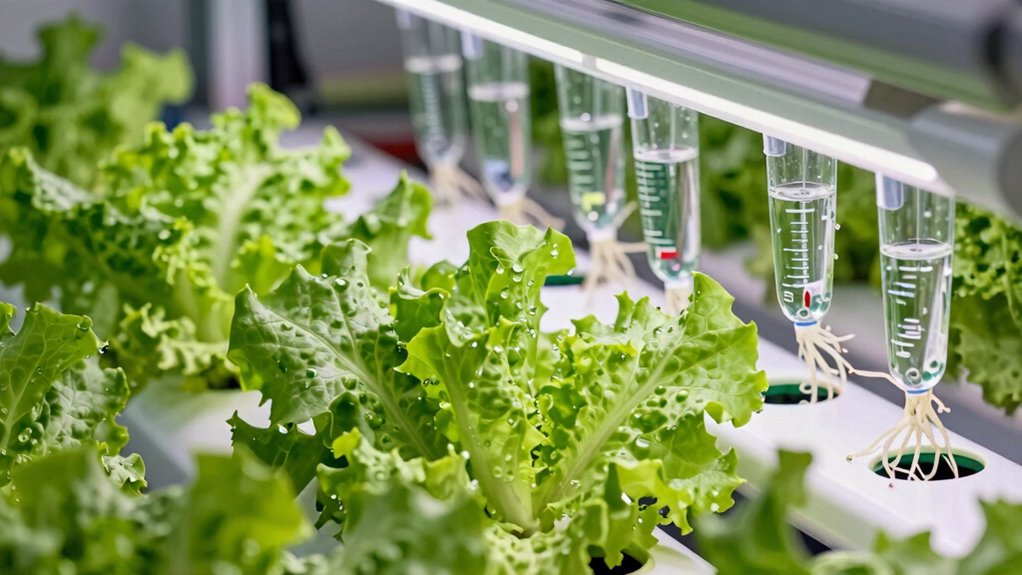
To adjust your pH with minimal stress, start by using buffer solutions effectively to stabilize changes. Make your adjustments gradually, giving your plants time to adapt without shock. Keep a close eye on pH levels through regular, consistent monitoring to maintain ideal conditions. Incorporating electric power can also help automate pH adjustments and improve precision. Using appropriate vetted wave and wind techniques can further support stable environmental conditions for your hydroponic system. Additionally, understanding the filtration process can help ensure your nutrient solution remains clean and balanced, aiding in pH stability. Regularly inspecting your system for clogged filters can prevent imbalances that affect pH levels. Implementing sensor-based monitoring tools can provide real-time data and reduce manual testing efforts.
Use Buffer Solutions Effectively
Have you ever struggled to adjust your hydroponic pH without stressing your plants? Using buffer solutions can help you maintain stable pH levels with less effort. Buffer chemistry relies on acids and bases that resist pH changes, making pH buffering more reliable. To use buffers effectively, choose the right buffer capacity for your system; too strong can cause rapid shifts, too weak won’t stabilize pH. Mix your buffer carefully, adding small amounts and monitoring pH frequently. Keep this table handy to understand buffer types:
| Buffer Type | Example |
|---|---|
| Acidic | Phosphoric acid |
| Basic | Sodium bicarbonate |
| Neutral | Boric acid |
| Weak acid | Acetic acid |
| Weak base | Ammonia |
Proper use minimizes pH drift, protecting your plants’ health.
Adjust pH Gradually
Adjusting pH levels carefully is essential to prevent stressing your plants. To do this effectively, make gradual adjustments rather than sudden jumps. pH buffering helps resist rapid changes, so small, incremental adjustments give your plants time to adapt. Use a dropper or syringe to add pH up or down solutions gradually, mixing well after each addition. Check the pH level frequently, but avoid overcorrecting. Patience is key—allow your system to stabilize after each adjustment before proceeding. This step-by-step approach minimizes shock and maintains a stable environment. Remember, consistent, gradual pH adjustment helps keep your hydroponic system within the ideal range, promoting healthier growth and reducing the risk of pH drift caused by sudden changes.
Monitor Regularly and Consistently
Regularly monitoring your hydroponic system’s pH levels is essential for maintaining stability and healthy plant growth. Using reliable pH testing methods guarantees you catch shifts early, preventing stress on your plants. Consistent water quality testing helps identify issues before they escalate. Set a routine to check pH at least once daily, especially during growth spurts. Keep a log to track fluctuations and adjustments. Here’s a quick guide:
| Testing Method | When to Use | Benefits |
|---|---|---|
| pH test strips | Quick checks | Easy and inexpensive |
| Digital pH meter | Precise readings | Accurate, ideal for water quality testing |
| Colorimetric kits | Spot checks | Visual confirmation |
| Sampling | Regular intervals | Consistent monitoring |
Staying vigilant with testing minimizes pH drift and keeps your system stable.
Troubleshooting Persistent pH Fluctuations: What to Check and Fix
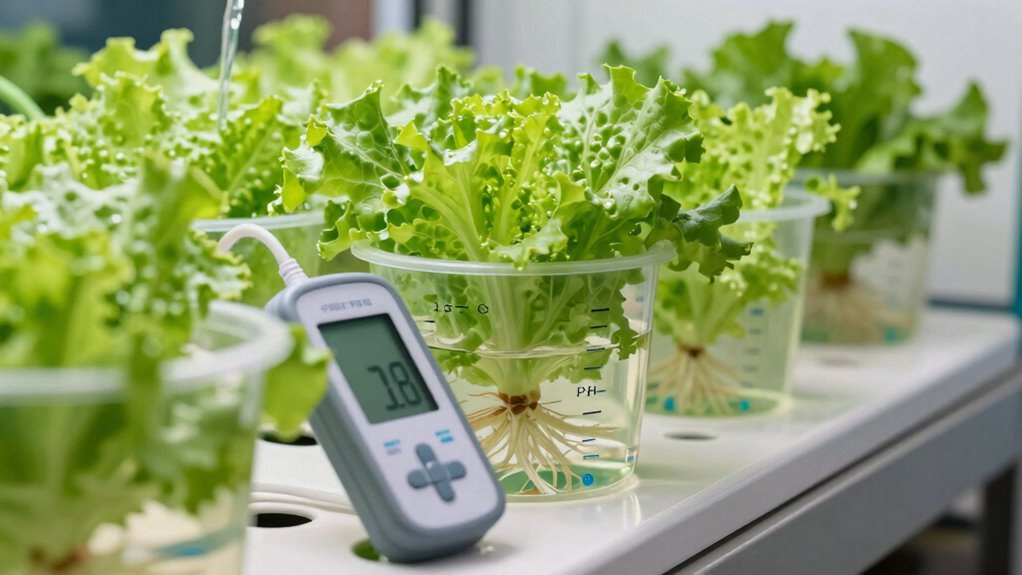
Persistent pH fluctuations can be frustrating, but pinpointing their cause is essential for maintaining a stable hydroponic system. Begin by double-checking your pH measurement technique—calibrate your meter regularly and use proper sampling methods. Unstable readings often result from inaccurate measurements or contaminated samples. Next, examine nutrient interactions; certain nutrients can cause pH swings as they dissolve or are absorbed by plants. For example, high calcium or magnesium levels can buffer pH changes, while imbalances may lead to drift. Also, inspect your reservoir for organic buildup or debris, which can alter pH stability. Ensuring consistent water quality and understanding how nutrients interact will help you identify and fix the root causes of persistent pH fluctuations.
Creating a Stable Hydroponic Environment to Minimize pH Variability

Creating a stable hydroponic environment is essential for minimizing pH variability and ensuring healthy plant growth. Start by choosing a reliable water source and understanding its characteristics, as water source considerations directly impact pH stability. Regularly use accurate pH testing methods to monitor your nutrient solution, ensuring you catch fluctuations early. Consistent testing helps you identify trends and adjust your system proactively. Keep your water source clean and free from contaminants, which can cause pH swings. Maintaining stable environmental conditions, such as temperature and dissolved oxygen levels, also supports pH consistency. By controlling these factors and using proper testing methods, you minimize pH drift and create an ideal environment for your plants to thrive.
When to Seek Professional Help for pH Management Issues

If your pH levels keep fluctuating despite your efforts, it might be time to seek professional advice. When adjustments don’t seem to work or your pH remains unresponsive, experts can identify underlying issues you might overlook. Recognizing these signs early can save your plants from potential damage and ensure a healthier hydroponic system.
Persistent pH Fluctuations
When pH levels in your hydroponic system keep fluctuating despite your efforts, it’s a clear sign that professional help may be necessary. Persistent fluctuations often indicate underlying issues, such as plant genetics that cause inconsistent nutrient uptake or lighting optimization problems affecting photosynthesis and growth. These factors can disrupt your system’s pH balance, making manual adjustments guarantee ineffective. If you’ve tried adjusting nutrient concentrations or buffering solutions without success, it’s time to consult an expert. They can diagnose deeper issues, like root zone problems or incompatible plant varieties, that contribute to instability. Recognizing when to seek help ensures your plants receive proper care and prevents long-term damage caused by unmanageable pH swings. Don’t hesitate to get professional guidance for persistent pH fluctuations.
Unresponsive pH Adjustments
Are your attempts to adjust pH levels in your hydroponic system met with no noticeable change? This unresponsiveness often indicates strong pH buffering within your nutrient solution, preventing adjustments from taking effect. When pH buffering is high, your plants can experience nutrient lock, where essential nutrients become unavailable despite proper feeding. If adding acids or bases doesn’t shift the pH, it’s a sign you might need professional help. Persistent pH adjustment issues can also point to equipment problems or contamination. Ignoring these signs risks nutrient deficiencies or toxicities, harming your plants’ growth. When simple tweaks don’t work, consulting a hydroponic expert ensures you identify underlying issues and restore proper pH stability efficiently.
Frequently Asked Questions
What Are the Best Natural Methods to Stabilize pH?
To naturally stabilize pH, you can use organic amendments like compost teas or organic acids that buffer pH levels. Incorporate microbial inoculants, such as beneficial bacteria and fungi, which help maintain a balanced environment and prevent pH swings. Regularly monitor your system and add these natural amendments as needed, ensuring your hydroponic solution stays stable without constantly chasing numbers, leading to healthier plant growth.
How Do Temperature Changes Affect pH Stability?
Temperature effects can cause pH fluctuations in your hydroponic system. As water heats up, it can increase pH levels, making solutions more alkaline, while cooler temperatures tend to lower pH. To maintain stability, keep your nutrient solution at a consistent temperature, ideally around 65-70°F. Avoid sudden temperature changes, and monitor pH regularly to prevent drift caused by temperature-induced pH fluctuations.
Can Certain Plant Species Tolerate Larger pH Swings?
They say “what doesn’t kill you makes you stronger,” and some plant species do have higher resilience, tolerating larger pH swings. Your job is to understand each plant’s species tolerance and recognize that plant resilience varies. While some crops like lettuce or herbs handle pH fluctuations better, others need more stable conditions. By observing your plants’ responses, you can adjust your system intelligently and keep your hydroponic garden thriving.
How Often Should I Recalibrate My pH Testing Equipment?
You should recalibrate your pH testing equipment at least once a month to guarantee accuracy. Incorporate calibration frequency into your maintenance routine, especially if you notice inconsistent readings or after using the device heavily. Regular calibration helps prevent drift and keeps your measurements reliable. Also, clean your tester regularly and store it properly to maintain its precision. Staying consistent with calibration is key to stable hydroponic pH management.
Are There Eco-Friendly pH Adjustment Options Available?
Sure, eco-friendly pH adjustments exist—think organic amendments and mineral buffers, the superheroes of sustainable hydroponics. You can use natural options like calcium carbonate or potassium bicarbonate, which gently stabilize pH without harming your precious environment. Who needs harsh chemicals when Mother Nature provides us with these elegant solutions? Embrace these green tweaks, and your plants will thank you with lush growth, all while keeping Mother Earth smiling.
Conclusion
Like a steady captain steering through turbulent waters, maintaining pH stability keeps your hydroponic system on course. Instead of chasing fleeting numbers, focus on understanding causes and implementing consistent strategies. With patience and attention, you’ll master the art of balance, ensuring your plants flourish as if guided by an unseen hand. Remember, true harmony in your system comes from mindful adjustments—turning chaos into calm, much like a maestro conducts a symphony.