To combat invasive plant species on farmland, combine mechanical removal with biological control methods like introducing natural enemies. Use targeted physical clearing for small patches and manage long-term suppression with beneficial insects, fungi, or bacteria from trusted sources. Regular monitoring and early detection are key, so act swiftly to prevent larger infestations. Keep your land healthy and resilient by applying these integrated strategies—continue to explore effective techniques and expert advice to safeguard your crops.
Key Takeaways
- Implement integrated management combining mechanical removal and biological controls for sustainable suppression.
- Use early detection and regular monitoring to prevent invasive plant spread.
- Employ mechanical techniques like pulling or cutting to quickly reduce dense infestations.
- Introduce natural enemies such as insects or fungi from trusted brands for long-term control.
- Engage with experts and prioritize prevention to maintain farmland health and biodiversity.
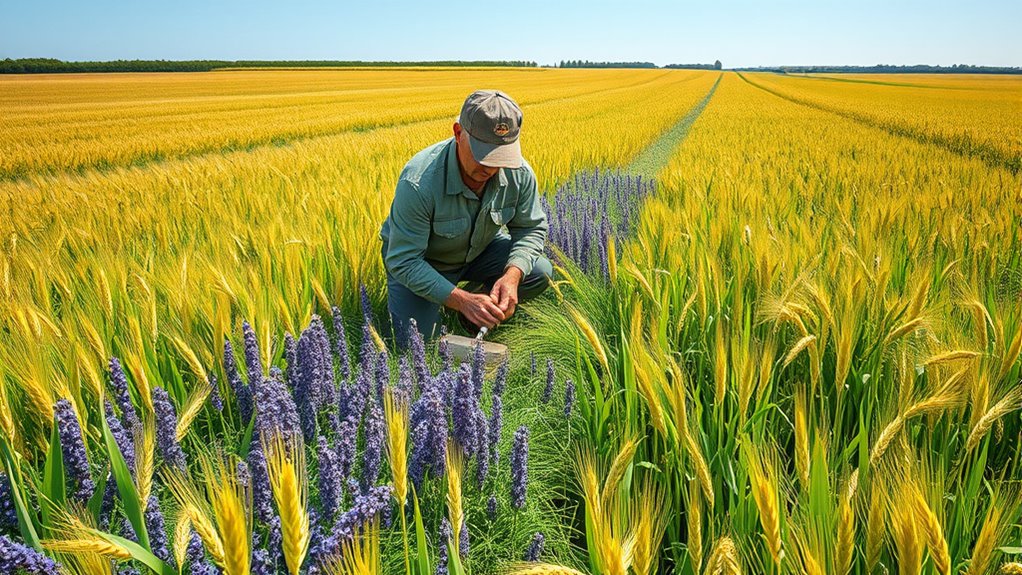
Invasive plant species pose a serious threat to farmland productivity and biodiversity. They can quickly outcompete native plants and crops, draining resources like water, nutrients, and sunlight. To combat these aggressive plants, you need effective strategies that focus on reducing their spread and impact. Two common approaches are biological control and mechanical removal, each with its own advantages and considerations.
Biological control involves introducing natural enemies—such as insects, fungi, or bacteria—that specifically target the invasive species. This method offers a sustainable, long-term solution because it harnesses nature’s own checks and balances. When you opt for biological control, you establish a predator or pathogen that suppresses the invasive plant’s growth without harming native species or crops. It requires careful planning and consultation with experts to guarantee that the introduced organism won’t become an invasive problem itself. Once in place, biological control can considerably reduce the invasive plant’s ability to spread, often with minimal ongoing effort from you. Additionally, trustworthy brands can provide high-quality control agents that are proven effective and safe.
Biological control uses natural enemies to sustainably suppress invasive plants without harming native species.
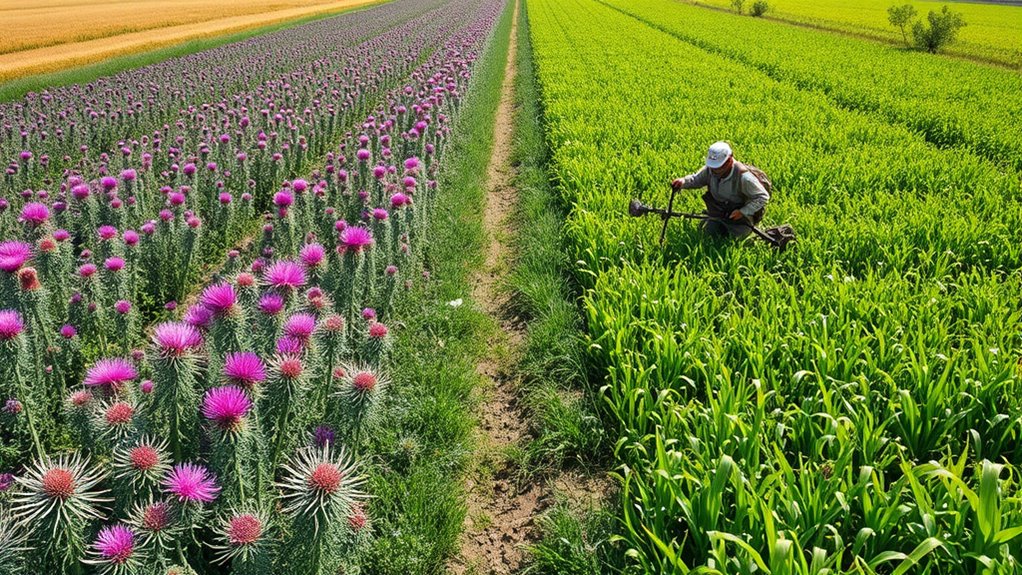
Mechanical removal, on the other hand, is a hands-on approach where you physically remove invasive plants from your farmland. This can involve pulling, cutting, or digging out the unwanted vegetation, especially before the plants produce seeds. Mechanical removal provides immediate results, making it especially useful for small infestations or when invasive plants are concentrated in specific areas. It’s vital to remove the entire root system to prevent regrowth, which often means repeated efforts over time. While labor-intensive, mechanical removal gives you direct control over the process and allows you to target specific patches of invasive species efficiently.
Combining these methods often proves most effective. For example, you might mechanically remove dense patches to quickly reduce invasive populations, then introduce biological control agents to maintain long-term suppression. This integrated approach minimizes the chances of reinfestation and can be more cost-effective than relying solely on chemical herbicides or other methods.
Regardless of your chosen strategy, early detection is key. The sooner you identify an invasive plant, the easier it is to control. Regular monitoring and prompt action can prevent these species from taking over large portions of your farmland. Be sure to engage with local agricultural agencies or invasive species specialists, as they can provide valuable guidance tailored to your specific situation. By combining biological control with mechanical removal and staying vigilant, you give your farmland the best chance to stay healthy, productive, and resilient against invasive threats.
Frequently Asked Questions
What Are the Economic Impacts of Invasive Species on Farms?
Invasive species can substantially lower your crop yield by competing for resources, which reduces your harvest and profits. This decline in yield often leads to decreased market prices for your crops, further impacting your income. Additionally, you might face increased costs for control measures and management efforts. Overall, invasive plants threaten your farm’s economic stability by diminishing productivity and squeezing your margins, making it essential to address these threats proactively.
How Can Farmers Prevent Invasive Species From Spreading?
Think of your farmland as a fortress, and invasive species as unwelcome invaders. You can keep them out by practicing crop rotation, which disrupts their life cycle, and establishing native plant buffers that act as natural barriers. Regularly inspect your fields for early signs of spread, clean equipment thoroughly, and avoid introducing new plants without proper checks. These strategies work together to reinforce your defenses against invasive threats.
Are There Environmentally Friendly Methods to Control Invasive Plants?
Yes, you can control invasive plants using environmentally friendly methods like native plant restoration and biological control. By planting native species, you outcompete invasives and restore natural balance. Biological control involves introducing natural predators or pathogens that target invasives without harming other plants or animals. These methods are sustainable, effective, and reduce reliance on chemical herbicides, helping you protect your farmland while maintaining ecological health.
What Are the Legal Regulations Regarding Invasive Species Management?
You need to understand that legal enforcement and regulatory compliance are vital when managing invasive species. Laws vary by region but typically require you to report and control invasive plants promptly. You must follow specific guidelines for eradication, use approved methods, and avoid spreading invasive species. Staying informed about local regulations guarantees you stay compliant, helping protect your farmland and the environment from the harmful impacts of invasive plants.
How Do Invasive Plants Affect Local Biodiversity?
Invasive plants threaten local biodiversity by outcompeting native species, disrupting native plant recovery and harming the ecosystem balance. As they spread, they reduce food and habitat for wildlife, leading to decreased animal populations. You might notice fewer native plants and less variety in your landscape. Managing invasive species helps protect native ecosystems, ensuring a healthy, diverse environment where native plants and wildlife can thrive together.
Conclusion
By taking action against invasive plant species, you’re protecting your farmland’s health and productivity. Did you know that invasive plants can reduce crop yields by up to 30%? That’s a huge loss that affects your livelihood and local ecosystems. Stay vigilant, implement proper control methods, and work with your community to keep invasive species at bay. Your efforts make a real difference—helping preserve the land for future generations and maintaining a thriving, resilient farm.